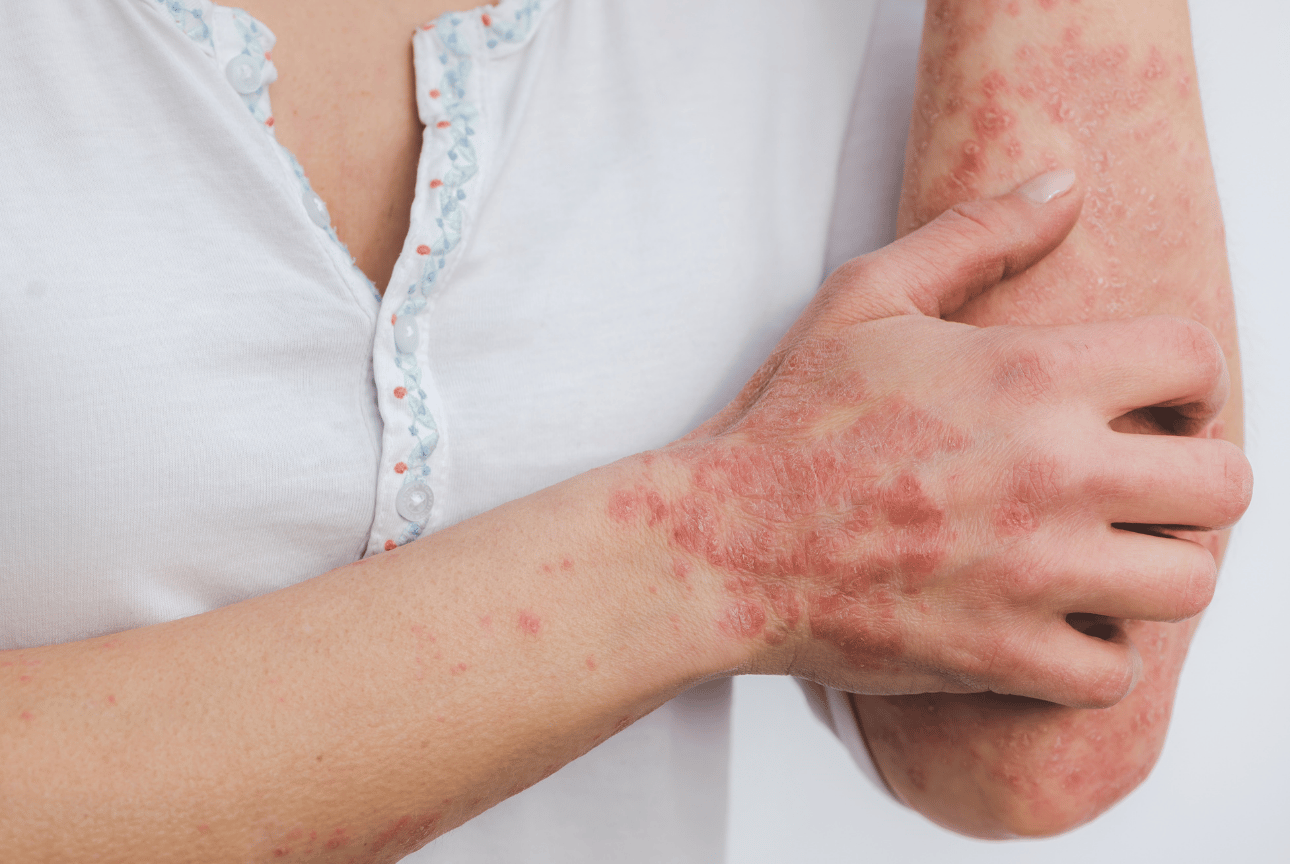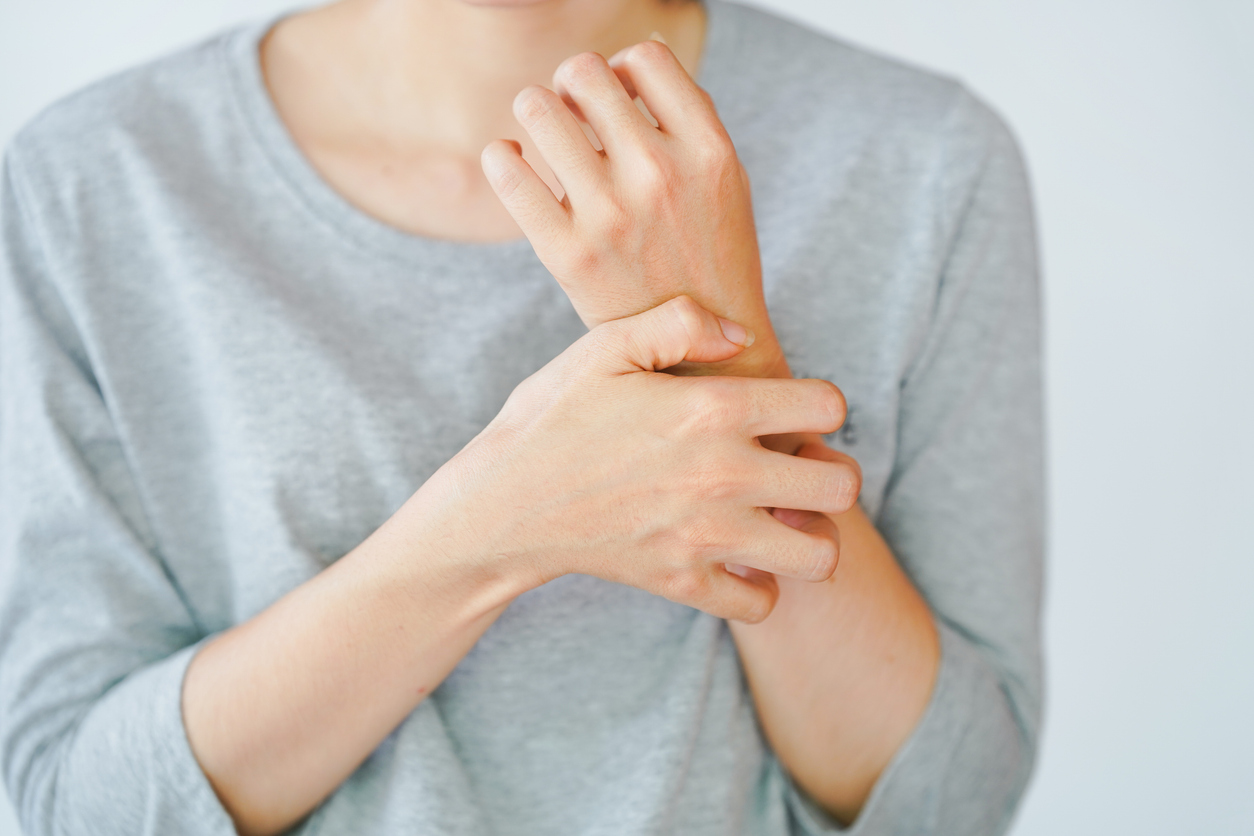


For many people with atopic dermatitis, commonly known as eczema, itching can be one of the most challenging symptoms to manage. The urge to scratch may feel impossible to ignore, especially during the flare-ups or at night. Unfortunately, scratching often makes symptoms worse, creating what researchers call the itch-scratch cycle.
This cycle is one of the defining features of atopic dermatitis, a condition that many people experience as a part of a larger autoimmune issue. Scientists now understand that it involves much more than dry skin alone. A complex interaction between the skin barrier, the immune system, and the nervous system helps drive chronic itching and repeated scratching. Understanding how these symptoms work together may help explain why atopic dermatitis can be so persistent.
What is the itch-scratch cycle?
The itch-scratch cycle describes a self-perpetuating process in which itching leads to scratching, and scratching leads to even more itching. At first, an itch may develop because of inflammation, dry skin, an environmental trigger, or skin irritation. Scratching provides temporary relief, but it also damages the skin. This damage triggers additional inflammation and activates itch-sensitive nerve fibers, creating stronger itch signals.
As the cycle continues, the skin becomes increasingly irritated and sensitive. Over time, even minor triggers may provoke significant itching, making it difficult to break the pattern. Researchers consider the itch-scratch cycle a central mechanism in atopic dermatitis because it contributes to both symptom severity and disease progression.
The skin barrier's role
Healthy skin acts as a protective barrier between the body and the outside environment. It helps retain moisture while keeping irritants, allergens, and microbes out. In atopic dermatitis, this barrier does not function as effectively as it should. Many people with the condition have changes in proteins that help maintain skin structure and hydration. As a result, the skin may lose water more easily and become dry, cracked, and vulnerable to irritation.
When the skin barrier is weakened, environmental triggers can penetrate more deeply into the skin. This exposure activates immune responses that contribute to inflammation and itching. Barrier disruption also increases sensitivity. Skin that is already inflamed may react more strongly to factors that would not bother someone without atopic dermatitis, such as fabrics, soaps, temperature changes, or sweat.
How the immune system contributes to itching
Inflammation plays a major role in the itch-scratch cycle. Atopic dermatitis is associated with an overactive immune response that promotes the release of inflammatory signaling molecules. These immune signals help drive many of the symptoms associated with eczema, including redness, swelling, and itching.
Researchers have identified several cytokines that appear to be particularly important in atopic dermatitis. Some of these inflammatory molecules can directly stimulate itch pathways, making the sensation stronger and more persistent. This helps explain why itching often continues even when there is no obvious external trigger. The immune system itself may be generating signals that promote itch sensations.
As inflammation increases, scratching causes additional skin damage, which in turn triggers further immune activation. This creates a feedback loop that reinforces the cycle.
The nervous system and chronic itch
One of the most important discoveries in recent years is the role of the nervous system in chronic itch. The skin contains specialized nerve fibers that detect itch sensations and send signals to the brain. In atopic dermatitis, these nerves may become unusually sensitive.
Research suggests that inflammation can change how itch-sensitive nerve fibers function. Certain inflammatory molecules increase communication between immune cells and sensory nerves, amplifying itch signals before they reach the brain.
Scientists have also observed increased nerve growth in affected skin. As more nerve fibers develop near the skin's surface, the skin may become more responsive to itch triggers. This heightened sensitivity helps explain why chronic itch can persist even when visible inflammation improves. The nervous system itself may remain primed to react.
Why scratching feels good, at least temporarily
Many people wonder why scratching provides relief if it ultimately worsens symptoms. Researchers believe scratching activates pain-related nerve pathways that temporarily override itch signals. This interruption can create a brief sense of relief and satisfaction.
The brain may also release reward-related neurotransmitters during scratching, reinforcing the behavior. In other words, scratching can feel rewarding in the moment, even though it contributes to long-term symptoms.
Unfortunately, the relief is usually short-lived. Once scratching damages the skin and inflammation increases, itch signals often return even stronger than before.
Why the itch-scratch cycle can be hard to break
The itch scratch cycle involves multiple biological systems working together. A weakened skin barrier allows irritants to enter. The immune system responds with inflammation. Inflammatory signals activate itch-sensitive nerves. The nervous system amplifies those signals and sends them to the brain. Scratching then causes additional skin damage, restarting the process.
Since so many mechanisms are involved, there is rarely a single trigger or solution. Factors such as stress, poor sleep, environmental allergens, heat, and infections can also intensify symptoms and make itching harder to control. This complexity helps explain why managing atopic dermatitis often requires addressing several aspects of the condition at the same time.
Managing your symptoms with Evidation
Scientists now recognize that the itch-scratch cycle in atopic dermatitis is driven by an ongoing interaction between skin barrier dysfunction, immune system activity, inflammation, and nerve signaling. What starts as an itch can quickly become a self-reinforcing cycle that is difficult to stop.
As research continues to uncover how these systems interact, tracking symptoms, triggers, and flare patterns can help you better understand your health. With Evidation, you'll get to use the health data you're already tracking to find patterns and get insights that can help you make decisions that take your health and well-being in the right direction. Click here to learn more about Evidation and get started today.