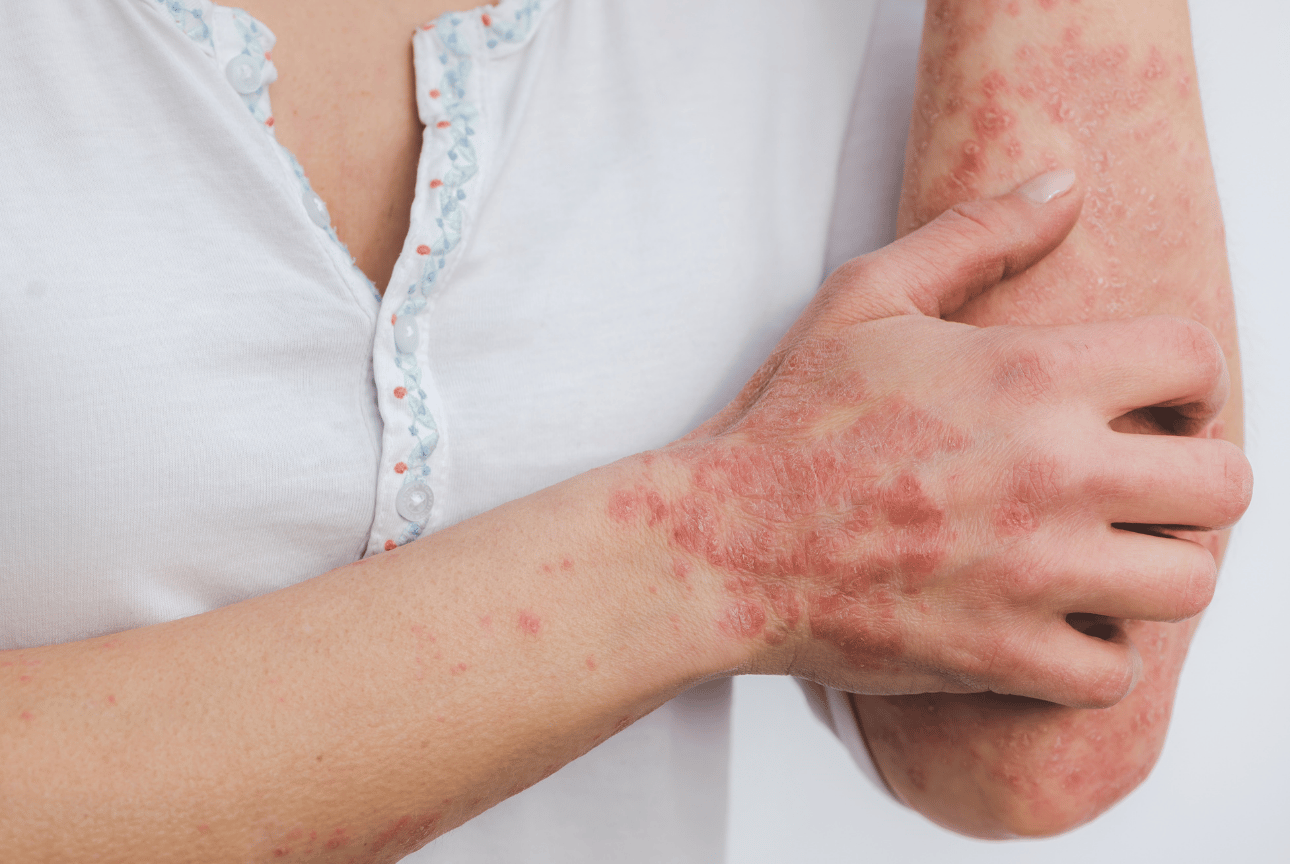


Psoriasis and eczema are chronic inflammatory skin conditions that often follow a cycle of periods of relative stability interrupted by symptom flare-ups. During a flare, symptoms such as redness, itching, dryness, scaling, or irritation may become more noticeable or severe than usual. While psoriasis and eczema are distinct conditions, both involve complex interactions between the immune system, the skin barrier, and environmental factors.
Researchers continue to study why flares occur and why certain triggers seem to affect some people more than others. Although there is no single explanation for every flare, growing evidence suggests that immune activation, skin barrier dysfunction, and external exposures all play important roles.
What defines a flare?
A flare refers to a temporary worsening of symptoms in a chronic condition. For people with psoriasis or eczema, a flare may involve increased itching, more extensive skin involvement, greater discomfort, or changes in the appearance of affected areas.
The timing and severity of flares can vary considerably. Some people experience occasional flare-ups triggered by specific circumstances, while others may notice a more unpredictable pattern. Researchers believe these fluctuations occur because the underlying inflammatory processes driving these conditions can become more active at certain times.
Immune activation and skin inflammation
Both psoriasis and eczema involve abnormal immune responses that contribute to skin inflammation, though the biological pathways differ between the two conditions. In psoriasis, immune cells trigger rapid skin cell growth and inflammation, leading to the development of thick, scaly plaques. Researchers have identified several inflammatory signaling pathways that contribute to disease activity and flare development.
Eczema, also known as atopic dermatitis, is associated with immune system dysregulation that contributes to chronic inflammation, itching, and skin irritation. Inflammatory signals can become amplified during a flare, resulting in worsening symptoms and increased skin sensitivity. Since immune activity plays such a central role in both conditions, researchers continue to investigate how internal and external factors may influence inflammatory responses and contribute to flare-ups.
Environmental and psychological associations
A variety of environmental and physiological factors have been associated with psoriasis and eczema flares. While triggers differ from person to person, several patterns have emerged in research. For eczema, common triggers may include dry air, irritants such as soaps or fragrances, allergens, infections, and emotional stress. Changes in temperature or humidity can also affect symptom severity.
Psoriasis flares have been associated with factors such as skin injuries, infections, psychological stress, certain medications, and lifestyle-related factors. Researchers have also explored how broader health conditions and systemic inflammation may influence disease activity.
Importantly, the presence of a trigger does not guarantee a flare. Instead, many experts believe flare-ups occur when multiple biological and environmental factors interact at the same time.
The role of the skin barrier
The skin barrier serves as the body's first line of defense against environmental exposures, irritants, allergens, and moisture loss. Growing research suggests that skin barrier function plays an important role in both eczema and psoriasis.
In eczema, defects in the skin barrier can allow moisture to escape while making the skin more vulnerable to irritants and allergens. This can contribute to inflammation and increase the likelihood of flare-ups. Although psoriasis is primarily driven by immune dysfunction, researchers have also identified abnormalities in the skin barrier function that may contribute to disease activity. When the skin barrier becomes compromised, inflammation can worsen and symptoms may become more difficult to control.
As researchers continue to learn more about autoimmune and inflammatory conditions, it has become increasingly clear that psoriasis and eczema flares are influenced by a combination of immune activity, skin barrier health, and environmental exposures. Understanding these factors may help provide a broader picture of why symptoms sometimes worsen and how researchers are working to better understand these chronic conditions.
How Evidation can provide insight and support your health
If you're living with psoriasis, eczema, or other chronic conditions, it can be tough to pinpoint your triggers and manage your health. Evidation can help. When you download the Evidation app, you'll be prompted to share the health information you're already tracking. With your permission, we'll use the information you share with us to find patterns, helping you learn more about how you can support your health while managing chronic conditions. Click here to learn more about how Evidation works and get started today.