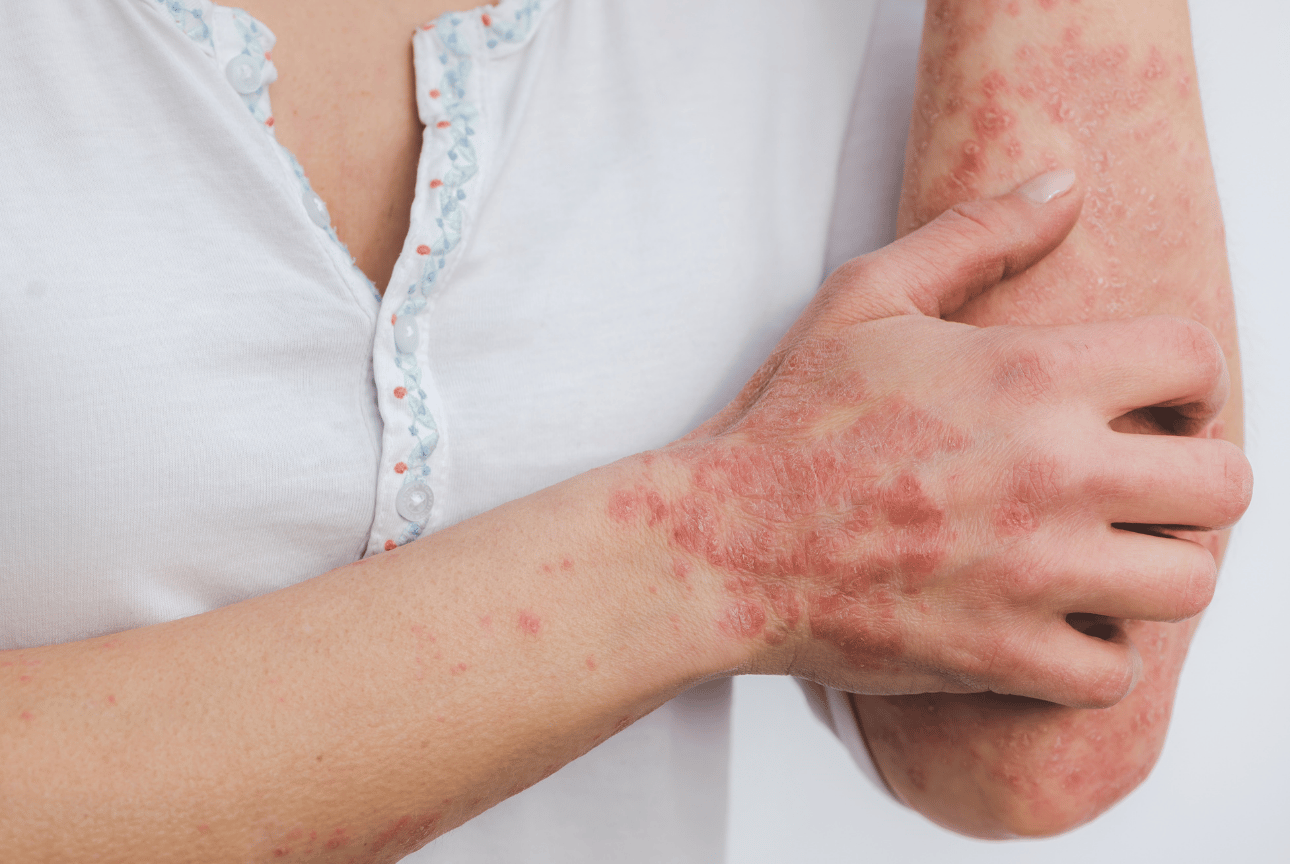


Sleep plays an important role in many aspects of health, including immune regulation, tissue repair, and inflammatory balance. For people living with chronic inflammatory skin conditions such as eczema and psoriasis, sleep disruption is also increasingly recognized as part of the broader symptom experience.
Researchers have found that sleep and skin health appear to influence one another in complex ways. Skin symptoms may interfere with sleep quality, while disrupted sleep may also affect inflammatory signaling and skin barrier function. This bidirectional relationship has become an important area of study in dermatology and sleep research.
What sleep disruption includes
Sleep disruption involves more than simply getting too little sleep. Researchers generally describe several dimensions of sleep that may affect health outcomes.
Sleep duration refers to the total amount of time spent sleeping. Sleep fragmentation describes repeated awakenings or interruptions during the night, even if total sleep time appears adequate. Sleep variability refers to inconsistent sleep schedules or large differences in sleep timing from one night to another.
For individuals with eczema or psoriasis, sleep fragmentation is especially common. Symptoms such as itching, discomfort, or skin irritation may lead to nighttime awakenings that interrupt normal sleep cycles. Some people may also experience difficulty falling asleep due to discomfort or heightened symptom awareness at night.
Researchers continue to study how these different forms of sleep disruption influence immune activity, stress responses, and inflammatory pathways associated with chronic skin conditions.
Sleep, immune function, and skin barrier repair
Sleep supports several biological processes involved in skin health. During sleep, the body carries out important restorative functions related to immune regulation, tissue maintenance, and repair.
The skin barrier plays a particularly important role in conditions like eczema. A healthy skin barrier helps retain moisture and protect the body from irritants, allergens, and microbes. Research suggests that sleep may help support processes involved in skin barrier recovery and repair.
Sleep is also closely connected to immune system activity. During normal sleep, the body regulates the release of signaling molecules involved in inflammation and immune coordination. Disrupted sleep patterns may alter this balance, potentially contributing to increased inflammatory activity.
In psoriasis, which involves immune-mediated inflammation affecting skin cell turnover, researchers have observed associations between poor sleep and increased disease severity in some populations. Similar patterns have been studied in eczema, where sleep disruption may contribute to worsening itch and skin irritation.
Although researchers continue to investigate these mechanisms, current evidence suggests that sleep quality may be one factor influencing how inflammatory skin conditions fluctuate over time.
Inflammatory signaling and nocturnal itch
One reason eczema and psoriasis can interfere with sleep involves the relationship between inflammation and itch signaling. Inflammatory molecules called cytokines help regulate immune responses throughout the body, but they may also contribute to itching and skin discomfort.
Some cytokine activity follows circadian rhythms, meaning inflammatory signaling can fluctuate across the day and night. Researchers have found that itch symptoms in eczema often become more intense during nighttime hours, a phenomenon sometimes called nocturnal pruritus.
Several factors may contribute to this pattern. Natural nighttime changes in body temperature, hormone levels, and skin water loss may increase skin sensitivity and itch perception. Reduced environmental distractions at night may also make itching more noticeable.
Repeated scratching during sleep can further disrupt the skin barrier, potentially contributing to additional irritation and inflammation. This may create a cycle in which itching disrupts sleep, while disrupted sleep contributes to inflammatory stress and symptom persistence.
A bidirectional relationship between sleep and skin symptoms
The relationship between sleep and inflammatory skin conditions appears to work in both directions. Skin symptoms such as itching, burning, irritation, or discomfort may interfere with sleep quality, while sleep disruption itself may influence inflammatory and immune processes linked to symptom patterns.
Researchers are increasingly interested in how long-term sleep patterns relate to chronic inflammatory diseases overall. Sleep variability, stress, mental well-being, and immune signaling may all interact in ways that affect how symptoms fluctuate over time.
This growing body of research reflects a broader understanding of health as an interconnected system rather than a collection of isolated symptoms. In eczema and psoriasis, sleep may represent one important piece of a larger physiological picture involving immune regulation, inflammation, skin barrier function, and everyday health patterns.
As research continues to evolve, scientists are working to better understand how sleep data and symptom tracking may help reveal patterns in chronic inflammatory conditions over time.
Tracking your health patterns with Evidation
If you're ready to take steps toward becoming the healthiest version of yourself, Evidation can help. With your permission, we utilize the health data you're already tracking to help you find patterns and insights that move your health forward. Click here to learn more about how Evidation works and get started today.