

Blog
Understanding the triggers behind psoriasis and eczema flares
Learn what defines a psoriasis or eczema flare and how immune activity, skin barrier function, and environmental factors may influence symptoms.
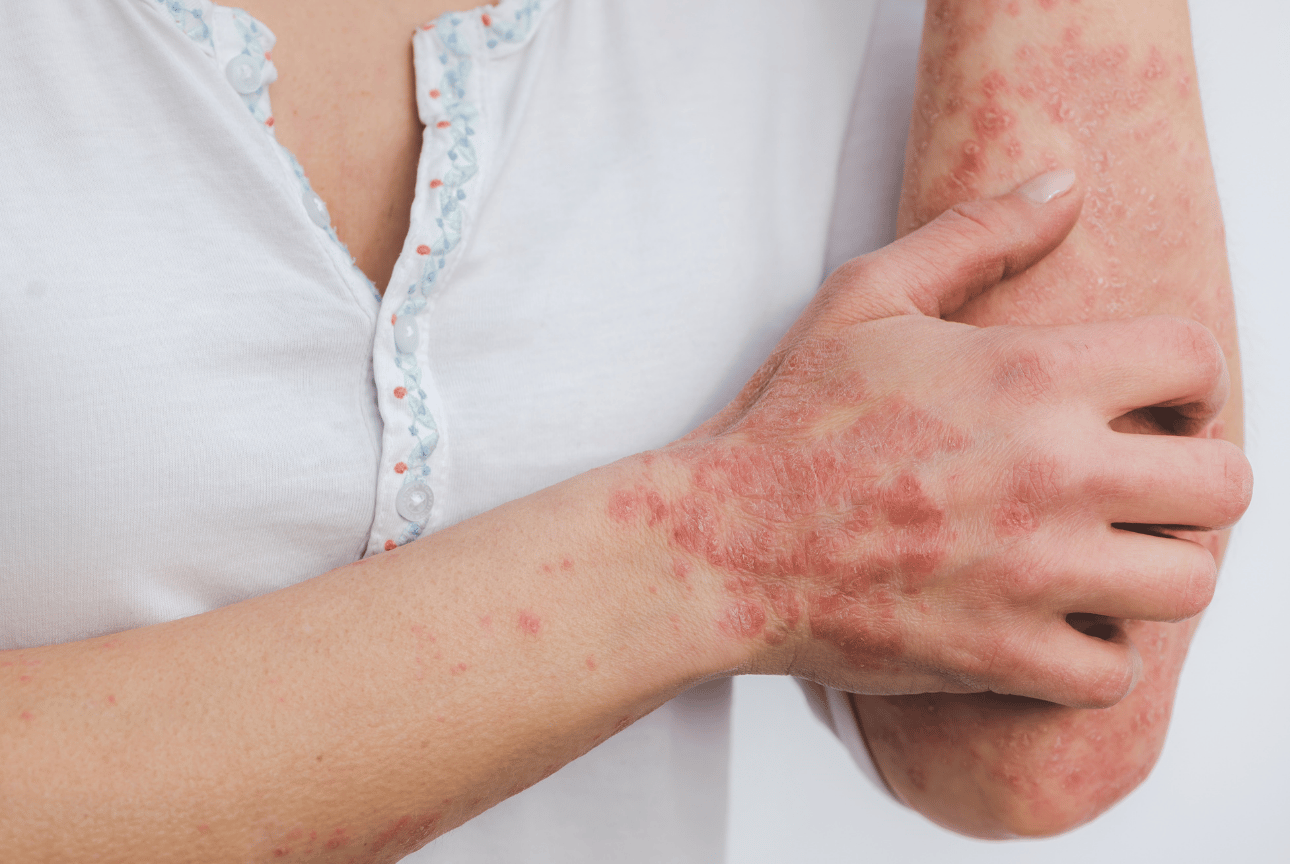
Psoriasis and eczema are chronic inflammatory skin conditions that often follow a cycle of periods of relative stability interrupted by symptom flare-ups. During a flare, symptoms such as redness, itching, dryness, scaling, or irritation may become more noticeable or severe than usual. While psoriasis and eczema are distinct conditions, both involve complex interactions between the immune system, the skin barrier, and environmental factors.
Researchers continue to study why flares occur and why certain triggers seem to affect some people more than others. Although there is no single explanation for every flare, growing evidence suggests that immune activation, skin barrier dysfunction, and external exposures all play important roles.
What defines a flare?
A flare refers to a temporary worsening of symptoms in a chronic condition. For people with psoriasis or eczema, a flare may involve increased itching, more extensive skin involvement, greater discomfort, or changes in the appearance of affected areas.
The timing and severity of flares can vary considerably. Some people experience occasional flare-ups triggered by specific circumstances, while others may notice a more unpredictable pattern. Researchers believe these fluctuations occur because the underlying inflammatory processes driving these conditions can become more active at certain times.
Immune activation and skin inflammation
Both psoriasis and eczema involve abnormal immune responses that contribute to skin inflammation, though the biological pathways differ between the two conditions. In psoriasis, immune cells trigger rapid skin cell growth and inflammation, leading to the development of thick, scaly plaques. Researchers have identified several inflammatory signaling pathways that contribute to disease activity and flare development.
Eczema, also known as atopic dermatitis, is associated with immune system dysregulation that contributes to chronic inflammation, itching, and skin irritation. Inflammatory signals can become amplified during a flare, resulting in worsening symptoms and increased skin sensitivity. Since immune activity plays such a central role in both conditions, researchers continue to investigate how internal and external factors may influence inflammatory responses and contribute to flare-ups.
Environmental and psychological associations
A variety of environmental and physiological factors have been associated with psoriasis and eczema flares. While triggers differ from person to person, several patterns have emerged in research. For eczema, common triggers may include dry air, irritants such as soaps or fragrances, allergens, infections, and emotional stress. Changes in temperature or humidity can also affect symptom severity.
Psoriasis flares have been associated with factors such as skin injuries, infections, psychological stress, certain medications, and lifestyle-related factors. Researchers have also explored how broader health conditions and systemic inflammation may influence disease activity.
Importantly, the presence of a trigger does not guarantee a flare. Instead, many experts believe flare-ups occur when multiple biological and environmental factors interact at the same time.
The role of the skin barrier
The skin barrier serves as the body's first line of defense against environmental exposures, irritants, allergens, and moisture loss. Growing research suggests that skin barrier function plays an important role in both eczema and psoriasis.
In eczema, defects in the skin barrier can allow moisture to escape while making the skin more vulnerable to irritants and allergens. This can contribute to inflammation and increase the likelihood of flare-ups. Although psoriasis is primarily driven by immune dysfunction, researchers have also identified abnormalities in the skin barrier function that may contribute to disease activity. When the skin barrier becomes compromised, inflammation can worsen and symptoms may become more difficult to control.
As researchers continue to learn more about autoimmune and inflammatory conditions, it has become increasingly clear that psoriasis and eczema flares are influenced by a combination of immune activity, skin barrier health, and environmental exposures. Understanding these factors may help provide a broader picture of why symptoms sometimes worsen and how researchers are working to better understand these chronic conditions.
How Evidation can provide insight and support your health
If you're living with psoriasis, eczema, or other chronic conditions, it can be tough to pinpoint your triggers and manage your health. Evidation can help. When you download the Evidation app, you'll be prompted to share the health information you're already tracking. With your permission, we'll use the information you share with us to find patterns, helping you learn more about how you can support your health while managing chronic conditions. Click here to learn more about how Evidation works and get started today.

Take Control of Your Health This Movember
Movember is all about men’s health. From mental health to cancer, it’s time for men to break the cycle of silence. Talking about health concerns, be it anxiety, physical health, or sexual function, is crucial to living a long, healthy, and happy life.
You may have heard of Movember, the month when men grow their facial hair in solidarity with men’s health issues, like testicular and prostate cancer. The trend has taken hold across the world and even generated its own spinoffs, like “No-Shave November.”
Movember started in Australia as a grassroots movement and began to become widespread in the early 2000s. Since then, the campaign has only grown, so you’re sure to see plenty of men rocking facial hair this November.
Let’s take a moment to discuss what you can do to take care of your health, raise awareness, and show your support for men’s health issues.
What Movember Is All About
Movember is all about men’s health. Rather than focusing on one specific medical concern, Movember encourages us to spread awareness of the many health risks specific to men. Mental health is a huge focus during the month, as studies have shown that men are statistically far less likely to seek help for things like anxiety and depression.
Men seek treatment less frequently for a variety of medical conditions, largely due to a culture that encourages men to be stoic and deal with things themselves. Regular checkups and cancer screenings are more likely to be put off or skipped entirely by men. We’re here to encourage guys to take charge of their health and break the cycle of stigmas that prevent so many men from properly taking care of themselves.
Mental Health
Mental health is a major issue for men, not just in the US but across the world. In the United States, men are 3.6x more likely to die by suicide than women. There are many reasons for this, but a lot of it comes down to a lack of comfort in discussing emotions. While we’ve made great progress, some men still feel ashamed of talking about their emotions, especially with a medical professional like a therapist or psychiatrist.
As a society, it’s important to treat mental health conditions, like anxiety and depression, with the same care and empathy we treat physical ailments.
Here are some common signs of depression that men should look out for:
- Anger and irritability—especially if it’s atypical behavior
- Insomnia and trouble sleeping
- Increased intake/abuse of alcohol and drugs
- Withdrawing from friends and loved ones
It’s important to remember that many of these signs can appear before the person is consciously aware that they’re suffering from depression. While these symptoms aren’t unique to men, it’s important to remember that men are less likely to openly talk about what they’re experiencing. That’s why it’s important to be an active listener and to try and pick up on nonverbal cues from the people you care about. If you think someone is struggling, encourage them to talk to a professional, and offer a safe and non-judgemental ear.
If you or someone you know is in in crisis, reach out to the suicide & crisis lifeline by calling or texting 988 for help.
.png)
Sexual Functioning
One area where men feel a lot of stigma is in their sexual function. As men age, their levels of testosterone naturally tend to drop. This decrease can result in lower libido, delayed orgasm, and even erectile dysfunction (ED).
Though it’s completely normal for your interest in sex to decrease a little as you age, major changes or difficulties are often a source of great anxiety and embarrassment. For example, even though erectile dysfunction is very common and usually highly treatable, available data indicates about 39% of men with ED never discuss it with their doctor. Fortunately, medical professionals can offer various solutions. Whether you try simple lifestyle changes or medication, or look into a more advanced treatment like hormone therapy, it’s likely there’s a solution to fit the need. Lack of communication is often the biggest hurdle, so talk to your doctor if you’re struggling and encourage others to break the stigmas also.
Physical Health
It isn’t just mental health that men are less likely to seek help for. Physical ailments are also reported by men at a lower rate than women. The reasons are essentially the same. With a culture that celebrates physical strength and ‘working through the pain,’ men are more likely to feel like they need to simply push through it. The statistics bear this out, as a recent survey showed that less than half (46%) of men had a routine checkup in 2022.
It’s imperative for men to get routine checkups, especially as they age. Prostate cancer is the third leading cause of death in men, and testicular cancer can be life-threatening and incredibly life-altering, if not caught early. The good news is that both of these cancers are generally fairly treatable when caught in time. Help the men in your life by encouraging them to get routine physicals, learn to perform a self-exam for signs of testicular cancer, and if you have a loved one that isn’t taking care of their health the way they should—talk to them.
Movember is all about men’s health. From mental health to cancer, it’s time for men to break the cycle of silence. Talking about health concerns, be it anxiety, physical health, or sexual function, is crucial to living a long, healthy, and happy life. Whether you’re a man hoping to improve your overall health or you want to encourage a loved one to do the same, we hope this article has provided you with some helpful facts and resources. Happy Movember, and good health to all!
.avif)
Why participants are so important to health research
Health research isn’t possible without the contributions of research participants. Find out how participants help contribute and how you can participate.
Health research is very important for improving health care for all.
As we mentioned in a previous article, What is Health Research?, this type of research helps medical researchers understand people’s health and how we can make treatments better for everyone.
But health research isn’t possible without the contributions of research participants. Research participants are volunteers who consent (in other words, give their permission) to be in a study. They provide the data (from surveys, lab tests, interviews, etc.) that researchers need to answer important questions that improve health care.
In fact, research participants are the most important part of research — without participants, medical advancements can’t happen!
Why participate in research?
There are a lot of great reasons to participate in research! Some common reasons people participate include:
- Contributing to medical science
- Learning more about health and health research
- Wanting to help improve treatment options for a variety of conditions
- Wanting to find a better treatment for a condition they have
%2520(1).png)
Whatever your personal reasons for participating, being a part of health-related research can have a lasting impact.
Why do researchers need research participants?
Did you know that most research studies don’t enroll enough people on time? When this happens, research efforts to develop medications, devices, and treatments get delayed. It causes studies to take longer than expected and ends up costing researchers more. This can lead to increased medication prices and delays in getting new treatments to market.
These factors limit progress in developing new treatments for conditions like Alzheimer’s Disease, Parkinson’s Disease, Cancers, Autoimmune Disorders, and many others.
Many of us have loved ones or know someone living with a condition that has no treatment and limited options for improving quality of life.
You may wonder, “with all the science and technology in the world, why isn’t there a cure or better treatment for this condition?”
Without research and participants, we can’t develop new or improved treatments.
That’s why it’s important that those who want to participate in health research have the ability and support to do so.
How to participate in research
There are many ways to learn about research participation opportunities. You can find opportunities online, in ads, through medical professionals, on the Evidation app, and more.
Here are some resources that can get you started if you’re interested in participating in a study!
- Evidation Studies specializes in decentralized research which is an easy way to contribute to medical science. To learn how to participate in one of our studies, check out our article How to Participate in a Research Study on Evidation. You can also download the Evidation app to learn more!
- Check out clinicaltrials.gov, which is a registry of clinical trials that provides the public with information on past and current trials.
- Talk to your healthcare providers to see if they know of research studies that may apply to you.
Want to know more about any of our Evidation Studies and how to get involved? Check out How to Participate in a Research Study on Evidation or reach out to us at study@evidation.com and one of our friendly team members can help you get started.
If you want additional general information on health research, we recommend checking out the following public resources:
- U.S. Department of Health & Human Services, Office for Human Research Protections
- FDA, Clinical Trials and Human Subject Protection
- National Institutes of Health (NIH), Educational Resources

How to have a fun and healthy Halloween
Keeping good eating habits during Halloween doesn’t mean you have to avoid sweet foods altogether. We’re sharing tips to keep you and your family healthy while still enjoying the treats Halloween has to offer.
Whether you have younger kids who are trick or treating, or you’re attending a Halloween party, Halloween is full of celebrations and activities. It may also be a time of year when healthy eating and overall good habits slip.
But what if you didn’t have to sacrifice fun for healthy choices?
We’ll share tips for you to keep you and your family healthy while still enjoying the treats Halloween has to offer.
Keep reading to learn more.
Eat before you go
Whether you’re heading to a Halloween party, or taking your kids trick or treating, eating before you head out can help you maintain your health.
How?
Giving your kids a healthy snack before they go door to door will help them stay full and keep them from eating candy out of hunger while trick or treating.
And instead of heading to a Halloween party on an empty stomach, eating a meal that fills you up will help you stay away from overindulging on treats and other sugary foods.
Try a snack or a meal rich in complex carbs. The fiber in complex carbs digests slower, providing a more steady release of glucose (energy) in the bloodstream and preventing energy crashes. It also helps you feel full for a longer period, making you (and your kids!) less likely to eat too many simple sugars like candy.
Trick or treat with a small bag
Rather than sending kids off with a large container to collect candy, try giving them a smaller bag. This will help stop them from collecting too much candy and limit the amount of treats they have to snack on—or bring home to the family to share.
Host a party with healthy foods
If you want to socialize but are concerned about overindulging in unhealthy food typically served at parties, consider hosting your own party. You can serve your own healthy recipes, offer healthy snacks, and decide how many sweets and sugary beverages to provide.
This doesn’t mean you have to avoid sweet foods altogether.
Serving chocolate? Choose dark chocolate. It contains 2 to 3 times more flavanol-rich cocoa. Flavonols help with the production of nitric oxide, which can relax blood vessels and improve blood flow, helping to lower blood pressure. It’s also rich in important minerals that support immunity, keep bones and teeth healthy, and improve sleep quality.
Another option is to use fruits and healthy Halloween recipes like roasted veggies or pumpkin hummus rather than candy and sweets.
Avoid consuming too much chocolate, candy, and sugar
Halloween is an easy time to overindulge in candy, chocolate, and sugar in general. High sugar intake can lead to inflammation, high blood pressure, weight gain, and diabetes.
While it’s best to avoid simple sugars, it’s more feasible to practice portion control. Set a daily limit for the amount of sugar, chocolate, and candy you allow yourself to consume.
Try restricting treats to after dinner, or lunch. And work together with family and friends to hold each other accountable.
Store the candy, chocolates, and sweets out of sight
By keeping the sugary snacks out of sight, you can reduce your temptation to over consume them.
It’s easy to eat chocolates when they're sitting on your kitchen counter. It’s much harder when they're completely hidden in the cupboard and you’ve forgotten all about them.
Buy candy for trick or treaters at the last minute
Instead of buying a box of treats long before Halloween—making it more likely you and your family eat them before the holiday, try buying treats at the last minute.
Then, because trick-or-treaters will be at your door soon, you’re less likely to risk eating too much candy in case you run out.
Conclusion - How to have a fun and healthy Halloween
It’s easy to start picking up bad habits and eat poorly around Halloween.
It’s also ok to enjoy some treats in moderation. But making proactive choices and adding some tricks into your routine can help you and your loved ones have fun and stay healthy all season long. Having fun is important too—and now you have some tools to help you to gain control of the foods you’re consuming.
If these tips were helpful, feel free to share this article with someone who might benefit from them.

Personality and Your Health
Many researchers agree that personality is made up of 5 unique traits: Conscientiousness, Agreeableness, Openness, Neuroticism, and Extraversion. Members on the Evidation platform were recently invited to complete a survey that measured conscientiousness.
Many researchers agree that personality is made up of 5 unique traits: Conscientiousness, Agreeableness, Openness, Neuroticism, and Extraversion. Members on the Evidation platform were recently invited to complete a survey that measured conscientiousness.
What is conscientiousness?
Conscientiousness describes the degree to which a person is organized, determined, and likely to follow norms and rules.
- High scorers tend to work hard to achieve their goals and complete tasks they’ve started. They also tend to get higher grades in school and perform better in many jobs, but are more likely to experience perfectionism and fear of failure.
- Low scorers tend to act spontaneously instead of making plans. While they may be a bit disorganized, they’re also more likely to be flexible with decision making, and able to bounce back from setbacks. Overall, they may find it easier to look at the big picture than to pay attention to details.
Why does conscientiousness matter for health?
Research has found that individuals who are high in conscientiousness tend to live longer and healthier lives. Why? Individuals who are high in conscientiousness tend to be rule followers, and are more likely to follow health recommendations. For example, on average, conscientious people drink less alcohol, eat healthier, and are more likely to wear seat belts.
Conscientious people may also have healthier coping mechanisms–that is, ways to deal with negative life events–than individuals who are less conscientious. For example, people who are conscientious are more likely to try to solve a difficult problem than to use an emotional escape.
For example, a highly conscientious person might think, “How can I fit in daily walking to reduce my cholesterol levels?”
And a less conscientious person might think, “I’ll watch TV now and think about my cholesterol tomorrow.”
What does this mean for me?
Although research has found that conscientiousness relates to mental and physical health, having a low score doesn’t mean you’re destined to poor health. Regardless of your own conscientiousness, you can use what research has uncovered about personality and health to improve your own wellbeing.
If you’d like to increase your conscientious behavior for better health, aim to set small, achievable goals. Below are some techniques you may find useful:
- Reflect on how to avoid or overcome obstacles. Imagine your desired future self and think about the obstacles you may face in becoming that person. For example, if your goal is to become a less distracted driver, an obstacle might be that you’re eager to look at your phone whenever you see an incoming message. One way to overcome this obstacle might be to set your phone to “do not disturb” when driving so that you can’t see the alerts and are reminded to break the habit of looking.
- Create “if-then” plans for handling situations related to your health goals. For example, if you want to reduce your tobacco consumption, your if-then plan may look like this: “If I crave a cigarette, then I’ll take a five minute walk instead.”
- Track your progress and celebrate small victories. For example, if your goal is to walk more, set a small, specific, and achievable goal: “I’ll walk for 5 minutes every morning after I finish my coffee.” As your walks become a habit, increase the time of your walks, but be careful not to let missed walks discourage you–you can pick up again tomorrow!
…and don’t forget, start small to set yourself up for success!

AIP Diet: What is it and what are the risks and benefits?
By avoiding certain foods that can cause inflammation, the AIP diet may help lessen symptoms of autoimmune diseases. See what the research says and how to determine if the AIP diet is an option for you.
More than 80 known autoimmune diseases affect 24 million people in the US alone.
An autoimmune disease is the result of your body's immune system attacking your body rather than protecting it. A normal functioning immune system acts as a defense against invaders like bacteria or viruses.
When someone experiences an autoimmune condition, the immune system can’t tell the difference between what's healthy and what's not. As a result, your body attacks healthy cells.
Common autoimmune conditions include lupus, rheumatoid arthritis, multiple sclerosis, and more.
Is there a cure?
While there’s no known cure for autoimmune conditions, medications can help people manage their disease. Some people also seek alternative therapies like acupuncture or herbs to treat their condition or manage their symptoms.
Can diet help reduce symptoms of autoimmune disease?
The AIP (autoimmune protocol) diet is a food plan that aims to improve autoimmune symptoms.
In this post, we’ll break down the AIP diet, including:
- What it is
- Risks and benefits
- How to consider if the AIP diet is the right choice for you
What is the AIP diet?
The AIP (autoimmune protocol) diet aims to cut foods, additives, or medication that can trigger dysbiosis (the imbalance of gut bacteria), intestinal inflammation, and even symptomatic food intolerance. It’s also used to help reduce symptoms caused by autoimmune conditions.
The AIP diet is an extension of the Paleolithic diet and shares similarities in the foods that are allowed and avoided. However, the AIP diet is a little more restrictive and eliminates nuts, seeds, nightshades, eggs, and seed herbs.
While it’s unclear what causes autoimmune disorders (certain genes and environments may increase the risk of developing a condition), some research suggests a leaky gut may play a role as well.
When a “leaky gut” occurs, bacteria and toxins can pass through the intestines and into the bloodstream. The AIP diet aims to avoid foods that make your gut permeable and incorporate foods that help support gut health and reduce inflammation.
But how?
By avoiding certain foods that can cause inflammation and worsen symptoms of autoimmune conditions, the AIP diet works to support the gut lining and avoid inflammation altogether.
This includes avoiding food groups such as:
- Nuts
- Eggs
- Dairy
- Seeds
- Seed herbs
- Grains
- Coffee
- Alcohol
- Legumes
- Nightshades
What can you eat on the AIP diet?
Foods recommended while following the diet include:
- Fruits
- Vegetables
- Fermented probiotic-rich foods
- Natural sweeteners in moderation
- Non-seed-derived herbs and spices
- Minimally processed oils like avocado oil, olive oil, or coconut oil
- Minimally processed meats, as well as lean cuts, wild-caught, and grass-fed meats whenever possible
What are the risks?
For starters, the AIP diet is restrictive. Beginning the diet includes three phases:
- Phase 1: the elimination of foods that aren’t AIP compliant (at least 30 days)
- Phase 2: continued maintenance and/or elimination (minimum of 30 days)
- Phase 3: reintroduction of foods. Slowly reintroduce one food per week and assess symptoms
Phase 1 (the elimination phase) can be difficult as it entirely restricts some foods many people are used to eating. Social situations can be challenging when there’s a limited choice of foods to enjoy. This is normal for the start of any diet, but because the AIP diet is so restrictive, it can be harder.
Remaining in Phase 1 or Phase 2 for too long can also make it difficult to reach your daily nutritional needs, leading to certain nutrient deficiencies if you don't follow the diet correctly.
This is why it’s critical to move into Phase 3 (the reintroduction phase) after 60 days. During this phase, you have the chance to re-introduce foods that will help you reach your daily nutrition easier.
What are the benefits?
The AIP diet may contribute to a reduction in common autoimmune disorder symptoms.
In a study following a group of people using the AIP diet with IBD (inflammatory bowel disease), participants reported fewer IBD-related symptoms. They found an improvement in stress, bowel frequency, and their ability to perform leisure and sports activities.
In another study, women with HT (Hashimoto's thyroiditis) who followed the AIP diet for 10 weeks experienced a 29% decrease in inflammation and a 68% reduction in disease-related symptoms by the end of the study.
While the research is promising, it’s also limited. As more AIP diet research and data comes to the forefront, we may learn more about the impact of this diet.
Is the AIP diet a good choice for you?
Determining if the AIP diet is the right choice for you depends on several factors.
Firstly, it’s important to know if it’s sustainable for you and your lifestyle. If enjoying food socially is a big part of your life, it might be more difficult to adopt the diet.
And although some studies support claims of the diet’s positive effects, there’s no way to determine in advance if it will work for you. It’s always best to consult with a healthcare professional before you make a sudden and significant change to your diet.
Conclusion
The AIP diet may help reduce symptoms of autoimmune disorders. While there’s some evidence to support its effectiveness, it’s best to consult with a healthcare professional before beginning a new diet—especially one with so many restrictions.
If you're ready for the lifestyle shift and can adhere to the diet while getting the nutrients needed to live a healthy life, it could be a great option.
If autoimmune symptoms are reducing your quality of life, there may be options available to help improve them—the AIP diet may be one option.
If someone you know might benefit from this information, consider sharing it. You never know, you could help someone change their life!

Learn more about dyslexia this Dyslexia Awareness Month
20% of people have dyslexia, which affects the way someone reads and identifies speech sounds. Early intervention can help people with dyslexia better excel in school and beyond. Learn more about the signs of dyslexia and treatment options available.
October is Dyslexia Awareness Month. Dyslexia is the most common neurocognitive disorder, affecting 80-90 percent of those with learning disabilities—and roughly 20 percent of the overall population.
- But what is dyslexia?
- What causes it?
- Who’s at risk?
- And what are the challenges people with dyslexia face?
Keep reading to learn more about dyslexia and the steps you can take to support those that have it.
What is dyslexia?
Dyslexia is a learning disorder and is sometimes referred to as a reading disability. It tends to impact our ability to read because it affects how people identify speech sounds—and how those sounds relate to words and letters.
This is what’s known as decoding.
Decoding often results in those with dyslexia reading at a lower level than their classmates despite having normal levels of intelligence.
What causes dyslexia?
Dyslexia occurs due to differences in parts of the brain that process language. It doesn’t affect intelligence, hearing, or vision, however.
What causes dyslexia?
Dyslexia is caused by differences in parts of the brain that help us read.
What causes these differences?
Usually dyslexia runs in families. It’s linked to certain genes that affect how our brain processes language and reading. If your family has a history of disabilities related to reading and learning you may have an increased chance of having dyslexia.
What are the challenges?
- What are the challenges of having dyslexia in our current education system?
- How can it impact day-to-day life?
The biggest impact dyslexia may have on children is making it difficult to learn in traditional classroom settings.
Because reading is a common skill utilized throughout all parts of our educational system, a child may have a hard time learning at the same rate as peers if they’re unable to read at the same level.
This difficulty to learn can create longer term problems in adulthood if not addressed due to the potential social, economic, and educational impacts dyslexia creates.
If a child or adolescent doesn’t get the support they need as they grow up, they’re less likely to be able to read and interpret language easily as an adult. This can have a negative impact on growth, learning, and even self-esteem.
Dyslexia can contribute to people experiencing negative feelings about themselves, including shame, aggression, low confidence, and anxiety. They may mistakenly believe they're unintelligent, although dyslexia doesn’t affect intelligence at all. Because of this, emotional support can play a role in helping people with dyslexia thrive.
People with dyslexia usually succeed just fine in school with a specialized program or tutoring. And adults with dyslexia can continue to benefit from additional support and resources.
Signs of dyslexia
What are common signs of dyslexia?
Dyslexia symptoms may become more apparent with age. As a child is exposed to learning environments, signs may emerge more frequently.
Some common signs of dyslexia in preschool-age children include:
- Talking late
- Learning new words slowly
- Problems forming words correctly
- Confusing words that sound similar
- Difficulty learning nursery rhymes or playing rhyming games
- Problems remembering or naming letters, colors, and numbers
Once a child starts grade school, symptoms may become more apparent, making them easier to identify. Symptoms a child in school might experience include:
- Avoiding activities that involve reading
- Difficulty spelling, reading, and learning
- Problems remembering certain sequences
- Reading well below the expected reading level
- Issues processing and understanding what’s heard
- Inability to sound out the pronunciation of an unfamiliar word
- Difficulty finding the right word or forming answers to questions
- Spending an unusually long time completing tasks that involve reading or writing
- Difficulty seeing (and occasionally hearing) similarities and differences in letters and words
Lastly, teenagers or adults may exhibit the following signs—many of which are similar across all life stages. They include:
- Problems with spelling
- Slow reading and writing
- Difficulty summarizing a story
- Trouble learning a foreign language
- Difficulty doing math word problems
- Avoiding activities that involve reading
- Difficulty reading, including reading out loud
- Mispronouncing names or words, or having problems retrieving words
- Spending an unusually long time completing tasks that involve reading or writing
Treatment options
What are the treatment options for dyslexia?
Treatment for dyslexia largely depends on age and focuses on the learning problems the condition creates. It usually involves adjusting learning environments and educational techniques to meet the specific needs of an individual with dyslexia.
If schools, teachers, and parents provide extra support in kindergarten and first grade, children are often able to improve their reading, writing, and learning skills.
However, if dyslexia isn’t addressed early on, children may have difficulty learning the skills needed to read well and learn. Because of this, they’re more likely to fall behind their peers in development.
Parents can play a big role in the development of a child, and they also play a significant role in the success of a child with dyslexia.
Here’s how you can help your child if they have this condition:
- Address the problem early on. If you suspect anything, visit your healthcare provider and seek early intervention and help to improve success.
- Try reading out loud to your child when they're young. You can try reading stories, or listening to recorded books.
- Work with your child's school and talk to the teacher about how you can work together to help your child succeed.
- Set aside time every day to read with your child. Children must practice to improve their reading skills. Have them read out loud to you and encourage them to read on their own.
If you’re an adult experiencing dyslexia, there are a few things you can do to support your success.
- Consider getting assistance with reading or writing. Although stigma and potential social implications may make this feel challenging, it can help get you the support you need, connect you with new friends, and make it easier to learn.
- Under the Americans with Disabilities Act, you may be eligible for additional training and accommodations from your employer or academic institution. Getting support can foster growth and development, help you do your job better, and aid you in reaching your goals.
Successful figures with dyslexia
The learning difficulties associated with dyslexia have nothing to do with intelligence or someone’s ability to succeed. In fact, some of the most gifted figures in science, math, and arts had dyslexia, including Albert Einstein, Henry Ford, and Pablo Picasso.
Albert Einstein experienced delayed verbal development and dyslexia symptoms in early childhood—and went on to receive the 1921 Nobel Prize in physics and created “the world’s most famous equation,” E=mc2.
Henry Ford spent his childhood struggling to read, then used his strong talent and interest in engineering to build one of the biggest automobile companies in the world.
During his early years at school, Pablo Picasso struggled to keep up with his peers. He went on to become one of the 20th-century’s most influential artists.
How to support Dyslexia Awareness Month
If you have a friend, coworker, child, family member, or classmate that deals with dyslexia, there are ways you can help.
- Learn more about dyslexia to better understand what people with the condition experience.
- Help your child or loved one learn, share encouragement, and aid their development during each step in their journey.
- Share what you learn and spread awareness to help more people understand how it affects individuals’ lives.

Results of Research Studies
Participants belong to a large community of people who help researchers learn more about important health conditions and treatments. Because they devote their time, data, and effort to research that can improve health care for all, it’s important that participants receive value in return for their contributions.
Return of Results to Participants
When researchers want to learn more about people and their health, they perform research studies. The individuals who agree to participate in these studies are called participants.
Participants belong to a large community of people who are helping researchers learn more about important health conditions and treatments. They play a key role in research studies by contributing their time and information about their health (researchers call this, personal health data) to help us better understand certain health conditions or behaviors.
Because participants devote their time, data, and effort to research that can improve health care for all, it’s important that participants receive value in return for their contributions.
One important way to give value back to participants is to give them a summary of the study they participated in. Study summaries are easy-to-read descriptions of the research conducted.
What information is found in study summaries?
.jpeg)
The content and format of study summaries is different depending on the study. At Evidation Studies, our study summaries are typically sent as emails and may include the following information:
- Why the study was done
- What happened during the study
- Who participated in the study
- What the results of the study were
- Where you can learn more
These summaries are a great way for participants to see the impact they made when participating in study. Sometimes, participants may even be able to extract useful information from the summaries that they can use to improve their day-to-day health.
Why are study summaries important?
Participants contribute their personal health data to scientific studies. Understanding the impact of those studies and the contribution their data makes can be rewarding and can positively impact their research experience.
For example, these summaries can help participants understand the overall study outcomes. They can also explain what the study results really mean. They allow participants to engage with the study on a deeper level. Sometimes, the results can even give participants insight into their own health and how to improve it.
Evidation Studies is committed to continuously identifying ways to improve the study experience, and we’ve started to return study summaries to participants when possible. We will continue to work towards a better understanding of the needs of our participants, so that we can return value in the most meaningful ways possible.
Want to know more about any of our Evidation Studies and how to get involved? Check out How to Get Involved in Evidation Studies, or reach out to us at study@evidation.com and one of our friendly team members can help you get started..
If you want additional general information on health research, we recommend checking out the following public resources:
- U.S. Department of Health & Human Services, Office for Human Research Protections
- FDA, Clinical Trials and Human Subject Protection
- National Institutes of Health (NIH), Educational Resources
- Clinical Research Resource HUB, Resources for Participants

Community Results: What types of things influence how we feel day-to-day?
How do things like day of the week, time of day, sleep, and exercise influence how Evidation Members feel on a day-to-day basis? Find out in our latest community insights blog post.
We’ve been asking our members how they feel every day since June, in what was previously called the Daily Mood Survey. We’ve since renamed this offer to the Daily Check-In, and we’re excited to share an update on our findings.

In our last community results post, we talked about the connection between how you feel and your activity levels. Since that last post, the percentage of responses for feeling “Good” has gone up—from 57% to 61%. See average results for July and August below:
- Good: 61%
- Okay: 33%
- Bad: 5%
With over 7.7 million responses to-date, today we’ll take a deeper dive to see how things like day of the week, time of day, sleep, and exercise relate to how our members feel day-to-day.
Day of Week & Time of Day
The last community results post showed that when it comes to how members feel, the "best" days were Saturday and Sunday and the "worst" days were Monday and Thursday.
What has continued to ring true is that people are generally in good spirits on the weekends—Saturday and Sunday remained the "best" days for responses in July and August.
However, alongside Monday (no shock there), Wednesday replaced Thursday as one of the two “worst” days in terms of how people felt.
But what about time of day? We found that the hours of the day when people respond most optimistically are mornings and early afternoons, specifically:
- 9AM-10AM
- 12PM-1PM
For the time periods above, Good = 62%.
We can compare this to the least optimistic hours, which are 12AM-4AM (Good = 55%).
Amount of Sleep
For members who track their sleep, we took a look at how the amount they sleep in a given night affects how they feel the next day.
We found that when members slept at least 7 hours the night before, they were more likely to respond that they felt good the next day (56% vs. 52%).
This indicates that people feel better when they get an adequate amount of sleep.

For example, if Evidation Member "Sally" sleeps less than 7 hours on August 1, and more than 7 hours on August 2 she is more likely to respond that she feels good on August 3, which is the day after she slept more than 7 hours.
If we combine "Sally's" data with data from all of our members, we find that members are about 7% more likely to feel good on days they slept for more than 7 hours.
Exercise
For members who’ve connected their workout data to Evidation, we wanted to see if working out affected how they felt in the 24 hours post-workout.
We found that members who worked out in the 24 hours prior to their response were more likely to respond that they felt good (65% vs. 59%).

Additionally, this finding lines up with a survey we shared in August asking our members if they felt better when they were more active. Out of 40,000 responses, 91% of members responded "yes".
Want to receive personalized insights for how things like sleep, exercise, and more affect how you feel? Connect an activity app or wearable to your Evidation account, and be sure to answer the Daily Check-In offer (found on the app home screen) as regularly as possible.
Better yet, you’ll receive more points to reach your 10k point goal!
The Daily Check-In offer is only available in the app at this time. If you typically log in on the web, be sure to download the app.

Mesothelioma Awareness in the Military Community
Mesothelioma is an aggressive form of cancer found in the lining of the organs - often in the lungs or abdomen, but can also be found around the heart or testicular area
Mesothelioma Awareness Day is September 26th - a time dedicated to spreading knowledge, education, and support to those diagnosed or at-risk for asbestos-related cancer.
For decades, products containing asbestos were used across the U.S. military for its low cost and fire-resistant qualities. Once its harmful health effects became known, asbestos use decreased, but it’s still found in many products and materials in use today. Studies show that asbestos exposure is still a problem, even after the widespread ban enacted over 40 years ago.
To support our military community, in today’s article we’re breaking down everything you need to know about this service-related condition and the steps you can take to help spread awareness about veterans and mesothelioma.
What is mesothelioma?
Who is at risk?
What symptoms should you look out for? And what type of support options are available?
Keep reading to learn more.
What is Mesothelioma? What causes it?
Mesothelioma is an aggressive form of cancer found in the lining of the organs - often in the lungs or abdomen, but can also be found around the heart or testicular area. Unfortunately, people with this form of cancer will not show symptoms until the cancer has progressed.
Because this cancer has a period of up to 50 years before the first onset of symptoms, the average life expectancy after prognosis dwindles to between 18 – 31 months.
Mesothelioma develops after being exposed to a small, fibrous mineral called asbestos. When inhaled or swallowed, these tiny fibers attach to the lining of the body’s organs called the mesothelium. Depending on where the mesothelioma develops, will determine the type of mesothelioma that’s diagnosed.
Who is at risk?
Anybody who has ever been exposed to asbestos is at risk of developing mesothelioma. Large quantities of asbestos products and materials were used in every branch of the military. Today, 30% of people diagnosed with mesothelioma are veterans.
Women in the military community are particularly at risk. As our recent highlight shows, women tend to delay their own healthcare due to childcare issues, distance, and scheduling conflicts.
But veterans aren’t the only ones at risk of mesothelioma - family members of veterans could also have been exposed to asbestos through the clothing, body, and hair of a person close to them. Even the simple act of washing a contaminated uniform could have put a person at risk.
Alongside the military community, industrial workers in construction or shipbuilding, firefighters, miners, and mechanics are equally at risk of asbestos exposure and developing mesothelioma.
Symptoms and diagnoses
General symptoms of mesothelioma cancer can include:
- Chest pain or abdominal pain
- Dry cough
- Fever
- Shortness of breath
- Fatigue
- Weight loss
Symptoms of mesothelioma appear once the cancer forms tumors and starts to spread. However, symptoms are commonly misinterpreted as other diseases - making it harder to determine the correct prognosis.
Tracking your health and being aware of the risks and symptoms of asbestos-related mesothelioma is the key to early detection and positive health outcomes.
Treatment & support options
One of the best ways to improve your health outcome is to maintain a healthy lifestyle and diet, when able. A combination of chemotherapy, immunotherapy, radiation, or surgery are common treatment plan options.
Experimental therapies are available to qualifying patients through clinical trials. Alternative medicines are another path to consider.
Alternative medicines include:
- Chiropractic cancer treatment
- Medical marijuana
- Mind-body therapies
- Nutritional and herbal supplements
If you, or a loved one, are a veteran with mesothelioma or have been diagnosed with an asbestos-related disease, there are several resources available.
The Department of Veterans Affairs (VA) offers resources for veterans with mesothelioma such as disability, pension, and healthcare benefits. Veteran dependents can also seek special compensation benefits if a veteran passes away from a disease related to asbestos exposure.
Conclusion
For veterans, every day should be mesothelioma awareness day. Being proactive, knowing the risks, and tracking your health is the best way to help prevent mesothelioma and other asbestos-related diseases. Do your part and tell your friends, colleagues, and loved ones about mesothelioma to keep others safe from asbestos cancers and disease.