

Blog
Understanding the triggers behind psoriasis and eczema flares
Learn what defines a psoriasis or eczema flare and how immune activity, skin barrier function, and environmental factors may influence symptoms.
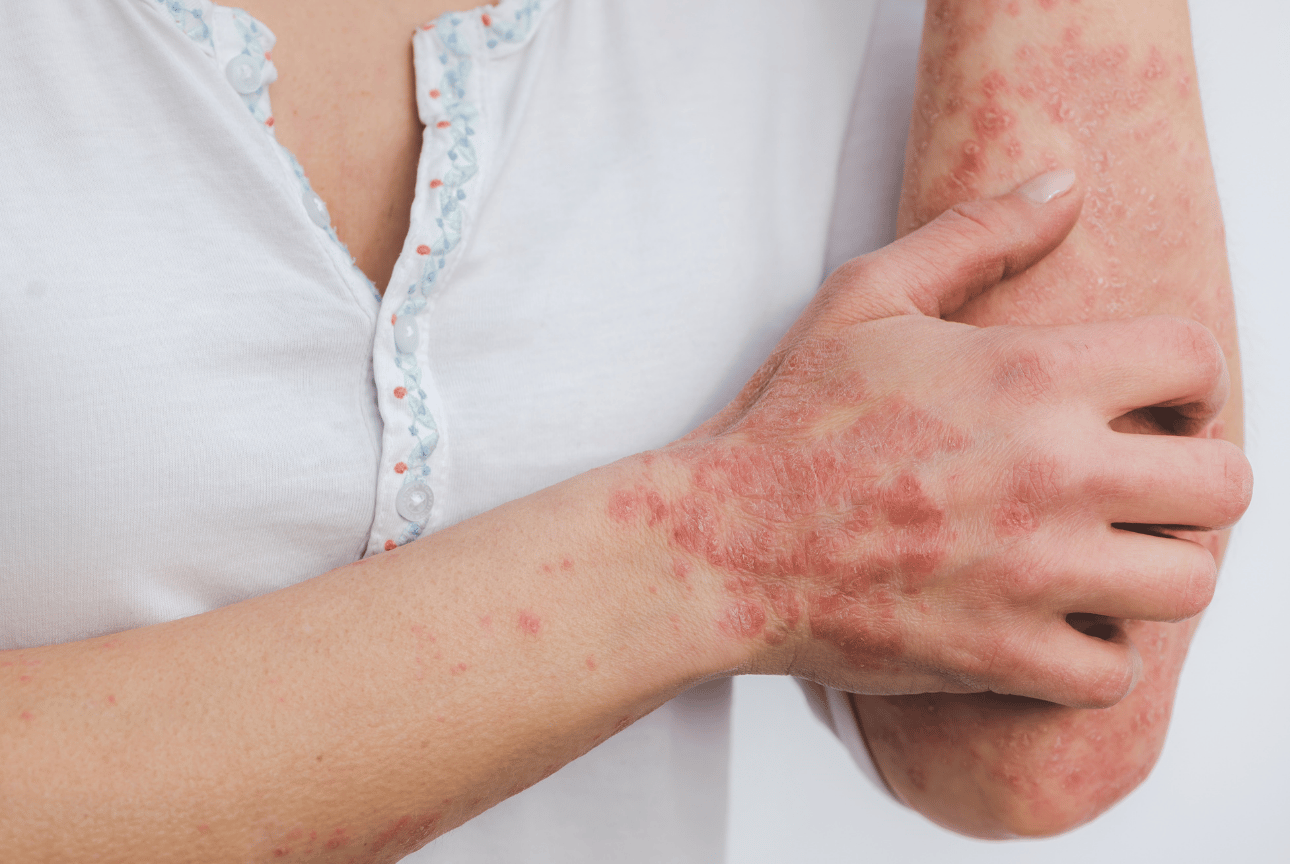
Psoriasis and eczema are chronic inflammatory skin conditions that often follow a cycle of periods of relative stability interrupted by symptom flare-ups. During a flare, symptoms such as redness, itching, dryness, scaling, or irritation may become more noticeable or severe than usual. While psoriasis and eczema are distinct conditions, both involve complex interactions between the immune system, the skin barrier, and environmental factors.
Researchers continue to study why flares occur and why certain triggers seem to affect some people more than others. Although there is no single explanation for every flare, growing evidence suggests that immune activation, skin barrier dysfunction, and external exposures all play important roles.
What defines a flare?
A flare refers to a temporary worsening of symptoms in a chronic condition. For people with psoriasis or eczema, a flare may involve increased itching, more extensive skin involvement, greater discomfort, or changes in the appearance of affected areas.
The timing and severity of flares can vary considerably. Some people experience occasional flare-ups triggered by specific circumstances, while others may notice a more unpredictable pattern. Researchers believe these fluctuations occur because the underlying inflammatory processes driving these conditions can become more active at certain times.
Immune activation and skin inflammation
Both psoriasis and eczema involve abnormal immune responses that contribute to skin inflammation, though the biological pathways differ between the two conditions. In psoriasis, immune cells trigger rapid skin cell growth and inflammation, leading to the development of thick, scaly plaques. Researchers have identified several inflammatory signaling pathways that contribute to disease activity and flare development.
Eczema, also known as atopic dermatitis, is associated with immune system dysregulation that contributes to chronic inflammation, itching, and skin irritation. Inflammatory signals can become amplified during a flare, resulting in worsening symptoms and increased skin sensitivity. Since immune activity plays such a central role in both conditions, researchers continue to investigate how internal and external factors may influence inflammatory responses and contribute to flare-ups.
Environmental and psychological associations
A variety of environmental and physiological factors have been associated with psoriasis and eczema flares. While triggers differ from person to person, several patterns have emerged in research. For eczema, common triggers may include dry air, irritants such as soaps or fragrances, allergens, infections, and emotional stress. Changes in temperature or humidity can also affect symptom severity.
Psoriasis flares have been associated with factors such as skin injuries, infections, psychological stress, certain medications, and lifestyle-related factors. Researchers have also explored how broader health conditions and systemic inflammation may influence disease activity.
Importantly, the presence of a trigger does not guarantee a flare. Instead, many experts believe flare-ups occur when multiple biological and environmental factors interact at the same time.
The role of the skin barrier
The skin barrier serves as the body's first line of defense against environmental exposures, irritants, allergens, and moisture loss. Growing research suggests that skin barrier function plays an important role in both eczema and psoriasis.
In eczema, defects in the skin barrier can allow moisture to escape while making the skin more vulnerable to irritants and allergens. This can contribute to inflammation and increase the likelihood of flare-ups. Although psoriasis is primarily driven by immune dysfunction, researchers have also identified abnormalities in the skin barrier function that may contribute to disease activity. When the skin barrier becomes compromised, inflammation can worsen and symptoms may become more difficult to control.
As researchers continue to learn more about autoimmune and inflammatory conditions, it has become increasingly clear that psoriasis and eczema flares are influenced by a combination of immune activity, skin barrier health, and environmental exposures. Understanding these factors may help provide a broader picture of why symptoms sometimes worsen and how researchers are working to better understand these chronic conditions.
How Evidation can provide insight and support your health
If you're living with psoriasis, eczema, or other chronic conditions, it can be tough to pinpoint your triggers and manage your health. Evidation can help. When you download the Evidation app, you'll be prompted to share the health information you're already tracking. With your permission, we'll use the information you share with us to find patterns, helping you learn more about how you can support your health while managing chronic conditions. Click here to learn more about how Evidation works and get started today.

Emotional Wellness Month
Emotional Wellness is a critical part of your overall health and wellbeing. In fact, studies show that feeling well supported emotionally and socially can help prevent illness and early mortality and help recovery from injury or illness.
Most people think being healthy is all about exercising and eating right. But did you know that your emotions and paying attention to how you feel are all important parts of being healthy?
It's true!
Emotional Wellness is a critical part of your overall health and wellbeing. In fact, studies show that feeling well supported emotionally and socially can help prevent illness and early mortality and help recovery from injury or illness.
What is Emotional Wellness?
According to the National Institutes of Health, emotional wellness (or emotional wellbeing) is your ability to handle stress and sudden changes in life.
And the National Center for Emotional Wellness defines it as,
“an awareness, understanding and acceptance of our feelings, and our ability to manage effectively through challenges and change.”
Some of the signs of emotional wellness from the University of New Hampshire include:
- Sharing your feelings with others
- Saying "no" without feeling guilty
- Being able to relax
- Feeling happy with life
- Having friends and family that support you
Why is Emotional Wellness Important?
According to the Earl E. Bakken Center for Spirituality and Healing at the University of Minnesota, it's important for people to let go of negative emotions and begin a path toward healing and emotional wellbeing.
Over time, feelings that are left unresolved, such as anger and resentment, impact the chemical balance in our brains, depleting feel-good hormones and releasing stress hormones such as adrenaline. These hormones cause chronic stress that according to the University of Minnesota, can cause premature aging, high blood pressure, and even cardiovascular disease and digestive issues.
The CDC also says stress can cause:
- Headaches
- Body pain
- Chronic health problems
- Trouble sleeping
- Trouble focusing
- Anger
- Sadness
- Frustration
Ultimately, emotional wellness is part of our total wellbeing. Regardless of how healthy we are physically, how well we eat, how much we work out...if we aren’t well emotionally, we are more susceptible to a variety of problems and illnesses.
How Can I Improve Emotional Wellbeing?
The good news is that everyone can learn to handle stress and improve their emotional well-being. It all starts with paying better attention to your emotions, focusing on self-care, and putting yourself first!
The NIH has come up with ways to help people improve their emotional wellness, including:
- Reducing stress
- Getting better sleep
- Having a positive outlook on life
- Practicing mindfulness
- Reaching out to friends and family
- Getting help when you lose a loved one
Although these are some great ways for people to improve their emotional wellness, everyone is different and can have their own ways of dealing with stress and improving their emotional wellbeing.
Maybe you like to write poetry, or make art, or play loud music on your drums to let loose! Maybe you like spending time alone to unwind instead of with family.
What’s important is that you find what's right for you and know that it's okay to take time for yourself.
Gaining emotional wellness is a process that takes time to get right!
So don't feel discouraged if you still feel yourself getting stressed. It's normal, and overtime you'll learn what works best for you to decompress.
By improving emotional wellness, you can be able to better handle problems in life and gain what is known as "resilience." Resilience, according to the NIH, is our ability to have less negative emotions and bounce back when life gets rough.
How Does Emotional Wellness Month Help?
Mental health is health, and while technically October is Emotional Wellness Month, you can help shed light on the importance of having a strong emotional wellbeing all year long.
Some ideas to help include:
1. Participate in online forums or emotional support groups. You can provide support to someone who is struggling or find support for yourself or a loved one.
2. Host your own mindfulness groups, such as yoga or meditation classes with your friends or family. You can hold them at your local park when it’s nice out to get some fresh air at the same time. It's free, easy to do, and can let you spread positivity while increasing emotional wellness.
3. Share social media posts on emotional wellness from sites such as the NIH, or make your own newsletters or blogs to educate others on emotional wellness.
4. Get out there and laugh, enjoy time with others or alone.
5. Start journaling or take time to seek therapy and get in tune with your emotions. There's no better time than now to explore and work on your inner self!
Whatever you decide to do, take time to practice self-care and do anything that makes you happy and helps you get in tune with your emotions!
Whether that's taking a walk or a bath, anything helps.
It also helps to join the conversation and reach out to your family and friends who might also be struggling with their own emotional wellbeing. By reaching out, offering support, and raising awareness on mental and emotional health, you can make a difference in the lives of friends and loved ones!

Why Health Literacy Matters!
Knowing when to go to the doctor, what your medications are for, and why you need certain treatment is essential to taking charge of your health.
October brings with it cool, crisp weather, pumpkins, falling leaves, and of course, Health Literacy Month!
For the past 20 years, Health Literacy Month has been a time for advocacy groups, hospitals, businesses, and communities to work together to spread awareness on the importance of health literacy.
What is Health Literacy?
According to the CDC, health literacy is an individual’s ability to find, understand, and use information to help them make well-informed decisions about their health and body.
Some examples of this can include:
- Understanding what your medication is and what it’s used for
- Having knowledge of your body and how it works
- Knowing when to visit a doctor or an emergency room
- Understanding why you might need surgery
- Understanding the risks behind medical procedures
There are many things that can impact a person’s health literacy including age, education, culture, language, and more.
But it’s important to point out that low health literacy affects individuals of all backgrounds. And even those with high overall literacy can have low health literacy.
Why is Health Literacy Important?
Health literacy has a significant effect on overall health. Individuals with low health literacy often avoid going to the doctor until too late. And many suffer from ailments or injuries that could be easily treated if caught early.
And health literacy is just as important to doctors and other medical providers. If their patients don’t understand them, they don’t trust them, and they don’t get the best care.
In the words of Former United States Surgeon General Dr. Regina M. Benjamin,
“Health literacy is as important for clinicians as it is for patients. To bridge the gap between the medical information provided and its implementation, we need health professionals who are able to speak the language and understand the culture of their patients.”
When people are health literate, they can share their concerns with their doctor easily, like telling them they’re having pain or other symptoms.
This allows doctors to understand their patient’s health concerns and patients to understand their overall health too.
The Cost of Low Health Literacy
The physical, emotional, and financial costs associated with lower health literacy can be high.
Many individuals wait to seek care until their symptoms become too much for them to live with. By then, issues or injuries that may have been less expensive and less invasive to treat, might be much worse and more expensive.
According to the Office of Disease Prevention, low health literacy can cause people to go to the emergency room (ER) more often than they need to.
Constant visits to the ER can be expensive. They can also be frustrating.
While the emergency room is the best place to handle a true emergency, it isn’t the right place for everything. And long wait-times just to be told you need care elsewhere can lead some to avoid seeking treatment in the future.
How Culture Impacts Health Literacy
Our beliefs about health and healthcare are shaped by not only our personal experiences and values, but our cultural, religious, and historical experiences and values as well.
It’s critical that we recognize the importance of culture and community on health and health literacy. According to the Center for Health Care Strategies,
“If cultural norms do not match up with the dominant values of the healthcare system, an individual — even with adequate reading, writing, and numeracy skills — can have trouble accessing health services, communicating with providers, and pursuing effective self-management. Such cultural mismatches — along with low socio-economic levels and historic discrimination — have contributed to disparities in health and health care experienced by individuals in racial, ethnic, and linguistic minority groups.”
Barriers to Health Literacy
The CDC estimates 9 out of 10 people struggle to understand medical information when it isn’t put in simple language. And there is a lot of work being done to encourage doctors to speak simply to their patients to help with this.
But for some, that’s not enough.
According to the U.S. Department of Health and Human Services, individuals from racial and ethnic minority groups who don’t speak English as their first-language are at high risk of having low health literacy.
Older age, living below the poverty line, lower education levels, and living with disabilities are other significant barriers to health literacy.
How Can Health Literacy Month Help?
The Institute for Healthcare Advancement, also known as the IHA, began its efforts to help improve health literacy in 1999. Today, they use social media, fliers, newsletters, and other outreach programs to spread the word on health literacy during the month of October and encourage other medical groups to do the same!
According to the IHA, the goal is simple to,
“build a world where all individuals have access to quality health outcomes.”
To do that, they work directly with doctors, medical groups, and others committed to improving health literacy for everyone.
There are also other groups dedicated to improving health literacy. Like the Institute for Healthcare Improvement.
Community centers and community clinics are also great for providing free classes, translators, and other resources to help support those with low health literacy and help those who want to learn about their health and their options.
What Can I Do to Help?
Some things you can do to help raise awareness for Health Literacy Month are:
- Making fliers on health literacy and sharing them
- Creating an email list to educate people
- Share the health literacy month website
- Work with your community for outreach opportunities
- Use social media to spread awareness
Here you can find fliers, social media posts, videos and more already made and ready to share!
You can share these tips with others, spread the word on social media and blogs, or even use these tips yourself with a loved one to help them improve their health.
Educate and Inform this October
While Health Literacy Month technically ends with Halloween, it’s importance stays the same all year long.
Take time this month, and in the months to come, to talk to people at your school, work, or at home about health literacy and why it matters. Ask them to spread awareness and give suggestions on what they can do to let others know health literacy month is in full swing!

Why is dental hygiene so important?
Every October, National Dental Hygiene Month aims to raise awareness about the importance of regular dental care and good dental hygiene.
Every October, National Dental Hygiene Month aims to raise awareness about the importance of regular dental care and good dental hygiene.
Why is dental hygiene so important?
Because oral health can have a big impact on our overall health.
For example, did you know that poor oral health (like gum disease and tooth loss) are associated with higher rates of heart disease?
Or that signs of some major health conditions can be seen in our teeth, gums, and mouth?
According to the Mayo Clinic, the following conditions can be linked to or affected by oral health:
- Endocarditis
- Cardiovascular Disease
- Complications with birth or pregnancy
- Pneumonia
- Diabetes
- HIV/AIDS
- Osteoporosis
- Alzheimer’s Disease
And since there is no greater expert on the subject than a dentist, we decided to reach out to one of our Achievement members (who also happens to be a dentist!) for more information.
Responses from a Dentist and Achievement Member
What is the number one most important thing we can do for our dental hygiene?
“Keep your mouth clean and get regular dental checkups. Brushing and flossing are super important, but so are regular dental exams. Regular exams are crucial for finding issues like cavities and gum disease and some major health conditions while in an early stage.”
Why is good dental hygiene important (besides for pretty teeth!)?
“Because your mouth is part of your body and it needs to be kept in good condition so your overall health is good.”
How does good dental hygiene affect my overall health?
“For instance,
- There is a connection between cardiovascular disease and periodontal disease.
- Diabetes can be complicated by mouth sores or infections.
- In children, if oral hygiene and nutrition are not good, it can affect growth of permanent teeth and can have an impact on speech.
- Oral health is more than just cosmetics. It can have financial implications, too. Individuals with broken or missing teeth often have difficulty finding work or face social stigmas.
- Problems with your teeth, gum, or mouth can cause headaches, sore teeth, etc.”
Is flossing really important?
“Yes! It removes material that a brush can’t get to!”
What is one thing you wish more people knew about oral health?
“That if you take care of your teeth, and handle any issues that do come up when they're small, you can save a lot of money and pain. And have a better experience at the dentist.”
What else do you think we should know about oral health?
“I wish pediatricians and other providers would teach new mothers about the importance of oral health in their children”
What is the best part about being a dentist?
“I like to help people feel better! There are a lot of fun challenges in dentistry, sophisticated procedures like implants and such. But, for me, helping someone with smaller, routine things like fillings can be just as rewarding.”
Dena S. Babin, DDS

Quick 15 minute Home Workout Routine
This quick workout that can be modified for different needs and ability levels.
This exercise routine was created by Rob Kitson, ISSA Elite Trainer and Exercise Therapy Specialist
We all know exercise is good for us. But for many, getting in a workout can be difficult.
For some, it’s just about finding time or motivation. For others, health or ability levels may limit what you can do and how much you can exercise.
The good news is, any movement is good.
The idea is to find what you CAN do — what fits into your schedule or what your body is able to do — and DO IT!
So, to help, we wanted to share a quick workout that could be modified for different needs and ability levels. One that could be done at home without any special equipment. In other words, a workout routine that would work for a variety of different people with different situations.
Of course, no one routine will work for everyone. So be sure to review the exercises and any modifications, consider where you are and what will work for you. And then, make it your own!
Interval Training
Recent research has proven that High Intensity Interval Training (HIIT) workouts cause an increase in metabolism that can last for hours after a workout. Plus, they burn more calories in less time.
These types of workouts have long been a tool of the elite athlete, because the short intervals allow them to exercise at higher intensities that aren’t sustainable when doing traditional low-intensity exercises at high volume.
With that in mind, we’ve put together this fun 15-minute interval-based workout designed to get your heart pumping, keep your body guessing, and let you quickly get on with your day. You won’t need any training equipment, but you will need a way to keep time (clock, stopwatch, or interval timing app) and a way to generate a random number between 1 and 6. Either a 6-sided die or a smart phone/speaker (“Hey Siri, roll a die”, “Hey Google, roll die”, or “Alexa, roll a 6-sided die”) will work fine.
* As with any new exercise regimen, if you haven’t been exercising regularly, or have any chronic medical conditions, you should consult with your doctor before trying this workout. When you’re ready to get started, take it slow and try not to overdo it during your first few workouts.
15 minute home workout routine
The workout is 3 rounds of 6 intervals.
Each round will look like this:
Interval 1: 60 seconds — Strength — Group 1 (Upper Body)
Options:
- Incline Pushups
- Knee Pushups
- Pushups
- Spiderman Pushups
Interval 2: 30 seconds — Cardio
Randomized. See instructions below.
Interval 3: 60 seconds — Strength — Group 2 (Lower Body)
Options:
- Alternating Bodyweight Lunges
- Box (or Chair) Squats
- Air Squats
- Jump Squats
Interval 4: 30 seconds — Cardio
Randomized. See instructions below.
Interval 5: 60 seconds — Strength — Group 3 (Core)
Options:
- Knee Plank
- Plank
- Flutter Kicks
- Crunches
- Toe Reach Crunches
Interval 6: 30 seconds — Cardio
Randomized. See instructions below.
Rest: 30 seconds
The strength groups are listed below. Each group is targeting a different part of the body and has exercises with a range of difficulties. The exercises are listed in order of difficulty, so as the number increases so will the difficulty.
Before getting started, look through the lists to decide which exercises in each group best suit your current ability. You should aim to complete at least 10 repetitions of your chosen exercise during each of the strength intervals.
If the time runs out before you reach 10, that’s ok, but you should immediately move on to the next interval and consider doing a less advanced exercise during your next round.
If you reach 10 in time, and feel like you can do more, you can continue, but if you reach 25 reps before the interval is over you should consider increasing the difficulty by using the next exercise in the group during the next round.
The cardio groups are where you’ll use the random number you get from rolling a die. Before each cardio interval, get a number between 1 and 6 from your chosen random number generator. Then find the corresponding cardio exercise in the list below and do that exercise for the time allotted.
If you are unable to do the selected exercise, look down the list (starting at the one selected by the dice) and do the first one that you are able to do.
Strength Exercises
Upper Body
Option 1: Incline Pushups
Difficulty: Beginner
Step 1: Set up a bench or stable elevated surface. Begin with both hands on the bench at shoulder-width or just outside of shoulder-width.
Step 2: Place your feet straight behind you while you tighten your abs and engage the hips. Your hips should not dip or elevate too high during the movement.
Step 3: Slowly lower yourself towards the bench. Once your upper arms are parallel with the floor, pause, and return to the starting position.
.jpeg)
Option 2: Knee Pushups
Difficulty: Beginner
Step 1: Come to the ground on your knees. Tighten your core and maintain a flat back.
Step 2: Position your hands on the ground in front of you, directly below your shoulders. Cross your feet in the back.
Step 3: Lower your chest towards the ground. Bend your elbows at a 60-degree angle until your chest is just above the ground. You should feel a stretch across your chest. Hold for a count of one.
Step 4: Without locking your elbows, push yourself back to the starting position by straightening your arms.
.jpeg)
Option 3: Pushups
Difficulty: Intermediate
Step 1: Get into position by placing your hands flat on the floor, directly below your shoulders.
Step 2: Extend your legs out behind you, with only your toes and balls of your feet touching the floor.
Step 3: Hold your body up and keep your back straight by tightening your abdominal muscles.
Your neck and head should be bent slightly back.
Step 4: Lower your chest towards the ground by bending your elbows until your chest is just above the ground or you feel a stretching of your chest and shoulders. Hold for a count of one.
Step 5: Press upwards from your chest and shoulders, straightening your arms as you return to the starting position. Hold for a count of one.
.jpeg)
Option 4: Spiderman Pushups
Difficulty: Advanced
Step 1: Go into a standard push-up position, supporting your weight on your toes and hands. Your back is flat and your core is tight. Your hands should be directly beneath your shoulders.
Step 2: Lower yourself into a push-up. Focus the tension in the chest.
As you descend, bring your right leg up and to the side. Try to touch the knee to the elbow. As you push yourself back up, return the leg to its original position.
Step 3: Repeat with the other side.
.jpeg)
Lower Body
Option 1: Alternating Bodyweight Lunges
Difficulty: Beginner
Step 1: Stand straight — that’s the starting position. Step forward with your left leg and slowly lower your body until your front knee is bent at least 90 degrees, while your rear knee is just off the floor. Keep your torso upright the entire time. Look forward.
Step 2: Pause, then push off your left foot off the floor and return to the starting position as quickly as you can.
Step 3: On your next rep, step forward with your right leg. Continue to alternate back and forth — doing one rep with your left, then one rep with your right.
.jpeg)
Option 2: Box (or Chair) Squats
Difficulty: Beginner
Step 1: Place a chair behind you. Stand up straight with a tight core and flat back. Fold your arms in front. Your feet should be shoulder-width and toes and pointing forward.
Step 2: Slowly descend by bending your knees and driving your hips back. Keep your chest and head up.
Step 3: Touch the chair with your butt then slowly rise back to the starting position.
.jpeg)
Option 3: Air Squats
Difficulty: Intermediate
Step 1: Place your feet at shoulder width apart while keeping your chest up and your abdominals braced.
Step 2: Begin the movement by swinging your arms up towards your shoulders. At the same time, bend at the knees and drive your hips back like you’re sitting in a chair.
Step 3: Once your upper thighs are parallel with the ground, pause, then drive your hips forward to return to the starting position.
.jpeg)
Option 5: Jump Squats
Difficulty: Advanced
Step 1: Stand with your feet hip width apart. Your toes should be pointing straight ahead or only slightly outward.
Step 2: Cross your arms in front of your body, place your hands behind your head or at the sides of your head.
Step 3: Keep your weight on your heels and bend your knees while lowering your hips towards the ground as if you are sitting down on a chair. Keep your back straight at all times.
Step 4: Continue until you feel a slight stretch in your quadriceps. Do not let your knees extend out beyond the level of your toes.
Step 5: Pause for a count of one.
Step 6: In an explosive movement, drive down through your heels pushing yourself up off the floor with your quads. At the same time extend our arms out above you.
Step 7: Land with your knees slightly bent to absorb the impact.
.jpeg)
Core
Option 1: Knee Plank
Difficulty: Beginner
Step 1: Lie face down on the ground with your legs together and your arms at your sides. Position your hands beneath your shoulders.
Step 2: Tighten your core and elevate your upper body off the ground, stabilizing yourself with your forearms. Your feet, shins, and knees will remain on the ground.
Step 3: Do not allow your hips to drop down. Hold the tension in your core for the prescribed amount of time. Slowly release back to the starting position.
.jpeg)
Option 2: Plank
Difficulty: Intermediate
Step 1: Get into a face down position on the floor supporting your upper body on your forearms. Your elbows should be bent at 90 degrees.
Step 2: Extend your legs straight out behind you, supporting them on your toes and balls of your feet.
Step 3: Keep your body in a straight line by tightening your abdominal and oblique muscles.
Step 4: Hold for as long as possible.
.jpeg)
Option 3: Flutter Kicks
Difficulty: Intermediate
Step 1: Lie on a mat with your hands under your buttocks and raise your legs slightly, keeping knees straight and ankles together.
Step 2: Keep abs engaged and perform short kicks in an alternating fashion.
Step 3: Repeat as needed and then lower legs to the ground.
.jpeg)
Option 4: Crunches
Difficulty: Intermediate
Step 1: Lie flat on your back with your feet flat on the ground, with your knees bent at 90 degrees. Alternatively, you can place your feet up on a bench a few inches apart with your toes turned inwards and touching.
Step 2: Place your hands lightly on either side of your head. Keep your elbows in so that they are parallel to your body.
Step 3: Push your back down flat into the floor to isolate your abdominal muscles.
Step 4: Gently curl your shoulders forward and up off the floor. Continue to push down into the floor with your lower back.
Step 5: Raise your shoulders about four to six inches off the ground.
Step 6: Hold and squeeze your abdominal muscles for a count of one.
Step 7: Return to the start position in a smooth movement.
.jpeg)
Option 5: Toe Reach Crunches
Difficulty: Advanced
Step 1: Lay on a yoga/exercise mat or towel with your back flat on the floor and your legs straight and in the air with the soles of your feet facing up.
Step 2: Outstretch your arms above your chest so that they run parallel to your legs.
Step 3: Lifting your shoulders off the floor, reach up and touch your toes with your fingertips.
Step 4: Lower your shoulders back to the floor to complete one rep.
.jpeg)
Cardio Exercises
Option 1: Jumping Jacks
Step 1: Stand with your feet together, arms fully extended with your hands by your sides. This is the start position.
Step 2: Bend your knees slightly then straighten and push through the balls of your feet while straightening your knees to jump up spreading your legs to wider than hip width apart.
As you do so, raise both arms out and up in a smooth arc until your hands meet above your head.
Step 3: As you return to the ground, bring your feet together and your hands back to your sides with your arms fully extended.
.jpeg)
Option 2: Seal Jacks
Step 1: Stand tall with your core braced, chest up, and arms at your sides. Begin the movement by jumping into the air.
Step 2: As you jump, move your legs out to the side. Also, bring your arms up in front of you and clap your hands together.
Step 3: Once your feet touch the ground, jump back into the starting position with your legs together and hands at your sides.
%2520(1).jpeg)
Option 3: Frog Jumps
Step 1: Standing straight up, bring your feet outside of shoulder width.
Step 2: Squat down by bending at the knees and driving your hips back.
Step 3: Keeping your chest up, forcefully push off the ground with the balls of your feet.
Step 4: Land on the balls of your feet, remaining in the squatting position. Your legs will remain wide.
%2520(1).jpeg)
Option 4: High Knees
Step 1: Begin jogging in place, lifting the knees as high as you can.
Step 2: Try to lift your knees up to hip level but keep the core tight to support your back.
For a more advanced move, hold your hands straight at hip level and try to touch the knees to your hands as you lift them. Bring the knees towards your hands instead of reaching the hands to the knees!
%2520(1).jpeg)
Option 5: Speed Skaters
Step 1: Keep your core tight and back flat as you bend slightly forward.
Step 2: Perform a small jump to the right. As you do, bring your left leg behind you and tap the ground. At the same time, bring your left arm in front of you.
Step 3: Jump to the left, bringing your right leg behind you and your right arm in front of you.
Step 4: Repeat the movement, alternating back and forth.
.jpeg)
Option 6: Burpees
Step 1: Stand straight with your feet shoulder width apart and hands by your sides. This is the start position.
Step 2: In one smooth motion, squat down and place your hands palms down on the floor in front of your feet.
Step 3: Lean forward, so your weight is on your hands, at the same time jumping your legs out behind you until they are fully extended. Your body should form a straight line with your weight supported on your toes and the balls of your feet and your arms fully extended. (In a push up position)
Step 4: Jump your feet out by spreading your legs, so that they are wider than hip width apart, then immediately jump them back together.
Step 5: Complete 1 full push up.
Step 6: Jump your feet forward to just behind your hands.
Step 7: Use an explosive motion to push through your heels and return to the start position.
.jpeg)

World Heart Day 2021
September 29th is World Heart Day. A global initiative to raise awareness about cardiovascular disease (CVD). CVD accounts for almost half of all deaths.
What is World Heart Day
World Heart Day is a global initiative to raise awareness about cardiovascular disease (CVD) and provide education and resources for those living with CVD.
The goal — reduce mortality and improve quality of life.
Observed every year on September 29th, World Heart Day is the largest, global awareness campaign for heart health.
CVD accounts for almost half of all deaths due to non-communicable disease world wide. It’s the world’s number one killer and a burden shared by all.
The World Heart Federation and their global partners lead the initiative each year. But it’s individuals who keep the conversation going. By learning more and sharing what we learn, each of us can lend our voice to the conversation and do our part in saving lives all over the world.
What is CVD
The Cleveland Clinic defines cardiovascular disease as
“a group of diseases that affect the heart and blood vessels of the body.”
This includes conditions like:
Arrhythmia
Peripheral vascular disease (PVD)
Heart Failure
Coronary Artery Disease (CAD)
Aortic disease
Pericardial disease
It also includes heart attack and stroke. Two of the most serious complications of cardiovascular disease.
According to the World Heart Federation,
“HEART DISEASE AND STROKE, IS THE WORLD’S LEADING CAUSE OF DEATH CLAIMING 18.6 MILLION LIVES EACH YEAR”
This year’s mission
“Harnessing the power of digital health to improve awareness, prevention and management of CVD globally is our goal for World Heart Day 2021.”
Today more than ever before, technology is a leading factor in health outcomes. Virtual visits with medical providers, health and fitness apps, symptom trackers, medication reminders, all are available and accessible digitally.
As more organizations like the World Heart Federation embrace this resource, the divide in access to healthcare shrinks. Of course, there’s still a lot of work to do. And we all have a part to play.
What can you do
Get on social media and start sharing!
The World Heart Federation has plenty of resources that allow you to add your voice to the global conversation. You can share posts, videos, even create your own posters to share!
Raising awareness does more than spark conversation, it sparks funding and access to care for so many that are without. The more we talk openly about health-related issues, the more resources are available for everyone.
Stay on top of your health!
Keep track of your health with one of the many apps or technologies available.
Fitness apps are an incredible resource for tracking your health and activity. Paired with Achievement, you can monitor your activity data, receive opportunities to participate in medical research, and access important information and resources to help you manage your health where you are.
Resources
For sharing information
World Heart Federation Resource Center
For learning more
https://www.heart.org/en/health-topics/consumer-healthcare/what-is-cardiovascular-disease
https://my.clevelandclinic.org/health/diseases/21493-cardiovascular-disease
https://www.who.int/news-room/fact-sheets/detail/cardiovascular-diseases-(cvds)
https://www.cdc.gov/heartdisease/index.htm

It’s National Hispanic & LatinX Heritage Month
Originally enacted by President Lyndon B. Johnson in 1968, the annual celebration was originally only a week long. In 1988, President Ronald Reagan signed the bill that extended it to a month-long celebration from September 15 — October 15 every year.
What is Hispanic & LatinX Heritage Month
“Hispanic Heritage Month celebrates the history and countless contributions that Latinos have made to the nation over the years. This month we also honor the cultural richness of Hispanics, who come from Mexico, Central America, South America and the Caribbean.” — National Hispanic Council On Aging (NHCOA),
Originally enacted by President Lyndon B. Johnson in 1968, the annual celebration was originally only a week long. In 1988, President Ronald Reagan signed the bill that extended it to a month-long celebration from September 15 — October 15 every year.
Today, Hispanic Heritage month is celebrated nationwide as a way to honor the contributions made by Hispanic Americans.
It’s common to see displays of art, music, literature, poetry, food, clothing, and other cultural expressions as well as recognition of those who have contributed to the fields of science, business, and politics.
Why is Hispanic Heritage Month celebrated over two different months?
Most heritage months begin on the first and end on the last day of the month. So, why is Hispanic Heritage Month different?
September 15th is the day that several Hispanic nations gained independence from Spain. These nations include Costa Rica, El Salvador, Guatemala, Honduras, and Nicaragua.
When President Johnson originally established Hispanic Heritage Week, it began every year on September 15th as a way to honor this date. The week also included the anniversaries of the dates Mexico, Chile, and Belize each gained independence.
When the celebration was expanded to a month, it made sense to continue to honor these important dates.
Who celebrates Hispanic & Latin X Heritage Month and why?
Hispanic Heritage Month is celebrated by all Americans as a way of recognizing and honoring the unique cultural contributions of the many Hispanic individuals and groups within the US.
According to the US Census Bureau, the month-long period was set aside to,
“celebrate the culture and traditions of those who trace their roots to Spain, Mexico and the Spanish-speaking nations of Central America, South America and the Caribbean.”
2021 Hispanic Heritage Month Theme
Every year The National Council of Hispanic Employment Program Managers (NCHEPM) chooses the theme and the poster that will represent Hispanic Heritage Month.
This year’s theme — “ESPERANZA: A CELEBRATION OF HISPANIC HERITAGE AND HOPE”
Here are the posters for this year! Click here to learn more about the artists

.png)

Breadless Eggs Benedict
Eggs Benedict is my favorite breakfast…unfortunately, it can be heavy, fatty, and high in calories. This one gluten free, low carb, packed with fresh veggies and protein, and it fills my need for a good bene!
The Story
It’s Better Breakfast Month!
Eggs Benedict is my favorite breakfast…unfortunately, it can be heavy, fatty, and high in calories. So, of course I had to come up with a healthier version. This one gluten free, low carb, packed with fresh veggies and protein, and it fills my need for a good bene!
Inspired by a true California Benedict, this recipe uses fresh sliced tomatoes in place of the bread and is loaded with fresh spinach and a nice portion of avocado — which is a great source of healthy fat.
I love to make this for special occasions like Mother’s day or Easter breakfast, but it’s also fun for a Sunday brunch with a friend.
Ingredients:
4 Servings:
For the eggs benedict:
4 eggs
2 large tomatoes
1 avocado
1 pound fresh spinach
Salt and pepper to taste
For the hollandaise sauce:
4 egg yolks (in addition to the eggs above)
1 tablespoon fresh squeezed lemon juice
2 tablespoons melted unsalted grass-fed butter
½ cup low-fat plain Greek yogurt
Pinch of cayenne pepper

Directions:
Sauce:
- Whisk egg yolks and lemon juice together in a small bowl until the mixture has thickened and doubled in volume (emulsified).
- Place the bowl over a saucepan of simmering water (you can use a double boiler, if you have one) and whisk quickly until warm. Be careful not to let the eggs get too hot or they will scramble.
- Slowly whisk in melted butter. It should be melted but not hot or the eggs will scramble.
- Remove from heat
- Whisk in greek yogurt and cayenne
- Set aside in a warm place until you are ready to use — be careful not to leave it on the stove as it will break if it gets too hot.
Eggs:
- Bring a sauce pan full of water to a boil. Add a splash of white vinegar. This will help keep the egg together.
- While water is heating, slice tomatoes and avocados and season with salt and pepper.
- Plate a slice or two of the tomatoes on each plate to use as the “bread” and add sliced avocado on top.
- Heat a non-stick skillet. Add spinach and toss until just wilted.
- Divide spinach into four portions and pile on top of each tomato avocado base. Set aside in a warmed oven. Oven should not be on, but just warmed to about 100 degrees to keep plates warm while you cook the eggs.
- Once water in sauce pan is simmering nicely, add eggs one at a time and poach until white is cooked but yoke is runny. About 2–3 minutes.
- Remove with a slotted spoon and set on a plate with a paper towel.
- Continue until all 4 eggs are cooked.
- Pull plates from the oven and add 1 egg to each stack.
- Top with hollandaise sauce and enjoy! Serve with Fresh berries or other fruit.
Modifications:
If the thought of making homemade hollandaise is terrifying (or too much work) you can easily substitute a premade or packaged version. Just be sure to carefully review the ingredients (especially the sodium level!). You can also get creative with the veggies, sometimes I make breadless crab cakes for the base!
Tips:
You can also poach your eggs in a skillet or frying pan if you prefer a flatter poached egg.
If you’ve never poached eggs before, find a good video to help you master the technique. It can be tricky, but seeing it done makes it a lot easier!
It’s best to crack each egg into a small bowl before pouring into the saucepan, that way you can get it in quickly and all at once.


Suicide Prevention Awareness Month
Every September individuals, communities, advocates, and organizations work to raise awareness and prevent suicide.
#SPM21 #BeThere #BeThe1To
“We can all help prevent suicide.”
Every September individuals, communities, advocates, and organizations work to raise awareness and prevent suicide. Suicide Prevention Awareness Month, National Suicide Prevention Awareness Week, and World Suicide Prevention Day all take place during September.
This years’ mission — change the conversation from suicide to suicide prevention.
Now, more than ever, people recognize the need to make suicide prevention a priority and are even ready to talk about their own mental health more openly. According to a 2020 national poll, the results
“underscore the importance of equipping all Americans with the tools and resources needed to feel empowered to have conversations about mental health and suicide prevention, and to take steps to care for their own mental health.”
What can you do to help?
As one of the leading causes of death, suicide affects everyone. And many of us struggle to know how we can help or feel like there is nothing we can do when someone we know is struggling.
But each of us can make a difference.
And there are so many resources and tools available to help.
With changes in the way we think and talk about mental health and suicide prevention, more and more people are sharing their experiences and reaching out. The pandemic and the toll it has taken on individuals has highlighted the need for resources and support. Especially for individuals who are most at risk.
This year, several advocacy groups and organizations have partnered to spread the message. Their goal is to raise awareness and help each of us learn how to find support or support someone who is struggling.
.jpeg)
Resources
Asking for support if you are struggling is difficult. And supporting someone who is struggling can be just as hard.
If you or someone you know is struggling with thoughts of suicide, please reach out. Below is a list of resources for anyone thinking about suicide or struggling with mental health.


Resources
National Suicide Prevention Lifeline
1–800–273-TALK (8255)
Lifeline for Attempt Survivors
Lifeline for Disaster Survivors
National Alliance on Mental Health
Stories of Hope and Recovery: A Video Guide for Suicide Attempt Survivors | SAMHSA
Suicide Safe Mobile App | SAMHSA
The Trevor Project or Call 1–866–488–7386 or online instant messaging
SAGE LGBT Elder Hotline or Call 1–877–360-LGBT (5428)
Trans Lifeline or call 1–877–565–8860 (US) 1–877–330–6366 (Canada)
Suicide Prevention and Care, Indian Health Service
Alaska Native Tribal Health Consortium
Resources for Veterans
Veteran Crisis Line Call 1–800–273–8255 and Press 1
VA Mental Health Suicide Prevention
Resources for Youth
#chatsafe: A Young Person’s Guide for Communicating Safely Online About Suicide (PDF | 6.7 MB)
Resources for Supporting Others
Help a Friend in Need: A Facebook and Instagram Guide (PDF | 524 KB)
https://www.wernative.org/articles/when-your-friend-is-talking-about-suicide

Preliminary Results from our Third COVID-19 Vaccination Perceptions and Behaviors Survey
COVID-19 continues to occupy our minds and affect our everyday lives. As vaccinations rolled out, questions emerged around what new directions the virus would take
COVID-19 continues to occupy our minds and affect our everyday lives. As vaccinations rolled out, questions emerged around what new directions the virus would take. For our third survey on COVID-19 Vaccination Perceptions and Behaviors (“Survey 3”), which was open between April and June 2021, we wanted to understand how people’s feelings and behaviors evolved as vaccination efforts continued in our communities.
We learned what percentage of members had gotten at least one vaccine, when they decided to get vaccinated, and what activities they felt comfortable resuming. The data also show interesting shifts in behaviors and mindsets compared to our previous surveys, and we’re excited to dive into some of the details with you below!
For an overview of the study objectives, methods, and results from the first perceptions and behaviors survey, please see our original blog post here. You can find the preliminary results from our second perceptions and behaviors survey here.
Background
74,740 people (“participants”) completed Survey 3. The average age of participants was 39.1, which is slightly higher than the previous surveys. Most participants identified as female (80.7%) and identified as white (79.6%).
_052022%2520(1)%2520(1).png)
Vaccination Perceptions and Behaviors
The main focus for this survey was to examine people’s beliefs and preferences around COVID-19 vaccination now that access to the vaccine is more widespread.
72.6% of Survey 3 participants reported having received at least one COVID-19 vaccine.
This percentage represents a substantial increase compared to our last survey, in which only 11.4% of participants had received a vaccine. We expected to see an increase since more people were eligible for vaccination during Survey 3 than in Survey 2 (which launched in January 2021), but were surprised by the magnitude: for comparison, only about 63% of the US adult population had received at least one vaccine when the survey closed (see here for the CDC’s summary of COVID and US vaccination in early June).
_052022%2520(1).jpeg)
A majority of vaccinated participants received the Pfizer vaccine (53.8%), followed by Moderna (39.2%) and Johnson & Johnson (6.7%).
_052022%2520(1).jpeg)
Most vaccinated participants were eager to get the vaccine as soon as they became eligible. (63.3%).
_052022%2520(1).jpeg)
For many people, increasing access to COVID-19 vaccination was accompanied by a return to certain activities that had been put on hold. Between April and June, 47% of vaccinated participants started attending indoor events with others who are vaccinated, and 43.9% began eating in restaurants again. Meanwhile, 15.9% of participants reported that they had not yet resumed any activities.
_052322%2520(1).jpeg)
Changing Trends Over Time
We were happy to see a number of positive trends when we looked at evolving perceptions throughout the three surveys we’ve completed in the series so far. For example, Survey 3 participants tended to report lower hesitancy about COVID-19 vaccines compared to previous surveys.
.jpeg)
This decrease in hesitancy may be due to an increase in information: Survey 3 participants reported feeling even more informed about the vaccines than previous survey participants. 68.9% of people reported feeling “informed” or “very informed”, compared with 53.3% in Survey 2 and 27.1% in Survey 1.
.jpeg)
Participants also reported being increasingly likely to get their children vaccinated when they could. 37.2% of participants reported that they would vaccinate their children when they were able to, compared to 26.9% in Survey 2 and 19.2% in Survey 1.
We look forward to exploring more about decisions to vaccinate children in our next Perceptions and Behaviors survey.
_052022%2520(1).jpeg)
Next Steps
To understand how people’s perceptions and behaviors related to COVID-19 vaccination have continued to evolve as variants spread and vaccines became available to children, we will soon send an additional survey on Evidation Members’ perceptions and behaviors. Stay tuned for more!
If you’d like to get vaccinated, see this CDC page with resources to find appointments near you.