

Blog
Understanding the triggers behind psoriasis and eczema flares
Learn what defines a psoriasis or eczema flare and how immune activity, skin barrier function, and environmental factors may influence symptoms.
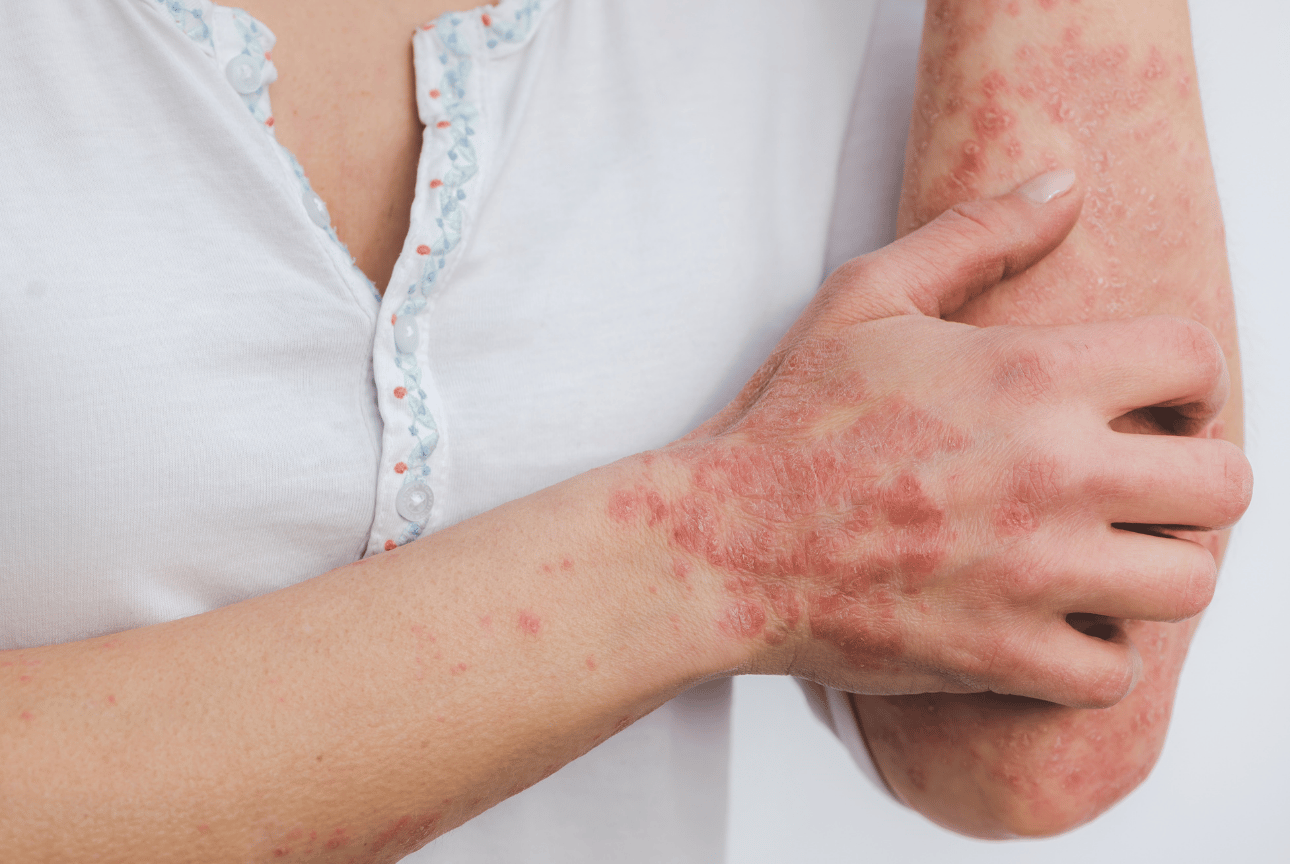
Psoriasis and eczema are chronic inflammatory skin conditions that often follow a cycle of periods of relative stability interrupted by symptom flare-ups. During a flare, symptoms such as redness, itching, dryness, scaling, or irritation may become more noticeable or severe than usual. While psoriasis and eczema are distinct conditions, both involve complex interactions between the immune system, the skin barrier, and environmental factors.
Researchers continue to study why flares occur and why certain triggers seem to affect some people more than others. Although there is no single explanation for every flare, growing evidence suggests that immune activation, skin barrier dysfunction, and external exposures all play important roles.
What defines a flare?
A flare refers to a temporary worsening of symptoms in a chronic condition. For people with psoriasis or eczema, a flare may involve increased itching, more extensive skin involvement, greater discomfort, or changes in the appearance of affected areas.
The timing and severity of flares can vary considerably. Some people experience occasional flare-ups triggered by specific circumstances, while others may notice a more unpredictable pattern. Researchers believe these fluctuations occur because the underlying inflammatory processes driving these conditions can become more active at certain times.
Immune activation and skin inflammation
Both psoriasis and eczema involve abnormal immune responses that contribute to skin inflammation, though the biological pathways differ between the two conditions. In psoriasis, immune cells trigger rapid skin cell growth and inflammation, leading to the development of thick, scaly plaques. Researchers have identified several inflammatory signaling pathways that contribute to disease activity and flare development.
Eczema, also known as atopic dermatitis, is associated with immune system dysregulation that contributes to chronic inflammation, itching, and skin irritation. Inflammatory signals can become amplified during a flare, resulting in worsening symptoms and increased skin sensitivity. Since immune activity plays such a central role in both conditions, researchers continue to investigate how internal and external factors may influence inflammatory responses and contribute to flare-ups.
Environmental and psychological associations
A variety of environmental and physiological factors have been associated with psoriasis and eczema flares. While triggers differ from person to person, several patterns have emerged in research. For eczema, common triggers may include dry air, irritants such as soaps or fragrances, allergens, infections, and emotional stress. Changes in temperature or humidity can also affect symptom severity.
Psoriasis flares have been associated with factors such as skin injuries, infections, psychological stress, certain medications, and lifestyle-related factors. Researchers have also explored how broader health conditions and systemic inflammation may influence disease activity.
Importantly, the presence of a trigger does not guarantee a flare. Instead, many experts believe flare-ups occur when multiple biological and environmental factors interact at the same time.
The role of the skin barrier
The skin barrier serves as the body's first line of defense against environmental exposures, irritants, allergens, and moisture loss. Growing research suggests that skin barrier function plays an important role in both eczema and psoriasis.
In eczema, defects in the skin barrier can allow moisture to escape while making the skin more vulnerable to irritants and allergens. This can contribute to inflammation and increase the likelihood of flare-ups. Although psoriasis is primarily driven by immune dysfunction, researchers have also identified abnormalities in the skin barrier function that may contribute to disease activity. When the skin barrier becomes compromised, inflammation can worsen and symptoms may become more difficult to control.
As researchers continue to learn more about autoimmune and inflammatory conditions, it has become increasingly clear that psoriasis and eczema flares are influenced by a combination of immune activity, skin barrier health, and environmental exposures. Understanding these factors may help provide a broader picture of why symptoms sometimes worsen and how researchers are working to better understand these chronic conditions.
How Evidation can provide insight and support your health
If you're living with psoriasis, eczema, or other chronic conditions, it can be tough to pinpoint your triggers and manage your health. Evidation can help. When you download the Evidation app, you'll be prompted to share the health information you're already tracking. With your permission, we'll use the information you share with us to find patterns, helping you learn more about how you can support your health while managing chronic conditions. Click here to learn more about how Evidation works and get started today.
.avif)
How to Participate in a Research Study on Evidation
Finding the right research opportunity can be difficult. We try to make it easier by matching you with research opportunities we feel are likely to be a good match for you.
At Evidation, we’re all about encouraging our members to actively participate in their health. One way to do that is by participating in health research.
In order for the information gathered during a study to represent and benefit everyone, it’s important that the individuals who are participating in that research are truly representative of society.
When research is fully representative it contributes to health insights that have the potential to improve lives. Not the lives of a few, but the lives of all.
But you might be wondering…
.jpeg)
Whether or not you should participate is a personal choice that only YOU can make, but hopefully the information here and in the rest of our Research 101 series can help provide some useful information to help you make an informed decision.
How do I get offered a research opportunity on Evidation?
In general, finding the right research opportunity can be difficult. There are so many studies and knowing which ones are right for you can be especially challenging. At Evidation, we try to make it easier by matching you with research opportunities we feel are likely to be a good match for you - based on what you tell us of yourself and your preferences.
So, before we can match you with study opportunities, we need to learn more about you. This helps us find opportunities that are relevant to you.
And because we know that one way doesn't work for everyone, you have several choices about what information you share and how you choose to share that information.
And you always have the right to change those choices or to opt out of any of our surveys or offers.
Tell us about yourself
.jpeg)
Currently, there are three ways you can tell us more about yourself. You can share information through any or all of these. The more you’re comfortable sharing, the higher the chances that we can find the right research opportunities for you.
1. Complete Surveys
Surveys are a quick way to tell us about who you are and about your individual health journey. These surveys take an average of about 1-5 minutes to complete, and you earn points just for filling them out! The points you earn can be redeemed for cash or donated to a variety of charities.
2. Connect your health apps/devices
If you’re currently using health apps and/or devices, you can connect these to your Evidation account. This way you can earn points for some of the activities you’re already doing and create additional opportunities to participate in research.
How does pairing an app or a device help with research opportunities?
Some research studies are interested in information like how many steps individuals walk in a day or how your pain levels affect your sleep. If you have a device that provides that information (for example, a smartphone, a Fitbit, or an Apple Watch), you’re more likely to qualify for that particular study.
3.) Respond to 1-click offers
One-click offers are a fast, easy way to tell us more about yourself. Typically, we ask Yes or No questions about your health and other personal information. Again, the more we know about you, the better chance we have of helping you find information and research opportunities that are relevant to you!
To learn more about how we protect the information you share, click here.
How do I get matched with a research opportunity?
Our expert team analyzes the data you provide and matches you with opportunities you may be interested in or eligible for[link in article 5]. Some examples of what we look at are your age, your health factors, etc.
When we find an opportunity that we think you may be eligible for (and interested in), we send you an offer!
What happens once I get an offer to participate?
.jpeg)
When we send you a research participation offer, we’ll include information about the study, the topic, and the study commitments. Once you receive this offer and information, there are a few steps you need to take to help determine if the study is right for you.
Step 1: Decide if you’re interested
- Read about the topic of the research.
- Understand the time commitment and activities involved.
- Review the guidelines to see if you feel you’re eligible.
Step 2: Complete the eligibility survey
- Answer questions to confirm that you’re eligible to participate in the research. Learn more about eligibility here.
Step 3: Provide your consent
- Read and sign the informed consent. You can learn more about informed consent here.
Step 4: Start participating in activities.
- Activities will vary from study to study, but typical examples include answering questions, at-home test kits, wearing an activity tracker, using an app or device, and so on.
Why should I participate in research?
People participate in research for a variety of reasons. Some want their voices to be counted, others want to contribute to better health outcomes for themselves and others. Whatever your personal reasons for participating, being a part of health-related research can have a lasting impact.
But don’t take it from us -- here’s a breakdown of what over 36,000 participants said about why they chose to join our recent COVID-19 Experience Study:
.jpeg)
What kind of support can I expect if I participate?
Our team is here to help you through the research participation process. We have a dedicated team of individuals (the Participant Support Team) who are here to make the experience as easy and comfortable as possible.
Some of our support features include:
- Answering questions about the study
- Helping with the enrollment process
- Providing technical or troubleshooting support for most study activities
- Assisting with payment inquiries
Want to know more about any of our Evidation Studies and how to get involved? Reach out to us at study@evidation.com and one of our friendly team members can help you get started.
If you want additional general information on health research, we recommend checking out the following public resources:
- U.S. Department of Health & Human Services, Office for Human Research Protections
- FDA, Clinical Trials and Human Subject Protection
- National Institutes of Health (NIH), Educational Resources
- Clinical Research Resource HUB, Resources for Participants

Is the Paleo Diet Right for Me?
One of the most popular diets these days is the paleo diet or “caveman” diet. And while you’ve probably heard of it, you may be wondering what it’s all about and if it's right for you.
When we hear of a new “diet”, our ears tend to perk up and curiosity sets in.
Considering that an estimated 45 million Americans go on a diet each year, it’s no wonder that this topic is always trending.
And if you’re like many of us, you may have tried different diets in the past with little to no luck or you just got plain sick of them. Certain health factors may have even stopped you from trying them.
The fact is, some diets suit our lifestyles and health factors while others don’t.
That’s why it’s important to learn as much as you can about any diet you may be considering, and take into account your unique set of circumstances before committing. And, if you have health concerns, it’s important to check with a medical provider or dietician to make sure the diet is right for you.
The Paleo Diet
One of the most popular diets these days is the paleo diet or “caveman” diet. And while you’ve probably heard of it, you may be wondering what it’s all about. You may even have asked yourself:
What exactly is the paleo diet? What are you allowed to eat?
What are the risks? And, are there any health risks or benefits to it?
To help you get a better sense of what it’s all about, we’re going to dive into these questions.
Keep reading to learn more!
What is the Paleo Diet?
The paleolithic diet (paleo diet) is a diet that's supposed to copy the way our ancestors ate during the Paleolithic era.
This era dates back more than 2 million years ago when our ancestors were hunters and gatherers.
Advocates of the paleo diet say we should eat foods that our ancestors ate during this time because our anatomy and genetics have not changed despite the relatively recent agricultural revolution.
This means the foods consumed with the paleo diet are foods that can be found in nature.
Our ancestors hunted, fished, and gathered plants for food. With the paleo diet, the idea is to mimic this way of eating. One of the main considerations with this diet, as opposed to others, is that it focuses more on health than weight loss.
While most people can lose significant weight on this diet, the main focus is on gut and whole body health in order to reduce inflammation.
What can I eat on the paleo diet?
Paleo eliminates the consumption of legumes (like beans and peanuts), grains, processed sugars, and dairy. Many of these foods are common in the western diet.
Foods consumed on the paleo diet include:
Fish
- Nuts and seeds
- Fruits and vegetables
- Lean meats (grass-fed or wild game)
- Healthy fats
The practice of agriculture and large-scale farming introduced many new foods into our diets. For advocates of the paleo diet, the theory is that since this was such a late and rapid change in our diet as a species - our bodies weren't able to adapt quickly enough which has led to a rise in obesity and disease.
According to the Mayo Clinic,
“This mismatch is believed to be a contributing factor to the prevalence of obesity, diabetes, and heart disease today.”
Is paleo right for me?
Cutting out certain food groups and limiting food choices can present risks. For others, it’s just not feasible due to the costs of “whole foods.”
For example, the diet isn’t recommended for people with conditions or beliefs that stop them from eating meat. Allergies, social beliefs, and even location could make it difficult to eat enough protein for your body's needs.
If you’re vegan or vegetarian, paleo can also be extremely difficult as the majority of the diet's protein comes from meats.
Are there risks in following a paleo diet?
Every diet has its own set of risks and benefits. Understanding them is critical to determining if the diet is right for you.
With the paleo diet, there’s a risk of consuming too much protein and saturated fat. This can increase the risk of different cancers as well as heart and kidney disease.
There’s also the risk of having deficiencies in both Vitamin D and calcium. Both are important for healthy bones.
Over time, the diet could increase low-density lipoprotein “bad” (LDL) cholesterol causing an increase in risk for heart disease.
The absence of whole grains and legumes may also present a problem as they are both good sources of fiber, vitamins, and other nutrients.
Most of these risks can be avoided by making sure you are eating the right foods in the right balance, but this can be a challenge for some. Getting the help of a nutritionist or dietician knowledgeable about the paleo diet and your risk factors can be a huge help.
Are there any health benefits to eating paleo?
For some people, the paleo diet could be ideal.
In fact, the paleo diet has been found to improve total and “bad” LDL cholesterol levels, blood sugar levels, and BMI (body-mass index). It’s also shown improvement in biomarkers that link to type 2 diabetes, metabolic syndrome, obesity, and cardiovascular disease.
In randomized clinical trials, when compared with other meal plans like the Mediterranean diet, the paleo diet shows several benefits such as:
- Lower triglycerides
- More weight loss
- Improved glucose tolerance
- Better blood pressure control
- Increase in appetite management
High levels of triglycerides can contribute to the risk of heart disease, stroke, and heart attack.
And better glucose tolerance and blood pressure control may help you lower the risk of diseases such as diabetes and heart disease.
The absence of refined sugars, processed foods, and carbs with the paleo diet increases the odds of you losing weight. And, because the diet is high in protein and healthy fats - it's very filling. This leads to better appetite control.
Paleo Diet Explained - Closing Thoughts
Just like any other diet, the paleo diet comes with its risks and benefits.
If you’re unsure if it’s right for you - always check with your medical provider, especially if you have health conditions or other concerns.
With a focus on fish, lean meat, and naturally grown fruits, vegetables, and nuts. The diet is high in both protein and healthy fats.
Not consuming any dairy, grains, sugar, or processed foods may help you to lose weight. And, it could also lower your risk of different diseases.
But, the diet may be hard to follow long term due to dietary restrictions and limitations. Plus the expensive cost of eating meat along with naturally grown fruits, vegetables, and nuts may also make it hard.
Just remember, not every diet is suitable for everyone. Be sure to think about your goals, lifestyle, and health factors before deciding if it’s right for you.
If you do know someone who’s interested in the paleo diet and learning more about it - share this article with them!

Top 5 Health & Wellness Trends of 2021
Each year, Google shares the top search trends of the previous year. In 2021, health and wellness topics were very popular. Here are the top 5.
The last few years have been tough on us all. And the worldwide impact of the COVID-19 pandemic has affected each of us in different ways.
One of the most recognized effects of the pandemic is an overall increase in attention to wellness. We’re talking about our health more. We’re paying attention to what helps us stay healthy, and what we can do to avoid getting sick.
Over the last couple years, many of us have looked to improve our overall wellness in some way. This is especially apparent when we look at what people are searching for on the internet.
Every January, Google lists the top search trends of the previous year. In 2021, wellness topics were very popular.
So, we took a look at the most popular search terms for health and wellness in 2021, and we found a wide range of topics.
From affirmations to where can I get a covid booster, we’ve compiled a list of the most searched health and wellness topics and top wellness trends of 2021.
2021 wellness trends
1. Affirmations
If you’re unfamiliar with affirmations - they’re a form of positive self-talk. They’re used to encourage yourself and bring about positive feelings.
An example of an affirmation might be: “I know I can accomplish anything I set my mind to”
or “I am strong, healthy, and confident.”
The idea is to talk to yourself using these affirmations on a daily basis. And, in doing so improve your emotional and mental well-being.
But, does it work?
Do affirmations actually make an impact?
Many believe they do. In fact, affirmations are a part of several cultural and religious practices world-wide. Professional athletes and entrepreneurs often use them regularly. And we’ve all heard the adage about the power of positive thinking.
But what about the science?
Studies show affirmations may cause a physical response in the brain.
This study in particular looked at brain scans of individuals who practiced self-affirmation and those who didn’t.
Those who practiced self-affirmation had more activity in the brain associated with valuation and reward compared to those who didn’t practice self-affirmations. They also demonstrated behavioral changes related to their goals. In other words, they were more likely to take steps in their daily lives to realize their affirmations.
But, what does this mean?
It means affirmations might actually change the way people value certain states they’re in or actions they take. In the same way we value food more when we're hungry - affirmations might be able to change how much we value certain things in our lives.
Affirmations are an easy way to possibly improve emotional and mental well-being. It requires minimal effort and no risk.
2. SoulMate
The idea of a soulmate has been around for centuries.
And, as one of the top searches in 2021, it’s evident that people are either curious to learn more about what a soulmate is, or even how to find theirs.
Although marriage rates are on the decline - it seems people are yearning for a strong connection with someone significant in their lives.
And, healthy relationships might even have a positive impact on our wellness.
Research suggests that healthy relationships and social ties can help us live longer, healthier lives. And, according to the NIH, relationships can affect our physical health, health behavior, and mental health.
Experts even suggest with a healthy loving relationship we can:
Heal quicker
- Lower our blood pressure
- Experience less pain
- Improve heart health
- Strengthen our immune system
- Become more physically fit
There are different ideas of what a soul mate could be. Some might say a soul mate is a romantic life partner. For some, it could be a friend.
Regardless, based on what researchers suggest, healthy relationships have a positive impact on our wellbeing.
3. Where can I get my covid booster
It’s no surprise that this was such a sought-after topic on the internet in 2021.
As vaccines rolled out, the world began to open up and become somewhat normal again.
Vaccines work by imitating an infection and helping the body develop immunity against it. This is especially important for those at risk. This includes people with underlying health conditions or people with weakened immune systems.
An increase in searches around where to get a covid booster suggests that more people were looking to make sure they’re fully protected.
Afterall, arming yourself the best you can against COVID is something we can all do to help keep ourselves and our communities safe.
And seeing this was one of the top searches of 2021 tells us that many of us were ready and eager to do our part.
4. How to maintain mental health
According to Google,
“How to maintain mental health was searched more this year globally than ever before.”
There’s no doubt mental health has suffered worldwide in recent years. And learning how to maintain good mental health is something that can benefit everyone regardless of what’s happening in the world.
Some great ways you can maintain your mental health include:
Getting enough sleep
- Spending time with friends and family
- Spending time on your passions and hobbies
- Exercising regularly
- Taking part in relaxing activities (meditation, yoga, etc.)
- Eating healthy and staying hydrated
- Practicing gratitude
Meditation can directly affect regions of the brain associated with depression. And exercise can lower feelings of stress, poor self-esteem, anxiety, and depression.
Our body is directly connected with our mind. The activities we take part in can help both our physical and mental well-being.
So find what works for you and know that maintaining good mental health is an important part of our overall well being.
5. Women's health and mammography
In the trending searches for wellness in 2021 - women's health and mammography were amongst the top.
With breast cancer affecting 1 in 8 women in the United States - it's become an epidemic of sorts.
It's unclear exactly why these topics were searched so much, it could be an increase in awareness or education around women’s health.
It could also have something to do with the general move toward improved health that we’ve experienced across the board during the last two years.
Regardless, increased knowledge and awareness of women’s health and the importance of mammography can only lead to better outcomes.
Better awareness means earlier detection of signs or symptoms and better adherence to preventative screenings. Both of which save lives.
Conclusion
There you have it. The top five health and wellness trends of 2021.
And while they appear at first glance to seem somewhat unrelated, the one thing they have in common is this…
They show us that we are more connected to and more concerned with our overall health and wellbeing than ever before. And they tell us that we recognize the importance of not only physical health, but emotional and mental health as well.

Focus on Kidney Health this National Kidney Month
Kidneys play a vital role in the healthy function of our body. Acting as a filter and working to remove waste and acid from our body while also working to maintain healthy levels of minerals, salts, and water.
Kidney disease affects roughly 15% of the adult population in the United States - that’s around 37 million people. But unlike other conditions, kidney disease is largely unrecognized.
That’s why during National Kidney Month, we look to shed light on kidney disease and educate ourselves about the importance of kidney health.
Kidney disease is a leading cause of death in America. This makes education and awareness of kidney disease crucial for our health and the health of future generations.
What do kidneys do?
The human body is made up of several organs that all play a role in the healthy function of our body.
As one of these organs, our kidneys work to remove extra fluid and waste from our bodies. They also remove acid, and they work to maintain a healthy balance of minerals, salts, and water.
They even make hormones that:
- Help make red blood cells
- Control blood pressure
- Keep bones healthy and strong
But, how do they work?
Most simply, the kidneys act as a filter.
They’re made up of a million tiny units called nephrons.
Each nephron contains a filter called the glomerulus and a tubule.
While the glomerulus filters your blood, the tubule returns needed substances into your blood and removes the waste, sending it to the bladder to be removed from the body through urine.
Risk factors and symptoms of kidney disease
Understanding risk factors, as well as symptoms, can help with the early detection of kidney disease.
This can help prevent kidney disease from developing more and leading to kidney failure.
High blood pressure and diabetes are the leading causes of kidney disease. In 76% of cases of kidney failure between 2015-2017, both hypertension and diabetes were the primary diagnoses.
There are other health factors and lifestyle choices that can also increase your risk for kidney disease. Some of which include:
- Obesity
- Smoking
- Older age
- Cardiovascular disease
- Abnormal kidney structure
- Family history of kidney disease
- Regular use of medication that can cause damage to the kidneys
Because our kidneys play such an integral role in the functions of our body - kidney disease can lead to many complications.
Some of these include fluid retention, the rise of potassium levels in your blood, and even a decreased immune response.
You can find a more extensive list of complications from kidney disease from the Mayo Clinic here.
Symptoms of kidney disease might include:
- Poor appetite
- Poor sleeping
- Dry and itchy skin
- Difficulty concentrating
- Swollen ankles and feet
- Drowsiness and lethargy
- Muscle cramping at night
- The need to urinate more often than usual
- Puffiness around your eyes (in the morning especially)
If you’re experiencing any of these symptoms or suspect you might have kidney disease, talk with your medical provider as soon as possible.
How you can help keep your kidneys healthy
We’ve talked about the importance of your kidneys and what they do as well as risk factors and symptoms you should look out for.
But, what can you do to keep them healthier?
Hydrate - water assists your kidneys in removing waste from your blood. It also helps keep your blood vessels open so blood can flow freely with essential nutrients for your kidneys.
Quit smoking - blood flow is slowed down by smoking - this results in a decrease in blood flow to organs like your kidneys. It can also cause higher blood pressure.
Regular exercise - exercising regularly can help you stay at a healthy weight. This prevents obesity, and exercising can improve your blood pressure and insulin resistance. All these factors can help prevent chronic kidney disease.
Eat a healthy diet - eating a well-balanced diet can lower your risk for kidney disease. Focus on foods that are healthy for your heart and body. Try to eat vegetables, fresh fruits, whole grains, and fat-free or low-fat dairy products. Cutting back on salt and added sugars can also help.
Avoid over-the-counter medications - taking certain over-the-counter medications for long periods of time can increase your risk for kidney disease. Be sure to talk to your care team about any medications you take regularly.
Be cautious with herbal remedies and supplements - too much of certain herbal remedies or vitamins could be harmful to your kidneys. It’s best practice to consult with your medical provider before you decide to start any new supplements.
National Kidney Month - Conclusion
Our kidneys play a vital role in the healthy function of our body. Acting as a filter and working to remove waste and acid from our body while also working to maintain healthy levels of minerals, salts, and water.
Like with most conditions, early diagnosis of kidney disease leads to better outcomes. That’s why it’s important to be aware of the risk factors and symptoms of kidney disease.
If you’re concerned - talk to your medical provider about kidney disease or any of the factors that might cause it.
And spread the word. Share this article with a loved one, and speak up to your friends about the importance of National Kidney Month!

Endometriosis Awareness Month
Endometriosis affects an estimated 176 million people worldwide. Endometriosis Awareness Month is all about spreading awareness, knowledge, and starting conversations.
Endometriosis is estimated to affect more than 10% of American women between the ages of 15 and 44.
And, worldwide it’s estimated to affect around 176 million people.
And because it can be difficult to distinguish the symptoms of endometriosis from the pain and discomfort associated with a normal menstrual cycle, many women go undiagnosed for years or never receive a diagnosis.
During Endometriosis Awareness Month discussions and events are held to educate and bring awareness to this often misunderstood condition.
What is endometriosis?
Endometriosis is a condition in which tissue similar to the kind that lines the inside of the uterus (the endometrium) grows outside the uterus.
It can form anywhere in the body, but most commonly affects:
- The tissue lining your pelvis
- The fallopian tubes
- The ovaries
During a menstrual cycle for someone living with endometriosis, the tissue that has grown outside the uterus acts the same as the tissue within. This means it thickens, breaks down, and bleeds during each cycle.
Since there’s no way for the broken down tissue to exit the body, cysts can form causing pain and irritation.
This can lead to the development of scar tissue forming and connecting between organs that aren't normally connected. These are what we call adhesions.
Adhesions due to endometriosis can cause serious complications such as infertility, chronic pelvic pain, and bowel obstruction.
What causes endometriosis?
According to the National Institute of Health, researchers don’t yet know for sure what causes endometriosis.
But, there are some theories.
One theory suggests that during menstruation, some tissue gets backed up through the fallopian tubes into the pelvis. Creating a kind of reverse menstruation. This is known as retrograde menstruation.
Another theory is that the characteristics of the cells that line the organs in the pelvis, actually change. This is referred to as coelomic metaplasia.
But, neither of these theories explain why endometriosis can affect organs outside the pelvis, like the lungs. Or why there are rare cases of men developing endometriosis.
While we may not know for sure what causes it, endometriosis can wreak havoc on our bodies.
That’s why it’s important to be aware of the symptoms.
Signs and symptoms of endometriosis include:
- Pain - One of the most common symptoms of endometriosis is pain. Pain during or after sex, more pain than usual during menstruation, chronic lower back/pelvis pain, intestinal pain, pain while urinating during menstruation, and painful bowel movements are all possible symptoms of endometriosis.
- Digestive problems - Especially during menstruation - diarrhea, nausea, constipation, or bloating could all be signs of endometriosis.
- Spotting or bleeding - Bleeding between menstrual periods is a common symptom of endometriosis.
- Infertility - Endometriosis often leads to fertility issues like difficulty conceiving.
If you’re experiencing any of these symptoms, make sure to discuss them with your medical provider.
Who’s most at risk for endometriosis?
Any person who has a menstrual cycle can develop endometriosis. And, as mentioned above, there are some extremely rare cases of men developing the condition. But, it’s most common among women in their 30s and 40s.
There are several risk factors that may increase the chance of developing endometriosis. Some of these risk factors include:
- Never giving birth
- Low body mass index
- Periods at an early age
- Reproductive tract disorders
- Close relatives that have endometriosis
- Experiencing menopause at an older age
- Menstrual periods that last more than 7 days
- Having higher levels of estrogen in your body
- Short menstrual cycles (E.g. less than 27 days)
- Medical conditions that prevent the passage of blood during menstrual periods
Lowering your risk and treatment options
According to Women's Health, you can’t prevent endometriosis.
But, you can lower your risk of developing it.
You can do this by lowering the levels of estrogen in your body.
Different ways you can do this include:
- Regular exercise - exercising often can help lower your body fat percentage. Both exercising and a lower body fat percentage help decrease the amount of estrogen in your body.
- Hormonal birth control methods - using certain hormonal birth control methods with lower doses of estrogen may help.
- Avoid large amounts of caffeine and alcohol - studies have shown that caffeine and alcohol can affect estrogen levels to some extent.
While living with endometriosis can be painful and present certain challenges, there are a variety of treatment options available.
For those with mild symptoms, pain medications or hormone therapy is often enough. Hormone therapy includes treatment options like:
- Danazol
- Progestins
- Gonadotropin-releasing hormone agonist
- Oral contraceptives with combined estrogen and progestin (progesterone)
Others find relief with alternative approaches such as acupuncture.
For some, medication and alternative therapies aren’t enough. In these instances, surgical procedures can provide more lasting relief from symptoms.
These surgical treatments include:
- Laparoscopy - this procedure is used to diagnose endometriosis. It's a minor procedure that allows the surgeon to see inside the pelvic area. It’s also often used to remove small endometrial growths.
- Laparotomy - a major abdominal surgery that’s performed to remove any displaced endometrial tissue.
- Hysterectomy - typically performed only in advanced cases or as a last resort, this surgery is performed to remove the uterus and, in some cases, the ovaries and or fallopian tubes.
What you can do to help
Endometriosis Awareness Month is all about spreading awareness, knowledge, and starting conversations.
It’s important to know the signs and symptoms and it’s important to talk about them.
Talk to your family and friends about endometriosis, and create a safe space for others to do the same.
If you’re experiencing symptoms, or feel concerned about endometriosis - talk to your medical provider.
With the right information and open dialogue, we can spread awareness and knowledge to help those in our communities and around the world.
.avif)
The Importance of Health Research
Health research is necessary in order for doctors and scientists to better understand and improve health. Research plays an important role in learning how to prevent and treat illnesses and has the potential to help improve care for people around the world.
Welcome back to our Research 101 Series! In this article, we’re going to talk about why research is important and the impact it has on the world.
Why is Health Research Important?
Health research is necessary in order for doctors and scientists to better understand and improve health.
Research plays an important role in learning how to prevent and treat illnesses and has the potential to help improve care for people around the world.
Treatments for heart disease, diabetes, cancer, and most recently the development of the COVID-19 vaccines are just a few examples of how research has positively impacted communities.
.jpeg)
Think about the last time you went to the doctor's office for treatment or received medication — the care you received all started with research!
The Impact of Evidation Studies
At Evidation (formerly Achievement) Studies, we like to engage in impactful, valuable research.
We do this because we want everyone to be able to participate in better health outcomes. Our studies are powerful because we measure health in everyday life and offer individuals the opportunity to participate in ground-breaking research.
Decentralized research
The majority of our research is decentralized, which means people can participate in studies from wherever they are. This is different from traditional research which frequently requires participants to travel to a doctor’s office, hospital, or other clinical setting. The time and cost of such travel makes it too difficult for many people to participate.
Why does this matter?
It means more people have access to research opportunities. Individuals who typically wouldn’t be able to participate in clinical research at big hospitals and universities now have the opportunity to join an online study from the comfort of their home, through decentralized research.
Our enrollment process is easy
Enrollment is one of the most slow and difficult parts of clinical research. In fact, many trials or programs can’t enroll enough participants to meet the goals of the study.
We’re different because we’re able to enroll people remotely. Making the process easier and more accessible to a wider variety of people.
Person-Generated Health Data (PGHD)
We use person-generated health data in our studies. This means that we use data (information) generated by you on a day-to-day basis to conduct research. This can include data from surveys, lab tests, wearables, sensors, apps, and much more!
By using PGHD in our studies, we’re able to look at much more everyday data such as heart rate and activity levels, or health history and lifestyle choices reported directly by you.
Data Privacy
We take your privacy very seriously. Above all, our participants come first, so we do everything we can to make sure we earn trust through honest and ethical practices. We do not sell your data and will never share your data without your permission. We’re committed to making sure you understand how your data is being used.
When we do share research results, all personal information is removed or de-identified and aggregated. That means it’s combined with other participants’ results, and your name and other identifying information is removed and never linked to study results. You can find our full Privacy Notice here.
How can I get involved?
Given how important research is, we encourage everyone to get involved in a way that’s best for them. For example, you can get involved in health research by participating directly in a study, donating money to research programs, spreading the word about different studies you hear about, or sharing this article with someone you know.
Want to know more about any of our Evidation Studies and how to get involved? Reach out to us at study@evidation.com and one of our friendly team members can help you get started.
If you want additional general information on health research, we recommend checking out the following public resources:

How Has COVID-19 Affected Our Physical Activity Levels?
To really get a sense of how COVID-19 has impacted our members and your activity levels, we took a look at average daily step counts before and during the pandemic.
The COVID-19 pandemic has taken a huge toll on just about every aspect of our lives. We’ve all been affected financially, emotionally, and physically. And the risk to our long-term health and wellbeing is significant.
So much attention has been given to the physical, emotional, and financial impact of both the illness and the restrictions that have been put into place for public safety. And we know that our activity patterns and lifestyles have changed drastically.
To really get a sense of how these changes have impacted our members and your activity levels, we took a look at average daily step counts before and during the pandemic.
We looked at Fitbit step counts for 74,000 Evidation Members from October 1, 2018 to January 31, 2022.
What we found wasn’t really surprising, but it did leave us with a few questions.
Has Covid-19 Affected Step Counts?
We looked at the average daily step counts of our members during the last week in January for the two years of the current coronavirus pandemic (2021 & 2022) and the same week in the previous two years.
As you can see in the chart below, step counts were much lower (around 800 steps per day) during the pandemic than before.
%2520(1).jpeg)
But, step counts always tend to go down over the holidays. That’s why we pulled steps from the last week in January, when they traditionally go back to pre holiday levels.
So, to be sure the decrease wasn’t caused solely by the holidays, we compared the step counts from January (shown above) to those in early October, before the holiday dip.
Since we also see an increase in COVID cases (and fear of COVID-related risks) during the holidays, we wanted to know what effect that might have on established patterns.
Is the drop in steps because of COVID? Or just because of the holidays?
Some of the decrease in steps is due to the holidays. But if we compare the levels to prior years, we can see that the past two Januarys (2021 and 2022), which were heavily impacted by the coronavirus, had a much bigger decrease in steps compared to a baseline taken in October of the previous year.
.jpeg)
As you can see from the chart below, we see dips in step counts during the holidays in all four years (before and during COVID).
But, the step counts are lower in general from 2020 to 2022 than in preCOVID years. And, when they dip for the holidays, they take longer to get back to preholidays levels during 2020-2022 compared to preCOVID years.
.jpeg)
We can also see that the drop in steps starting late December 2022 matches with the Google Trends interest score for the search term "COVID" which peaked in January 2022.
.jpeg)
That means that worry about COVID and COVID-related interest peaked at the same time the step counts were at their lowest point.
Are vaccinated people taking more steps?
Since it seems that concern over COVID is related to the decrease in steps, we wanted to understand if people who are vaccinated or live in areas where more of the population is vaccinated are moving more.
What we found is that while step counts are lower overall than in preCOVID years, regardless of vaccination rates, states with higher vaccination rates tend to have higher step counts on average.
What does that mean?
It means that people in states with higher vaccination rates are walking more than those in states with lower vaccination rates, but still not as much as they were before the pandemic.
.jpeg)
Why are step counts lower during Covid?
We can’t know for certain why people are moving less during COVID, but there is no shortage of information out there on the subject.
More people are staying home, avoiding public places like the gym or large events. Many are still not leaving their homes except for when absolutely necessary. Some are dealing with mental health or financial challenges that may impact their ability to find the motivation to match their previous levels of activity.
What is certain is that while step counts always fluctuate based on a variety of factors, the current pandemic is definitely having an impact as well, whatever the reason.

American Heart Month
We all feel the hard work it does when we engage in physical exercise. And, behind the scenes, it's doing all sorts of work to help our body function. Our heart pumps blood throughout our body and helps to control our heart rate and maintain our blood pressure...
American Heart Month brings awareness to heart disease and serves as a reminder of the importance of a healthy heart.
We all feel the hard work it does when we engage in physical exercise. And, behind the scenes, it's doing all sorts of work to help our body function.
Our heart pumps blood throughout our body and helps to control our heart rate and maintain our blood pressure.
It’s a vital part of our body’s functions. In saying that, heart disease continues to be the leading cause of death in Americans.
Did you know 1 in 4 deaths every year in the United States is linked to heart disease?
The most common amongst them is coronary heart disease. In 2018 it was the cause of 42.1% of deaths related to heart disease in the US.
While you may be aware of the importance of your heart and how it contributes to your body, you may not be aware of the different forms of heart disease, who is most at risk, and how we can build a healthier heart.
We’ll be answering all these questions! Keep reading to learn more.
Types of Heart Disease
Heart disease is any condition that affects the function or structure of our heart. There are several different forms of heart disease that can develop for various reasons.
Some of them include:
Heart failure - this happens when the heart muscle can't pump blood as efficiently
Structural heart disease - abnormalities in the structure of the heart that can be present at birth or develop later in life
Coronary artery disease - caused by the build-up of plaque that narrows or blocks blood flow through the arteries
Heart rhythm disorders (arrhythmias) - there are different types of heart rhythm disorders. But, they all cause irregular heartbeats
These are just a few forms of heart disease - there are many others. You can see a more extensive list provided by Mayo Clinic here.
Who is most at risk?
There are many factors that can affect your risk for heart disease including:
- Age
- Lifestyle
- Family history
- Health conditions
Some of these factors we have no control over - such as age and family history.
And, our health conditions can vary. Some are controllable and others aren't.
Here are some common health conditions that can increase our risk of heart disease:
Unhealthy blood cholesterol levels - our liver produces enough cholesterol for what our body needs, but we also get cholesterol from the foods that we eat. Low-density lipoprotein (LDL) cholesterol - also known as “bad” cholesterol can cause plaque buildup in our arteries.
Obesity - higher “bad” (LDL) cholesterol levels and lower “good” (HDL) cholesterol levels are both linked to excess body fat. Obesity can result in diabetes, high blood pressure, and heart disease.
High blood pressure - this happens when the pressure of your blood in your blood vessels and arteries is higher than normal.
Diabetes - when you have diabetes, your body can't make enough insulin or it can’t use the insulin you already have effectively - sometimes it can’t do either well. Insulin helps move sugar (glucose) from the food you eat to your body's cells. When you have diabetes, it can cause sugar to build up in the blood - creating a higher risk for heart disease.
Our lifestyle also contributes to our risk level for heart disease.
Tobacco, alcohol, stress levels, physical inactivity, and our diet can all affect our risk.
But, our lifestyle choices are something we do have control over. You might not be able to reverse your aging, change your family tree, or even cure a certain health condition.
But most of us are capable of exercising a little more and changing up our diet.
Tips For A Healthy Heart
Just as you can go to the gym and eat nutritiously to grow your muscles and be healthier, there are also things you can do to help make your heart healthy and strong.
Many of these tips will improve your overall health, but they can also have an impact on your cholesterol, blood pressure, and body weight. In return, creating a healthier heart.
Diet - a healthy diet is crucial in developing a healthier heart. Do your best to stay away from fast foods, trans fat, refined carbohydrates, sugary drinks, and beverages. And, try to stick to a diet that includes lots of fruit, vegetables, nuts, whole grains, poultry, and fish.
Physical exercise - getting any form of physical exercise will do lots of good for your heart. It reduces stress, inflammation, and blood pressure. It also helps strengthen muscles which improves their ability to draw oxygen from your blood. Exercise is also a key component in maintaining a healthy body weight.
Manage stress - stress can contribute to high blood pressure, obesity, diabetes, and heart disease. You can manage stress through exercise, breathing exercises, yoga, meditation, or even journaling. The important thing is to find something you enjoy and stick to it.
Quit smoking and avoid secondhand smoke - smoking damages your heart and your blood vessels. Quitting can reduce your risk for heart disease even in as little as a year.
Drink alcohol in moderation - Heavy drinking causes conditions that can lead to heart disease such as stroke, heart failure, and higher blood pressure.
Closing Thoughts - American Heart Month
It’s evident that heart disease is a serious problem affecting many Americans.
Some people are more at risk than others, and there are factors that affect our heart health that we have little to no control over.
But, we do have control over a few things.
American Heart Month is about bringing awareness to the seriousness of heart disease. And, bringing the focus to things that we can control such as our lifestyle and choices.
So, why not start today? Start going for those daily walks or visits to the gym. Or you could even start meditating and eating a cleaner diet.
It’s all up to you!
Make sure you talk to your doctor if you’re concerned about your heart health or any of the factors that can affect it.
And, make sure to spread awareness and educate your loved ones and friends! Bring it up in conversation or you can even share this article.
Heart Health on Evidation
Interested in learning more about your heart health? Or keeping track of symptoms related to heart health?
Heart Health on Evidation is open to heart aware individuals who may be at risk for more serious conditions.
If you’re an eligible Evidation Member, you may have seen the offer already. If not, and you think you may be eligible, be sure to complete your health survey and contact us if you have any questions.
If you’re not an Evidation Member, sign up today!
.avif)
What Types of Research does Evidation Perform?
There are several ways you can participate in research with Evidation Studies, including...
In an earlier article called “What is Health Research?”, we shared some brief general information about what health research is and what it looks like. Now, let’s cover the types of research studies that Evidation Studies (formerly Achievement Studies) focuses on.
What types of Studies can people participate in?
There are several ways you can participate in research with Evidation Studies, including:
Single Surveys
Yes! It is as simple as it sounds. We often ask our participants to answer just a single survey. In addition, we might ask you to share your recent activity data (from your activity tracker - like a Fitbit, Garmin, Apple Watch, etc). This information already exists in your activity tracker, so it’s quick and easy to share, if you choose to do so. Remember - your activity data belongs to you! We do not use it for research purposes unless you say we can!
Observational Studies
We do many observational studies, and they can range in effort and length from one week all the way to several years long. We often ask you to answer surveys about your health and health experience at regular times (such as once per day or once per month). We may also ask you to share your activity tracker data with us, or complete a lab test in the comfort of your own home (like a quick and easy swab of your nose or cheek).
Below, you can learn more about some of the highlights of our research!
We live and breathe ‘Decentralized’ research
The majority of our research is decentralized, which means people can participate in studies from where they are, locally. People who typically would not be able to participate in health research at big hospitals and universities can have the chance to join an online study from the comfort of their home.
This allows Evidation Studies to invite a diverse group of people to participate, regardless of their geographic location.
We do, occasionally, ask participants to travel to a local laboratory or care provider - but this is clearly explained before anyone chooses to participate. We make sure that any requests like these are as quick and easy to complete as possible.
What does ‘PGHD’ or ‘Person-Generated Health Data’ have to do with it?
Evidation Studies uses what is called ‘Person-Generated Health Data’ (PGHD). PGHD is information from a person, like responses from surveys, activity and sleep data from wearables, and more!
PGHD can:
- help researchers better understand health on an individual level.
- contain clues to help find patterns within groups of people that live with a similar disease.
- capture information beyond what we remember to tell our healthcare providers at our regular visits.
- help researchers explain “How does this disease impact your everyday life?” and “How can we detect and treat this illness more effectively?”
We look at all sorts of PGHD to understand what a person’s health experience is like outside the doctor’s office. This includes expertise in looking at data from common wearables like a watch or activity tracker or from more unique sources like air quality sensors.
We are proud of the research we conduct and look forward to the incredible ways our work contributes to health science going forward.
Want to know more about any of our Evidation Studies and how to get involved? Reach out to us at study@evidation.com and one of our friendly team members can help you get started.
If you want additional general information on health research, we recommend checking out the following public resources: