

Blog
Understanding the triggers behind psoriasis and eczema flares
Learn what defines a psoriasis or eczema flare and how immune activity, skin barrier function, and environmental factors may influence symptoms.
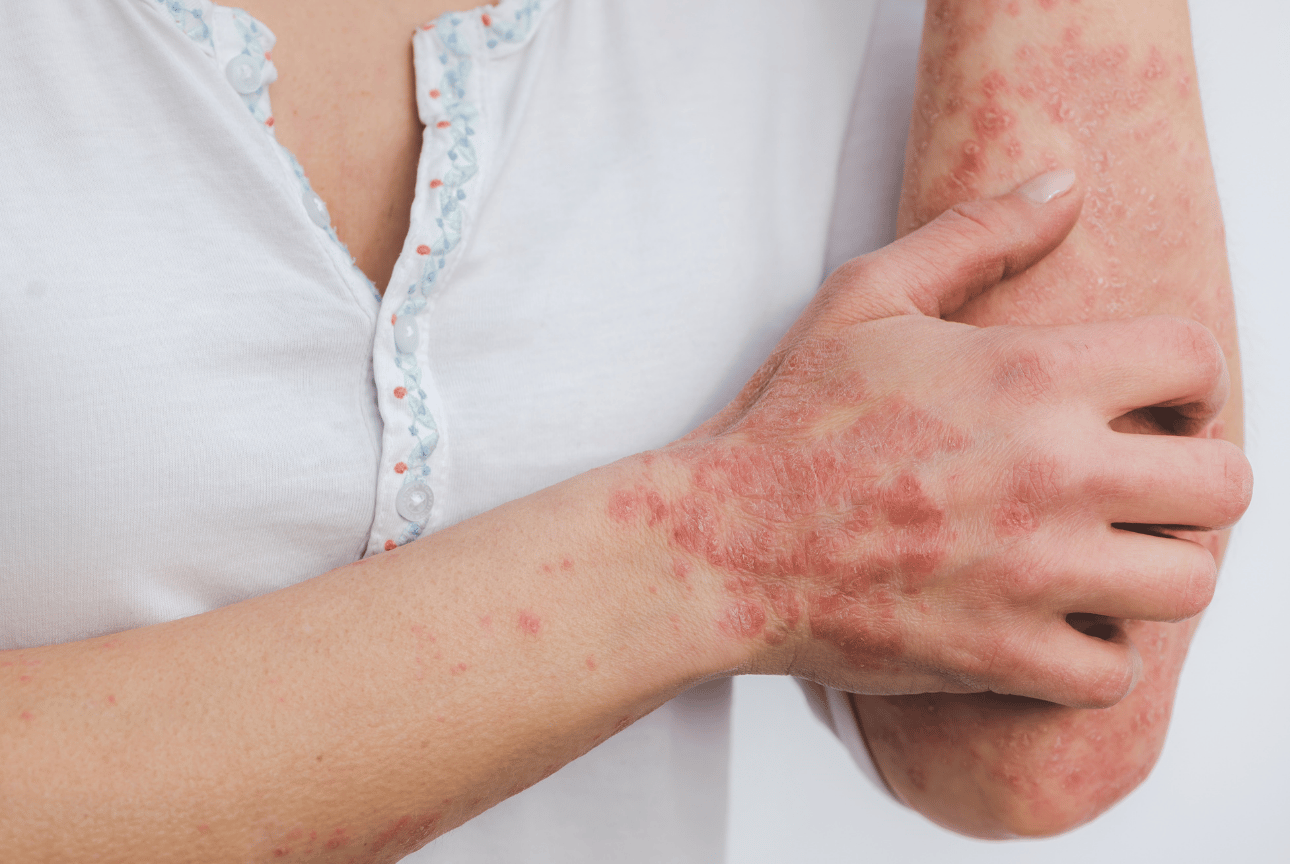
Psoriasis and eczema are chronic inflammatory skin conditions that often follow a cycle of periods of relative stability interrupted by symptom flare-ups. During a flare, symptoms such as redness, itching, dryness, scaling, or irritation may become more noticeable or severe than usual. While psoriasis and eczema are distinct conditions, both involve complex interactions between the immune system, the skin barrier, and environmental factors.
Researchers continue to study why flares occur and why certain triggers seem to affect some people more than others. Although there is no single explanation for every flare, growing evidence suggests that immune activation, skin barrier dysfunction, and external exposures all play important roles.
What defines a flare?
A flare refers to a temporary worsening of symptoms in a chronic condition. For people with psoriasis or eczema, a flare may involve increased itching, more extensive skin involvement, greater discomfort, or changes in the appearance of affected areas.
The timing and severity of flares can vary considerably. Some people experience occasional flare-ups triggered by specific circumstances, while others may notice a more unpredictable pattern. Researchers believe these fluctuations occur because the underlying inflammatory processes driving these conditions can become more active at certain times.
Immune activation and skin inflammation
Both psoriasis and eczema involve abnormal immune responses that contribute to skin inflammation, though the biological pathways differ between the two conditions. In psoriasis, immune cells trigger rapid skin cell growth and inflammation, leading to the development of thick, scaly plaques. Researchers have identified several inflammatory signaling pathways that contribute to disease activity and flare development.
Eczema, also known as atopic dermatitis, is associated with immune system dysregulation that contributes to chronic inflammation, itching, and skin irritation. Inflammatory signals can become amplified during a flare, resulting in worsening symptoms and increased skin sensitivity. Since immune activity plays such a central role in both conditions, researchers continue to investigate how internal and external factors may influence inflammatory responses and contribute to flare-ups.
Environmental and psychological associations
A variety of environmental and physiological factors have been associated with psoriasis and eczema flares. While triggers differ from person to person, several patterns have emerged in research. For eczema, common triggers may include dry air, irritants such as soaps or fragrances, allergens, infections, and emotional stress. Changes in temperature or humidity can also affect symptom severity.
Psoriasis flares have been associated with factors such as skin injuries, infections, psychological stress, certain medications, and lifestyle-related factors. Researchers have also explored how broader health conditions and systemic inflammation may influence disease activity.
Importantly, the presence of a trigger does not guarantee a flare. Instead, many experts believe flare-ups occur when multiple biological and environmental factors interact at the same time.
The role of the skin barrier
The skin barrier serves as the body's first line of defense against environmental exposures, irritants, allergens, and moisture loss. Growing research suggests that skin barrier function plays an important role in both eczema and psoriasis.
In eczema, defects in the skin barrier can allow moisture to escape while making the skin more vulnerable to irritants and allergens. This can contribute to inflammation and increase the likelihood of flare-ups. Although psoriasis is primarily driven by immune dysfunction, researchers have also identified abnormalities in the skin barrier function that may contribute to disease activity. When the skin barrier becomes compromised, inflammation can worsen and symptoms may become more difficult to control.
As researchers continue to learn more about autoimmune and inflammatory conditions, it has become increasingly clear that psoriasis and eczema flares are influenced by a combination of immune activity, skin barrier health, and environmental exposures. Understanding these factors may help provide a broader picture of why symptoms sometimes worsen and how researchers are working to better understand these chronic conditions.
How Evidation can provide insight and support your health
If you're living with psoriasis, eczema, or other chronic conditions, it can be tough to pinpoint your triggers and manage your health. Evidation can help. When you download the Evidation app, you'll be prompted to share the health information you're already tracking. With your permission, we'll use the information you share with us to find patterns, helping you learn more about how you can support your health while managing chronic conditions. Click here to learn more about how Evidation works and get started today.

.png)

Global Flu Insights: Is the flu making a comeback?
It may not be flu season yet in the Northern Hemisphere, but it’s never too early to learn about flu prevention. According to the CDC, receiving a yearly flu vaccine is the most important step in protecting against flu viruses.
Flu Trends from Down Under
Flu season is picking up in Australia, with an earlier uptick in infections than previous years. In the graph below, we can see that flu cases in Australia typically peak in June, July, and August. The solid red line for 2022 shows that cases actually started peaking in late April—two months earlier than usual.
.png)
How can you protect yourself and others this fall?
It may not be flu season yet in the Northern Hemisphere, but it’s never too early to learn about flu prevention. According to the CDC, receiving a yearly flu vaccine is the most important step in protecting against flu viruses. Other preventive measures include avoiding close contact with people who are sick, covering coughs and sneezes, disinfecting surfaces that may be contaminated with viruses, and washing your hands with soap and water.

Juvenile Arthritis Awareness Month
1 in 250 kids is affected by some form of juvenile arthritis. Juvenile Arthritis Awareness Month is about educating, spreading awareness, and taking part in events that help those who are living with this condition.
Although arthritis is commonly associated with older aged people, a form of arthritis known as juvenile arthritis affects approximately 300,000 teenagers and kids in the United States.
That’s why it’s so important for us to observe Juvenile Arthritis Awareness Month every year.
During July, we look to not only observe, but also spread awareness and educate ourselves and those around us about this condition.
1 in 250 kids is affected by some form of juvenile arthritis.
So, what can we do to help?
What is juvenile arthritis and what causes it?
What are the symptoms we should look out for in our children?
And how can you get the proper diagnoses and treatments?
We’ll be speaking on these matters and sharing how you can take part during this important month and make an impact on people's lives and communities. Keep reading to learn more.
What’s juvenile arthritis? What causes it?
Juvenile arthritis isn’t a singular disease. It’s an umbrella term used to describe rheumatic and inflammatory diseases that affect children under the age of 16.
Autoimmune and autoinflammatory diseases make up most types of juvenile arthritis.
This means that the immune system, which normally fights against foreign bodies like germs and viruses, becomes confused and starts releasing inflammatory chemicals that attack healthy tissue and cells.
But how does this affect the body?
This results in joint pain, tenderness, swelling, and inflammation.
But in some cases, none of these symptoms are visible on the joints. It sometimes only affects the internal organs and skin.
So, what causes juvenile arthritis?
The verdict behind the cause of it is still up in the air. But several factors like our environment and certain genetics may lead to juvenile arthritis.
This means it could get passed down through families or triggered by exposure to certain things.
Symptoms and diagnosis
What are common symptoms associated with juvenile arthritis?
People dealing with juvenile arthritis might experience:
- Pain - it’s common to feel a certain degree of pain in the joints or around them.
- Stiffness - as joints become painful they may also become stiff.
- Swelling - when certain joints become inflamed it’s common to notice some swelling.
- High fever, rash, and swollen lymph nodes - in rare cases, children who have juvenile arthritis may experience these symptoms.
Now, how is juvenile arthritis diagnosed?
There is no particular test to confirm the condition. But when a healthcare professional examines someone who may have juvenile arthritis, they look at their health history and they may do a physical examination.
They usually ask about symptoms the person is experiencing and any recent illnesses that may have occurred. In many cases, when inflammation symptoms have been present for 6 weeks or more, juvenile arthritis may be the cause.
There are different forms of tests that may also be performed. Common forms of testing include blood tests and imaging tests.
Some blood tests include:
- Complement tests - these tests measure the level of complement in the bloodstream. Complement is a protein found in our bloodstream. Low levels are often linked to immune disorders.
- White blood cell count - higher levels of white blood cells may indicate an infection is prevalent. Lower levels may show a sign of some autoimmune diseases or even reactions to medications.
- Antinuclear antibody (ANA) and other antibody tests - these tests measure the levels of antibodies in the blood. The levels are often elevated in people who have autoimmune and inflammatory diseases.
Imagery tests could include:
- MRI
- X-Rays
- CT scan
- Bone scan
Urine tests might also be performed. They’re used to find blood or protein in the urine which could indicate the kidneys aren’t working properly.
Another form of testing for juvenile arthritis is joint aspiration. This test consists of taking synovial fluid (a thick liquid that lubricates the joints) from a joint and examining it to see if bacteria or viruses are present. Juvenile arthritis can be activated by certain viruses and bacteria.
Treatment options
Medications, lifestyle changes, and different forms of therapies are all used to treat juvenile arthritis.
Some medications that are commonly prescribed include:
- Corticosteroid medicines - these medications are often used to treat severe symptoms people may experience and to reduce inflammation
- Nonsteroidal anti-inflammatory medicines (NSAIDs) - NSAIDs are sometimes used to reduce inflammation and pain.
- Disease-modifying antirheumatic medicines (DMARDs) - these medications work to ease inflammation and control juvenile arthritis.
Medicines known as biologics are sometimes used if other forms of treatment aren’t working. These medicines work by interfering with the inflammatory response of the body.
Different forms of therapy are also used to improve certain aspects of life that juvenile arthritis might hinder.
To improve and maintain joint and muscle function, some people do physical therapy. Occupational therapy might also be another solution to help people in their ability to perform regular daily activities.
Some lifestyle changes that may help include:
- Weight control
- Exercising regularly
- Nutritional coaching
- Getting enough rest
How to participate in Juvenile Arthritis Awareness Month
What can you do to help your community and those affected by this condition?
One way we can participate is by educating ourselves and spreading awareness around Juvenile Arthritis Awareness Month.
Educating ourselves gives us the chance at having a better understanding of the condition and how we can help those affected by it. It also allows us to educate others.
And spreading awareness is a great way to introduce this condition to those who may be unaware of it. We can spread awareness by speaking with friends, family, and coworkers, or we can even share information and articles on social media.
Another way to get involved would be to take part in community events or even host one of your own.
Conclusion
Juvenile Arthritis Awareness Month is about educating, spreading awareness, and taking part in events that help those who are living with this condition.
Whether you decide to take part in community events or speak with your friends and family, we encourage you to take part.
Arthritis is often seen as a condition that only affects older adults, but with more awareness, we can change that conversation.
Make sure to share this with your friends, family, coworkers, or even your social media, and do your part in helping this important cause.

What is Good Clinical Practice (GCP) and why is it important?
Good Clinical Practice (GCP) is an international guide for how to conduct ethical and good quality research. GCP applies to all stages of research: design, conduct, performance, monitoring, auditing, recording, analyses, and reporting of any research involving people.
It’s important to understand what Good Clinical Practice is and why it matters. Especially if you are participating (or thinking about participating) in research.
Good Clinical Practice (GCP) is an international guide for how to conduct ethical and good quality research. GCP applies to all stages of research: design, conduct, performance, monitoring, auditing, recording, analyses, and reporting of any research involving people.
GCP consists of 13 principles focused on the following:
- Safety
- You feel protected throughout the entire research study.
- Rights are Protected
- You have the right to information about the research.
- You decide whether or not you want to participate in the research.
- You have the right to withdraw from the research at any time without penalty.
- Your privacy and confidentiality will be protected.
- Quality of Research Data
- The data collected from you is for the purpose of the research and is based on a scientific protocol approved by an ethics committee.
Why do we need Good Clinical Practice (GCP)?
The idea of a “good physician” and “good clinical/medical practice” dates back to the Hippocratic Oath from about 400 B.C. This oath represents the earliest idea of medicine being practiced in a just and ethical manner. It established several principles of medical ethics that remain important today. These include the principles of “confidentiality,” “privacy,” and “doing no harm.”
While the oath itself was a good start, it was not enough to protect all of the people who participated in research from harm. Additional rules and regulations were necessary to help keep people safe.
The United States put into place the first legislation to help regulate drugs that are available over the counter, The Food and Drugs Act of 1906. Before this legislation, harmful and deadly drugs could be purchased by anyone, just like any other product. These unsafe products led to serious illness, injury, or death because the ingredients were not tested for safety.
Well known examples of drugs available at the time include:
- Kopp’s Baby’s Friend - contained a mixture of morphine and alcohol
- Dr. King’s Consumption Cure - contained a toxic mixture of chloroform, morphine, and pine tar
- Dr. Bull’s Cough Syrup - contained dangerous amounts of opium
In 1938, the Food and Drug Administration (FDA) approved the Federal Food, Drug, and Cosmetic Act. This was the first time manufacturers were required to not only test drugs for safety, but to also provide real-world evidence of that safety to the FDA prior to being available to the public.
The importance of Real-World Evidence
Real-world evidence comes from real-world data, and is evidence about the use, risks, and/or benefits of a medication, product, or treatment. Without real-world safety evidence, the product could not be sold. Companies that broke this rule could now be fined, sued, or even prosecuted by law if their products caused harm.
While research can be used to help people, the label of “research” has also been used across history to cause harm, particularly in times of war.
One of the most well-known occurrences was in World War II, when German physicians conducted horrific experiments on individuals in the concentration camps of Europe. These war crimes, performed under the banner of “research,” resulted in the development of the Nuremberg Code in 1947. This code is part of the reason research participants have the right to decide whether or not they want to participate in a research study.
Your voice and your choice matters.
GCP over time
Over time, new guidelines have been developed to better define the idea of ethical medical practice in clinical research. Unfortunately, nearly all of these guidelines were created in reaction to research that was harmful to participants or was unethical.
These guidelines include the Declaration of Helsinki (written in 1964, updated in 2013), the Belmont Report (1979), and the International Guidelines for Biomedical Research Involving Human Subjects (1982).
The primary goals of these guidelines are to protect research participants, allow people to participate in research when it can be helpful to the world, and treat all research participants equally and justly. As new research types emerge, like the use of technology or developments in genetic research, new ethical challenges arise. These documents help guide researchers through ethical challenges and define the principles within GCP guidelines.
How does the team at Evidation Studies ensure Good Clinical Practice?
From the design of our research studies to the final analysis of the information that’s collected, our research team holds each other accountable.
Our team is trained in GCP annually and attends discussions on the importance of Good Clinical Practice in human research studies. It is our guidebook for making sure our research is safe and the rights of our participants are protected.
Additionally, our research studies are reviewed and approved by an ethics committee called an Institutional Review Board (IRB), whose goal is to keep people safe and make sure research is done ethically.
We feel strongly about the importance of GCP because our participants are top priority to us.
Our mission is to encourage everyone to participate in better health outcomes. In order to fulfill our mission, we must provide a safe and educational experience for all of our research participants.
Want to know more about any of our Evidation Studies and how to get involved? Reach out to us at study@evidation.com and one of our friendly team members can help you get started.
If you want additional general information on health research, we recommend checking out the following public resources:

Support Men's Health this National Men's Health Month
During National Men’s Health Month we look to spread awareness around men's health and encourage men to take care of themselves by getting regular checkups and take care of themselves through exercise, diet, and disease prevention.
According to the CDC, Heart disease, cancer, and COVID-19 are the leading causes of death in men.
And due to many societal factors, men often pay less attention to their overall health compared to other genders.
According to Harvard Health, men are more likely to not take part in regular checkups. They’re also more likely to smoke tobacco and drink alcohol - increasing the risk for heart disease.
But most of the health problems men face are preventable.
During National Men’s Health Month we look to spread awareness around men's health and encourage men to take care of themselves by getting regular checkups and take care of themselves through exercise, diet, and disease prevention.
So, how can men take control of their health?
What can they do?
What actions should they take?
And what are some of the most common health problems men face?
In today’s article, we’ll be answering all these questions. Keep reading to learn more!
Common health problems men face
What are some of the common health problems men face?
How can they prevent these health problems from happening?
Among all cancers, prostate cancer is the most common among men. It’s said to be the second leading cause of death from cancer for men in the United States.
Although there are steps you can take to prevent it, some aspects that affect health are out of our control. Age, race, and genetics can all increase the chances of getting prostate cancer.
But making changes in your lifestyle and diet could help prevent it. Some changes you can make to help prevent prostate cancer include:
- Eating a healthier diet
- Increasing Vitamin D intake
- Quitting smoking and drinking less
- Staying sexually active (with or without a partner)
- Regular exercise and maintaining a healthy weight
Although prostate cancer is common, the leading cause of death in men in the United States is actually heart disease. In 2019 it caused 1 in 4 male deaths in the United States.
But there are steps men can take to reduce their risk of heart disease:
- Lower stress levels
- Quit smoking and limit alcohol intake
- Maintain a healthy weight and eat a healthy diet
- Get regular checkups and ask about checking for diabetes and high cholesterol
Men face a lot of physical health problems, but one of the most stigmatized issues men face is mental health. And although the conversation has changed drastically, men, like many others, are still suffering from mental health issues.
Approximately 30.6 percent of men suffer from a period of depression in their life, and the suicide rate in American men is four times higher than it is in women.
But there are steps we can all take to care for our mental health. Self-care is one way we can maintain good mental health. We can practice self-care by:
- Practicing gratitude
- Focusing on positivity
- Getting regular exercise
- Setting goals and prioritizing
- Staying connected with people
- Taking part in a relaxing activity
- Getting an adequate amount of sleep
- Staying hydrated and eating regular healthy meals
But sometimes self-care isn’t enough. Recognizing the signs that you or a loved one is dealing with mental health issues can help someone take the first steps in treatment.
Some signs of depression might include:
- Irritability
- Decreased energy or fatigue
- Feelings of guilt, worthlessness, or helplessness
- Loss of interest or pleasure in hobbies and activities
- Thoughts of death or suicide or even suicide attempts
There are treatments for mental illness, and if you think you or a loved one are suffering make sure to reach out to a health care provider to get the help needed.
If you or someone you know is in crisis, you can call the National Suicide Prevention Lifeline at 1-800-273-8255, or text “HELLO” to the Crisis Text Line at 741741.
How to participate
We can all participate in National Men's Health Month in one way or another.
It’s a great time for men to take a look at their health and start changing their habits and routines to create a healthier lifestyle.
Men can take charge of their health by:
- Exercising regularly - exercising can help people maintain a healthy weight, fight health conditions and diseases like cancer and depression, promote sleep, and even boost energy.
- Eating a more balanced and healthy diet - eating a more rounded diet may help to maintain a healthy weight, get the nutrients for optimal health, and even improve your heart health.
- Taking care of their mental health - activities like meditating, yoga, or time spent with hobbies and loved ones are all great ways men can practice self-care and relieve any stress, anxiety, and worry they may be feeling.
- Participating in some activities - spend some time hiking, playing soccer, dancing, or painting with some friends, loved ones, or even co-workers.
We can also encourage the men in our lives to speak about their mental health issues. Creating a safe place for men to express their concerns is a great way for us all to participate in Men’s Health Month.
Spreading the word about Men’s Health Month is also a great way to participate. It helps educate people on common issues men face, and it opens the door for more conversations to take place in our communities.
You could even participate in a fundraiser or create your own for men's mental health or even prostate cancer.
Another way we can participate is by dawning the color of blue during Wear Blue Day. Wear Blue Day is a day people wear the color blue to spread awareness around men’s health month, it takes place each year, on the Friday before Father’s Day.
Closing thoughts - National Men’s Health Month
Men’s Health Month is a time to make changes, spread awareness, and open the conversation about topics that are sometimes stigmatized in today's society.
We can all do our part during this month either directly by helping the people in our lives or ourselves, or even by participating in fundraisers and events that highlight the common health issues men face every day.
Make sure to share this with a friend or family member who could benefit from some of the information we provided so you can do your part to spread awareness around this important month for men's health!

Get Out and Moving this Great Outdoors Month
During National Great Outdoors Month, we look to celebrate and explore our surroundings and discover the many beautiful sights our world has to offer.
In the United States alone, over 300 million people have a smartphone. For many, that increase in connectivity through technology has led to becoming disconnected from the outdoors.
During National Great Outdoors Month, we look to celebrate and explore our surroundings and discover the many beautiful sights our world has to offer.
What activities can you take part in to embrace the outdoors?
Where should you explore?
How should you celebrate?
Besides spending time outside, how else can we take part in helping our environment and the many communities that thrive outdoors?
In today’s article, we’ll be touching on the many activities and places you can visit to celebrate Great Outdoors Month. Keep reading to discover more!
What physical activities can we take part in?
There’s no shortage of activities to do outdoors.
From rock climbing to canoeing, with such a diverse landscape across the country, there’s bound to be some kind of activity to enjoy.
We know there are many benefits from exercise itself. It can help control weight, improve mood, and reduce the risk of heart diseases. But combining exercise with spending time outdoors could have a profound impact on your well-being.
But physical activity isn’t the only way to reap the benefits of spending time outside. Just being out in nature is good for us.
In fact, spending time outdoors may actually reduce stress.
While there are many different outdoor activities you can take part in, some ideas include:
- Cycling - this is a great cardio workout that puts minimal stress on our joints yet challenges core muscles and legs.
- Hiking - explore your local area or a national park while improving your cardiovascular health and decreasing stress.
- Paddling - spending time on the water by kayaking or canoeing with others is a great way to enjoy the weather while working your muscles and cardiovascular system, and it may even help improve stability.
- Rock climbing - challenge your abilities and enjoy the natural landscapes by rock climbing.
- Walking - physical activity doesn’t have to be strenuous to be beneficial. Take a walk in your local park, or a stroll through a zoo or nature preserve.
- Garden - gardening is a great way to reap the benefits of being outside and get some mild exercise.
- Have a picnic or BBQ - eating outside feels good. Have a picnic with friends or family or invite them over for a BBQ and share the benefits of being together and being outside.
How to celebrate great outdoors month and where to explore
Getting out and active is a great way to celebrate this June, but there are other ways you can celebrate Great Outdoors Month by contributing and helping the environment and local communities.
Here are a few ideas:
- Plan a trip - whether traveling solo or with friends and family, planning a trip is a great way to celebrate.
- Spend some time outdoors - You don’t have to go on a big trip to celebrate this month. Go to the local park and throw the ball around or go on a small hiking trip to explore your local area.
- Visit national parks - with a total of 63 national parks in the United States there are lots of landscapes to explore. From the Grand Canyon in Arizona to Yosemite National Park in California, America has plenty of national parks to discover.
- Conserve the outdoors - Help celebrate this month by cleaning up. Participate with local groups hosting events or host your own. You can even go out and clean up the trails, parks, and other local spots in your area.
- Volunteer as a summer camp counselor - spend some time helping others as a counselor at a summer camp.
Conclusion - Great Outdoors Month
Great Outdoors Month is a time to embrace the surrounding landscapes and nature.
Whether you decide to take a day trip fishing or to explore a national park you’ve never been to, we encourage you to get outdoors and find some time to get active and enjoy all the beautiful landscapes our country has to offer.
Make sure to share this with a friend or family member who you’d like to take with you on a trip or adventure during Great Outdoors Month!

Community Results: The connection between mood and activity levels
Because day-to-day mood is such an important aspect of our wellbeing, we recently began asking members to keep track of their mood by completing a daily offering asking them how they feel.
We all know that exercise is supposed to make us feel better. In fact, even mild exercise can increase endorphins or feel good hormones.
And exercise enthusiasts may know this to be true without needing the science. We’ve all heard of “runner’s high”.
But for some, it may be difficult to see or notice the impact activity has on our mood. And understanding how our mood affects our activity levels adds another layer to consider.
Because day-to-day mood is such an important aspect of our wellbeing, we recently began asking members to keep track of their mood by completing a daily offering asking them how they feel.

In the first two weeks we received 743,401 responses from over 131 thousand members!
Overall, the majority of responses indicated that people were feeling good.
- Good: 56.9% (423,268)
- Okay: 37.3% (277,273)
- Bad: 5.8% (42,860)
The “best” days seem to be Saturday (Good = 59.2%) and Sunday (Good = 58.4%), and the “worst” days seem to be Monday (Bad = 6.1%) and Thursday (Bad = 6.14%).
.png)
In this short time, we noticed a significant connection between those who said they felt “good” and their activity, sleep levels, and resting heart rate.

More specifically, we took a look at participating members over the first two weeks and examined the relationship between each individual’s self-reported mood and their steps, sleep, and resting heart rate.
Members who indicated they had a better mood walked more and slept more, and had a lower resting heart rate.
In fact, we observed that "good" days were associated with an increase of nearly 1900 steps when compared to "bad" days


What does that mean?
Well, it shows that for these members at least, mood and activity levels appear to have some connection.
It could be that keeping active makes them feel good. Or maybe, feeling good allows them to keep active.
Curious about how your mood and activity are connected? If you haven’t paired an activity app or wearable to your Evidation app yet, do it today. You’ll earn points for connecting and be eligible to receive more personalized insights.
And stay tuned for more community insights from Evidation!
The daily mood survey is a new offer type we’re currently testing and is only available in the app at this time. If you typically log in on the web, be sure to download the app.

Global Flu Insights: Why should we start thinking about flu in the summer?
Planning to go to the southern hemisphere this summer? The CDC shares these tips to protect yourself and others:
What Flu Season in the Southern Hemisphere Can Tell Us
Although flu season in the Northern Hemisphere won’t begin until fall, it’s already underway in the Southern Hemisphere.
In fact, seasonal flu activity is spiking earlier this year when compared to the previous five years! In the graph below, see how the spike in cases at the beginning of 2022 is higher than most spikes during peak flu season in previous years.

Summer Travel Tips for Flu Prevention
Planning to go to the southern hemisphere this summer? The CDC shares these tips to protect yourself and others:
- Keep up to date on flu trends wherever you’re traveling
- Wash your hands often with soap and water, or use an alcohol-based hand sanitizer
- Cover your mouth when you sneeze or cough
- Get a yearly flu vaccine
- If you are sick with flu-like symptoms (fever, cough, sore throat, runny or stuffy nose, muscle or body aches, headache, and fatigue), consider staying home

Focus on your Wellbeing this Professional Wellness Month
Professional Wellness Month is a time for employers and employees to evaluate the focus they put on health and wellness in the workplace and at home.
In 2017, health promotion and wellness programs were offered in almost half of all US worksites. And with over 150 million people spending the majority of their waking hours at work, it’s an encouraging number to see.
Professional Wellness Month looks to shed light on the importance of creating a work culture that emphasizes and creates an environment that encourages wellness in the workplace.
It also looks to stress the importance of a work-life balance for our health.
From financial well-being to our physical well-being, we can participate and celebrate this month in many different ways.
So, how can we celebrate Professional Wellness Month in the workplace?
What are steps we can take to improve our wellness at work and at home?
And, how can we better balance our work and personal lives?
In today’s article we’ll be breaking down the many options you have to celebrate and take part in during Professional Wellness Month.
How to celebrate professional wellness month in the workplace
According to the American Institute of Stress,
“83% of US workers suffer from work-related stress.”
But there are steps we can take to create an environment that encourages wellness in the workplace.
How can we deal with stress?
Employers and employees can take many different approaches to create a culture that emphasizes the importance of wellness in the workplace. Some ideas include:
- Workshops - Workshops can be a great way to teach new concepts and ideas to employees. From education around different health exercises to certain habits and actions we can take. Workshops can serve as a great way to build a healthier working environment.
- Resources - having paid sick days, holidays, and health and dental insurance are some of the many ways to develop a healthy work culture that emphasizes the health of its employees.
- Classes - taking part in different classes may also be a powerful way of creating wellness in the workplace. From meditation classes to fitness circuits, there’s really an endless supply of ideas we can tap into.
- Events - having some sort of event can help us connect with our coworkers and better our overall well-being through socialization. In fact, being social helps us deal with loneliness and may even help improve our cognitive skills and memory. We can take part in online games with coworkers or laid-back meetings talking about our weekends. Events can be a great way to connect and unwind with coworkers in the workplace.
- Wellness challenge - creating a wellness challenge for coworkers to take part in not only encourages people to get active, but it’s a great way for people to connect. Exercise increases the release of endorphins (the feel-good chemical), and it’s a great way to maintain a healthy weight.
Work-Life Balance
Professional Wellness Month is about highlighting the importance of wellness in the workplace. But, it’s also about creating a better work-life balance.
It can be hard to separate the two with the convenience of modern technology and remote work.
How can we make it easier?
Some ways we can create a better work-life balance include:
- Unplugging and relaxing - taking a break to spend some time on our hobbies and passions can help us destress and unwind.
- Detach from work - technology allows us to be constantly connected with work and our duties. If you work at home, try to only work in a dedicated workspace. And when you finish work for the day, make a transition into home life by changing your clothes or going for a walk.
- Managing our time - we should give ourselves enough time to take care of our responsibilities at work. Learning to schedule our time accordingly and avoid taking on too much if we know it’s going to interfere with our work-life balance is a critical skill.
- Develop a support system - we can balance our work and personal lives much easier with support. Whether it's coworkers who can cover for us if needed or family members who can help with responsibilities at home. Having a support system is an effective way to find balance.
- Take some time off - completely shutting off from work and taking time to relax and unwind can be a great way to refocus. It also allows us to mentally and physically recharge.
Closing Thoughts
Professional Wellness Month is a time for employers and employees to evaluate the focus they put on health and wellness in the workplace and at home.
Whether you decide to participate in new workshops or classes or you choose to take some time off from work completely. Every June we’re reminded of the importance of taking care of ourselves in every aspect of our lives. At home and at work.
Make sure to share this with a coworker, friend, or family member that may need the reminder!