

Blog
Understanding the triggers behind psoriasis and eczema flares
Learn what defines a psoriasis or eczema flare and how immune activity, skin barrier function, and environmental factors may influence symptoms.
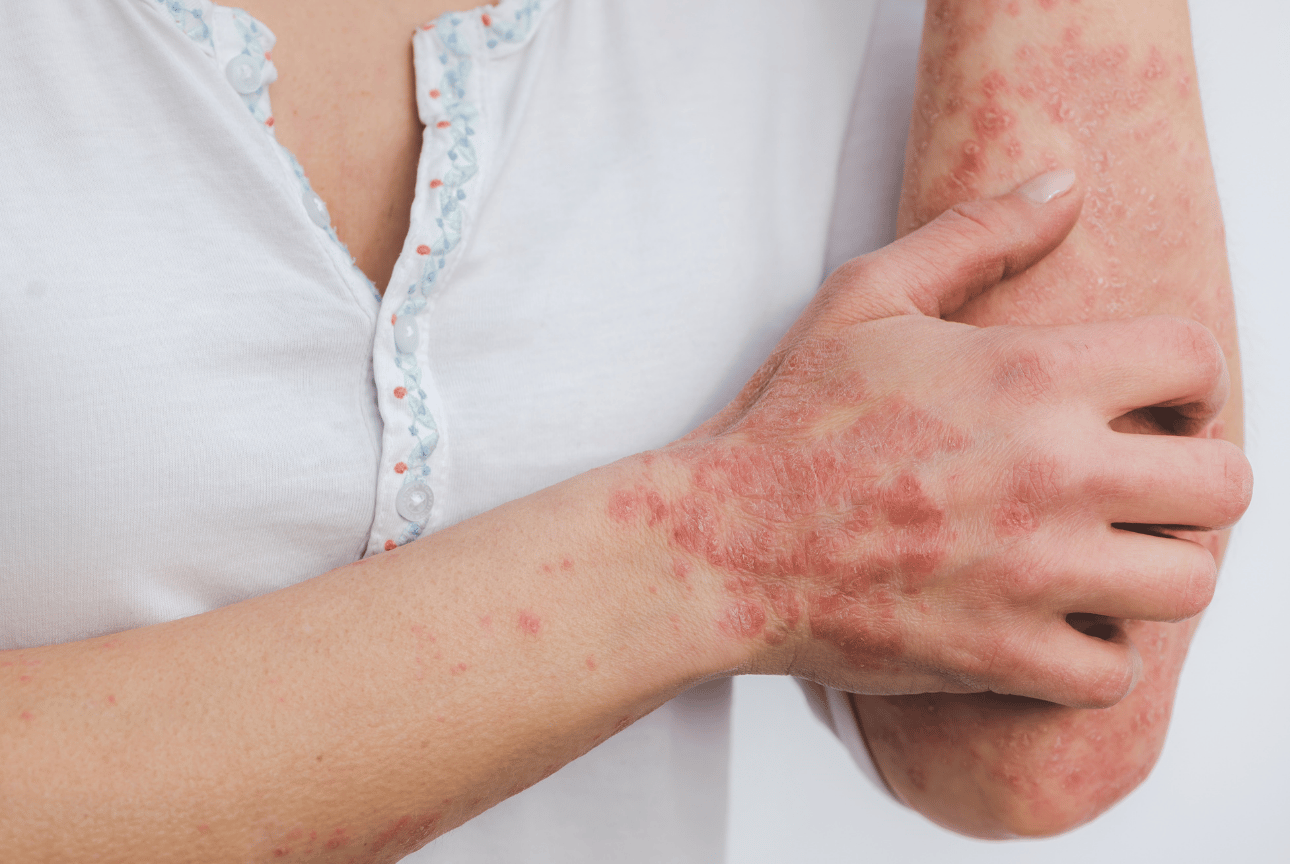
Psoriasis and eczema are chronic inflammatory skin conditions that often follow a cycle of periods of relative stability interrupted by symptom flare-ups. During a flare, symptoms such as redness, itching, dryness, scaling, or irritation may become more noticeable or severe than usual. While psoriasis and eczema are distinct conditions, both involve complex interactions between the immune system, the skin barrier, and environmental factors.
Researchers continue to study why flares occur and why certain triggers seem to affect some people more than others. Although there is no single explanation for every flare, growing evidence suggests that immune activation, skin barrier dysfunction, and external exposures all play important roles.
What defines a flare?
A flare refers to a temporary worsening of symptoms in a chronic condition. For people with psoriasis or eczema, a flare may involve increased itching, more extensive skin involvement, greater discomfort, or changes in the appearance of affected areas.
The timing and severity of flares can vary considerably. Some people experience occasional flare-ups triggered by specific circumstances, while others may notice a more unpredictable pattern. Researchers believe these fluctuations occur because the underlying inflammatory processes driving these conditions can become more active at certain times.
Immune activation and skin inflammation
Both psoriasis and eczema involve abnormal immune responses that contribute to skin inflammation, though the biological pathways differ between the two conditions. In psoriasis, immune cells trigger rapid skin cell growth and inflammation, leading to the development of thick, scaly plaques. Researchers have identified several inflammatory signaling pathways that contribute to disease activity and flare development.
Eczema, also known as atopic dermatitis, is associated with immune system dysregulation that contributes to chronic inflammation, itching, and skin irritation. Inflammatory signals can become amplified during a flare, resulting in worsening symptoms and increased skin sensitivity. Since immune activity plays such a central role in both conditions, researchers continue to investigate how internal and external factors may influence inflammatory responses and contribute to flare-ups.
Environmental and psychological associations
A variety of environmental and physiological factors have been associated with psoriasis and eczema flares. While triggers differ from person to person, several patterns have emerged in research. For eczema, common triggers may include dry air, irritants such as soaps or fragrances, allergens, infections, and emotional stress. Changes in temperature or humidity can also affect symptom severity.
Psoriasis flares have been associated with factors such as skin injuries, infections, psychological stress, certain medications, and lifestyle-related factors. Researchers have also explored how broader health conditions and systemic inflammation may influence disease activity.
Importantly, the presence of a trigger does not guarantee a flare. Instead, many experts believe flare-ups occur when multiple biological and environmental factors interact at the same time.
The role of the skin barrier
The skin barrier serves as the body's first line of defense against environmental exposures, irritants, allergens, and moisture loss. Growing research suggests that skin barrier function plays an important role in both eczema and psoriasis.
In eczema, defects in the skin barrier can allow moisture to escape while making the skin more vulnerable to irritants and allergens. This can contribute to inflammation and increase the likelihood of flare-ups. Although psoriasis is primarily driven by immune dysfunction, researchers have also identified abnormalities in the skin barrier function that may contribute to disease activity. When the skin barrier becomes compromised, inflammation can worsen and symptoms may become more difficult to control.
As researchers continue to learn more about autoimmune and inflammatory conditions, it has become increasingly clear that psoriasis and eczema flares are influenced by a combination of immune activity, skin barrier health, and environmental exposures. Understanding these factors may help provide a broader picture of why symptoms sometimes worsen and how researchers are working to better understand these chronic conditions.
How Evidation can provide insight and support your health
If you're living with psoriasis, eczema, or other chronic conditions, it can be tough to pinpoint your triggers and manage your health. Evidation can help. When you download the Evidation app, you'll be prompted to share the health information you're already tracking. With your permission, we'll use the information you share with us to find patterns, helping you learn more about how you can support your health while managing chronic conditions. Click here to learn more about how Evidation works and get started today.
.avif)
Evidation Member Stories
No matter where you are in your health journey, we want to commend you for taking steps to become a better version of you.
We’re back to share more about the growing community of Evidation Members. No matter where you are in your health journey, we want to commend you for taking steps to become a better version of you. Over the last year, we’ve asked members to share their stories with us. Since then, we’ve received more than 160,000 stories! Here’s a look at some of the many stories members have shared — hopefully one of them will help inspire you as they’ve inspired us.
Whether you’re looking for a source of motivation, a community to learn from, or are here for a few extra bucks, we’re happy to be a part of your journey! Here’s another look at some of your fellow Evidation Members and their stories:
“A friend told me about Evidation which I’ve been using for quite a while. It gives me credit for my daily exercise, weigh-ins and tracking my food which I do daily. It helps keep me in the zone and best of all has paid me for my efforts! What’s better than that? I just had a Grand Opening in Oceanside, NY for my business, Restorative Wellness and Weight Loss. I plan to share this app with all my clients. What a great motivator!” — (Wendy C., New York)
“I have been a part of a research study on breakthrough pain through Evidation, and it’s really helped me to be more aware of my body and what kind of triggers are causing my pain. It has also caused me to look into other ways of relieving my pain, such as yoga and deep stretching, and to gain some muscular structure back that I had lost before.” — (Stacy M., Tennessee)
%2520(1)%2520(1).png)
“I have been using Evidation to help me stay on top of my health and fitness. I have a busy schedule and it’s hard to stay on top of things. In 2016, I was 227 lbs, very depressed and unhappy. After making several lifestyle changes, I have gotten down to 166lbs and maintained that since 2018. Evidation helps me stay on top of why health by keeping me accountable.” — (Nicole M., California)
“Through the research projects and daily accountability, Evidation has supported my increased health outcomes. By participating in a chronic pain study, daily loggings have helped my provider and I to track some of the triggers that have affected my pain levels. Additionally, being accountable to the overall app gives me motivation to get outside my comfort zone and get out and move even when I am not physically feeling like it.” — (Karen K., Colorado)
%2520(1).png)
“Using Evidation really helped me during a time of my life when I was down. We moved from my hometown and I was so sad, depressed, and motivated. I was in a funk, I felt lost, and did not want to leave my house. No friends or close family. When I started my health journey I got out of the house to attend group exercise and made friends. Not only did I have an online community cheering me on, I stepped out of my comfort zone again and felt like a better version of myself. Thanks for keeping me accountable!” — (Christina W., Texas)
%2520(1).png)
“I have been using the Evidation App for a few years now and I love how I build points for demonstrating regular and consistent healthy practices. As a Tour Director and Travel Professional, it’s great to know that regardless of the activity or destination I may be in there is still an app that will incentivize me to staying fit. Through the use of this app, I have been able to climb the Great Wall of China, hike Machu Picchu, Swim between Thailand islands, and walk on African Safaris. Thank you Evidation for making this app user friendly, simple, and personable.” — (Justin C., Arizona)
%2520(1).png)
“I am 64 years old. I want to be a future fun Grandpa and with the support of Evidation, I will be able physically as well as emotionally to prepare for my next adventure. This is why I hike and walked so much.” — (Rusty L., Indiana)
%2520(1).png)
“The Evidation App has allowed me to accurately track certain aspects of my health and fitness activities, which allows me to create better habits. Seeing my progress and stats turn into points both extrinsically and intrinsically rewards me. This part of the app, as well as reading interesting health studies has huge, positive impacts for future health gains.” — (Kathleen E., Florida)
“From looking at my lifestyle, my health wasn’t what I need it to be. Evidation helps me create a goal for me to challenge myself to get active and to be more involved with the local area. I have been going out for walks, participate in a gym, and being more aware of the foods I eat. With a group of friends, it becomes a fun activity! In a way, I hope my choice in exercise also inspire others to participate in fitness.” — (Hanh N., Arkansas)
%2520(1).png)
“I have been using Evidation for a while now, and the motivation and support I get from this app is unparalleled! It’s a constant reminder to get up and get moving, practice my yoga and meditation, and be that vibrant example of a holistic, balanced life for my daughter. The surveys and app functionality are a fun touch, too!” — (Meggie C., Idaho)

Here’s to our Heart Healthy Members!
This February, in honor of Heart Health Awareness Month, we partnered with our data science team to look at patterns of some of our heart healthiest members.
This February, in honor of Heart Health Awareness Month, we partnered with the data science team at Evidation to look at patterns of some of our heart healthiest members.
Resting heart rate (your pulse rate while awake, relaxed, and stationary) has been shown in several large epidemiologic studies to be an independent predictor of cardiovascular disease and all-cause mortality in both men and women. Given the importance of resting heart rate for heart and overall health, the team looked at all of the Evidation Members who contributed resting heart rate data in 2018. We explored the trajectory of resting heart rate from week to week and selected a handful of members that significantly dropped their resting heart rate over the year. The individuals we selected had a wide range of resting heart rates to begin the year.
Of the members we selected, 96% were within the normal range of 60–100 beats per minute. According to the Harvard Health blog, “while a heart rate is considered normal if the rate is between 60 and 100 beats per minute, most healthy relaxed adults have a resting heart rate below 90 beats per minute.” Only 4% had resting heart rates below 60 beats per minute at the beginning of the year. Resting heart rates below 60 bpm are often indicative of people who get a lot of physical activity. Near the end of the year, over 30% had reduced their resting heart rate to 60 beats per minute or lower. Overall, we observed an average drop of 11 beats per minute, which corresponds to an average decrease of 15% from the beginning of the year.

We then asked these resting heart rate improvers to tell us a little bit more about what they did in order to better understand their habits throughout the year — everything from how often they checked their heart rate, to the frequency of their workouts, to dietary changes they had made throughout 2018.
Here’s what we found!
Most members who had a significant decrease in resting heart rate in 2018 also noticed the same thing!

Most of our heart healthy members said they checked their resting heart rate frequently — if not every day, then at least a few days per week.

The most common changes that Evidation Members made to their diet included the following:
- Adjusting their portion sizes
- Limiting consumption of fast food
- Consuming more vegetables and fruit

The most common types of physical activity included:
- Walking
- Lifting weights
- Running
- Hiking
- Yoga

When we took a closer look at activity data, we actually saw an increase of 871 steps per day (12.3% increase) for members who had lowered their heart rate. Those who responded that they did more walking in 2018 truly did up their step count.

___________________________________________________________________
Evidation Members overwhelmingly said that they had lost weight, made changes to their diet, exercised more often and regularly, and focused on maintaining a healthy weight when sharing some of the changes that they made to their lifestyle in 2018.
In fact, when we took a look at weight tracking for our heart healthy members, the data matched up with the responses. For those who tracked their weight at least once per week for 30 weeks or more, the average weight loss was 12 pounds (a 6% decrease on average).


Not surprisingly, mental health and improved sleep can significantly influence an individual’s overall quality of health. Did you know that sticking to a sleep schedule can help you improve your heart health?

Our community of heart healthy members have recommended to others the value of maintaining a healthy diet, exercising more, and managing stress as tips to improve heart health.

For advice on how to take action today to make your lifestyle a little healthier, check out these additional suggestions from some trusted sources:
- Heart Healthy Recipes from the NIH
- CDC Heart Month Feature from the CDC
- Taking Care of Our Hearts, Together from National Heart, Lung, and Blood Institute

The Big Picture: Are Evidation Members’ Data Scientifically Valid?
Our scientists analyzed activity and sleep metrics from more than 600 members using a global health assessment tool to assign scores for physical and mental health measures.
You use Evidation to conveniently monitor progress toward personal health goals. By making datasets available to scientists, Evidation also is helping uncover insights to benefit people with multiple sclerosis, chronic pain, and other conditions. So, it’s important for you and researchers alike to know that Evidation's quality of life measures stand up.
Prior research conducted with activity trackers has shown that some behaviors (such as inconsistent sleep patterns) are associated with lower levels of physical and mental well-being. While this seems logical, we wanted to see if data collected via Evidation’s unobtrusive, hands-free methods have the same correlations.
Our scientists analyzed activity and sleep metrics from more than 600 Evidation Members using a global health assessment tool to assign scores for physical and mental health measures. (Controls included age, sex, race, socioeconomic status, and medical markers of anxiety and depression.) The 600 members involved in this analysis included members who had self reported having anxiety and depression and were a part of the Mental Health Study.
In this analysis of activity and sleep metrics, here’s what our researchers found:
- Two-thirds of members who participated in this study had scores above the median level for both physical and mental health. One-third scored below the median.
- Those with higher scores were more physically active, walking an average of 1,674 more steps and burning 100 more calories daily than those with scores below the median level.
- Individuals with lower scores demonstrated less consistent sleep than those with scores above the median.
The conclusion? Passive apps where most information is collected automatically can accurately characterize key quality of life metrics — good news for you and for scientists.
An ongoing, year-long study continues to examine a subset of member activity and sleep data, plus self-reported quality of life, mental health, and use of health care resources. Stay tuned as we share more on these findings, plus future research participation opportunities.

Why Evidation Believes Everyone Can Participate in Better Health Outcomes
Evidation Members share their experiences and how they use Evidation to improve health outcomes
At Evidation, we’re passionate about helping everyone reach their individual health goals. That could be in the form of getting paid for doing health-related activities as a little extra motivation, or by providing you with easy ways to understand your personal health. We also help to connect you with ways to contribute to cutting-edge research, where you can help to improve health for everyone. We wanted to share 5 of Achievement’s values that are important in our mission of helping everyone to participate in better health outcomes.
We meet you where you’re at
We understand that everyone’s health goals and needs are not the same; that’s why we individualize your experience based on what you tell us is relevant to you. You can also choose to earn points for everything from step tracking, sleep tracking, continuous glucose monitoring, meditation and more. We are here to support your health goals, regardless of where you’re at in your personal health journey, like Sarai (a long time Achiever) explains:
“I have Fibromyalgia and chronic Myositis …. Life can become difficult and overbearing … Many, like me, are bound to a wheelchair 50% or more of the time. Can you imagine how unmotivated you can feel to get out of bed, let alone workout!? But as it stands, the best treatment for this condition, is to KEEP MOVING. Achievement provides that imaginary friend. One who will not give you unwanted advice, or invite you to things you cannot go to. It provides that gentle motivation, for you to set your own goals. Not that of your doctor, friend, or family member. But YOURS. You know your body best …. With Achievement I can keep track of my progress…” -Sarai H.
When you get started with Evidation, we encourage you to take the time to fill out your Health Survey so that we can provide you with study invitations, and other opportunities that are relevant to you.
You are in full control of your data
Evidation provides a place for you to view your data from your connected apps in one place. By centralizing this information, we can help you to better understand your health and ultimately achieve your health goals.
It’s entirely up to you to choose what you want to share and earn points for on Evidation. Whether you’re interested in steps, exercise, sleep, nutrition, meditation or something else, you can choose what activities will be shared.
This member shares how they’ve used multiple apps on Evidation to track their health:
“I’ve been a member of Evidation for a while and it has motivated me to take control of my health by syncing all of my apps into one place and then rewarding me for it. This has been vital for me recently because my health has taken a toll lately and I’ve needed to really step up my game and take control of what I can in my personal health, Evidation has made that simple.” — Isis F.
You can access and download all of your Evidation data in one place at any time, giving you more insight into your health. You can change your mind about what activities you want to track at any time. We provide you with control over what data you share with us and we do not sell your data to third parties without your clear consent. Your health data is yours.
We are transparent
We believe that it is important to always be clear and transparent with our members about how their data is used. We may use your anonymized data for our own internal research to advance the forefront of healthcare and share back insightful health trends and tips, such as whether or not air quality can affect activity patterns or how the World Series affected sleep patterns. Tristan shares why he chooses to share his data with Evidation:
“…Evidation is exciting for me as I get to send data to [them] every single day. Data gathering is fulfilling for me, especially knowing it’ll be put to good use, so that inspires me to log my activities all the time” — Tristan R.
We also give you the choice to participate in research projects related to your health interests, goals or conditions. The specific information you will be asked to share will be disclosed in the consent and/or disclosures for that particular project (each project may be different). Evidation Members have had the opportunity to participate in groundbreaking research around diabetes, mental health, and more.
We provide you the opportunity to give back to the causes you care about
It’s great to earn personal rewards for all of your health actions; however, many members also choose to use their rewards for a good cause. That’s why Evidation also provides the opportunity to donate your points to a health charity of your choice through Benevity when you reach 10,000 points. The points you earn for taking healthy actions can also go back to organizations that are working towards creating a healthier world. Elizabeth shares why she decided to donate her points:
“Evidation motivates me to exercise more since it adds points each time. It also motivates me to join support apps for my type 1 diabetes and read more research articles. When I hit 10,000 points I donated the $10 to JDRF International [Type 1 diabetes researching funding and advocacy] to help support the continuation of research to find a cure.” — Elizabeth P.
Your actions can impact many
At the individual level, we can take actions to control our health, but we believe that we can achieve and learn even more as a community. We’ve sent out offers to members with similar health conditions, allowing them to ask relevant questions they would like answered about health topics that matter to them, such as anxiety or diabetes.
You’ll also have the opportunity to qualify for and participate in cutting-edge research studies related to various conditions, for which you can earn additional points or money, and together we can contribute to and advance research that can help improve health for everyone. This Evidation Member shares how her participation in a study has helped in improving her health outcomes:
“I have been using Evidation for a few years now. I participated in the 1yr Cognitive Health Study that really helped me to know how to improve my cognitive health and protect my brain from damage due to diet and environment. It motivated me to start an exercise class for seniors … As of today we have 11 in the class…” — Janet A.
We’ve worked with a variety of research partners to conduct groundbreaking research and studies where members could participate and earn. Evidation members who participated in studies and research helped to advance research in conditions ranging from like asthma, cystic fibrosis, diabetes, mental health, migraines, rheumatoid arthritis and more. The contributions made to these studies could impact millions in the future, and help to bring new understanding about these conditions. We think Jenny, a long time Evidation Member, sums it up best:
“…[Evidation] makes me feel good knowing that maybe one day my tracking could maybe help someone. I have depression and anxiety. If that helps even one person with this data collection I stand by it 100%.” — Jenny B.

Why you might be stuck in your health goals
We’ve all been there — the “new year, new me” mindset where the first few months of the year we quickly shift our habits in order to become a better version of ourselves. However, right as the ball gets rolling, the progress suddenly stops.
We’ve all been there — the “new year, new me” mindset where the first few months of the year we quickly shift our habits in order to become a better version of ourselves. However, right as the ball gets rolling, the progress suddenly stops. Why am I not running as far? Why am I not losing any more weight? What am I doing wrong? Here are 5 key points we found that might have you stuck with your health goals (hint: it’s not your fault!)
1. The Inevitable Plateau
According to a Washington post article, once you gain the initial traction, there will be an inevitable plateau. It’s actually part of the journey. You didn’t do anything wrong, but rather you hit a milestone. Once you achieve your small goals, the journey is just beginning!
The plateau is your body’s way of telling you that you may need to switch up your fitness or eating regime to keep your body stimulated and get the most benefits from your efforts! Remember that health does not have an endpoint, it is a journey with a myriad of challenges and achievements that help sustain healthy behaviors.
2. Having grit: make a plan and stick to it!
To overcome the plateau, it’s important to analyze your goals. But first, what are they? Why do you want to achieve these goals? What steps can you take right now to achieve your goals? Having grit shows that you are resilient, able to persevere through tough situations, and keep your eye on the prize.
Remember that your journey towards better health may be nonlinear and may come with obstacles. But it’s important to create a system that works for you and make your goals attainable. According to Plunkett of the Washington Post, “the main difference between an average adult and a high-level athlete isn’t a lack of talent or willpower but rather a lack of a system.” At Achievement, we’re here to help you reach your goals no matter how big or small. Whether it is walking 5,000 steps or 25,000 steps per day, you will be rewarded for your healthy actions!
3. Have someone nudge you — accountability and buddy system
A few health experts like Dr. Arefa Cassoobhoy found that she does better when she shares her health goals with someone else. It’s important to have someone support you and be able to share wins and losses during your health journey. Having someone join you will also hold you accountable to reach your goals, and you may be helping someone else reach theirs! Win-win!
Additionally, digital health trackers are a great way to help hold you accountable to health goals and track your journey. Our in-house research team looked at thousands of individuals using digital health trackers and found a positive association between activity tracking frequency and weight loss. Just one more reason to try out a new health and wellness app for some extra accountability.
4. Rethink, don’t sink.
Perspective is key — making healthy choices shouldn’t be seen as a chore, but more of making everyday incremental investments to be a better version of yourself. Instead of having the same routine for months straight, mix it up. Try a new exercise, mix up your sleep routine, or try adding daily meditation to your day to see what works for you. This will stimulate more progression and get you out of the plateau sooner.
If you dislike running, try substituting running for something that still keeps your heart going like swimming. If you dislike eating certain foods, try substituting those foods with other ones you like that offer the same nutrition. Your health journey is not a race to the finish line — remember that this journey is about learning and creating the best version of yourself.
Cultivating confidence and finding the reasons behind your goals will help motivate you through the journey. PennState Extension Educator Lynn James stated building confidence, praise, and support are key factors in motivating you to reach your health goals. Furthermore, take time to thank your body. Akin to health expert Samantha Heller, a registered dietitian and exercise physiologist, shares that your body is working 24/7 to keep you alive; therefore, we should appreciate our body and hone in on practicing positive body image.
5. Pat yourself on the back: reward yourself.
Lastly, recognize that you are making strides and meeting milestones in your journey. For all the hard work you put in, you deserve to treat yourself! Through the Achievement app, you can connect and earn points for cash for your hard work! Woo-hoo! Our research team notes how incentives can help form habits. In this case, we want to reward you for the healthy actions you take to form healthy habits.
You can make a reward system that best suits your lifestyle, such as going to the movies or going out with your loved ones after completing your week’s workout. If you have been diligent in preparing your meals and enjoy making your own meals and drinks, use your Achievement reward to treat yourself to buying the nice blender that you wanted for your smoothies or slow cooker for your weekly meals. If you have been sticking to your exercise routine, use your rest day to spend some time hanging out with your family or friends and share your journey with them.
At Achievement, we strive to support you along your health journey and make it enjoyable. We hope that these key points and tips will give you the boost you needed to carry on and continue to progress. Was there something that we missed that made it on your motivator list? We’d love to hear your thoughts in the comments below!

Meet Our Community of Evidation Members
We recently shared a survey out to our community. The feedback and responses we’ve been receiving from our work and research brings us comfort and assurance knowing that the Evidation app has made a positive impact on your lives.
At Evidation, we're committed to putting our community first and to helping you reach your health goals no matter how big or small. We recently shared a survey out to our community. The feedback and responses we’ve been receiving from our work and research brings us comfort and assurance knowing that the Evidation app has made a positive impact on your lives. Our community of members is our driving force to create and learn new things that help you reach your health goals. Your stories have truly hit it home for us, and we love reading them.
We’re excited to continue to be part of your health journey and guide you in any step you need to keep achieving. Want to hear more about what our community of members feel? Meet the community and read their responses:

“I’ve been using Evidation for about 2 months now. I need to get back into exercising to earn more points. I like that it offers interesting articles to read and surveys. I enjoy Evidation because it will help me to reach my goals!” — (Emily D., Michigan)

“I have been using Evidation for a few years now. I participated in the 1yr Cognitive Health Study that really helped me to know how to improve my cognitive health and protect my brain from damage due to diet and environment. It motivated me to start an exercise class for seniors. This photo was last week. As of today we have 11 in the class. I am blessed!” — (Janet A., California)

“I have been using Evidation for probably close to 2 years now. I am hoping more people continue to use this so that data can be collected on activity, diet, weight, and sleep patterns and be studied to see the effects on health. This app has definitely made me track my weight closer and log my food more as well. I think this is a great app that may motivate people to make changes for a healthier lifestyle and better quality of life.” — (Ryan A., Florida)
“I was lucky enough to be chosen as one of the participants in the [cognitive health] study. It was a great experience and has made me more aware of what I need to do to keep my memory healthy. It has taught me which foods are essential for mental health and the need for exercise.” — (Carol C., PA)

“I have been using Evidation since the beginning of the year and it has been an awesome tool to quantifying my activities each day. I am a marathon runner but Evidation has been awesome for seeing all of the activities aside from running. It also just runs in the background of my daily life and will eventually earn me some money. I have been managing my own blog for my running for the past year and Evidation is changing the game for me.” — (Amanda R., South Carolina)
“I’ve been using Evidation now for about a month and a half and it’s amazing that I can earn money for being active! I challenge myself everyday to walk more and more to earn even more points then I did the day before. Cheers to being healthy! :)” — (Madison S., Indiana)

“It has been difficult to find a health routine to fit my third shift schedule. Working from midnight to 8 am sometimes forces you to eat bad food to stay awake! Fitbit and Evidation keep me accountable. I am now on a workout routine that gives me energy to put my all into work and my relationships outside of work.” — (Lauren B., Ohio)
“Evidation has been great in motivating me to get to a better place. Seeing the points I accumulate only makes me want to do more! I signed up as a means to better my health due to having high blood pressure since the age of 3. About two years ago, I decided to take up running to help do my part. Since then I have been getting faster, going farther, and feeling better than I ever have!” — (Eddy R., Pennsylvania)
“Having an app pay me to work out definitely has given me the motivation to join a gym and become a healthier happier person. I was also part of a migraine study which I hope my data is used to help someway in the future.” — (Katie N., MA)
Thanks again to all of our Evidation Members who have already shared their amazing stories. We’d love to hear from more of you! What does Evidation mean to you? What do you want to achieve? How can we help get you there? And let’s not forget, you can be a part of our Evidation community! Check out some of their awesome smiles below.
.jpeg)

Can sleep patterns tell us the severity of our anxiety or depression?
Depression and anxiety can have a huge impact on our daily lives and overall health. It can affect our mood, social interactions, sleep and more, but can our daily behaviors predict the severity of our anxiety and depression? Our research team sought to find out more.
We know that anxiety and depression affect many of you, with 7 out of 10 adults in the U.S. saying they experience stress or anxiety daily. Depression and anxiety can have a huge impact on our daily lives and overall health. It can affect our mood, social interactions, sleep and more, but can our daily behaviors predict the severity of our anxiety and depression? Our research team sought to find out more.
What we tested
We enrolled over 1,000 participants in a clinical study with self-reported anxiety and depression and assessed the participants’ mental health states by looking at the following for each individual:
- Anxiety and depression symptoms
- Number of hospitalizations and ER visits for anxiety/depression
- Use of anxiety and depression medications
We then looked at participants’ sleep metrics and patterns for the previous three months.
What we learned
Severe depression was significantly associated with inconsistent and disordered sleep patterns, such as spending a great amount of time in bed awake. Individuals taking medications for their anxiety and/or depression were likely to sleep more compared to those not receiving treatment, however, they also had inconsistent sleep patterns. Participants who had been previously hospitalized for anxiety and/or depression were more likely to have inconsistent sleep patterns as well.
What does this mean?
We all know that a lack of sleep can affect our daily lives, but it can also be associated with severe depression and anxiety. This means that certain sleep patterns might be able to predict the severity of an individual’s mental well-being in the future. With further research we’d like to understand if tracking sleep behavior could predict changes in the severity of an individual’s mental health condition.

Thanks to all of our members who participated in this research about how daily behaviors, like sleep, can tell help researchers to better understand anxiety and depression. If you’re interested in contributing to innovative research, we are regularly running new studies at Evidation.

3 Reasons Why Tracking Your Health Can Help You Participate in Better Health Outcomes
Here are the top three reasons why tracking your health with Evidation will help you be part of something just a little bit bigger than yourself this holiday season.
According to 2015 Pew Research, “one in three cell phone owners have used their phone to look for health information.” Four years ago, we started Evidation to help everyone understand their personal health, take control of their health journey, and help contribute to improving the health of everyone. Here are the top three reasons why tracking your health with Evidation will help you be part of something just a little bit bigger than yourself this holiday season.

1. Actively participate in your health
With the over 30+ apps that you can connect to Evidation, we’re able to look at patterns of activity levels and do a deep dive into tracking health and wellness. We’ve published research around how your social engagements can impact activity levels. Lastly, we’ve given our community a chance to learn from each other, asking communities of individuals what questions they have for one another and sharing back the results.
2. Learn about health and research through insights
With a community of over a million, we’re constantly looking for opportunities to highlight and share relevant research tailored to you. We’ve also done deep dives on seasonal trends over the last year, including a step analysis around the Pokemon Go phenomenon, the difference between men and women during Back to School, and a look across the United States at Halloween calorie count.
3. Participate in ground-breaking research to advance the health of everyone
We’re focused on building a product that makes your interactions with health unified. We believe that health is much more than a visit to the doctor. It’s a constant effort every day of how to track/monitor healthy activities — whether it be steps taken, heart rate monitored, sleep tracked, or even meditation sessions executed. Sign up for Evidation today and starting taking health-related actions, including contributing to cutting-edge clinical studies that are tailored to your specific health conditions.

Dads vs. Moms: How does the transition from summer to fall impact activity levels?
The change in seasons often brings with it a change in routine. We wanted to know how the transition from summer to fall affects our health and wellness, and we’re excited to share these insights from members.
The change in seasons often brings with it a change in routine. So we wanted to know how the transition from summer to fall affects our health and wellness, and we’re excited to share these insights from Evidation Members.
The transition to fall can be especially cumbersome for parents as they juggle back to school duties, but is one parent more impacted than the other by the changing season? We decided to take a closer look at how moms and dads health holds up during the seasonal transition. We were also curious to explore how sleep and steps between parents and non-parents compared.
Who is catching more zzzs?
We uncovered a statistically significant gender disparity between moms and dads. Moms sleep 5 minutes less in the summer than their non-mom counterparts. As the school year ramps up in late August and early September, the difference is significantly more pronounced on weekdays. Moms sleep 10 minutes less than their non-mom counterparts. Dads, on the other hand, show no consistent differences from their counterparts in summer or fall. If anything, they may sleep slightly more.
Moms are also taking a bigger hit in sleep interruption than Dads. Moms sleep 0.34% less than non-moms and 1.4% less than dads. Surprisingly though, non-dads have the most sleep interruptions, spending 8.3% of the night awake.
What time is everyone falling asleep?
Moms fall asleep 12 minutes earlier than non-moms, while dads fall asleep 24 minutes earlier than non-dads. So, while dads don’t seem to be sleeping any less if they are a parent, they appear to be shifting their sleep schedules more. Interestingly, all four groups shift their bedtimes earlier in fall, possibly due to earlier sunsets.
Who is taking more steps?
Moms take fewer steps than non-moms in general. During the summer, moms take 427 fewer steps/day on weekends and 243 fewer steps/day on weekdays. However, when the school year starts, their weekends show an even larger deficit, at 543 fewer steps/day vs non-moms. Their weekdays step counts improve markedly, though, at just 85 fewer steps/day than non-moms.
Dads show the opposite pattern. They actually take more steps than non-dads. In the summer, they have an average of 250 steps/day more than non-dads, while in the fall, they have an average of 348 steps/day more than non-dads.