

Blog
Understanding the triggers behind psoriasis and eczema flares
Learn what defines a psoriasis or eczema flare and how immune activity, skin barrier function, and environmental factors may influence symptoms.
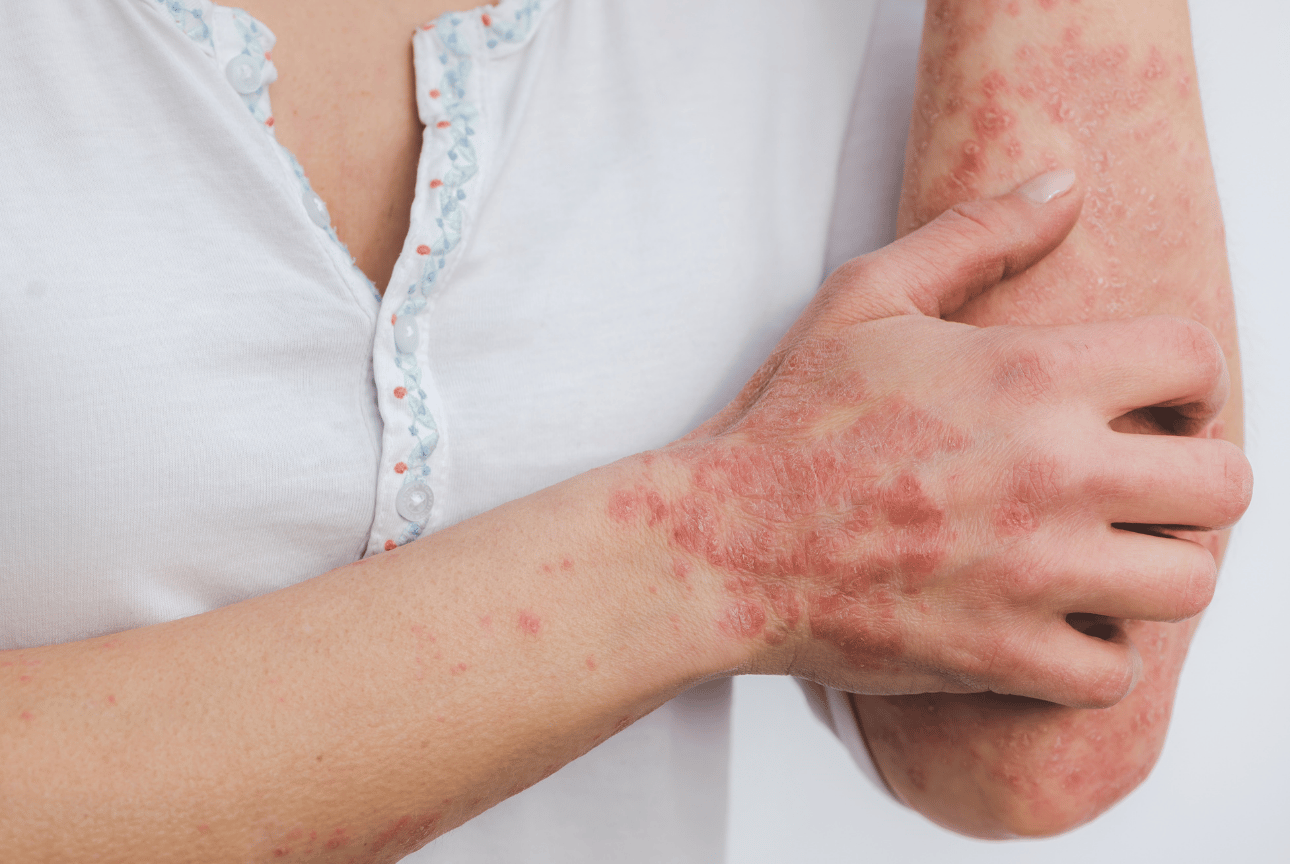
Psoriasis and eczema are chronic inflammatory skin conditions that often follow a cycle of periods of relative stability interrupted by symptom flare-ups. During a flare, symptoms such as redness, itching, dryness, scaling, or irritation may become more noticeable or severe than usual. While psoriasis and eczema are distinct conditions, both involve complex interactions between the immune system, the skin barrier, and environmental factors.
Researchers continue to study why flares occur and why certain triggers seem to affect some people more than others. Although there is no single explanation for every flare, growing evidence suggests that immune activation, skin barrier dysfunction, and external exposures all play important roles.
What defines a flare?
A flare refers to a temporary worsening of symptoms in a chronic condition. For people with psoriasis or eczema, a flare may involve increased itching, more extensive skin involvement, greater discomfort, or changes in the appearance of affected areas.
The timing and severity of flares can vary considerably. Some people experience occasional flare-ups triggered by specific circumstances, while others may notice a more unpredictable pattern. Researchers believe these fluctuations occur because the underlying inflammatory processes driving these conditions can become more active at certain times.
Immune activation and skin inflammation
Both psoriasis and eczema involve abnormal immune responses that contribute to skin inflammation, though the biological pathways differ between the two conditions. In psoriasis, immune cells trigger rapid skin cell growth and inflammation, leading to the development of thick, scaly plaques. Researchers have identified several inflammatory signaling pathways that contribute to disease activity and flare development.
Eczema, also known as atopic dermatitis, is associated with immune system dysregulation that contributes to chronic inflammation, itching, and skin irritation. Inflammatory signals can become amplified during a flare, resulting in worsening symptoms and increased skin sensitivity. Since immune activity plays such a central role in both conditions, researchers continue to investigate how internal and external factors may influence inflammatory responses and contribute to flare-ups.
Environmental and psychological associations
A variety of environmental and physiological factors have been associated with psoriasis and eczema flares. While triggers differ from person to person, several patterns have emerged in research. For eczema, common triggers may include dry air, irritants such as soaps or fragrances, allergens, infections, and emotional stress. Changes in temperature or humidity can also affect symptom severity.
Psoriasis flares have been associated with factors such as skin injuries, infections, psychological stress, certain medications, and lifestyle-related factors. Researchers have also explored how broader health conditions and systemic inflammation may influence disease activity.
Importantly, the presence of a trigger does not guarantee a flare. Instead, many experts believe flare-ups occur when multiple biological and environmental factors interact at the same time.
The role of the skin barrier
The skin barrier serves as the body's first line of defense against environmental exposures, irritants, allergens, and moisture loss. Growing research suggests that skin barrier function plays an important role in both eczema and psoriasis.
In eczema, defects in the skin barrier can allow moisture to escape while making the skin more vulnerable to irritants and allergens. This can contribute to inflammation and increase the likelihood of flare-ups. Although psoriasis is primarily driven by immune dysfunction, researchers have also identified abnormalities in the skin barrier function that may contribute to disease activity. When the skin barrier becomes compromised, inflammation can worsen and symptoms may become more difficult to control.
As researchers continue to learn more about autoimmune and inflammatory conditions, it has become increasingly clear that psoriasis and eczema flares are influenced by a combination of immune activity, skin barrier health, and environmental exposures. Understanding these factors may help provide a broader picture of why symptoms sometimes worsen and how researchers are working to better understand these chronic conditions.
How Evidation can provide insight and support your health
If you're living with psoriasis, eczema, or other chronic conditions, it can be tough to pinpoint your triggers and manage your health. Evidation can help. When you download the Evidation app, you'll be prompted to share the health information you're already tracking. With your permission, we'll use the information you share with us to find patterns, helping you learn more about how you can support your health while managing chronic conditions. Click here to learn more about how Evidation works and get started today.
.avif)
Can a furry friend help you cope with COVID?
You may be wondering, can owning a dog help you live a bit healthier? It turns out that new dog owners in general are a promising sign of better health!
We know that the last few months have put everyone into a new funk. Work, lifestyles, and exercise are all uniquely different than they may have been back when 2020 started.
That’s why we decided to look at how Evidation Members were resting and perhaps coping with some of these changes. To better understand our community, we decided to look at members who logged fitbit data in 2019 and 2020 between January and April to see if the pandemic was causing people to change up their nap schedule (hopefully for the better). Total number of naps per user per day were counted and the average nap count per day was calculated across our Evidation population. See the figure below:
.jpeg)
It appears that members are indeed napping far more than they were in 2019, beginning at about the time shelter in place orders began (which was around March 15, 2020, see grey in graph). On average, after shelter in place began, Evidation Members napped 14.37% more compared to the previous year during this time period. That’s many more naps! And hopefully, people are using this time to rest and recuperate.
We know that being mindful of sleep is one way people can take care of their health. However, we also observed in the news that fostering dogs has been at an all time high. It has become so popular that there’s even a waitlist.
So, in addition to users napping far more compared to last year, we delved more into what other things users are doing differently during this uncertain time. We released a survey a few weeks ago asking our members about their dogs, what type of relationship they have with their pets, and their activity habits with their pets. We received over 35,000 responses!
The first thing we wanted to know about our members and their pets was whether they had recently fostered a dog. It turns out that many people have begun to foster dogs, likely due to the pandemic. In total, 1,500+ Achievers indicated that they fostered their dog in between February and April of this year. Compare that to only 450+ Achievers during that time period last year. It definitely appears that the pandemic is causing people to go out and lend a helping hand to a homeless dog.
Of the people who recently fostered a dog, 55% indicated that they are now working from home due to the coronavirus. 39% said that they are still going into work, and 5% indicated that they had worked at home prior to the pandemic. These newly remote workers appear to be helping keep these shelters empty.
You may be wondering, can owning a dog help you live a bit healthier? It turns out that new dog owners in general are a promising sign of better health! For those that got their dog in 2019 or 2020, we found that members walk on average about 350 steps more per day, comparing the 30 days prior to getting a dog with the 30 days post getting a dog. Even in pandemic times (though members are walking far less than their 2019 dog owner counterparts, by about 1000 steps per day for those that got their dogs in March and April), members with new dogs are getting a 200 step increase in steps pre vs post dog ownership! Of course, this is expected, and we’re happy to report that dogs can help you get more steps. This trend turned out to be especially true for the older folks in our population. The 50+ population increased their steps by about 500 steps on average, compared to the ~200 step increase for those who are less than 50. Take a look:
.jpeg)
Another interesting question we asked our members was whether or not they sleep with their pets and how often per week they sleep with their pets. While we didn’t see a necessary difference in sleep quality or total time when our members had their dog buddies snoozing with them, we did see many people report that they sleep next to their dogs. In fact, 73% of Evidation Members said they nap or sleep next to their dog, at least once per week. For members who said they nap or sleep next to their dog, over 19,000 reported to nap or sleep next to their dog at least 4 times a week! This may sound surprising for the folks who may not have furry pals, but many can attest that sleeping next to their dogs can be a comforting ritual.
The last thing we wanted to explore was whether we could learn anything about our members who had reported that having a dog had helped them manage with their health-condition (heart condition, limited mobility, etc). We found that 1000+ members agreed that having a dog helped. It seemed as though having a furry friend was very helpful for emotional support and well being. We did not find any concrete information around managing conditions, but were glad to hear that those who had self reported with many conditions (specifically anxiety, asthma, chronic pain, depression, diabetes, high cholesterol, hypertension and migraines) and who had a higher resting heart rate found having a pet to be supportive.

5 Ways to Live a Climate-Friendly Lifestyle While Sheltering In Place
5 tips to help you lead a more climate-friendly lifestyle all while safely sheltering in place!
This week, we celebrated Earth Day on April 22nd. While this year brought a fresh perspective on the day, we still found some great ideas on how to be involved even if some swaps to celebrations meant staying indoors.
We hope that these tips will help you lead a more climate-friendly lifestyle all while safely sheltering in place!
- NASA created all kinds of resources online to give Earth Day the proper 50th year celebration it deserved. Check out everything from satellite views of the planet to global archives of photos capturing hurricanes, wildfires, icebergs and more!
- Try planting something and create a little garden. For simple tips, read more in this USA Today Article.
- Experiment with a plant based meal. If you have a sweet tooth, check out these quick, easy swaps.
- Make a grocery list via any of these apps (AnyList, Mealime, Bring! to name a few) to more easily keep track of home food needs.
- Small actions can have a big impact! Switch to paperless bank statements where you can and make sure to unplug electronic devices and appliances when you aren’t using them around your home.

Give the Happiness Project Podcast a Listen
Check out The Happiness Lab podcast by Dr. Laurie Santos
Given how tumultuous a time it has been for all, we found this podcast with episodes that will lift your spirits. The Happiness Lab podcast is narrated by Dr. Laurie Santos who is a Yale professor who teaches a class called “Psychology and the Good Life.” Through various episodes, Dr. Santos references the latest, relevant scientific research and relates them to everyday experiences and some unusual moments.
In this specific series, she’s curated a variety of content related to coping with the coronavirus. We found a lot of the commentary relatable and useful.
The content specific to coronavirus includes the following:
- Beat Your Isolation Loneliness
- Coach Yourself Through a Crisis
- Rising to a Challenge
- Calm Can Be Contagious
- Help Others to Help Yourself
- Keep Your Relationship Happy
- Checking in with Susan David
Susan David is a Psychologist at Harvard Medical School who offers ways to manage fear and panic through healthy strategies that anyone can adopt. - Laurie’s Personal Tips

How Evidation Members Are Hacking Together Home Workouts
Exercise tips, routines, and links to favorite home workout videos from our Evidation Memebers
Though many people generally exercise at home, we know that there are many others who have had to recreate their regular exercise habits during this time of sheltering in place. We polled our Evidation community, and 70% of members who responded said they have been finding new ways to exercise or stay active during the coronavirus pandemic. We then asked our members to share some of their exercise tips, routines, and links to their favorite home workout videos and helpful stretches to inspire others.
Here are a few ways you can exercise at home:
- If you do not have a home gym set up or any weights, you can find ways to use household items to get a great exercise in.
- Similarly, instead of buying separate weights to create your own home gym, you can also purchase exercise video games for the whole family to join on the fun.
- Online videos and streaming sites like YouTube are common places that Achievers are getting exercise routines from. Here’s a list of fitness gyms and studios that are offering free classes.
- Fitness apps like Fitbit or MyFitnessPal also offer exercise tips for at home workouts and is also an easy way to keep track of your progress as well.
- Pinterest has been a popular site for inspiration and tips since Achievers are able to pin multiple resources to one place. Here’s an example of the many you can find.
- Zumba is an exercise-dance program that has been great to do in groups or by yourself. Here’s a resource to do Zumba at home.
- You can search social media platforms to find inspiring fitness instructors or live exercise sessions. Platforms like Facebook, Instagram, or Snapchat are easy places to start!
- Create your own workout routine or do the alphabet challenge by doing bodyweight exercises that spell out your name. You can start out with your name, your pet’s name, or anyone else in your household!
- If you’re looking for other ways to get your cardio in, you can try jump rope exercises. It’s a simple, but effective way to increase your heart rate and work out multiple areas.
- Another helpful exercise is stretching your muscles, it’s a great way to start or end your exercise session.
- For Achievers who may have limited mobility or who have chronic pain, these exercises and stretches are a great way to keep your body moving.
- If you’re looking for other ways to improve your flexibility or range of motion, yoga and pilates can be a fun way to stretch your muscles. It’s great for anyone at any difficulty level!
- Other exercises like barre offer a mixture of isometric holds to increase strength and also improve posture. Barre also requires little to no equipment!
- Whether you own a regular bike or a stationary bike, biking is one exercise that is easy on the joints and helps reduce stress. Here’s a few tips on how to make biking more fun.
- Practicing tai chi and breathing exercises offers many benefits for both your mental and physical health. You can stream videos to follow along and do them on your own once you learn the motion.

Take Two: Creative Coronavirus Meals
We've had so many great community submissions that we wanted to round up a few more to share in our second recipe digest.
Coronavirus has changed our usual cooking routine! We hope that turning to the kitchen to try a new recipe has helped create some calm during an otherwise crazy time. We had so many great community submissions last week that we wanted to round up a few more to share in our second recipe digest.
Chicken Centered Recipes:
- Chicken Bread Recipe
- Spicy Basil Thai Chicken
- Baked Lemon Garlic Chicken
- Chicken Salad
- One Pot Creamy Chicken Tortellini
Veggie Friendly Meals:
- Cauliflower Mac and Cheese
- Socca Pizza with Sun-dried Tomatoes and Pesto
- Easy Hummus
- Chickpea and Spinach Curry
- Paleo Sweet Potato Toast
- BBQ Jackfruit Sandwiches with Avocado Slaw
- Black Bean Sweet Potato Enchiladas
Baking Goodness:
- 3 Ingredient Flatbread
- 30 minute dinner rolls
- Banana Bread and an oatmeal banana bread variety (for an extra twist banana coffee cake!)
- Creamy 1 ingredient banana ice cream
- Chocolate Chip Oatmeal Breakfast Squares
- Chocolate Peanut Butter No Bakes
As a reminder, we’ve pinned all of these to our Creative Coronavirus Meals board on Pinterest.

The Impact of Coronavirus on Cooking
We're blown away by the number of recipes our members have shared with us, so we decided that to reveal a series of recipes over the next few weeks.
We recently polled our community to ask if they had become more creative with their meals since the coronavirus. We heard back and 55% of members who responded said yes. We then followed up to see what types of recipes and food hacks are keeping them happy and healthy during this time.
We were overwhelmed by the number of recipes shared, so we decided that we’ll reveal a series of recipes over the next few weeks. We’ll curate all of our top community picks on our Creative Coronavirus Meals Pinterest board.
For our first edition of crowdsourced favorites, check out these go-to easy bites and soothing soups.
Go-To Easy Bites:
- Deviled Eggs
- 15 Pantry Recipes for Emergency Preparedness
- Self-Quarantine Recipes from the New York Times
- 5 ingredients or less high protein smoothies! (+a green smoothie)
- Easy Overnight Oats
Soothing Soups:
Vegetarian:
- Rosemary Garlic White Bean Soup
- Mexican Lentil Soup
- Alison Roman’s Chickpea Stew
- Spicy Instant Pot Taco Soup
- Cabbage Soup
Non-Vegetarian:
- Thai Red Curry Noodle Soup
- Quick and Easy Chinese Noodle Soup
- Zuppa Toscana Soup
- Cabbage Roll Soup Recipe
- Buffalo Black Bean Chilli
.avif)
Self-Care Tips from our Evidation Members
We know that together we can always achieve more. That’s why we were glad to hear from so many members when we sent out a poll about self-care tips during coronavirus.
We know that together we can always achieve more. That’s why we were glad to hear from so many members when we sent out a poll about self-care tips during coronavirus.
We received over 75,000 responses and decided to consolidate some of the top themes we saw across our community to gauge how Evidation Members were practicing self-care during this time.
Here’s a list of the top 20 activities and suggestions that we saw!
- Make sure to eat and drink immune boosting food and beverages. For a list of suggestions, check out this article from CNN Health.
Teaser: Carrots, kale, and apricot are good sources of beta carotene and oranges, strawberries, and broccoli are good sources of Vitamin C. - Take the time that you need when possible to squeeze in a nap to get enough rest.
- Make a morning and evening routine to help create some structure during your day.
- Watch a comedy show to make sure to create laughter during your day. Check out some of the top stand up comedy shows on Netflix.
- Create a gratitude list or even download a Gratitude Journal app to document positive things that happen throughout your day.
- Take out your favorite board game to play with friends or family. Check out a few ideas here!
- Plant some seeds or work on a gardening project. Watch this YouTube video from Epic Gardening for ideas (including how to use a water bottle to make a container garden)
- Take a long bath and grab a face mask or two! If you’re feeling adventurous, you can make a natural face mask with ingredients at home.
- Check out one of these online resources to print out coloring books to take a mini break in the middle of your day.
- Spend time catching up on reading. If you’re a parent, check out some free content and stories that Audible has made available here.
- Stretch daily! Here’s a quick yoga video for when you need a mid work-day break.
- Work towards a goal even if you’re stuck indoors. For example, try a new recipe every week or make it a point to connect via video chat with a friend or family member every few days.
- Up your podcast game! Check out this list from Esquire on top 2020 podcasts to listen to.
- Find a class that you can take online! Here’s a list of popular classes from Coursera that are available for free online.
- For parents — rally kids together to write chalk messages on the sidewalk! We’ve heard about neighborhoods spreading positivity to others through sidewalk chalk messages, and we’re inspired by trending #chalkwalks.
- Try a crafting project like knitting or crocheting to calm your nerves. Check out this tutorial on how to learn how to knit.
- Limit your news intake. Try and stay updated, but not inundated with new stories.
- Be sure to drink lots of water!
- Have a dance party at home or virtually with co-workers! Our team has a weekly 5-minute dance party.
- Jump on the jigsaw puzzle bandwagon. Grab a puzzle from your local bookstore.

How to Protect Your Mental Health and Find Distractions During the Coronavirus
We know that this particular time is unnerving and challenging during the coronavirus, so we wanted to share some tips and tricks from our team to help you find some calm throughout your day.
We know that this particular time is unnerving and challenging during the coronavirus, so we wanted to share some tips and tricks from our team to help you find some calm throughout your day.
- Connect with your friends and family through virtual lunches or even a happy hour! Regularly check in with your loved ones to see how they’re doing. Video chat can help you feel more connected.
- Download a mindfulness app to get a daily or weekly moment of meditation in! Don’t forget that Stop, Breathe, Think connects to Achievement, so you can continue to track your progress! We were also glad to hear that Headspace has unlocked a series of specially curated content for consumers who have an account called Weathering the Storm. You can preview content here. Mindfulness app Calm has an online portal available that you can check out as well!
- Stuck inside most of the day? Schedule a quick walk or grab some time to be amidst nature. Be careful to maintain social distancing during this break. Don’t forget that if you have a backyard, it can be a quick escape during the day. One of our team members played “I Spy” with her little ones when they did a walk around the neighborhood.
- Take a virtual tour of a museum while you’re staying in. Read about how these 12 famous museums offer tours that you can take from the comfort of your couch.
- Give Bullet Journaling a try to help organize thoughts. Follow this Pinterest board for ideas or prompts. Journaling can be a relaxing way to express how you’re feeling and prompts can help you take the time to reflect.
- Take breaks from reading and viewing the news and grab your favorite book or listen to a good podcast. Check out this list of podcasts for book lovers.
- Livestream music from famous venues like the Metropolitan Opera and keep an eye on Global Citizen on Instagram to hear about live concerts that famous musicians are live streaming for fans.
- Tune in to an online workout! Check out 15 Minute Relaxing Yoga for Anxiety and Stress Relief, 5 Best Chair Cardio Exercises, or this 7 Minute Ab Workout to catch a good healthy break when you’re indoors.

Behind the Behaviorgram
Behaviorgrams help us put data into context and extract additional insights from it. For example, we can more easily analyze how heart rate changes when people are in a workout session, or the effect that talking on the phone has on walking pace.
Learn What a Behaviorgram Is and How It Works
We have a talented team of data scientists and researchers focused on providing individuals the opportunity to participate in cutting edge research. When our members participate in research, the activity data that they consent for use in the research helps our team study a number of health behaviors — everything from how to measure chronic pain to better understanding the individual migraine experience.
Analyzing and contextualizing the behaviors of thousands of participants with millions of data points is not an easy task. Over the years, this analysis lead to the creation of something that we have internally named “behaviorgram”. The behaviorgram of a person is a collection of their data streams over the course of some time. A behaviorgram can be quite simple and consist of only a few data streams from a single device (such as heart rate and steps from an activity tracker) or it can be quite large and include multiple data streams from multiple sources. A behaviorgram can be visualized much like an ECG, and below, we provide a glimpse as to what this visual may look like.
In our studies, we may start with activity data from a Fitbit or Apple Watch and then layer on additional data such as survey responses (e.g., mood or feelings during the day) and contextual information (e.g., weather, air quality, and the time of the day). Dense behaviorgrams give us richer pictures of someone’s behavior over time. As a reference, the behaviorgrams we created for the research on Alzheimer’s disease we did with Eli Lilly and Apple in August contained dozens of data streams and included steps counts, walking pace, sleep depth, workout sessions, and many others.
Behaviorgrams help us put data into context and extract additional insights from it. For example, we can more easily analyze how heart rate changes when people are in a workout session, or the effect that talking on the phone has on walking pace. It also allows us to derive new data channels from the existing ones. For instance, while MyFitnessPal already reports how many grams of protein and calories are eaten, we often find it useful to layer in a channel that represents the percentage of calories that came from protein. Similarly, we often add a new data stream that represents heart rate during periods of inactivity (i.e., no steps).


What would actually help you visualize a behaviorgram? A picture of course! We wanted to illustrate that there are small moments throughout your daily life that can have a significant impact on your health, and we were fortunate enough to get consent to share one of our colleague’s visual health journey via the various apps they have connected on Evidation. Looking at their data from the last 6 months, we tracked down a few key dates where we noticed specific behavior changes and asked them to add labels to the behaviorgram on what happened in their life on those days. Sure enough — in a week with less sleep, we uncovered they were abroad, working until late to match California time and then having troubles falling asleep due to jet lag and an uncooperative baby. You can see other activity trends like sightseeing with friends in Singapore and New York on high steps count days, frequent awakenings in sleep during a night spent on an international flight, and a spike in logged calories when they had leftover sweets for breakfast. You can also see that they were able to sleep longer when the baby was away with the grandmother. We got a good laugh out of the observation that the company offsite was a high fat/protein-heavy day!
Based on weather data, the highest precipitation day is low in activity! Though some of our team is based in sunny locations, it highlights that weather does impact our activity. Related, given the air quality impact that the Wildfires had in California this year, you can see that during the time of the fires 11/25 to 12/14, they did not spend much time outside and took some time off from exercising (with the exception of their time in New York!)
Keep an eye out for more references to behaviorgrams from us! Our hope is that they’ll begin to become a tool by which you contextualize different actions that you take. We also know that big life changes can impact your habits and health. That’s why we’re planning on sharing some personal stories from our team on the journey to being a new parent and its impact on health routine. We also want to capture events like life with a newborn to highlight trends that our specific team members are experiencing to show activity patterns during the first few months of these very significant milestones.