

Blog
Understanding the triggers behind psoriasis and eczema flares
Learn what defines a psoriasis or eczema flare and how immune activity, skin barrier function, and environmental factors may influence symptoms.
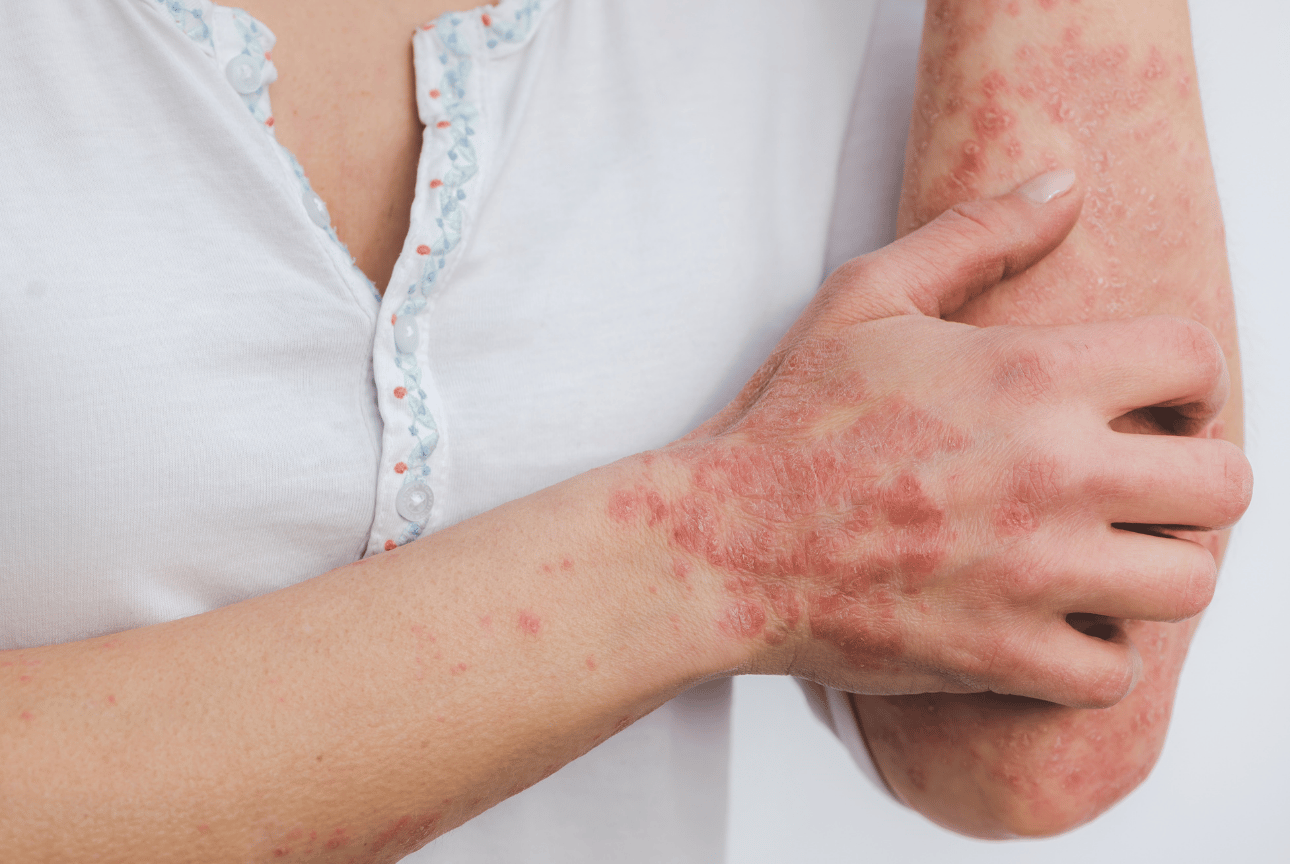
Psoriasis and eczema are chronic inflammatory skin conditions that often follow a cycle of periods of relative stability interrupted by symptom flare-ups. During a flare, symptoms such as redness, itching, dryness, scaling, or irritation may become more noticeable or severe than usual. While psoriasis and eczema are distinct conditions, both involve complex interactions between the immune system, the skin barrier, and environmental factors.
Researchers continue to study why flares occur and why certain triggers seem to affect some people more than others. Although there is no single explanation for every flare, growing evidence suggests that immune activation, skin barrier dysfunction, and external exposures all play important roles.
What defines a flare?
A flare refers to a temporary worsening of symptoms in a chronic condition. For people with psoriasis or eczema, a flare may involve increased itching, more extensive skin involvement, greater discomfort, or changes in the appearance of affected areas.
The timing and severity of flares can vary considerably. Some people experience occasional flare-ups triggered by specific circumstances, while others may notice a more unpredictable pattern. Researchers believe these fluctuations occur because the underlying inflammatory processes driving these conditions can become more active at certain times.
Immune activation and skin inflammation
Both psoriasis and eczema involve abnormal immune responses that contribute to skin inflammation, though the biological pathways differ between the two conditions. In psoriasis, immune cells trigger rapid skin cell growth and inflammation, leading to the development of thick, scaly plaques. Researchers have identified several inflammatory signaling pathways that contribute to disease activity and flare development.
Eczema, also known as atopic dermatitis, is associated with immune system dysregulation that contributes to chronic inflammation, itching, and skin irritation. Inflammatory signals can become amplified during a flare, resulting in worsening symptoms and increased skin sensitivity. Since immune activity plays such a central role in both conditions, researchers continue to investigate how internal and external factors may influence inflammatory responses and contribute to flare-ups.
Environmental and psychological associations
A variety of environmental and physiological factors have been associated with psoriasis and eczema flares. While triggers differ from person to person, several patterns have emerged in research. For eczema, common triggers may include dry air, irritants such as soaps or fragrances, allergens, infections, and emotional stress. Changes in temperature or humidity can also affect symptom severity.
Psoriasis flares have been associated with factors such as skin injuries, infections, psychological stress, certain medications, and lifestyle-related factors. Researchers have also explored how broader health conditions and systemic inflammation may influence disease activity.
Importantly, the presence of a trigger does not guarantee a flare. Instead, many experts believe flare-ups occur when multiple biological and environmental factors interact at the same time.
The role of the skin barrier
The skin barrier serves as the body's first line of defense against environmental exposures, irritants, allergens, and moisture loss. Growing research suggests that skin barrier function plays an important role in both eczema and psoriasis.
In eczema, defects in the skin barrier can allow moisture to escape while making the skin more vulnerable to irritants and allergens. This can contribute to inflammation and increase the likelihood of flare-ups. Although psoriasis is primarily driven by immune dysfunction, researchers have also identified abnormalities in the skin barrier function that may contribute to disease activity. When the skin barrier becomes compromised, inflammation can worsen and symptoms may become more difficult to control.
As researchers continue to learn more about autoimmune and inflammatory conditions, it has become increasingly clear that psoriasis and eczema flares are influenced by a combination of immune activity, skin barrier health, and environmental exposures. Understanding these factors may help provide a broader picture of why symptoms sometimes worsen and how researchers are working to better understand these chronic conditions.
How Evidation can provide insight and support your health
If you're living with psoriasis, eczema, or other chronic conditions, it can be tough to pinpoint your triggers and manage your health. Evidation can help. When you download the Evidation app, you'll be prompted to share the health information you're already tracking. With your permission, we'll use the information you share with us to find patterns, helping you learn more about how you can support your health while managing chronic conditions. Click here to learn more about how Evidation works and get started today.

23 health facts: surprising insights for wellness
Want to take charge of your health? These interesting facts about the human body and health "did you know" facts can help.
The human body has some pretty amazing properties and capabilities. Understanding health facts and interesting insights about the human body may help you take better care of your own. These facts will also help you appreciate all that your body does for you day in and day out.
Surprising connections between lifestyle and health
1. Drinking a cup of coffee can reduce feelings of depression.
Feeling a little down in the morning? One study found that a cup of coffee can boost your mood and lower your risk of depression. But don’t go for the decaf. You need caffeine for this effect.
2. Owning a dog may reduce heart disease risk.
The American Heart Association says owning pets improves mental health and may lower blood pressure and cholesterol levels, lowering your risk for heart disease.
3. Stress increases your risk of type 2 diabetes.
You may already know that stress can increase your heart disease risk, but it also increases your risk of developing type 2 diabetes due to cortisol level increases. Cortisol increases blood sugar levels.
Intriguing facts about the human body's capabilities
.jpeg)
4. The body can produce enough heat in just half an hour to boil water.
Each hour, the human body creates 350,000 joules of energy, which creates the same amount of energy as a 100-watt light bulb. This ends up being enough heat to boil a half gallon of water in just 30 minutes.
5. Humans are the only animals who cry due to emotion.
You may see tears in other animals, but they don’t stem from emotions. That’s a human trait.
6. Your nose has a superpower.
The average human nose can remember 50,000 different smells. While a dog’s nose may be more powerful, that number’s still impressive.
7. Your brain is powerful.
The brain operates on 12 to 25 watts, which is enough power to light an LED light bulb.
Surprising effects of sleep on health
8. Getting more exercise may mean better sleep.
Moderate exercise may increase the amount of deep sleep you get. While you won’t want to run a mile before bed if you want to be ready to sleep, getting some exercise earlier in the day may improve your overall bedtime experience. Get motivated to work out with Evidation, and you may notice an improvement in your sleep.
9. Sleep affects almost every tissue in the body.
The National Institutes of Health indicate sleep impacts your growth, hormone levels, immunity, cardiovascular health, blood pressure, appetite, and breathing.
10. Adequate sleep reduces your risk of many diseases.
The Sleep Foundation indicates a decreased risk for high blood pressure, stroke, diabetes, and heart disease when you get sufficient sleep.
Impact of laughter on overall well-being
11. Laughter can actually decrease pain and release happy hormones.
When you laugh, your body releases endorphins, which help you feel happier. These happy hormones boost your mental health. This can also lead to less pain.
12. Laughter causes more oxygen consumption.
The process of laughing increases your respiratory rate. The increased oxygen consumption causes you to enter a state of relaxation for a period of time.
13. Laughing impacts blood sugar.
One study found that watching a funny television show lowered participant’s overall increase in glucose levels after a meal, and research has also found that laughter therapy reduces the heart-related complications of type 2 diabetes.
Lesser-known facts about hydration
14. You may lose 3% of your body weight in fluids before you feel thirsty.
Instead of going by thirst, check the color of your urine. It should be close to clear. If not, you’ll want to drink up.
15. Eight glasses of water is a myth.
While eight glasses of water daily can be the right amount for some people, it may be too little or too much for others. Your hydration needs depend on activity levels, body weight, and temperature.
16. You get hydrated through food.
As much as 20% of your hydration levels come from foods. Soups and produce are high in liquid content, which adds to your overall hydration.
17. You can get too much of a good thing.
People can actually overdose on water. This condition, which is called hyponatremia, causes swelling in the body’s cells and a dangerous drop in sodium levels.
Nutritional facts and their implications for health
18. Not all fats are bad.
Fat has a bad reputation, but you need some fat for heart and brain health. Unsaturated fats, including omega-3 fats, are a vital part of a healthy diet, but unsaturated fats can have negative health implications.
19. Lemons are one of the world’s healthiest foods.
Not only do they contain high doses of vitamin C, but lemons also aid in weight loss and immune system function. Adding some to water can be a simple way to add a wellness boost to your day.
20. The sun is part of your nutrition.
Getting sunshine exposure is essential to making vitamin D. So soaking in some rays is actually part of a healthy diet.
Debunking health myths with facts
21. Eight glasses of water is a myth.
While eight glasses of water daily can be the right amount for some people, it may be too little or too much for others. Your hydration needs depend on activity levels, body weight, and temperature. However, it’s a good average, so you can aim for this amount if you feel you need more water intake.
22. Coffee doesn’t cause dehydration.
Coffee has plenty of water in it. The caffeine in it does serve as a diuretic, but the water content compensates for this. According to a study in PLOS One, You can get hydrated with coffee in moderation.
23. Diet is highly personal.
What’s a healthy diet for one person may not work well for the next. For instance, some people thrive on a low-carb diet, while others need a balance between carbs and protein to feel their best. For that reason, working with a doctor or nutritionist when making dietary changes is important.
Motivate yourself to take care of your amazing body with Evidation
These interesting facts about health and the human body may have motivated you to take better care of your body. Evidation can give you the tools to stay motivated. Check out the app, and download it today to start tracking your health and getting rewarded for doing so.

How to keep your heart healthy with these 5 tips
Wondering how to keep your heart healthy naturally? Here are some tips that may help.
You only have one heart, and it works hard day in and day out to keep your blood flowing. This vital organ is directly impacted by your lifestyle choices, and taking charge of your health often starts with making changes that support a healthy heart. If you're wondering how to keep your heart healthy and strong, here are some good tips that may help.
The importance of heart health
The heart takes your blood to all the other organs and systems in your body. That blood carries oxygen and nutrients to the muscles and systems, ensuring they can function. It also plays a role in your immune and endocrine systems. These roles show why heart health is so vital to your overall health.
Sadly, heart disease is becoming a serious problem across the U.S. In fact, according to the American Heart Association, it’s the top cause of death for adults in the country, and every day, over 2,300 people die due to cardiovascular diseases. These sobering statistics become even more alarming when you realize that 80% of these deaths could be prevented through lifestyle change. Heart health is more than just a modern buzzword. It’s a life-or-death situation.
Heart disease risk factors
While anyone can suffer from heart disease, certain conditions or lifestyles put an individual at higher risk for these conditions. Some common risk factors include:
- Diabetes
- Obesity
- Sedentary lifestyle
- Too much alcohol use
- High blood pressure
- Unhealthy cholesterol levels
- Periodontal (gum) disease
- Poor sleep
In addition to these universal risk factors, men and women have different risk factors worth noting.
Heart disease factors for men
Men and people who were assigned male at birth have specific risk factors, as identified by Johns Hopkins University. These include:
- Low testosterone levels
- Metabolic syndrome, which is a condition with high blood sugars, unhealthy cholesterol, and increased weight around the abdomen
- Stress
- Consistent problems with erectile dysfunction
Heart disease risk factors in women
Like men, women and people assigned female at birthcan have specific risk factors that indicate heart disease is likely. The CDC warns that many women have no symptoms of their heart disease, so noting risk factors is vital. These risk factors include:
- Untreated high blood pressure
- Ethnicity, with Black women being more likely to have issues than Caucasian women
- Stress and depression
- Reproductive health issues, such as PCOS or early menopause
Daily habits for a healthy heart
Whether you have risk factors already or simply want to take better control of your heart health, there are some things you can do daily that will make a big difference.
1. Maintain a heart-healthy diet
The food you eat can impact your heart health. Mayo Clinic recommends a diet rich in fruits and vegetables as well as whole grains. Protein is also important, but low-fat protein trumps high-fat sources. Also, work to avoid unhealthy trans fats, swapping them for healthy unsaturated fats instead. The American Heart Association also recommends limiting salt intake to no more than 2,300 milligrams daily for healthy adults, or 1,500 milligrams if you’re at risk for heart conditions.
2. Get regular physical activity
Lack of physical activity may contribute to poor heart health, but increasing physical activity can reverse this. You don’t need to start big here, either. CanoHealth recommends a 45-60 minute daily brisk walk as a good starting point. Consistency is critical here, and Evidation may help motivate you to do what’s good for heart health and start moving.
3. Manage stress and mental health
When your body feels stressed, you may have higher levels of the hormone cortisol in the bloodstream. The University of Rochester Medical Center warns that cortisol levels can increase blood cholesterol, blood sugar, and blood pressure levels, all of which are risk factors for heart disease. In addition, chronic stress can lead to mental health issues, and mental health issues are tied directly to heart disease concerns, according to the American Heart Association. Stress may also raise your resting heart rate.
4. Get adequate sleep
Most adults benefit from 7 to 8 hours of sleep a night. Cano Health warns that getting too little sleep, or sleeping in small chunks instead of one long period of nighttime sleep, disrupts the hormonal balance. When hormonal balance is off, the rest of the body’s organs also struggle. To improve your sleep, consider removing electronics from your room and setting up a stable getting ready for bed routine, both of which may encourage better sleep habits.
5. Avoid smoking and excessive alcohol use
Smoking and excessive consumption of alcohol are both connected to an increased risk of heart disease. Nicotine narrows the blood vessels, which reduces the amount of oxygen coming to the heart. Alcohol in large amounts can damage the heart muscle and increase blood pressure. Quitting smoking altogether and reducing the amount of alcohol you consume may help improve your heart health.
How to incorporate these strategies into daily life
These strategies all sound good, but if they were easy to implement, you’d probably already have them in place. Some strategies to make it easier to add them to your life include:
- Start small: Set small goals, such as going to bed 30 minutes earlier for a week, that add up to bigger changes.
- Celebrate success: When you stick to one of your goals, celebrate your success, and Evidation can be part of that with positive reinforcement through rewards and an uplifting community.
- Take the stairs: Taking the stairs or parking farther away from the door of your location can increase your physical activity without adding anything to your “to do” list.
- Make swaps: Instead of stopping your afternoon snacking habit, swap out the crunch of chips for the crunch of an apple for a healthier alternative.
Tips for heart disease prevention
While the five daily changes mentioned above are great steps to take, there are additional things you may want to consider to help prevent heart disease from developing in the first place. Some strategies recommended by Mayo Clinic include:
- Strive for a healthy weight: If you’re carrying around some excess pounds, reducing your weight by just 3 to 5% can make a difference in your heart health.
- Practice stress reduction techniques: Use mindfulness, yoga, meditation, or relaxation exercises to reduce your overall stress level.
- Have your health screened: An annual physical that includes blood pressure and cholesterol checks may help you stop heart disease before it starts.
Lifestyle changes for your heart health
If you’re ready to take heart health seriously, it may be time to make some lifestyle changes. Lifestyle changes have a bigger impact on your overall health than temporary fixes. For example, instead of viewing your heart-healthy eating as a temporary diet, view it as a new way of life. Consider making physical activity part of your recreation time, like taking a walk in your free time instead of watching TV. Then, add in tools like Evidation and your favorite fitness tracker to keep tabs on your heart rate and activity level so you can be proactive in protecting your health. Evidation will reward and motivate these positive changes, so you’ll be on track for a lifetime of healthier habits.
If you’re ready to keep track of your health, download the Evidation app today.
.avif)
Navigating a busy life: A guide to a healthy lifestyle
Healthy lifestyle tips on nutrition, sleep, exercise, meal prep, stress management, and more.
There's no way around it: today's world is fast-paced, and many of us feel like we're never quite doing enough. When it comes to work, family, and social obligations, it can be tough to balance the ups and downs of life with living a healthy lifestyle.
The key to living a healthy lifestyle? Knowing where to start. We understand that you're super busy, and it can be tough to fit the foundations of a healthy lifestyle into your daily routine.
We're here to help.
Here, we'll delve into everything you need to know about getting started with a healthy lifestyle, from starting a fantastic nutrition plan to practicing mindfulness to keeping your stress levels low. Whether you're looking for some tips to add to your already-healthy routine or you're just getting started with a wellness journey, we've got you.
Healthy lifestyle foundations
If you're curious about starting a healthy lifestyle, it's important to get back to basics. All too often, it's easy to get caught up in the latest technology, workout craze, or nutrition trend, all while forgetting that nailing the basic tenants of a healthy lifestyle is key toward creating a sustainable plan.
It's important to remember that health isn't about a number on the scale or the way we look in a swimsuit. Health is about increasing both the quality and length of your life by providing your body with everything it needs to function at its best.
Three lifestyle factors--nutrition, exercise, and sleep--can set you up to meet and exceed your health and wellness goals.
Nutrition
Food is the foundation of wellness. Depending on how you approach nutrition, it can either be an amazing medicine or the cause of disease. While there's no need to eat perfectly all of the time, getting most of your calories from whole, nutrient-dense foods can help boost energy levels, improve sleep, and help you avoid diet-related disease.
Knowing how to eat well and actually doing it are two different things. Many people who are interested in health and wellness find that despite knowing exactly what they should be eating, it's hard to stay on track.
There are several techniques you can use to stay motivated to continue following your nutrition plan, including:
- Think about adding instead of subtracting: When you're focused on all the foods you're working to eat less of, it can feel like you're being deprived. Instead of focusing on what you're not having, try focusing on what you can have.
- Switch up your routine: Instead of sticking with the same meals from week to week, take some time to introduce new recipes.
- Make it simple: Convenience is key, and when it comes to staying on track with your nutrition, getting into a meal prep routine can make it easier to stick to it.
- Choose foods you love: You don't have to forgo delicious meals when you're eating healthy. If you're not a fan of eating chicken and broccoli day in and day out, exploring recipes that are a good fit for your taste buds can help you stay on the path to wellness.
When you decide that you'd like to clean up your nutrition, it may be helpful to start slowly. Going all-in on a new nutrition plan can work well for some people, but others find that it's easier to make small changes--such as swapping out a morning sugar-laden latte for a bowl of oatmeal and berries--than to do a complete nutritional overhaul.
If you're not sure what type of nutrition plan is the best fit for your body, it's a good idea to talk with your doctor or a registered dietitian. You'll be able to get valuable insights into the meals that will work best for your health and fitness goals, as well as be able to track your progress over time. Working with a healthcare professional will also help to ensure that you're choosing a sustainable nutrition plan, rather than a too-strict set of guidelines that will send you reeling the minute you decide to venture off-plan.
Exercise
Movement matters, and finding the motivation to work out can be a smart first step in getting and staying healthy. While your exercise needs depend on your individual fitness level, body type, age, and health and wellness goals, it's important to get moving a few times each week.
If you want to get started with an all-out fitness program, more power to you--but this isn't necessary for your body to enjoy the benefits of regular exercise. It's recommended that you shoot for about 150 minutes of moderate exercise each week. This could be walking after dinner for half an hour each weekday, doing yard work for about 20 minutes each evening, or spending some time chasing after your kids a few afternoons each week.
In order to stick with physical activity long-term, it's important that you find exercise that feels good for your body. You shouldn't dread your workout. If you find that it's tough to get moving on your own, teaming up with family, friends, or neighbors can help you stay motivated to keep moving. If you're more of an introverted exerciser, you may be interested in online fitness challenges that keep you on your toes with others around the world.
A few tips when it comes to keeping yourself moving:
- Remember, motivation wanes, while habits stick. Getting in the habit of moving regularly--even when you're not particularly in the mood to exercise--can help you continue to work toward your goals.
- Small rewards like new shoes after you hit your mileage goal for the month or a manicure with friends after you stick to your plan for a few weeks can help keep you pushing forward.
- Keep track of your statistics--like how long it takes you to walk a mile, or how long you're able to make it through your favorite dance workout video before you have to take a break--can help you to see that you're making impressive progress.
Sleep
When it comes to your health, rest is key. In today's go-go-go world, it can be tempting to burn the midnight oil. While it may feel good to check items off your to-do list late into the night in the short-term, doing so can hurt your productivity the next day, and can eventually hurt your long-term health.
Sleep needs are individual, so it's important to pay attention to the amount of sleep that allows you to feel your best. The recommended eight hours of sleep per night can be a good jumping off point for most adults, but you might need more or less sleep depending on your personal needs.
Establishing good sleep habits can help you stay on track with healthy actions throughout the following day. When you get solid rest at night, you're more likely to exercise and make nutrition decisions that fuel your body than when you're tossing and turning into the wee hours.
It's important that you set the stage for great sleep, night after night. Some great ways to improve your sleep quality include:
- Cool off. Experts say that the ideal room temperature for sound sleep is about 65 degrees. Of course, this is individual--if you find that 65 degrees is too cool for you, it's ok to crank the thermostat up a few degrees. If it's cool outside, opening a window in your bedroom for a little while before you go to bed can let in some fresh air and begin the cool-down process.
- Set a schedule. A bedtime isn't just a good idea for your kids--it's a smart move for you too. When you go to bed at the same time each night and wake up at the same time each morning, your body begins to know what to expect. This can make it easier to fall asleep faster and stay asleep longer.
- Darken your room. While you don't necessarily need blackout curtains to get good sleep, it's smart to close the blinds and draw the curtains each night. The darker you can make your room, the better.
- Make your nutrition work for you. Most people find that they get their best sleep when they stop eating a few hours before bedtime. The old adage of "breakfast like a king, lunch like a prince, dinner like a pauper" can help you rest easy--when your body isn't working to digest a large meal at the end of the day, you may find that it's easier to fall and stay asleep.
- Cut the coffee. There's nothing wrong with a cup of coffee in the morning, but if you're struggling to fall asleep or stay asleep at night, it may be time to cut the caffeine habit. If you're not willing to go cold turkey, try switching to half-caf, and be sure to stop drinking caffeine before noon.
Sleep is deeply individual, and it's important to take the time to figure out what sleep techniques work best for you. If it's not distracting, wearing a smartwatch or other wearable health device to bed can provide valuable sleep insights that can help you make the most of your non-waking hours.
Meal planning for busy people
.jpeg)
Convenience is king when it comes to food, and meal prepping can be a super-helpful way for you to stick to your nutrition plan when things get rough. No, you don't need to eat every meal out of a plastic container, but having some tried-and-true healthy favorites in the fridge can set you up for success.
Try these tips to get into a meal prepping groove:
- Designate a grocery day. You don't need to run to the store every day after work to pick up a few things for dinner--this makes it all too tempting to order in. Plan your meals for the week according to plan, then take a few hours to hit the grocery store to get everything you need.
- Make meal prep an appointment. Just like you wouldn't blow off a scheduled appointment, you don't get to blow off meal prep. Set your prep time into your calendar each week.
- Keep it fresh. It's tempting to prepare the same foods week after week, but doing so increases the likelihood that your prepped food will sit in the fridge while you munch on something more enticing. Trying a new recipe each week can introduce the variety you need to stay interested.
Incorporating exercise into your schedule
Whether you've been promising yourself that you'll finally exercise tomorrow, you've been waiting for the weather to clear up, or you're telling yourself that taking the dog out was enough, it's easy to make excuses not to exercise when you're busy. No judgment--we've all been there. Thankfully, there are some ways that you can make it easier to get the movement your body craves, no matter how jam-packed your schedule may be.
Try these tips to incorporate exercise into a busy schedule:
- Shift your sleep. Many people find that it's easiest to exercise in the morning, before the tasks of the day begin to pile up. Moving your bedtime to an hour earlier so you can wake up and work out can make it easier to get moving when you have a lot on your plate.
- Find a workout buddy. It can be all-too-tempting to drive right past the gym or the park on the way home after a long day at work, but it's harder to cancel when you know you have someone depending on you. Teaming up with a friend, family member, or co-worker for daily or weekly workouts can help you stick to the plan, even when things get busy.
- Multitask. While this isn't always ideal, sometimes, multitasking is the only way to get your movement in--and that's ok! Whether you need to go for a walk while you take a conference call, do a few minutes of yoga here and there between appointments, or make playing with the kids into a game of tag to get your steps in, small efforts add up.
Mindfulness and stress management
Stress is a part of life, but that doesn't mean that we need to constantly exist in a state of stress. When stressful events happen, it's easy for us to take the physical, mental, and emotional stress of the event into the rest of our lives. While some of this is unavoidable, practicing healthy mindfulness and stress management techniques can both improve your mood and bolster your overall well-being.
Many people find that meditation is a simple, free, and fast way to re-focus and de-stress. Meditation doesn't have to be complicated, and you don't need to be able to empty your mind in order to gain the benefits. Simply setting a timer for five minutes, closing your eyes, and focusing on a word or idea can help your mind and body reset. As you begin to notice the benefits of meditation, increasing the length of your practice or the number of sessions you do each week can help you continue to lower stress levels.
Mindfulness-based movement--such as yoga--can also offer both physical and mental health benefits. While yoga classes can be a fun, effective way to get centered and meet other like-minded people, there's no need to go to a studio to enjoy the benefits of yoga. Getting started only requires a mat and a YouTube video, and you'll notice the immediate benefits--like a clear mind, deeper breathing, and increased energy--right away.
A final note on stress management: don't be afraid to reach out and ask for help if you're struggling. It can be easy to try to deal with stress on your own, but doing so isn't just difficult--it can be exhausting. Turning to your community or a trusted therapist when things get rough is a key part of managing stress.
Why hydration matters
Quick--when last did you have a glass of water?
Hydration is a key part of keeping your body healthy long-term, but it's easy to forget to drink up when we get busy. It can also be hard to remember to drink water when we're enjoying other beverages.
Benefits of drinking enough water each day include:
- Regulation of kidney function
- Supports digestive health
- Boosts energy levels
- Can contribute to healthy weight maintenance
- Improves skin health
- Boosts focus
Knowing how much water your body needs to feel great is a smart place to start. Many experts recommend drinking half of your body weight in ounces of water each day--for example, if you weigh 150 pounds, you'd aim for 75 ounces each day, plus more if you're exercising, breastfeeding, or spending time in hot temperatures.
Setting an alarm on your phone to remind you to drink water can help you stay hydrated, as can starting a water challenge with the people you're around during the day. When you begin to boost your water intake, you may feel that you're constantly drinking--don't worry, this will fade over time. A word of caution: if you're new to hitting your hydration goals, you may want to stop drinking a few hours before you go to sleep, so you aren't constantly waking up to use the bathroom.
Prioritizing self-care
When you're busy taking care of others, it's easy to put yourself last. Whether you end up picking at leftover food on kids' plates because you feel too busy to make a healthy dinner for yourself or you fail to get the sleep you need because you're working to meet deadlines, many people have a tough time prioritizing self-care.
Doing so, however, is key to your long-term well-being. Self-care looks different for everyone, and it's important to pay attention to what self-care behaviors help you feel restored, revitalized, and ready to live your best life.
If you're not at the point where you feel you can prioritize your well-being for your own sake, think about how prioritizing your well-being helps others. When you're healthy and happy, it's easier for you to keep others healthy and happy. When you have high energy levels, the people around you benefit. If you have little ones at home, engaging in self-care helps them see the importance of doing the same.
Self-care isn't always about taking a bubble bath or getting a massage. Some less-often-discussed self-care activities include:
- Asking for help when you need it
- Calling a friend to talk when you feel stressed
- Setting boundaries with others
- Declining invitations when you feel overwhelmed or in need of rest
- Spending time by yourself
- Relaxing with your pet or a family member to recharge
- Preparing and enjoying healthy food
- Participating in physical exercise that is challenging and fun
- Going to the doctor for regular check-ups
- Talking with a therapist to support your mental health
We've all heard the saying "put your own oxygen mask on first," and this is as true in life as it is 30,000 feet in the air. When you put yourself first, you're reminding yourself--and everyone else--that your well-being matters.
Long-term strategies to maintain overall wellness
You don't just want to have a long life--you want to have a high quality of life for years to come. Implementing healthy living strategies now can help you enjoy the decades ahead.
Some tips for maintaining your health over time include:
- Find an activity that contributes to both your physical and social health. Joining a walking or running club, playing a sport, or exercising with family can boost both your physical and mental health, as well as solidify healthy habits that will support your health long-term.
- Follow your doctor's health screening guidelines. Early detection of health conditions is important. While it can be easy to turn a blind eye to your doctor's screening recommendations out of fear of getting unwanted information, ignorance is not bliss when it comes to your health.
- Pay attention--and speak up when something feels off. You know your body better than anyone else. If you feel that something isn't quite right, don't be afraid to ask for a second opinion or a referral to a specialist.
- Weed out unhealthy habits. While some unhealthy habits may seem like they don't affect your health now, it's important to play the long game when it comes to your health. Smoking, vaping, and drinking to excess can all harm your health over time. Quitting now--or getting the support you need to quit--is a key first step in improving your long-term health.
Evidation: Here to support your health, one day at a time.
At Evidation, we're here to help you learn how to have a healthy lifestyle, one step at a time. Download the Evidation app today to learn more and get started.

Embarking on wellness: How to start a healthy lifestyle
The journey to a healthy lifestyle is ongoing and is achieved through proper nutrition, exercise, and positive habits.
For many of us, getting and staying healthy feels overwhelming.
Where do you start? How do you determine what steps you need to take to improve your overall well-being? The truth is everyone’s journey to a healthy lifestyle is different.
As you embark on this journey, remember this — building sustainable habits takes time, so having patience and compassion for yourself are essential.
The Importance of Living a Healthy Lifestyle
Establishing a healthy lifestyle begins with the foundation of creating positive, sustainable habits. From eating well-balanced meals to self-care and physical exercise, these habits are created over time and mastered with consistency.
No matter where you are with your physical and mental health, you can make small changes to your daily routine that will benefit your life and health in the long run.
In doing so, you’ll look and feel healthier, be less prone to illness, and have more energy to enjoy your life.
How to Start a Healthy Lifestyle: Research-Backed Steps to Take
Research shows that nutrition, exercise, and sustainable habits are key to creating a healthy lifestyle for long-term success. Here’s how to start living a healthy lifestyle.
.jpeg)
Setting clear health and wellness goals
Ever heard the phrase, “A goal without a plan is just a wish”?
Keep that in mind as you imagine a healthy lifestyle for yourself! Without a plan, your goals may never come to fruition because you aren’t creating actionable steps to get there.
Setting attainable, realistic goals for yourself is essential to embracing a healthy lifestyle. When you need to readjust, you can. There’s no judgment for realizing something isn’t working and finding a different solution. That’s all part of your journey — it’s unique and tailored to your experiences, wants, and needs.
Keep a schedule for healthy meals
Changing our eating patterns has the potential to make a significant impact on our overall health. Maybe you overeat at meals, skip meals, snack too often throughout the day, or eat too fast — all of these have repercussions that can be damaging to your relationship with food.
Instead, create a plan for your well-balanced meals each day. Start with a healthy breakfast, including protein, whole grains, and fruits. Plan ahead with healthy snack options in between meals, so you can set yourself up to make more nutritious decisions.
Meal prep your lunches (especially if you work in an office or travel during the day), so you are more likely to eat a filling, nutritious meal. Try to plan your dinners ahead of time, so you can shop for everything you need.
So many of us get off work and head home without a thought about what we’re making for dinner. When we’re tired and hungry, convenience may win over taking the time to prepare a healthy, fresh dinner.
Drink plenty of water
Staying hydrated boosts your mood, strengthens the immune system, and gives you more energy throughout the day. When the body has enough water, the organs can function properly, you’ll get better sleep, and your body temperature is regulated.
.jpeg)
Increasing your daily water intake is a great way to improve your overall health. Experts recommend that, on average, men should drink 13 cups of water per day, and women should drink 9.
To drink more water throughout the day, set an alarm every hour to drink a cup or two. Many people use water bottles with markings telling them how much they should consume each hour. This way, it becomes a mindless part of your day, and drinking water consistently will become natural in time.
Exercise regularly
Establishing and maintaining a regular workout routine is very challenging, and there’s no shame in struggling to find consistency.
The immediate and long-term benefits of exercise are reason enough to start implementing movement into your daily life. In the short term, you’ll experience improved brain health, sleep, blood pressure, memory, and focus.
Long-term exercise can benefit body weight regulation and cardiovascular health while reducing your risk of chronic disease and mental health conditions like depression.
If you’re just starting out with physical exercise, try to walk for 10 to 15 minutes each day and slowly add time or distance as you feel stronger. You can also incorporate strength training 2 days a week as you feel comfortable.
In general, the CDC recommends 150 minutes of moderate exercise per week. It may seem like a lot, but you can scale up to that number over time. Building small habits leads to big changes!
Reduce screen time & unplug
We’re living in a digital world, but we don’t have to let it consume us. Many of us work in front of computer screens all day long and also use our phones, tablets, and TVs in the morning and evening.
Screens are everywhere, and the benefits of reducing our interactions with them are robust. From lower stress levels to improved posture, better focus, sleep, and brain function, there are so many reasons to reduce your daily exposure to screens.
It can be uncomfortable to find ways to fill your time, making this a great opportunity to add to your self-care routine. Unplugging gives you the chance to read a book, meditate, go on a walk, nap, or any other activity you feel fulfilled doing.
Prioritize sleep
Did you know that 1 in 3 Americans report not getting the recommended amount of sleep - at least 7 hours - each night?
The power of quality sleep is pretty incredible for your body. During sleep, your brain repairs itself, flushes toxins, and processes memories. Blood flow repairs the body’s muscles, promotes cell regeneration, and more.
That’s why after a good night’s sleep, we wake up well-rested, energized, and mentally clear. Your body needs quality sleep to stay mentally and physically strong, fight off illnesses, and reduce your potential risk of disease.
Breaking unhealthy habits
Building positive habits is important, but you’ll also have to break your unhealthy habits along the way. Everyone has unhealthy habits, and these behaviors can become very difficult to control, particularly those that are harmful to our health.
As you break up with your unhealthy habits, be sure to analyze why you need to do this for your well-being.
For example, if you’re quitting alcohol, vaping, or smoking cigarettes, acknowledge why this decision will benefit your long-term health and happiness. From saving money to reducing your risk of heart disease, putting a benefit to the action will help hold you accountable, even when you’re struggling.
Build Healthy Lifestyle Habits with Evidation
Creating healthy lifestyle habits is not an overnight occurrence, and you may not get it right every day. The key is to keep going and to utilize tools and resources along the way to help support your journey.
Evidation is a free health app that supports members in tracking their habits while providing helpful health and wellness information. Evidation Members can take surveys, participate in research, and gain access to relevant trends, insights, and health content. Along the way, our members are empowered to make healthy decisions to improve their physical and mental health.

How to build a habit: creating a healthy routine
Do you want to learn how to build a new habit that will help you achieve your goals? Check out this guide from Evidation.
Did you know that approximately 40% of your behaviors are not conscious choices but habits? There are hundreds of actions you take on a daily basis that you don’t think twice about. Habits are part of everyday life, but they can be a highly positive or highly negative thing. Often, making big lifestyle health and wellness changes or becoming more productive in your professional and personal life requires changing your habits. If you’re wondering about how to create new habits, this guide will walk you through the process.
Habits are essential for personal development
As you’re looking into your own personal development and healthy lifestyle changes, the development of healthy habits is at the heart of it all. Whether you're hoping to add more exercise, excel at work, increase your physical activity, or even get more organization into your schedule, developing habits will help you get there more naturally.
Why are habits so essential to grow as a person? Because they're the building blocks of daily life. If you have goals you want to achieve, you need to develop habits to get you there. Also, everyone has them. You may not think you have many habits, but in reality, you do. They just may not be pushing you toward your goals. Understanding your habits, and then developing the ones you need for success, is a key to personal growth and development.
Understanding types of habits
.jpeg)
Every action you take throughout the day is a result of some of your habits, but not all habits are the same. There are three main categories of habit: good, bad, and neutral.
Bad habits are those habits that keep you from attaining your goals. If your goal is to get more healthy sleep at night, but you're in the habit of doom scrolling on your phone after you hit the bed, then you have a bad habit that’s preventing you from reaching your goal.
Good habits are those habits that help you reach your goals. If you're hoping to boost your mood and improve your mental health, and you have a healthy meditation habit each morning, then you’re doing an action that will help you meet your goal.
Neutral habits are the everyday things that you do that don’t really hurt or help you. They just exist. For instance, every day you eat breakfast in the same seat at the table, and you may make your coffee in the same order. If you changed up your routine, it wouldn’t keep you from getting to work on time or meeting your goals for the week, but the habit exists, nonetheless.
When it comes to taking charge of your habits, the key is to focus on changing the bad habits and building new good habits. Most of the time, neutral habits can be left alone as they don’t help or harm you.
What science says about habit formation
If you're wondering how to build a habit, a look at science could be helpful. According to Harvard Business Review, neuroscience teaches us there aren’t any shortcuts to building a habit. Small, incremental steps combined with repetition will eventually lead to new habit development.
Habits start with routines
Building a habit starts with building routines in your life. Routines are intentional, whereas habits are involuntary. When you regularly perform a behavior or set of behaviors, it becomes a routine. After enough repetitions, the routine can become a habit.
There’s no set timetable
You may have heard that it takes 21 days to build a new habit. According to a study in the Proceedings of the National Academy of Sciences, the answer is more complex. So, how long does it take to build a habit? The answer depends on how challenging the habit is, how different it is from your current habit set, and personal factors that affect each individual differently. If you’re wanting to learn how to create new habits that support your goals, just keep repeating the positive habits until they become second nature, but don’t put yourself on a timetable.
Understanding the habit loop
As you’re working to build better habits, a tool that can help is the habit loop. Coined by journalist Charles Duhigg, the habit loop is a framework to better understand the development of habits. It includes three main steps:
- Cue: This factor triggers habitual behavior.
- Routine: This is the behavior itself
- Reward: This is what the behavior does or the benefit you get
When the cue is strong enough and the reward sweet enough, you'll quickly develop a habit.
So, how can you use the habit loop to build your own habits? Consider a healthy habit like exercising. If you want to build more exercise into your life, create a cue. It could be as simple as a reminder on your phone or as structured as wearing your workout clothes as pajamas, so you can jump out of bed and hit the pavement.
Next, practice the behavior. Make yourself exercise several days in a row after facing the cue.
Finally, build in a reward. The reward should happen soon after the exercise, not at the end of the month. For example, you might reward yourself with something luxurious in the shower, such as new shampoo or body wash, that you only use on days you exercise.
Identifying what motivates you
For a habit loop to work and a new habit to develop, you must understand your own motivations. What reward will motivate you to perform the behavior? It’s going to be unique, and it may not work for everyone.
As you work to identify your motivation, also look at your goals. What are you trying to accomplish? Sometimes, a clearly defined goal can be exactly what you need to motivate yourself. Consider making large goals as well as small goals so you retain the healthy motivation that will push you toward a new habit.
How to grow and then maintain healthy habits
So now that you understand more about the science of habits, how can you start building them? Consider these practical tips.
1. Write down specific goals
Make specific, measurable goals, and write them down. This will help motivate you as you move forward in your habit building.
2. Find or avoid cues
If you’re hoping to build a healthy habit, find a cue you can attach to it. If you’re hoping to break a negative habit, learn to avoid cues that trigger the behavior.
3. Start small
Small changes are easier to make than big ones. Start small, and build new habits slowly. For example, if your goal is to be able to run a marathon, start with learning to run a mile, then a 5K. Eventually, you’ll be able to run longer distances, and running may become part of your daily routine.
4. Get accountability
Ask a friend or mentor to hold you accountable for your new habit. When someone’s going to check up on you, you’ll be more likely to stick to your new behaviors.
Build healthy habits with help from Evidation
There are many areas of life where you can develop great habits, but your overall health and well-being are some of those areas. Evidation gives you tools you can use to build healthy habits, cues to trigger those habits, and rewards to keep you motivated. Get started building your habits. Download the app today.

Endometriosis and mental health
Discover how endometriosis affects mental health and learn how the Evidation community can help you stay informed and make a difference.
Endometriosis is a condition in which uterine tissue grows outside the uterus. This can cause severe pain and make it harder to get pregnant.
Affecting roughly 10% of people who menstruate, endometriosis has significant personal, social, public health, and economic implications.
According to the World Health Organization (WHO), endometriosis
“can decrease quality of life due to severe pain, fatigue, depression, anxiety and infertility. Some individuals with endometriosis experience debilitating pain that prevents them from going to work or school. Painful sex due to endometriosis can lead to interruption or avoidance of intercourse and affect the sexual health of affected individuals and their partners. Addressing endometriosis will empower those affected by it by supporting their human right to the highest standard of sexual and reproductive health, quality of life and overall well-being.”
Endometriosis and mental health
There is a well-established connection between physical and mental health. In fact, the two are inseparable in our daily lives.
The way we feel mentally negatively impacts the way our body experiences conditions (for example, irritable bowel syndrome and headaches), as well as increases the risk of developing physical conditions (such as heart diseases, diabetes, and more). At the same time, physical conditions such as cancer, asthma, and diabetes can worsen our mood.
It’s no surprise then that there’s a relationship between mental wellness and endometriosis.
Research shows that endometriosis is associated with conditions like depression and anxiety, as well as a reduced quality of life. On the other hand, there is evidence that depression and anxiety can “...amplify the severity of pain” associated with endometriosis.


In fact, for some, the relationship can often look like a vicious cycle. When pain occurs or gets worse, emotional distress can follow. That emotional distress can then heighten the perception of pain.

Tips to help
Improving your mental wellness and endometriosis can be complicated, and what works for some may not work for others. Treating any condition can be influenced by a number of factors – for example, access to care, social support, stigma, cultural factors, and more.
Below, we’ve created a list of general tips for you to consider, which may be useful in managing endometriosis:
- Take care of your whole self! This means focusing on both the mind and the body!
- Talk to your healthcare provider about the relationship between your mental wellbeing and your endometriosis symptoms. They can recommend both endometriosis—and mental health—specific treatments that are best for you.
- Read more about the relationship between endometriosis and mental health, because as they say, knowledge is power! Here are some cool resources we liked!
- Endometriosis and Mental Health: What You Need to Know
- Endometriosis and Mental Health
- Endometriosis, Psychiatric Disorders May Raise the Risk of One Another
Join the Evidation community and help advance endometriosis research
If you're passionate about raising awareness and supporting individuals affected by endometriosis, consider joining the Evidation community today. By becoming a part of our community, you'll have the opportunity to contribute to cutting-edge research initiatives, and gain access to valuable resources and information.
Your involvement can help us better understand endometriosis and its relationship with mental health, ultimately paving the way for improved treatments and quality of life for those affected. Join us in our mission to drive research and make a lasting impact on the understanding of endometriosis. Your participation matters.
Download the app today.

Why can't I sleep? A guide to understand how to sleep better
A guide to understanding how you can sleep better and improve your life.
Sleep is at the top of the list of all the human functions necessary for survival. Sleep's benefits impact every part of our lives; physical health, mental wellness, and emotional stability are deeply ingrained in our sleep patterns.
However, nearly 1 in 3 Americans report not getting the recommended sleep per night — 7 or more hours.
From an increase in digital consumption to mental health disorders, stress, and demanding jobs, there are so many reasons that adults struggle to get adequate sleep quality on a consistent basis.
In this guide, we’ll break down all things sleep. What happens to your body when you sleep, common reasons for not sleeping, consequences of not getting enough sleep, and how you can improve your sleep patterns.
We hope that this guide can serve to answer the question, “Why can’t I sleep?” and support you in taking the necessary steps to improve this essential part of our daily lives.
What happens to your body when you sleep
We know sleep is necessary for survival and supports the body and the mind with daily functions. However, do you know what’s happening inside your body when you’re asleep?
We spend nearly one-third of our lives sleeping, and it’s great to understand what’s going on while you’re catching Z’s. Here are the most critical activities occurring in the body and the brain while asleep.
Maintenance
Scientists and researchers have spent years learning what the brain does while asleep. We know that during sleep, the brain can flush its toxins, and new research shows that memory consolidation also occurs in the brain during sleep as well. From new memories to information processing, the brain is highly active while you’re asleep.
Recovery & Repair
During sleep, the body’s proteins and white blood cells are hard at work to fight off infections and potential diseases. Healing hormones are released during sleep that repair the cells in the body, while an increase in blood flow helps muscles heal and promote cell regeneration.
Energy Conservation
As you go about your day, the energy stored in your body becomes depleted. So, when you go to bed, the cells in your body are hard at work to replace the resources you’ve used to ensure you wake up re-energized, well-rested, and ready to take on the day.
The Sleep Cycles
There are two primary cycles of sleep that the human body experiences while asleep.
The first is rapid eye movement (REM) sleep, and the second is non-rapid eye movement, which is broken down into phases N1, N2, and N3. REM sleep and N3 are considered restorative sleep essential to repairing biological functions.
Each cycle and phase has its own uses and benefits for the body. As you sleep, your body goes through these cycles between 4 and 6 times per night, around 90 minutes per cycle.
REM Sleep
During REM sleep, the brain is the most active during sleep. REM sleep is typically when you dream because the brain has similar activity during this cycle to when you are awake.
Sleep experts believe REM sleep is vital for mood balance, cognitive learning, and storing memories. If you’re having sleep trouble, your REM sleep can also be affected. In the process, you may notice shifts in mood, your ability to learn, and memory issues.
Non-REM Sleep (N1-N3)
During stage 1 of non-REM sleep, bodily functions slow, blood pressure and heart rate decrease, and brain waves slow. Stage 1 is considered when you slowly “nod off” to sleep and typically lasts around one minute.
In Stage 2, body temperature lowers, and two things happen in the brain. These activities are associated with memory consolidation and “neural maintenance,” where the brain can repair itself.
Stage 3 is arguably the most crucial of a night’s sleep — the deep sleep phase. Deep sleep is associated with many critical bodily functions, from releasing hormones to repairing tissue, muscle, and bone. Stage 3 is also responsible for allowing the immune system to regulate.
You may be asleep, but many critical things are happening inside your body and brain!
The Standard Sleep Cycle Length by Age
The older you get, the less sleep you need. But is it really that simple?
Babies and toddlers need the most sleep out of any phase or age. Infants up to one year should be sleeping between 12 and 16 hours per day, while adults require 7 hours at a minimum.
Did you know our sleep cycle durations change as we age?
Newborn sleep cycles are usually around 40 minutes long, while infants are about 50 minutes. Toddlers and young children’s sleep cycles last approximately 60 minutes, while children from 5 to grown adults have sleep cycles ranging from 90 to 120 minutes.
Additionally, babies and children under 5 require nearly twice as much REM sleep as adults. Researchers believe this relates to the brain working hard during REM sleep to consolidate memories and process new experiences.
By the teenage years, sleep cycles and durations are set in stone for the rest of our adult lives. You may experience lighter sleep or more difficulty falling asleep as you age, but in general, all adults need 7 or more hours of sleep per night.
Why Can’t I Sleep? Common Reasons for Not Sleeping
.jpeg)
Not only is a lack of sleep frustrating, but it can also be a slippery slope. That’s why it’s important to determine what factors in your life are causing your sleep disruptions. Once you’ve figured out what it is, you can take the appropriate steps to make lifestyle changes and discuss your options with a doctor.
Existing Health Conditions
A few medical conditions can unexpectedly disrupt your natural healthy sleep patterns without your knowledge. That’s why it’s vital to know how certain conditions may change or interfere with your sleep habits. These health conditions include the following:
Pregnancy
Pregnant people often face issues with sleep they didn’t have before becoming pregnant. Insomnia and restless leg syndrome are the most common. Pregnant people also have an increased urge to urinate and nighttime heartburn, which can impact their quality of sleep, particularly in the first and third trimesters.
Depression
75 percent of people with depression report having trouble falling and staying asleep. This cycle is particularly challenging because it’s difficult to say which comes first - the depression or the sleep issues.
Insomnia
Insomnia can create difficulties regulating emotions, leading to depression, while depression can impact the duration and quality of sleep, making it difficult to feel better. Those with depression often face excessive daytime sleepiness and may nap to combat their tiredness, which can lead to more issues falling asleep at bedtime.
Schizophrenia
Nearly 80 percent of individuals diagnosed with schizophrenia face sleep disturbances on a regular basis. Fortunately, insomnia associated with schizophrenia has been treated quite successfully with cognitive behavioral therapy methods for over 15 years.
Scientists and researchers have determined that overactive dopamine receptors in the brain are likely to blame for insomnia and a lack of restful sleep.
Intellectual/ Developmental Disabilities
Individuals with IDDs, including autism spectrum disorders and ADHD, often have trouble falling and staying asleep. This is likely because people living with autism or ADHD have some difficulties relaxing, preventing their bodies from falling asleep quickly.
Stress
It’s no secret that stress can keep us all up at night. When you have things on your mind, shutting them off when it’s time for bed can be difficult. And you aren’t alone in that feeling — 43 percent of adults report that their stress levels regularly impact their sleep quality.
From financial woes, issues at work, or situations with family and friends, there are so many ways that stress impacts our quality of sleep.
Lifestyle Factors
So many lifestyle factors explain why you may not get the sleep you need to function properly. These include:
- Drinking too much caffeine
- Alcohol consumption
- Smoking cigarettes
- Eating a big meal before bed
- Not getting enough exercise
- Irregular sleep schedules
- Not having a relaxing sleep environment
- Medications
- Physical pain
- Age
Changing lifestyle habits, like consuming large amounts of caffeine or alcohol, and eating before bed, may quickly impact sleep. Others take time to feel the effects, like improving your physical exercise routine and creating consistent sleep schedules.
It’s important to build on consistency and keep going even if you don’t immediately see the desired results. You’re creating lasting healthy sleep patterns that will benefit you throughout your life.
Some of these factors, like physical pain, medications, and age, aren't entirely in your control. Consulting with a doctor can help you find the lifestyle factors you can control and the ones that can significantly improve your sleep quality.
Other Mental Health Disorders
If you’re living with a mental health condition like PTSD or anxiety, you may experience poor-quality sleep or chronic sleep issues. People with mental illness may struggle with getting quality sleep, which can, in turn, impact their mental health.
Sleep Disorders
If you’ve been diagnosed with a sleep disorder, you may struggle to get good sleep regularly. Common sleep disorders include sleep apnea, insomnia, narcolepsy, restless leg syndrome, and REM sleep behavior disorder. If you think you may have one of these disorders, consult your physician to get a proper diagnosis so you can figure out how to improve your sleep habits.
Insomnia
Insomnia is the most common sleep disorder that makes it very difficult to fall and stay asleep all night. While most adults experience brief bouts of insomnia throughout their lives, chronic insomnia can be crippling.
Insomnia is most common in women over 60, people with mental health disorders or physical health conditions, and those with irregular sleep schedules. The complications from insomnia include a slowed reaction time and an increased risk of conditions including cardiovascular disease and high blood pressure.
Sleep Apnea
Sleep apnea is a condition where a person’s breathing starts and stops while they’re sleeping. It can be very dangerous because it prevents the body and brain from getting the oxygen they need to function correctly. Sleep apnea is typically diagnosed after the patient completes a sleep study. If they are diagnosed with this sleep disorder, surgery or a breathing device are usually prescribed for treatment.
Signs You Aren’t Getting Quality Sleep
.jpeg)
Some people fail to get quality sleep and hardly realize it. Common signs to watch for that may indicate poor sleep include the following:
- Daytime tiredness
- A constant state of grogginess
- Difficulty waking up and getting out of bed
- Feeling drowsy while driving or after eating
- Becoming tired while doing ordinary tasks
The consequences of not sleeping enough
Sleep affects every aspect of our lives, from energy levels to thought processes, mood, and even risk of disease. There are physical, mental, and emotional risks in not getting enough sleep, all of which can be lowered significantly by getting to the root of the problem.
Physical effects
Not only is it critical to get consistent sleep, but getting enough deep sleep is vital for our physical health. Individuals who fail to get enough deep, restorative sleep are more at risk for cardiovascular disease, diabetes, infection, depression, and obesity.
As we discussed, necessary replenishment, repair, and recovery tasks occur in the body when we sleep. The physical effects and risks can be severe over time if the body doesn’t get adequate opportunities to repair itself. The cumulative impacts include an increased risk of the following:
- Hypertension
- Obesity/ weight gain
- Type 2 Diabetes
- Heart attack
- Stroke
- Respiratory infections (cold, flu)
- Inflammation
- Low sex drive
Additionally, a lack of sleep can impact your balance and coordination, making you more prone to accidents. When you aren’t getting enough sleep, your body will be more tired, making it more challenging to have the energy to exercise. This can impact your ability to maintain a healthy weight because your body builds up insulin resistance with less physical activity.
Mental effects
The mental effects of sleep deprivation can be just as harmful as the physical risks. Here are the troubling mental effects you may experience if you’re struggling to get enough sleep:
- Lack of concentration and focus (often called brain fog)
- Decreased alertness
- Decreased creativity and motivation
- Poor problem-solving and decision-making skills
- Confusion, stress, and anxiety
Emotional effects
Most people are grumpy and irritable after a night of inadequate sleep. When sleep deprivation or insomnia becomes a consistent issue, the emotional effects can be overwhelming. Some changes you should look for include:
- Trouble coping with change
- Lack of emotional and behavioral control
- Severe mood swings
- Impulsive or risk-taking behavior
What can I do to sleep better?
.jpeg)
Are you wondering how to get more deep sleep and better sleep overall? You can combat poor sleep and get back on track in many ways. Here are some of the most effective ways to fall asleep and get better quality sleep in the process.
Relaxation techniques
Relaxation techniques are designed to do just what you’d think - help you relax! Relaxation techniques can be very effective if you need help managing daily stress that doesn’t seem to ease before bed.
Breathing exercises
Breathing exercises are a great way to manage stress, promote relaxation, and help you find peace and calm before you head to bed. The most effective breathing exercises can also promote the production of melatonin, which aids with sleep as well.
4-7-8 Breathing, known as relaxing breath, involves a deep inhalation, holding the breath, and then slowly exhaling. You should inhale for a count of 4, hold your breath for a count of 7, then exhale for a count of 8.
Belly breathing teaches slower, more intentional breaths with the end goal of relieving stress and anxiety. Take deep breaths through the nose and exhale through the mouth, with a hand on your chest and another on your stomach. Taking your time, inhale up to 20 breaths until you feel more relaxed.
Box breathing is a helpful strategy for visual learners who need something to picture while focusing on breathing. This involves picturing a box and its four sides as you take four deep breaths in to calm your thoughts. As you envision your box, slowly inhale for a count of 4, then hold your breath for 4. Then, exhale for a count of 4, and finally, hold your breath for another count of 4.
Meditation
Meditation is used around the world to promote calmness and mindfulness, two powerful feelings to foster before bedtime. The health benefits of meditation are robust for sleep in particular.
Meditating before bedtime can increase serotonin levels, encourage slower breathing, reduce heart rate, and lower blood pressure. It can also reduce adrenaline anxiety, preventing you from feeling tired. These are essential for a positive sleep routine, so we highly recommend meditation as part of your pre-bedtime ritual.
Mindfulness
Through intentional mindfulness practices, you can focus on the present rather than being distracted by anything that happened during your day. Mindfulness is designed to help you relax, be aware of your body and feelings, and find peace through grace and acceptance. Mindfulness is usually practiced during meditation, but you can begin by associating sleep with positive energy and accepting that you’re doing what you can to improve your sleep patterns.
Yoga
Consider adding some light yoga stretches to your bedtime routine to help you wind down for the night. Yoga is associated with lowering cortisol, the stress hormone, in the body, allowing you to de-stress and find calm at the end of the day.
Get regular exercise
Aside from yoga before bed, you should exercise regularly to combat sleep deprivation. Physical activity releases endorphins into the brain, which improves mood and decreases anxiety and stress. We discussed the deep sleep phase at great lengths, and studies have shown that physical exercise can help enter and prolong the deep sleep phase.
Limit caffeine
If you can’t get through the day without several cups of coffee, it may be time to reevaluate your caffeine intake and find other ways to feel energized. Caffeine positively impacts mental alertness, performance, and mood, but it can also take the body a long time to process, affecting sleep quality and duration.
Are you not ready to give up your daily caffeine? Try to limit your caffeine consumption to under 400 mg per day, and avoid it entirely in the late afternoon or evening. This is about four cups of coffee, six cans of soda, and eight cups of black tea.
Establish a bedtime routine
Creating and sticking to a consistent bedtime routine will help to improve your sleep habits. Routines are personal, but here are a few standard things to do in order to wind down in the evening.
- Turn down the lights
- Turn off the TV and put your phone away
- Take a shower or a warm bath
- Take melatonin 30 minutes before bed
- Read a book or talk to your spouse
- Complete some positive affirmations
- Stretch, do yoga, or breathing exercises
- Drink some caffeine-free tea or water
Create a relaxing environment
Invest in a firm but comfortable mattress, black-out curtains to shield any light, and try a white noise machine to drown out any environmental noises or distractions.
If you have chronic pain, it’s worth investing in a quality pillow that will help with your alignment and ensure you don’t wake up sore from sleeping in an uncomfortable position. Be sure to remove any electronics that may distract you or leave you feeling unsettled before bed.
Avoid daily naps
You may love taking naps during the day. Unfortunately, long, frequent naps can have a negative effect on sleep quality overnight, particularly if you struggle with insomnia or haven’t been sleeping well recently. Avoid napping for a week or so, and then evaluate if your sleep has improved.
Get better sleep and improve your health
Now that we’ve answered the question, “Why can’t I sleep?” It's your turn to explore the lifestyle factors and possibilities that could impact your sleep and, in turn, your quality of life. If you're concerned you're not getting enough quality sleep, consider speaking with a healthcare provider or participating in medical research or a sleep study to get answers.
Evidation Members can earn points for tracking self-care activities such as walking, sleeping, and food intake. Download our app today to get started.

What does it mean to be healthy?
How do you know if you are physically healthy? Let's find out.
Health encompasses all aspects of well-being, including physical, mental, and social wellness. While being free from disease is one part of health, there are other important factors that contribute to a healthy life.
If you're trying to answer the question of what does being healthy mean to you, it's important to understand that health looks different for everyone. Sometimes, such as during a time of grief, your mental health may need more focus than other aspects of your health. Other times, such as after a tough diagnosis, your emotional and social health may take a back seat as you prioritize your physical health. Our health and well-being needs fluctuate over time, and it's normal to focus on different parts of your health as your seasons of life change.
Here, we'll take a look at some of the different types of health, factors to consider when working to improve your health, and how you can work to achieve an optimal state of wellness.
Types of health: What does it mean to be mentally and emotionally healthy, as well as physically healthy?
Health is personal, and what means positive health for one person may not for someone else. It's important to get to know what makes you feel your best. Three common focus areas of well-being include physical, mental, and social health.
Physical health
Your physical well-being--including physical ailments, injuries, immune system function, cardiovascular health, etc.--is an important part of your overall health. Physical health can be more cut-and-dry than other types of health. Target numbers (like getting into an ideal blood pressure range) can help people know when they're making progress with their physical health.
Mental health
It can be harder to pinpoint progress with mental well-being than with physical well-being. Mental health can be more subjective. Scaling and other mental health measurement tools can offer insight into a person's mental and emotional well-being. That being said, understanding whether a mental health treatment (such as therapy or medication) is working can be harder than understanding whether a treatment for a physical ailment is working. While finding the right mental health support can take time, it's well worth your effort.
Social health
Humans are social creatures, and our interaction with one another is an important part of our well-being. When we don't feel connected socially, our physical and mental health can suffer. Being a part of a family or a community is key for health. Your social support system doesn't have to be the one that you're born into--it can be the one you choose. Close friends, neighbors, coworkers, and chosen family can all play a significant role in improving social health.
Factors for good health
If you want to improve your health, it's important to have a starting point. Taking stock of where your health is doing well--and where there is room for improvement--can help you stay motivated to keep improving your health.
Genetics
You can't choose your genetics, but you can choose behaviors that allow you to make the most of what you've got. Understanding your genes through talking with your family about their history and taking certain DNA tests can help you understand what you're up against. If you find that you have significant genetic issues, working with a genetic counselor can provide you with the information you need to be as healthy as possible, no matter what your genes. Working on your genetic health understanding helps you get an idea of what to expect health-wise over the course of your life--and can provide extra motivation to engage in healthy behaviors.
Tips to boost genetic health:
- Talk to your doctor about any DNA tests that might make sense for you based on family history
- Talk with your family members about health issues that run in your family
- Schedule an appointment with a genetic counselor if you have concerns
Environmental
Your environment affects both your physical and mental well-being. Creating a clean, safe environment can help your health thrive. When it comes to the basics of environment, you'll want to make sure that your home, workspace, and anywhere else you spend time are clean and pleasant. Staying away from smoke and other pollutants and allergens can allow your body to focus on vital processes, rather than trying to fend off allergens. Allowing sunlight into your space, cleaning regularly, and working to spend time in outdoor spaces when possible can make your environment work for you.
Tips to boost environmental health:
- Get outside when you can--being outdoors is healthy for the body and mind.
- Keep your home and workspace clean and free of clutter.
- Stay away from allergens, including smoke.
Health inequity
Health inequity in the United States--and around the world--is stopping many individuals, communities, and populations from achieving optimal health. A lack of access to healthcare, resources, healthy food, clean water, and preventative care can all make it devastatingly difficult for people in certain areas or with certain difficulties to thrive. Many health disparities between groups are preventable, and advocating for your care--and helping others advocate for their care--can help to reduce inequity in the healthcare system.
Tips to stop health inequity:
- Write to your local and state elected officials demanding policy change.
- Talk with your local hospital about opportunities to serve those in need.
Heart rate
Generally, a low resting heart rate is indicative of good cardiovascular health. Most hearts beat between 60 and 100 times per minute. The more efficient your heart, the less your heart may need to beat at rest--for example, an Olympic athlete's heart may only beat 40 times per minute while they're resting.
Tips to lower your resting heart rate:
- Practice stress management techniques, like meditation and yoga.
- Stop drinking alcohol and caffeine.
- Get regular cardiovascular exercise--at least 20 minutes, 3–4 times per week.
Evidation: Start keeping track of your health today.
At Evidation, we provide you with the health data you need to ensure that you're moving toward optimal wellness. We're proud to put you in the driver's seat of your own health. Download the app today to start making your health data work for you.

How to stay asleep all night: unlocking the secrets of a full night's sleep
Why can't I sleep through the night? Here are reasons why you might be waking up and tips on how to stay asleep all night.
The human body's designed to work hard, but it’s also designed to restore and rest during sleep. As you work on improving your health and wellness, don’t neglect the value of sleep. Yet it’s not just getting enough sleep that matters; it’s also getting enough quality sleep. If you're suffering from frequent nighttime awakening, then you're not getting good sleep. Here’s a closer look at how to stay asleep all night so you can get better quality sleep.
Quality sleep is a key component of health and wellness
The average adult needs 7 to 9 hours of sleep, according to the National Sleep Foundation. Yet even if you’re in bed for all of those recommended hours, constant waking up during the night means you aren't getting the true rest you need, and your health and wellness could be suffering. Here’s a closer look at how to stop nighttime waking for a better night's sleep.
Common reasons you’re waking up during the night
%2520(1).jpeg)
If you’re noticing a problem with waking up during the night, finding the underlying cause is important. There are multiple reasons why this might happen. These include:
- Physical problems, like illness or pain
- Stress and anxiety
- Sleep disorders
- Medications or foods, such as caffeine
- Problems with the sleep environment
- Age
With so many potential causes, you might feel frustrated at trying to fix the issue. Thankfully, once you do find your underlying cause, there are many options to help you get better sleep.
Understanding the sleep cycle
Your body moves through four stages when you sleep, according to the Sleep Foundation, and restorative sleep requires you to go through all four multiple times a night. If any stage is interrupted, you won’t feel rested. Here's a closer look at each stage.
Stage 1
Stage one is the stage when you first fall asleep. It’s short, lasting between one and seven minutes. During this stage, your brain and body activities start to slow down, but you wake up easily.
Stage 2
If nothing interrupts you during stage 1, you’ll quickly head into stage 2. Here, your body temperature drops, and your muscles relax. Your overall brain activity slows, and you’re harder to wake up. This stage lasts about 10 to 25 minutes during your first sleep cycle and can get longer as the night goes on.
Stage 3
Stage 3 is your deep sleep. Here, your body relaxes further, and you’re hard to wake up. This stage creates delta waves, a slow brain wave that medical professionals can identify on scans. Many medical experts believe this is where your body recovers and grows, making it a highly restorative stage. This stage lasts between 20 and 40 minutes.
Stage 4
Stage 4 is called REM sleep, and this stage is when you dream. The Sleep Foundation indicates many believe this to be the stage that impacts memory, learning, and creativity. You’ll enter REM sleep after around 90 minutes of sleep, and your brain will start to wake up. The length of time you spend in REM sleep changes through the night as you cycle through the four stages, ranging from a few minutes to over an hour. About a quarter of an average night of sleep is taken up by REM sleep.
Getting woken up at any part of this process could impact your emotional and physical health. Each stage is vital to feeling rested and restored, but deep and REM sleep may be the most important. Constant waking up during the night hurts these stages, leaving you feeling groggy and tired.
Causes of nighttime awakenings
Are you wondering how to improve sleep quality? First, understand the reasons why you're waking up at night, which may include these:
Stress and anxiety
One of the most common reasons people struggle to get a good night’s sleep is due to stress and anxiety, according to WebMD. If you’re struggling with your mental health, your sleep often stays in the lighter stages, leaving you without the healing deep and REM sleep stages.
Poor sleep habits
If you’re struggling with poor sleep habits, your body may struggle to fall and stay asleep. For instance, if you consume caffeine close to bedtime, it may prevent you from staying asleep. Similarly, the blue light from electronics can keep your brain in a more alert stage. Having an erratic sleep schedule can also be problematic.
Problems in the sleep environment
If you have a pet that jumps on you at night or a neighbor whose porch light shines in your window, your sleep may suffer. Other problems in the sleep environment may include an uncomfortable mattress or the wrong temperature.
Health concerns or medication
Finally, you may suffer from a health condition that impacts your sleep, including sleep disorders like sleep apnea. Some medications can also impact sleep. If you feel that you’re not getting enough sleep, consider having a medical checkup to rule out any of these physical concerns.
Tips to stay asleep all night
Are you ready to get a better night’s sleep? Consider these strategies:
Create a sleep-friendly environment
Set up your sleep environment so it’s sleep-friendly. Tools like a fan or white noise machine, room-darkening blinds, and a cooling mattress can all help set the stage for a good night’s sleep. In addition, exposing yourself to natural light can trigger your body’s natural melatonin production cycle, making you feel sleepier when it’s time to go to bed.
Manage stress and anxiety
Stress and anxiety can leave you with an overabundance of cortisol and adrenaline, and these hormones impact sleep. Learn ways to reduce adrenaline naturally and practice techniques such as meditation and journaling to lower other types of stress and anxiety.
Establish a consistent sleep routine
Keeping your sleep habits on a good, solid routine will help your body and brain learn when to fall asleep. Going to bed and getting up around the same time each day will help you sleep better. Research has found that “catching up on sleep” by sleeping in on the weekends is a fallacy. You need consistent, daily sleep to feel rested. After you’ve established a routine bedtime and wake-up time that works for your body, consider adding a routine to your bedtime that helps your brain wind down. Figure out what helps you relax, such as a warm bath or some time reading, and do those activities before you go to bed.
Treat sleep disorders
If your doctor discovers a sleep disorder, then treat the disorder. Restless leg syndrome and sleep apnea are two of the most common, but there can be others. Work with your doctor to get these conditions under control.
Tackle diet and lifestyle factors
Several lifestyle factors can impact your ability to sleep. Exercise can help you sleep, but it works best if early in the day, rather than before bedtime, when adrenaline will impact your sleep. Some foods can help with your sleep as well, including low-fat cottage cheese, bananas, cherries, and salmon.
Taking control of your health can have a positive impact on your sleep routine and overall quality of sleep. Evidation can be a tool to help. Download the app today, and start tracking your health to improve your overall wellbeing.