

Blog
Understanding the triggers behind psoriasis and eczema flares
Learn what defines a psoriasis or eczema flare and how immune activity, skin barrier function, and environmental factors may influence symptoms.
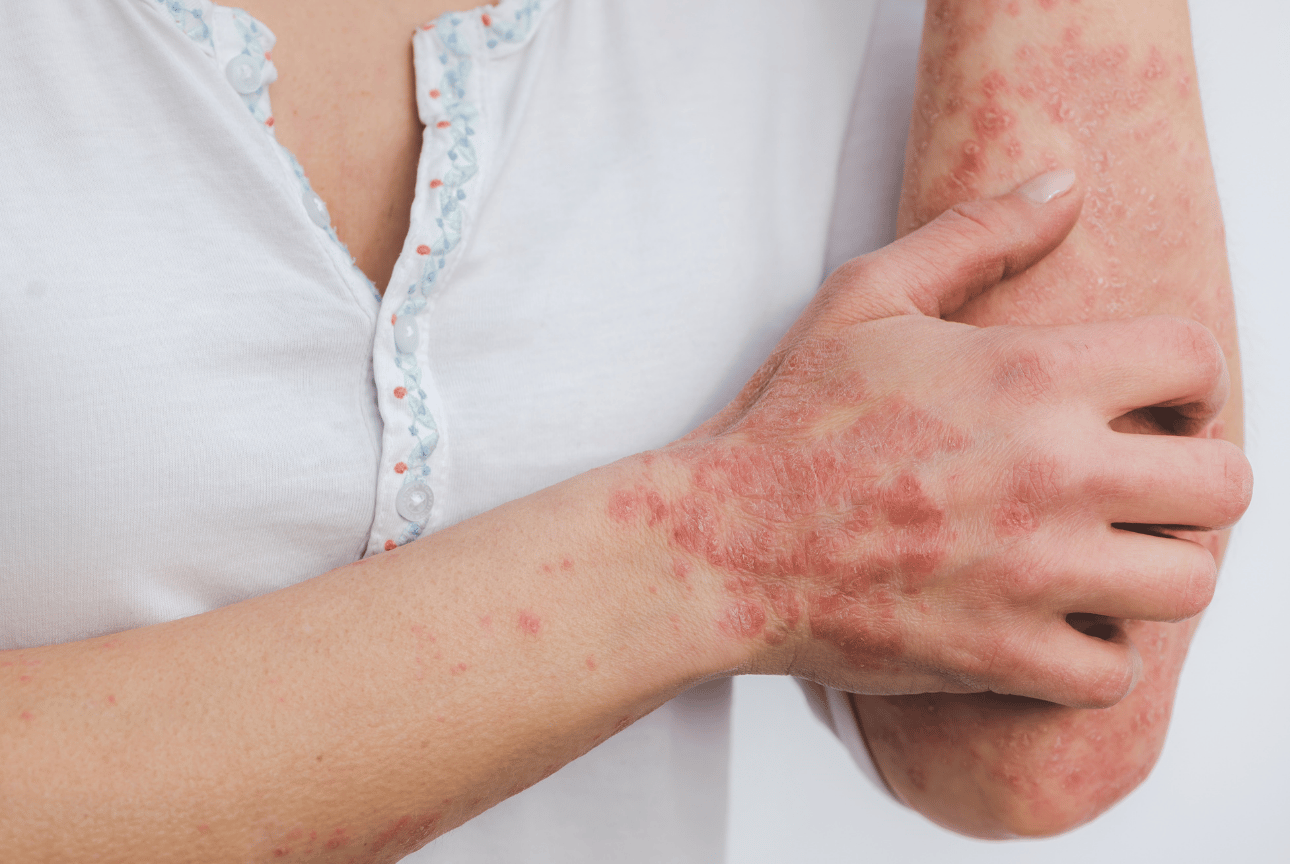
Psoriasis and eczema are chronic inflammatory skin conditions that often follow a cycle of periods of relative stability interrupted by symptom flare-ups. During a flare, symptoms such as redness, itching, dryness, scaling, or irritation may become more noticeable or severe than usual. While psoriasis and eczema are distinct conditions, both involve complex interactions between the immune system, the skin barrier, and environmental factors.
Researchers continue to study why flares occur and why certain triggers seem to affect some people more than others. Although there is no single explanation for every flare, growing evidence suggests that immune activation, skin barrier dysfunction, and external exposures all play important roles.
What defines a flare?
A flare refers to a temporary worsening of symptoms in a chronic condition. For people with psoriasis or eczema, a flare may involve increased itching, more extensive skin involvement, greater discomfort, or changes in the appearance of affected areas.
The timing and severity of flares can vary considerably. Some people experience occasional flare-ups triggered by specific circumstances, while others may notice a more unpredictable pattern. Researchers believe these fluctuations occur because the underlying inflammatory processes driving these conditions can become more active at certain times.
Immune activation and skin inflammation
Both psoriasis and eczema involve abnormal immune responses that contribute to skin inflammation, though the biological pathways differ between the two conditions. In psoriasis, immune cells trigger rapid skin cell growth and inflammation, leading to the development of thick, scaly plaques. Researchers have identified several inflammatory signaling pathways that contribute to disease activity and flare development.
Eczema, also known as atopic dermatitis, is associated with immune system dysregulation that contributes to chronic inflammation, itching, and skin irritation. Inflammatory signals can become amplified during a flare, resulting in worsening symptoms and increased skin sensitivity. Since immune activity plays such a central role in both conditions, researchers continue to investigate how internal and external factors may influence inflammatory responses and contribute to flare-ups.
Environmental and psychological associations
A variety of environmental and physiological factors have been associated with psoriasis and eczema flares. While triggers differ from person to person, several patterns have emerged in research. For eczema, common triggers may include dry air, irritants such as soaps or fragrances, allergens, infections, and emotional stress. Changes in temperature or humidity can also affect symptom severity.
Psoriasis flares have been associated with factors such as skin injuries, infections, psychological stress, certain medications, and lifestyle-related factors. Researchers have also explored how broader health conditions and systemic inflammation may influence disease activity.
Importantly, the presence of a trigger does not guarantee a flare. Instead, many experts believe flare-ups occur when multiple biological and environmental factors interact at the same time.
The role of the skin barrier
The skin barrier serves as the body's first line of defense against environmental exposures, irritants, allergens, and moisture loss. Growing research suggests that skin barrier function plays an important role in both eczema and psoriasis.
In eczema, defects in the skin barrier can allow moisture to escape while making the skin more vulnerable to irritants and allergens. This can contribute to inflammation and increase the likelihood of flare-ups. Although psoriasis is primarily driven by immune dysfunction, researchers have also identified abnormalities in the skin barrier function that may contribute to disease activity. When the skin barrier becomes compromised, inflammation can worsen and symptoms may become more difficult to control.
As researchers continue to learn more about autoimmune and inflammatory conditions, it has become increasingly clear that psoriasis and eczema flares are influenced by a combination of immune activity, skin barrier health, and environmental exposures. Understanding these factors may help provide a broader picture of why symptoms sometimes worsen and how researchers are working to better understand these chronic conditions.
How Evidation can provide insight and support your health
If you're living with psoriasis, eczema, or other chronic conditions, it can be tough to pinpoint your triggers and manage your health. Evidation can help. When you download the Evidation app, you'll be prompted to share the health information you're already tracking. With your permission, we'll use the information you share with us to find patterns, helping you learn more about how you can support your health while managing chronic conditions. Click here to learn more about how Evidation works and get started today.
.avif)
Evidation Year in Review 2021
In 2021, members like you participated in over 200 research opportunities, contributed to 19 research publications, and together logged over 147 million days of activity data. To honor all that hard work and to share back some of the exciting things that have happened, we wanted to highlight some of this year’s biggest accomplishments.
It’s been a busy year on Evidation!
In 2021, members like you participated in over 200 research opportunities, contributed to 19 research publications, and together logged over 147 million days of activity data.
To honor all that hard work and to share back some of the exciting things that have happened, we wanted to highlight some of this year’s biggest accomplishments.
In 2021 Evidation Members:
- Earned 7 billion points.
- Redeemed millions of dollars in awards.
- Completed 18 million offers.
- Logged 951 billion steps. That's equivalent to walking to the moon over 1,896 times!
- Logged over 2 billion minutes of exercise. If each minute of exercise burned 10 calories, our members burned the equivalent of 114 million donuts!
- Spent some of their time finding their zen. According to our most popular connected devices, members logged 8 million minutes of yoga this year.
- Joined from all over the US! California was the state with the most new members, and New York was the state that had the largest percent increase from last year.
New to Evidation in 2021:
We introduced several new features in 2021, including:

Flu Monitoring on Evidation: Since November, 130,000 people have joined together to form our Flu Monitoring on Evidation community from all 50 states. In its first month alone, Flu Monitoring on Evidation identified nearly 6000 cases of flu-like symptoms from changes in activity data. This information can help people know when to access treatment and protect their loved ones.
Steps Challenges: This year, some Evidation members stepped up their games in the form of a challenge, and in general, those who participated increased their steps! On Halloween, we wondered how trick or treating impacted our members’ activity levels, and our results showed that people who enrolled in the Halloween Steps Challenge stepped it up much more than people who opted out of the challenge - three times as much, to be precise! Stay tuned for more challenges in 2022.
Month In Review: We’re also working on sending you personalized insights on your healthy habits and activity, from steps to active minutes, which can be especially important to monitor during colder months as we tend to slow down. Keep an eye out for this new feature!
We also launched a new blog so you can find your favorite posts (and maybe some you missed) all in one place.
These efforts and others like them help bring us closer to achieving our mission of creating new ways to measure and improve health in everyday life. But none of it would be possible without you!
What’s Next?
We plan to keep the momentum going in 2022 by offering you more opportunities to earn points and participate in challenges. We’ll also be creating additional health programs and offering more personalized content experiences.
And be sure to keep an eye out for our upcoming Research 101 series and our Diversity in Research series!

11 Tasty Gluten Free Cookies to Try This Gluten Free Baking Week
These tasty treats are hard to resist, even for the most disciplined healthy eaters. It is the holiday season, after all!
It seems there are baked goods everywhere this time of year. At the office, at school, at family gatherings, in shop windows.
These tasty treats are hard to resist, even for the most disciplined healthy eaters. It is the holiday season, after all!
But for those with wheat allergies, celiac disease, gluten sensitivity, or other dietary restrictions - there’s often little opportunity for such indulgence. Which can lead to feeling isolated or left out of holiday traditions.
That’s why the week before Christmas is recognized as gluten-free baking week!
Luckily, these days it’s easy to find good gluten free flours in just about any grocery store.
But who has the time to go looking for recipes this time of year?
That’s why we put together this list of our favorite gluten free cookie recipes - plus a bonus recipe from one of our Evidation team members! Try them out and let us know on Facebook or Instagram how you liked them!
Gluten Free Cookie Recipes
- Almond Flour Snickerdoodles
- Gluten Free White Chocolate Macadamia Cookies
- Healthy Oatmeal Chocolate Chip Cookies
***If you have a gluten sensitivity or celiac disease, be sure to use gluten free oats!
***Be sure to use the gluten free flour option in this one!
- Chewy Gluten Free Chocolate Chip Cookies
- Gluten Free Sugar Cookies
- Gluten Free Molasses Ginger Cookies
- Gluten Free Peanut Butter Cookies
- Gluten Free Tahini Cookies
- Gluten Free Vegan Lemon & Poppy Seed Cookies

Paleo Chocolate Chip Cookies:
Ingredients:
1 cup almond flour (finely ground) OR
***for nut allergy - 1 cup rice flour, or 1 cup oats, or 1/2 cup coconut flour + 1/2 cup sunflower seed flour
1/4 cup cassava cauliflower blend from trader joes
1/2 cup coconut sugar or maple syrup
1 tbsp vanilla extract
A pinch of salt
1 tsp baking soda
1/4 cup-1/2 cup mini chocolate chips to taste
1 egg
4 tbsp of coconut oil or butter/ghee.
Bake for 12-15 minutes at 325F

Help Stop the Spread of Flu This December
Every year in December, we’re reminded of the importance of protecting ourselves and others by stopping the spread of flu. The easiest ways to do that are by washing our hands and getting the flu vaccine.
It's National Influenza Vaccination Week PLUS National Handwashing Awareness Week!
Every year in December, we’re reminded of the importance of protecting ourselves and others by stopping the spread of flu.
The two easiest ways to do that are:
- Getting the flu vaccine
- Washing our hands
According to the CDC, these simple preventative measures can have a huge impact.
That’s why National Handwashing Awareness Week and National Influenza Vaccination Week occur together every year in the beginning of December.
What is National Handwashing Awareness Week?
During National Handwashing Awareness Week health organizations focus on the importance of good hand hygiene and teaching us the best way to wash our hands. This year, Handwashing Awareness Week takes place December 1-7.
Handwashing Awareness Week is now more important than ever, and can even help save lives during the COVID-19 pandemic.
According to the CDC, washing your hands with soap and water is one of the easiest and best ways to stop the spread of germs and help keep you and others from getting sick!
The proper steps of handwashing, according to the CDC are:
- Wet your hands with clean running water (warm or cold doesn't matter) and apply soap
- Lather the soap until it bubbles on the back of your hands, under your nails, and between your fingers
- Scrub your hands for 20 seconds (that's as long as the happy birthday song!)
- Rinse your hands until they're clean
- Grab a clean towel or air-dry your hands (for a green-friendly alternative)
It's important to know not just how to wash your hands, but also when.
When to wash your hands:
- Before eating
- Before, during, and after handling food
- Before and after caring for a sick person
- Before and after touching a cut or wound
- After using the bathroom
- After playing with your pets
- Any time your hands look or feel dirty or greasy
What is National Influenza Vaccination Week (NIVW)?
National Influenza Vaccination Week (NIVW) is a national awareness week focused on highlighting the importance of influenza vaccination. This year, NIVW takes place the week of December 5-11.
What is influenza?
Influenza (more commonly called the flu) is a contagious respiratory virus that affects the nose, throat, and lungs. Most people experience mild to moderate symptoms, but for some it’s much more serious.
In fact, the CDC estimates that flu causes 12,000 to 52,000 deaths per year.
How does the flu spread?
According to the CDC,
“Most experts believe that flu viruses spread mainly by tiny droplets made when people with flu cough, sneeze or talk. These droplets can land in the mouths or noses of people who are nearby. Less often, a person might get flu by touching a surface or object that has flu virus on it and then touching their own mouth, nose or possibly their eyes.”
How can the flu shot help?
The influenza vaccine, known as the flu shot, helps create immunity to flu viruses. But new viruses spread each year, so the flu vaccine is different from year to year.
That's why the CDC recommends getting the flu shot every year.
The vaccine is usually available in September or October, and can be given well into January and even February in some cases.
Not everyone can get the flu shot. Some individuals, including babies under 6 months old and people with severe allergies or certain health conditions aren’t able to receive it.
So be sure to talk to your healthcare provider before getting vaccinated.
Celebrate to Save Lives
Do your part this December by encouraging your loved ones to wash their hands, get their flu shot, and stay healthy. You can spread the word on social media, at school, and even at work!
There's no better way to help than to protect yourself and your loved ones. So wash your hands, visit your local clinic for your vaccine, and start fighting germs today!

Here’s What’s Happening in Flu Monitoring on Evidation!
Did you know that changes in your activity levels can predict flu before you have symptoms? This month, we launched Flu Monitoring on Evidation. Here's what's happening!
The power of community building and data sharing.
This month, we launched Flu Monitoring on Evidation, and in that short time, more than 100,000 people have enrolled in the program!
In recent years, we’ve seen that tremendous good can come from sharing activity and symptoms data–and from a collective commitment to health. The impact these two actions have made in reducing the spread of illness in communities is profound, and your continued engagement with Flu Monitoring on Evidation follows that same path.
Enrollment across the US
In the spirit of health, we’ve seen people join together to form our Flu Monitoring on Evidation community from all 50 states. Ranging from young adults to those in their 80s!
With an average age of 37 years old, the Evidation Members participating in this program represent a diverse mix of geographies and ages throughout the US.
These maps show details of the program enrollment by state and by zip code:
Enrollment by state:

Enrollment by zip code:
.png)
Engagement in our health this flu season
As flu season kicks into high gear, it’s more important to take part in our health, but many people won’t receive treatment for their flu symptoms. This can lead to increased spread in our families, social circles, and communities.

That’s where Flu Monitoring on Evidation comes in: Engaging with us regularly can help match the right people with the right services at the right time.
Remember, you can let us know at any time if you’re experiencing flu symptoms by clicking on this offer card. Being mindful of your symptoms and sharing that information is key to slowing the spread.
Flu cases among Evidation Members
Even though rates of influenza-like illness moving up from “minimal” toward “low,” may not seem severe, it’s an important trend to watch.
.png)
Weekly CDC Influenza-like Illness Activity Map for Week Ending November 13, 2021
Identifying early signs of flu across the country can help us slow the spread of illness.
In its first month alone, Flu Monitoring on Evidation has identified nearly 1600 cases of flu-like symptoms from changes in activity data. This information can help people know when to access treatment and protect their loved ones.
It’s no surprise that most of the flu symptoms have been reported in states where program enrollments are highest — California and Texas. But when we look at the number of reports as a percentage of the total enrolled, a different pattern emerges.
We’re keeping an eye on the data we collect –both from the program and from the CDC–so make sure to look out for more personalized information about how the flu is circulating in your area.
Percentage of flu symptoms reported, of those enrolled:

Total flu symptoms reported, of those enrolled:

Stay healthy and engaged
According to the CDC, this season’s flu vaccine will be quadrivalent–which means it’s designed to protect against the four most common flu viruses. That way it can provide the broadest protection. And while most Flu Monitoring participants report having their COVID vaccine, fewer than half reported getting their flu vaccine.
But it’s not too late! Join the 162 million people getting the flu vaccine. And in case you were wondering, flu vaccines and COVID-19 vaccines can be given at the same time.

Sticking with Flu Monitoring is easy, and only takes a few seconds each day. All you have to do is open your Evidation app regularly, and be sure to respond to any notifications we send you. Alert us when you’re feeling under the weather, and we’ll ask you a few follow up questions. And as always — sync your wearable device every day if you have one.
Haven’t joined us yet? You can still enroll! Visit your Evidation dashboard and look for this offer card.
Thanks for joining us on the journey toward healthier living this flu season.

Common Health Myths
Can eating carrots improve your vision? Does going out in wet hair make you sick? Find out in our first health myth debunking post!
Chicken soup is good for a cold. Going outside with wet hair will make you sick. Carrots improve your vision…
We’ve all heard these or other phrases like these - whether they came to us from our parents, grandparents, or through our own beliefs and experiences.
And it can be hard to know which of the many health beliefs passed down to us are tried and true wisdom from the past, and which are myths.
So, we decided to take some of the most common health beliefs out there and do some digging to find out which are true and which are myths.
To help us figure out where to start, we asked our members what they thought.
We started by asking what our members believed about three common health “myths,” and then asked them to tell us about a common health myth or practice that they believe.
What did we ask?
- Do you believe drinking coffee during childhood stunts your growth?
- Do you believe if you stay outside in the cold weather for too long, you will catch a cold?
- Do you believe eating carrots will improve or give you great vision?
- What is a common health myth or practice that you know or follow?
In total, 81,782 of our members responded to the survey. Find out what they thought below!
Does Coffee Stunt Your Growth?

Most of our members didn’t believe this one. And, according to Harvard Health, they’re right.
“There is no scientifically valid evidence to suggest that coffee can stunt a person's growth.”
So, where does this myth come from?
Early studies on caffeine indicated that it may affect how well our bodies absorb calcium, which helps bones grow strong. But we now know that the effect is too small to really make an impact. And while caffeine can cause other issues in children and teens, there’s no evidence that it slows or stunts growth.
Does Being Outside in Cold Weather Make You Sick?

As you can see from the image above, most of our members don’t believe that going out in cold weather can make you sick. But, over 25% of them believe it can.
Who’s right?
While being outside in cold weather can’t cause you to catch a cold (which is a virus), it can cause other illnesses (like frostbite, hypothermia, etc.), and it can lower your body’s ability to fight off infections like a cold.
And, colds and cold-like viruses are more common, more easily spread, and harder to treat in colder weather.
According to Northwestern Medicine,
“Being cold actually may reduce your body’s ability to fight infection, and the cold air in your nasal passages may reduce your immune cells’ ability to fight off the virus in your nasal passage.”
So, it looks like our parents were right on this one!
Does Eating Carrots Improve Your Eyesight?

This one was close!
While most of our members didn’t believe this one either, the yes and no responses were almost equal.
44.6% said they didn’t believe that eating carrots can improve their vision, and 42.2% said they did. That’s less than a 2% difference.
But, is it true? Can eating carrots improve your vision?
We know carrots are high in beta-carotene which our bodies use to make Vitamin A. That’s where this health “myth” comes from. We’ve all heard that Vitamin A is good for eyesight. And, studies support that.
The problem is that some research suggests that beta-carotene doesn’t convert into vitamin A well enough to do much good to our vision.
What does that mean?
It means that while vitamin A supports healthy vision, the jury is still out on whether the beta-carotene we get from carrots is enough to make much of an impact.
Common Health Myths and Practices
To help us decide which health beliefs to tackle in upcoming posts, we asked our members which health myths and practices they believed in, and the same ones came up over and over again.
Here are the top ten:
- An apple a day keeps the doctor away
- 10,000 steps a day is the magic number
- Carbs make you gain weight
- You should drink at least 8 cups of water per day
- You should get 8 hours of sleep each night
- Sleeping with wet hair can make you sick
- Going outside with wet hair when it's cold will make you sick
- Chicken noodle soup can help you recover from illness quicker
- Honey is good for illnesses and allergies
- Apple cider vinegar can help you lose weight
To learn more about which of these myths are true and which we can ignore, we’re going to dig into each of them, one by one, in upcoming blog posts. So keep your eye out for more of our health myth debunking series!

Focus on Brain Health this Alzheimer's Awareness Month
National Alzheimer's Month reminds us to focus on brain health and to put practices in place that can reduce our risk of developing dementia and Alzheimer’s disease.
By 2030, more than 76 million people worldwide will struggle with Alzheimer's Disease, and many more will experience some type of brain health issues. National Alzheimer's Month 2021 is an opportunity to learn more about Alzheimer’s disease and to start conversations with those you love about brain health.
What is Alzheimer’s Disease?
Alzheimer’s is a disease that harms nerve cells and tissue in the brain, affecting a person’s ability to remember, think, and plan. As of now, there is no cure.
The cause of Alzheimer's disease is thought to be an abnormal build-up of proteins called amyloid plaques in and around brain cells that makes it difficult for neurons to "talk" to one another. Another type of protein that leads to Alzheimer’s disease causes “tangles” in the brain cells.
Communication between neurons in the brain is important for almost every biological function our bodies need to carry out. This includes everything from talking to sleeping to remembering where we placed the remote, or what our address is.
When Alzheimer’s disease affects the brain, a person’s quality of life is directly impacted. They may start with mild memory loss. Over time, the plaques and tangles in the brain take over, making it difficult for the people we love to function as they were once able to.
What Can We Do to Minimize Alzheimer's Disease?
National Alzheimer's Month is a perfect time to learn more about what you can do to help reduce your risk of developing Alzheimer’s disease.
While it’s true that Alzheimer’s primarily affects those over 60, there are lifestyle choices we can begin to make earlier in life to minimize the risk of developing it.
National Alzheimer's Month 2021: Prevention
According to the Alzheimer’s Association, the following actions can help reduce your risk of developing Alzheimer’s disease. :
- Get regular exercise. Exercise helps to clear toxins from the brain and oxygenate it, keeping your neurons healthy. The Mayo Clinic advises that physically active people are less likely to develop dementia and Alzheimer’s Disease.
- Reduce stress. Stress causes hormonal and vascular changes in the brain that can harm it. Eliminating stress can help to protect the brain against Alzheimer’s disease. Try a yoga class, meditation, deep breathing exercises, walking in a park, or talking with close friends to relieve stress.
- Eat healthy foods that reduce excessive inflammation. Excess inflammation harms the brain. Numerous studies have shown that Alzheimer’s is impacted by lifestyle choices that cause inflammation. Foods that reduce inflammation include the spice turmeric, leafy greens, nuts, healthy oils like olive oil, tomatoes, fruits like blueberries and goji berries, and Omega 3-rich fish like salmon.
- Get restful sleep. Sleep is essential for the brain to rid itself of toxins and to repair neurons. Talk to your doctor to find out how much sleep is ideal to allow your natural rest and repair process to happen.
- Keep your brain active. The old axiom, use it or lose it, stands true for the brain. Do crossword puzzles, listen to music, learn to play an instrument, play cards, or read a book to keep your brain active and engaged.
National Alzheimer's Month reminds us to focus on brain health and to put practices in place that can reduce our risk of developing dementia and Alzheimer’s disease.

Join the Fight Against Diabetes this American Diabetes Month
Each year 1.5 million Americans learn they have diabetes. American Diabetes Month is held every year in November to raise awareness and help people living with this illness.
Diabetes affects millions of Americans every single day. According to the CDC, around 1.5 million Americans learn they have diabetes each year.
American Diabetes Month is held every year in November to raise awareness and help people living with this illness. Events and classes are held to teach people about diabetes, answer questions, and help people learn to prevent or manage diabetes.
What is Diabetes?
The World Health Organization states 422 million people have Diabetes worldwide. According to the CDC,
“Diabetes is a chronic (long-lasting) health condition that affects how your body turns food into energy.”
What does that mean?
Our bodies turn much of the food we eat into different types of sugars. Normally, when this happens, and our bodies recognise that our sugar levels have gone up, the pancreas will produce insulin which let’s our bodies use that sugar for energy.
But, if you have diabetes, your body doesn’t make enough insulin or can’t use it as well as it should.
This can be dangerous because, over time, having too much sugar in our blood can lead to complications like heart disease, kidney disease, and vision problems.
Types of Diabetes
There are two types of Diabetes that anyone can develop at any age.
- Type 1 Diabetes: In type 1 diabetes (this type used to be called juvenile diabetes or insulin-dependent diabetes) the body produces little to no insulin. It’s important to know that anyone can develop type 1 diabetes at any age.
You can learn more about type 1 diabetes, including risk factors, symptoms, and treatment, here.
- Type 2 Diabetes: Type 2 used to be known as adult-onset Diabetes. However, type 2 diabetes is becoming more common in children and teens, especially in the US. In this type of diabetes, the body does not make enough insulin, and the body does not respond to the insulin that is made as well as it should.
You can learn more about type 2 diabetes, including risk factors, symptoms, and treatment, here.
What Causes Diabetes?
Many people think that eating too much sugar causes diabetes. However, there are many risk factors that can make someone more likely to develop diabetes. According to the Mayo Clinic, these include:
- Genetics and family history
- Environmental factors
- Geography
- Race or ethnicity
- Inactivity
- Age
- Weight
- Certain medical conditions like prediabetes, high blood pressure or cholesterol, and polycystic ovarian syndrome.
How to Prevent Diabetes
Although family history plays a big role, there are many steps you can take to lower your chances of getting diabetes. According to Harvard's School of Public Health, these include:
- Controlling your weight
- Getting exercise
- Eating a balanced, healthy diet
- Managing stress
- Quitting smoking
Of course, anyone can develop diabetes, even those who are healthy and active. So, it’s important to recognize the symptoms and talk to your doctor about anything that concerns you!
How can American Diabetes Month Help?
Every year during American Diabetes Month, the American Diabetes Association chooses a theme to help focus their campaign. For instance, in 2019, the theme was "Count Me In." The focus of that theme was to help people learn about the risk factors of diabetes and to help them make healthy changes in their life.
Celebrating American Diabetes Month 2021
American Diabetes Month 2021 will focus on prediabetes and making healthy changes. Prediabetes is the stage of the disease before diabetes actually develops. And the good news is, that for many, it is easily reversible at this stage.
Individuals with prediabetes have blood sugar levels that are higher than normal. THis is measured with a blood test called A1C. This test gives doctors an average of your blood sugar levels over the last 2-3 months.
The CDC states people with prediabetes have an A1C level of 5.7 to 6.4.
Although many people won't have symptoms of prediabetes, some might have symptoms of actual diabetes. According to the ADA, these symptoms can include:
- Being really tired
- Losing a lot of weight
- Being hungry all the time
- Being thirsty all the time
- Having to urinate constantly
If you or a loved one has these symptoms, be sure to see your doctor.
During American Diabetes Month 2021, you can learn about prediabetes and take steps to help keep your blood sugar levels normal, or get them back to normal!
What Can You Do to Help?
Diabetes can have serious, long-lasting effects on those living with it and their loved ones. And, while there is no cure, medication and lifestyle changes can help people with diabetes feel better and live longer, healthier lives.
With the help of American Diabetes Month 2021, you and your loved ones can help spread awareness on diabetes and join the fight to end it for good.

Epilepsy Awareness Month 2021
Epilepsy is one of the oldest-known medical conditions, but many people still don't understand what it is, how many people it affects, or how they can help.
This November, you can make a difference in the life of someone living with epilepsy by participating in epilepsy awareness month!
Epilepsy is one of the oldest-known medical conditions, but many people still don't understand what it is, how many people it affects, or how they can help. During Epilepsy Awareness Month, The Epilepsy Foundation and other advocates work together to raise awareness on the challenges that people with epilepsy may face and support those living with epilepsy.
What is Epilepsy?
According to the CDC, epilepsy, or seizure disorder, is a medical condition where people have seizures. A seizure is a short change in brain activity. These seizures can last seconds or minutes and can happen at any time, to anyone, anywhere. This unpredictability can create unique challenges for those living with epilepsy.
How Common Is Epilepsy?
Epilepsy is one of the most common conditions that affect the brain.
The Epilepsy Foundation says that:
- 1 in 26 people will develop epilepsy at some point in their lives
- 3.4 million people in the US are currently living with epilepsy
- There are 150,000 new cases of epilepsy every year
Who is at risk?
Epilepsy can happen to anyone, no matter how old they are. In fact, according to the Epilepsy Society, most people are diagnosed with epilepsy when they're still under 20 years old.
Is there a cure?
There is no cure for epilepsy currently. However, the CDC has tips for people to help manage their seizures, including:
- Taking medicine.
- Talking with your doctor regularly
- Avoiding triggers like flashing lights
- Keeping a record of your seizures
- Getting good sleep
- Lowering stress
How can Epilepsy Awareness Month Help?
It's important to spread epilepsy awareness so people can know how to support someone with seizures and when to get help from a doctor.
The National Institute on Neurological Disorders and Stroke say that over 60% of people with epilepsy have focal seizures, meaning they don't shake and jerk like in more recognizable seizures.
According to the Epilepsy Foundation, there are many types of seizures like absence seizures, where people stare off into space for a bit, febrile seizures that happen because of high fevers, and many more.
Epilepsy Awareness Month helps by sharing this information and raising awareness on the many types of seizures.
During Epilepsy Awareness Month, You Can Help By:
- Learning first aid for seizures
- Donating to help pay for research
- Learning and spreading awareness about the different types of seizures
- Spreading awareness on how serious epilepsy can be
- Encourage people to recognize the signs and get help
What to Do if You See Someone Having a Seizure
It can be scary to see someone having a seizure. But knowing what to do can make a big difference.
- Stay with the person until the seizure ends and they are fully awake. After it ends, help the person sit in a safe place. Once they are alert and able to communicate, tell them what happened in very simple terms.
- Comfort the person and speak calmly.
- Check to see if the person is wearing a medical bracelet or other emergency information.
- Keep yourself and other people calm.
- Offer to call a taxi or another person to make sure the person gets home safely.
Should I Call 911 if Someone is Having a Seizure?
Typically, seizures don’t require emergency medical attention. But certain conditions or situations can be more serious and require medical attention.
According to the CDC, you should only call 911 in the following cases:
- The person has never had a seizure before.
- The person has difficulty breathing or waking after the seizure.
- The seizure lasts longer than 5 minutes.
- The person has another seizure soon after the first one.
- The person is hurt during the seizure.
- The seizure happens in water.
- The person has a health condition like diabetes, heart disease, or is pregnant.
Of course, if you’re unsure, it’s always best to err on the side of caution. Don’t hesitate to call 911 if you feel the person is in any danger.
What NOT to Do if You See Someone Having a Seizure
According to the Epilepsy Foundation,
- You should NEVER force something into the mouth of someone having a seizure. Forcing something into the mouth of someone having a seizure can cause injuries like chipped teeth, cut gums, or even break someone's jaw.
- DON'T restrain someone having a seizure. You’re more likely to hurt them than the seizure is. Most seizures end in a few seconds or a few minutes on their own.
Spreading Hope and Awareness
During this epilepsy awareness month, you can help spread education and hope just by sharing information. Join the fight to find a cure and raise awareness this epilepsy awareness month!
Learn more about how you can make a difference here!

How You Can Support the Men in Your Life This Movember
Mustaches have become a symbol of men's health awareness during November. Be an advocate for the men in your life this Movember.
Mustaches have become a symbol of awareness for men's health during the month of November.
From handlebar mustaches to the classic English mustache, the famous mutton chops, and even the famous “Monopoly man” mustache.
You may have noticed that November is the month of the mustache. You may have even heard of No Shave November. But you may be wondering just what facial hair has to do with awareness.
What is Movember?
Movember is the only global charity focused solely on men’s health.
Cleverly combining the words mustache and November, Movember is helping to transform how men think about their health – and how they act on it.
During the month of November, the charity, their partners, and advocates worldwide focus on raising awareness and funding for research on critical issues in men’s health. Their main focuses are on mental health and suicide prevention and prostate and testicular cancer.
Why is Movember Important?
According to the Movember charity,
“Men’s health is in crisis. Men are dying on average 6 years earlier than women, and for largely preventable reasons.”
According to the American Foundation for Suicide Prevention, in 2019 men died by suicide over 3.5 times more than women did. Jill Harkavy-Friedman of the AFSP says:
"Men seek help for mental health less often...they're a little less likely to know they have whatever stresses or mental health conditions that are putting them at greater risk for suicide."
Prostate and testicular cancer are also leading causes of death among men. And testicular cancer is the most common cancer in young men.
Movember allows us to raise awareness on these cancers to help with early detection and treatment that can be life-saving!
How is Movember Helping?
The Movember charity is the leading charity fighting for awareness on men's health. Since 2003, the foundation and their partners have raised funds to help more than 1,250 projects focused on men's health issues.
They’ve also created a social media storm with the hashtags #movember #menshealth and #mentalhealth on Twitter and Instagram! Memes have also been big since the start of Movember, making their mark on Reddit threads everywhere.
Projects that have been funded through the help of Movember include:
- Clinician Scientist Awards to help progress prostate cancer research
- Men in Mind that helps doctors better understand their male patients and men's distress
- Assisting Fathers in Mourning to help fathers who are grieving the loss of a child
- GAP5-TIGER trial to find treatment for testicular cancer that keeps coming back
How Can I Help?
There are many ways you can help this Movember besides growing a mustache!
Some ideas to help include:
1. Encourage others to grow their mustache and share it on social media! The more people who participate and talk, the more awareness is spread on men's health!
2. Donate once through the Movember website, or set up a fundraiser on your own to help your choice of men's health charity. Some great charities to consider besides Movember are:
- Prostate Cancer Foundation
- Testicular Cancer Society
- The Face It Foundation
- American Foundation for Suicide Prevention
- Local charities to help men in your community, such as the Salvation Army
3. Team up with your school, work, or family and join one of Movember's fundraising challenges while competing against other teams! Some challenges you can join today include:
- Mo first-responder challenge
- Big mustache on campus challenge
- NHL hockey fights cancer challenge
- Mo LGBTQ Challenge
- Mo business club challenge
- Mo wispy lips challenge
4. Educate yourself on the signs of depression.
According to Suicide Awareness Voices of Education, or SAVE, some warning signs of someone who might be thinking of suicide include:
- Talking about wanting to die
- Looking for a way to end their life
- Talking about feeling hopeless
- Giving away items
- Talking about plans for suicide
- Increasing drug or alcohol use
- Worsening anxiety or depression
If you notice these signs, reach out for help. Share the suicide hotline number of 800-273-8255. Even if you don't know someone struggling with thoughts of suicide, sharing warning signs and resources for suicide prevention on social media can help save lives not just in Movember, but every month! And remember, if you feel this is an emergency and your loved one's life is at stake, dial 911 and get help right away!
Be the Change for Men Everywhere this Movember
It’s important that we work to create a world that understands the unique health needs faced by individuals and groups of individuals and prevents premature deaths. This Movember, you can help to raise awareness on men's health and save lives. Whether it's by growing out a mustache, encouraging others to, or by sharing the message of Movember, your voice counts!