

Blog
Understanding the triggers behind psoriasis and eczema flares
Learn what defines a psoriasis or eczema flare and how immune activity, skin barrier function, and environmental factors may influence symptoms.
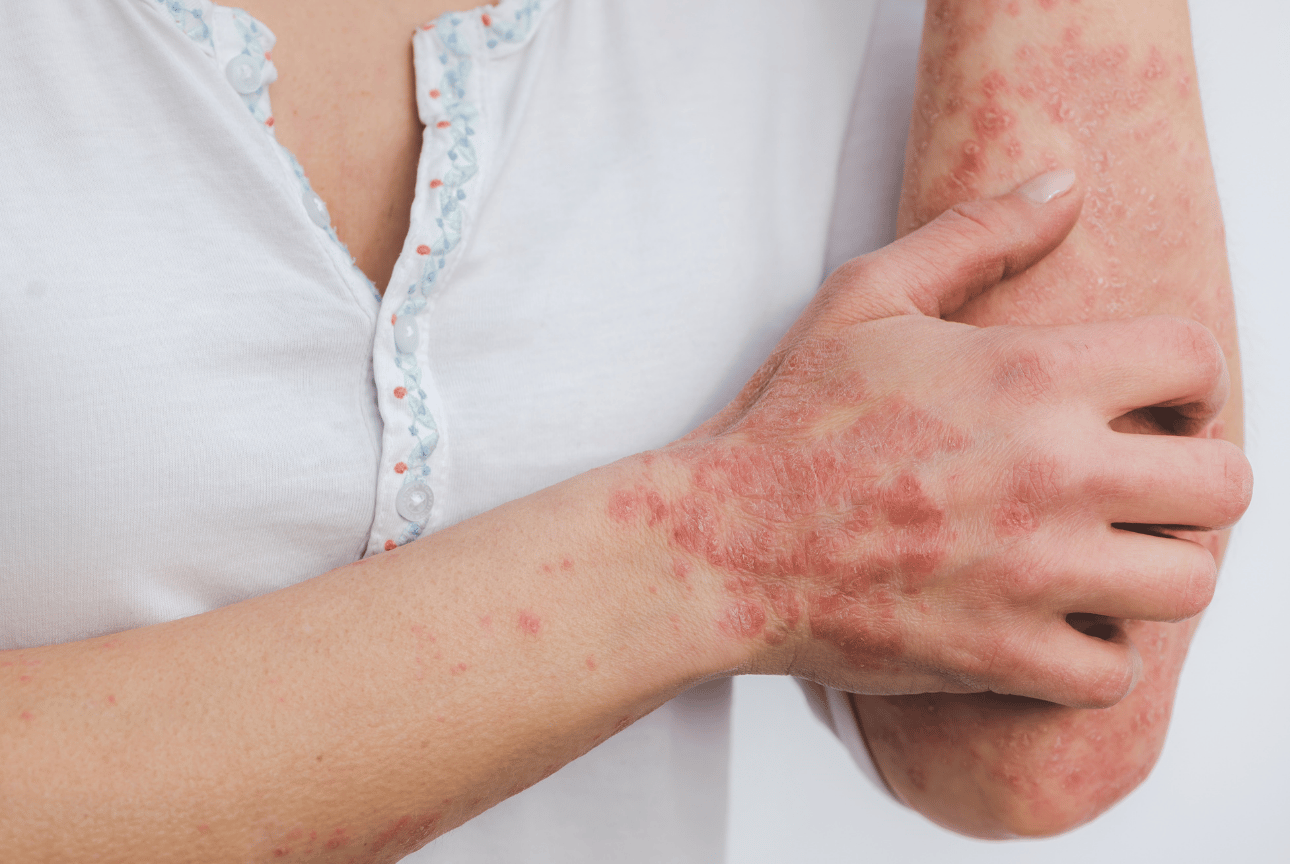
Psoriasis and eczema are chronic inflammatory skin conditions that often follow a cycle of periods of relative stability interrupted by symptom flare-ups. During a flare, symptoms such as redness, itching, dryness, scaling, or irritation may become more noticeable or severe than usual. While psoriasis and eczema are distinct conditions, both involve complex interactions between the immune system, the skin barrier, and environmental factors.
Researchers continue to study why flares occur and why certain triggers seem to affect some people more than others. Although there is no single explanation for every flare, growing evidence suggests that immune activation, skin barrier dysfunction, and external exposures all play important roles.
What defines a flare?
A flare refers to a temporary worsening of symptoms in a chronic condition. For people with psoriasis or eczema, a flare may involve increased itching, more extensive skin involvement, greater discomfort, or changes in the appearance of affected areas.
The timing and severity of flares can vary considerably. Some people experience occasional flare-ups triggered by specific circumstances, while others may notice a more unpredictable pattern. Researchers believe these fluctuations occur because the underlying inflammatory processes driving these conditions can become more active at certain times.
Immune activation and skin inflammation
Both psoriasis and eczema involve abnormal immune responses that contribute to skin inflammation, though the biological pathways differ between the two conditions. In psoriasis, immune cells trigger rapid skin cell growth and inflammation, leading to the development of thick, scaly plaques. Researchers have identified several inflammatory signaling pathways that contribute to disease activity and flare development.
Eczema, also known as atopic dermatitis, is associated with immune system dysregulation that contributes to chronic inflammation, itching, and skin irritation. Inflammatory signals can become amplified during a flare, resulting in worsening symptoms and increased skin sensitivity. Since immune activity plays such a central role in both conditions, researchers continue to investigate how internal and external factors may influence inflammatory responses and contribute to flare-ups.
Environmental and psychological associations
A variety of environmental and physiological factors have been associated with psoriasis and eczema flares. While triggers differ from person to person, several patterns have emerged in research. For eczema, common triggers may include dry air, irritants such as soaps or fragrances, allergens, infections, and emotional stress. Changes in temperature or humidity can also affect symptom severity.
Psoriasis flares have been associated with factors such as skin injuries, infections, psychological stress, certain medications, and lifestyle-related factors. Researchers have also explored how broader health conditions and systemic inflammation may influence disease activity.
Importantly, the presence of a trigger does not guarantee a flare. Instead, many experts believe flare-ups occur when multiple biological and environmental factors interact at the same time.
The role of the skin barrier
The skin barrier serves as the body's first line of defense against environmental exposures, irritants, allergens, and moisture loss. Growing research suggests that skin barrier function plays an important role in both eczema and psoriasis.
In eczema, defects in the skin barrier can allow moisture to escape while making the skin more vulnerable to irritants and allergens. This can contribute to inflammation and increase the likelihood of flare-ups. Although psoriasis is primarily driven by immune dysfunction, researchers have also identified abnormalities in the skin barrier function that may contribute to disease activity. When the skin barrier becomes compromised, inflammation can worsen and symptoms may become more difficult to control.
As researchers continue to learn more about autoimmune and inflammatory conditions, it has become increasingly clear that psoriasis and eczema flares are influenced by a combination of immune activity, skin barrier health, and environmental exposures. Understanding these factors may help provide a broader picture of why symptoms sometimes worsen and how researchers are working to better understand these chronic conditions.
How Evidation can provide insight and support your health
If you're living with psoriasis, eczema, or other chronic conditions, it can be tough to pinpoint your triggers and manage your health. Evidation can help. When you download the Evidation app, you'll be prompted to share the health information you're already tracking. With your permission, we'll use the information you share with us to find patterns, helping you learn more about how you can support your health while managing chronic conditions. Click here to learn more about how Evidation works and get started today.

Preliminary Results from our First COVID-19 Vaccination Perceptions and Behaviors Survey
We wanted to understand people’s evolving perceptions and behaviors related to COVID-19 and vaccinations.
We are all looking forward to the end of the COVID-19 pandemic and the disruptions it’s caused in our lives. A safe and effective COVID-19 vaccine will form part of the public health strategy to help us reach this endpoint faster. As many organizations work to develop and release such a vaccine, we wanted to understand people’s evolving perceptions and behaviors related to COVID-19 and vaccinations. We launched the first set of surveys in our study in October, and are excited to share some preliminary results with you!
Objectives
This study’s goal is to describe people’s perceptions and behaviors around the COVID-19 vaccine. For example, what reasons do people have for getting or not getting the COVID-19 vaccine? How likely are they to get it once it’s released? Has the pandemic encouraged people to get the flu shot? This study will investigate whether and how these perceptions and behaviors change over time, as COVID-19 vaccines are developed and released.
Methods
To describe people’s perceptions and behaviors, and how those perceptions and behaviors change over time, we are asking for people’s input through a series of online surveys. These surveys will be sent throughout the development and release of COVID-19 vaccines.
So far, we’ve launched 2 surveys: one to understand the backgrounds of the people participating (for example, their demographics, where they live, whether they’re at risk for COVID-19), and one to characterize current perceptions and behaviors. We have started analyzing the data collected between October 9th, 2020 and November 11th, 2020. We won’t be able to understand how perceptions and behaviors have changed until we launch the next survey, but we can start to describe how people are currently feeling about the COVID-19 vaccine!
Preliminary Results
Here are some preliminary results from our first 2 surveys.
Participants
64,750 people (“participants”) have completed the first perceptions and behaviors survey. Mean age was 38.5 (SD: 11.7 years), and the majority of participants identified as female (79.7%) and identified as white (80.0%).
.jpeg)
All 50 states (plus Puerto Rico and Washington, DC) are represented:
.jpeg)
Vaccination Likelihood, Motivators, and Barriers
On average, participants were on the fence in terms of likelihood of getting the COVID-19 vaccine when it’s released (mean=4.93, median=5). The distribution shows a wide range of opinions, with the largest numbers of people reporting at:
- 0 (“Very unlikely”): 18.8%
- 5: 13.6%
- 10 (“Very likely”): 14.3%
.jpeg)
The most common reasons people reported for getting the COVID-19 vaccine were to:
- help protect their family, friends, or community (59.9%)
- lower their chances of getting COVID-19 (56.7%)
- lower their chances of having to go to the doctor or getting hospitalized due to severe COVID-19 symptoms (53.7%)
- feel more comfortable spending time with their friends, family, or community (55.7%)
The most common reasons people had to not get vaccinated were because they were:
- concerned the vaccine is being approved too quickly (61.3%)
- concerned about possible side effects (60.1%)
- not sure the vaccine will be safe (56.2%)
- not sure the vaccine will be effective (57.0%)
Relative Vaccination Hesitancy
Most participants reported feeling more hesitant about the COVID-19 vaccine than other vaccines (68.0%), with 24.9% feeling equally hesitant and 7.1% feeling less hesitant:
.jpeg)
Vaccination Informedness
We’ve also found that people don’t feel particularly well-informed about the COVID-19 vaccine in general. 19.8% of participants report feeling “Not at all informed”, 22.7% “Slightly informed”, 30.4% “Moderately informed”, 19.2% “Informed”, and only 7.9% “Very informed”:
.jpeg)
Pandemic Influence on Flu Shot Plans and Behavior
The CDC has stressed that getting the flu shot this season is more important than ever, to help protect oneself and others and to minimize burden on the healthcare system. Many participants seem to agree: of the 35,997 participants who had not gotten the flu shot yet (or were unsure), 20.2% reported being more likely to get it this season due to the pandemic:
.jpeg)
Of the 28,753 participants who had gotten the flu shot, 20.0% reported that the pandemic encouraged them to get it, and 9.1% reported the pandemic was the primary reason they did so:
.jpeg)
We are excited to continue to investigate these current perceptions and behaviors and see how they change over the coming months!
Next Steps
To understand how people’s perceptions and behaviors related to COVID-19 vaccination evolve over the development and release of vaccines, we will send more surveys over the following months asking for Evidation Member’s perceptions and behaviors. These surveys will be sent as big events happen around the vaccine’s development, like its approval or release. The exact dates of these future surveys will depend on when these events happen, so stay tuned for more!

8 Fresh Summer Ideas
Don’t let summer pass you by this year! We chatted with our team and consolidated some of our favorite activities.
Don’t let summer pass you by this year! We chatted with our team and consolidated some of our favorite activities.
- Connect with brainy folks all around the world with Atlas Obscura’s Trivia Night! Rally together a virtual team and participate for $7.
- Celebrate Blues Artist Mavis Staples and listen to other folk artists including Brandi Carlile, Jason Isbell, Ben Harper, and Phoebe Bridgers for a Livestream concert. Tickets cost $12. Tune in this Friday, July 31st at 8:30pm EST.
- Join host Saleem Reshamwala as he goes on global expeditions and learns from people around the world who are creatively working to make their communities better. Tune into this Ted podcast to transport to another world virtually in the absence of travel.
- Host a virtual book club with friends. The benefit of talking about your latest read via Zoom or video chat is that you can connect with friends across time zones.
- Jump on the geocaching bandwagon. We recently heard from some Achievers that they’ve been geocaching with their family members for an active, outdoor treasure hunt.
- Make a box fort/cat castle for your cat children if you’re a cat mom or dad. :)
- Set up a socially distanced front yard hang! Dust off your lawn chairs and pick up some of your favorite snacks and head outdoors.
- Choose a road trip and safely travel to a closeby spot! Know you’re not alone in opting for a road trip as a staycation during these unusual times. Read up on some of the best road trips in America.
- Host your very own hot sauce competition with your “quaranteam.” Find some new hot sauces you’ve always wanted to try online and order them in to have a mini hot sauce competition. Pro tip: the Heatonist has some of our favorites.
- Channel your inner artist with a paint by number kit. Tune into a favorite playlist and enjoy a leisurely weekend art hour.
.avif)
Representation in Research Matters
We’re collaborating with BlackDoctor.org to ensure that the effects of COVID-19 are investigated in a representative population.
Historically, minorities have been inadequately represented in research studies. We’re committed to enrolling a more diverse and representative population in Evidation for studies.
We’re collaborating with BlackDoctor.org to ensure that the effects of COVID-19 are investigated in a representative population.
We, in partnership with BlackDoctor.org and Myovant Sciences, have launched Forward Momentum, a cross-sector coalition working to improve the lives of men with prostate cancer. Forward Momentum is committed to addressing the complex set of challenges that hold back the representation, information, and conversations that all men deserve. By bringing together organizations from diverse sectors and investing in novel digital initiatives, Forward Momentum strives to accelerate progress for men with prostate cancer.
Stay tuned for more updates from us on these research efforts!
.avif)
Hear from Us About the Future of Health
Evidation partners with the world’s leading healthcare companies and enables everyone to participate in research.
Our CEO, Deborah Kilpatrick, recently spoke on a podcast about the importance of everyday behavior data and the future of health. After working in the medical technology space, she joined Evidation Health in 2014. Evidation partners with the world’s leading healthcare companies and enables everyone to participate in research. We’re focused on helping people measure everyday activities. We’re also invested in connecting our community to opportunities that will help them better understand the conditions that impact them and their loved ones. Listen more on this podcast here.

Together We Can Achieve More
At Evidation, we’re focused on meeting people where they are and helping them along their health journey.
At Evidation, we’re focused on meeting people where they are and helping them along their health journey. Our engaged community of members represents 96% of U.S. counties and includes individuals across ages, ethnicities, and socioeconomic backgrounds. This community puts us in a unique position to learn from one another and contribute to meaningful health research.
With a mission of helping people participate in better health outcomes, we're committed to identifying opportunities that are inclusive of all and educating ourselves on the social issues that are impacting the world. To truly achieve our mission of helping people participate in better health outcomes, we recognize we have more work to do. Our commitment going forward:
- Provide our members with educational content around health and race curated by our team of researchers.
- Put in place more inclusive study opportunities for members to participate in.
- Do our part as a research company to participate in inclusive clinical research practices to ensure diverse and generalizable results through diverse participant recruitment and participation.
- Hold ourselves accountable by reporting our progress out to our members.
We’re committed to supporting long-term systematic change and stand in solidarity with our Black teammates, Evidation Members, and the entire Black community. We know this is only the beginning of the conversation, and we need to continue to fight for equality. We’ll continue to listen, educate ourselves, take action, hold ourselves accountable, and pledge to do our best to support all communities to participate in better health outcomes.
An immediate change we’re pleased to share is that Evidation Members can now donate their rewards to these charities:
American Civil Liberties Union
.jpeg)
.jpeg)

Evidation Health and BARDA Partner on Early Warning System for COVID-19
On June 4th, Evidation Health announced a new effort to develop an early warning algorithm to detect symptoms of COVID-19 and to understand susceptibility to infection, funded by the Biomedical Advanced Research and Development Authority (BARDA), part of the Office of the Assistant Secretary for Preparedness and Response at the U.S. Department of Health and Human Services (HHS) and the Bill & Melinda Gates Foundation.
Here at Evidation, we’ve been identifying opportunities to contribute to COVID research. THe Evidation app is a product of Evidation Health, and has a community of over 3 million and members all around the United States. With an engaged research population representing a variety of zip codes and demographics, we’re uniquely positioned to help researchers and organizations conduct meaningful research about the pandemic.
On June 4th, Evidation Health announced a new effort to develop an early warning algorithm to detect symptoms of COVID-19 and to understand susceptibility to infection, funded by the Biomedical Advanced Research and Development Authority (BARDA), part of the Office of the Assistant Secretary for Preparedness and Response at the U.S. Department of Health and Human Services (HHS) and the Bill & Melinda Gates Foundation.
“Many infected individuals are asymptomatic but still able to spread the virus, making efforts to prevent and slow transmission of COVID-19 difficult,” said Luca Foschini, Ph.D., Evidation’s co-founder and chief data scientist. “This initiative will use novel behavioral and physiological data to more effectively identify when and where people may contract COVID-19, and can potentially enable real-time interventions to limit spread and monitor outcomes.”
The analysis, performed in collaboration with non-profit 4YouandMe, will use de-identified data generated by self-reporting and wearable devices to track symptoms of COVID-19 in those at particularly high risk, including health care workers and other first responders, in order to better understand susceptibility to SARS-CoV-2 infection. One potential outcome of this work is an early warning algorithm to help individuals better understand and monitor their respiratory disease symptoms and take precautions against their spread.
“The ability to self-monitor and be informed of health status will empower Americans in their decisions to help slow the spread of this pandemic and improve health outcomes for people with COVID-19,” said BARDA Acting Director, Gary Disbrow, Ph.D. “This pilot study is not only an early step in demonstrating the utility of models developed using person-generated health data but also may provide data to better understand the varied symptoms of COVID-19.”
This program follows Evidation’s work with BARDA to monitor individuals for respiratory infections, such as influenza. Evidation’s existing research on influenza utilizes person-generated health data and population-based models with the goal of improving real-time respiratory infection monitoring at the individual and population level. BARDA is contributing a $720,000 award as part of BARDA’s COVID-19 Rapidly Deployable Capabilities program to identify and pilot near-term innovative solutions for COVID-19. Support from the Bill & Melinda Gates Foundation is from the $250 million the foundation has committed to address the COVID-19 pandemic.

How Evidation Members Rallied Together Through COVID Pulse Survey
Through this challenging time, we we've been inspired by our members who responded to many questions with great empathy and creativity as they have adapted to new routines
We’ve been continuing to monitor sentiment in the community around the coronavirus through an Evidation Survey called COVID Pulse. Since kicking off the survey on March 12th right after the coronavirus was declared a pandemic, we’ve been sending out a weekly survey to our members.
We wanted to quantify participation and interest and share some of the latest trends from our most recent surveys. After we released the first survey, we received over 120,000+ responses in five days from over 20,000 United States zip codes. The highest percentage of responses came from the age groups in the range of 30–39, followed by the 18–29 age range, and lastly, the 40–49 range. Though, we did see representation from members ages 18–80+! We’ve been pleasantly surprised by the number of members who have continued to check in week over week to share their sentiment surrounding coronavirus. In fact, 11% of survey respondents have completed all five COVID Pulse Surveys to date and 22%+ completed four out of five COVID Pulse Surveys.
Most recently, we saw that over 85% of respondents said that if social distancing and stay at home orders were lifted today, they would know what to do to reduce chances of contracting the coronavirus. We also saw that members would continue to take the necessary precautions even if social distancing guidelines and stay at home orders were lifted. Over 60% would continue to stay at home and maintain social distancing behaviors. Additionally, nearly 70% said they would continue to start to wear protective equipment (for example a face mask) in public settings. For those who responded in locations where shelter in place has been lifted, only ~25% of respondents said that they were attending small social events.
Through this challenging time, we were also inspired by our members who responded to many questions with great empathy and creativity as they have adapted to new routines. In fact, when asked about their concerns if they were to be diagnosed, 75% of respondents expressed concern over getting others sick in their worries. This fear was followed by 60% of respondents expressing their worry over the physical discomforts of getting sick. Regarding ways to minimize changes to physical and mental health, we’ve seen an uptick in individuals sharing the importance of maintaining whatever routines possible, avoiding or taking breaks from the news, and a continued connection through video chats with friends and family. In fact, maintaining connection through social media scored high for Evidation Members as a method to socialize with others. Both last week and this week, 70% of respondents said they used social media to socialize with other people.

Get Your Cooking Game On
We know that being stuck indoors can be tough, but hopefully getting creative in the kitchen continues to be a fun pastime for many.
As we continue to be home during the coronavirus, we wanted to share another collection of snack ideas that you can make at home. We know that being stuck indoors can be tough, but hopefully getting creative in the kitchen continues to be a fun pastime for many.
- Try your hand at making a sweet or savory dip at home! Check out this greek cucumber yogurt dip from the Today Show or this three ingredient Healthy Honey Mustard Dip from the blog Cupcakes and Kale Chips.
- Experiment with no-bake bars like this No Bake Chocolate Oat Bar from All Recipes.
- Make your own cup of Dalgona Coffee (the Coronavirus trend that’s bringing out everyone’s internal barista)
- Test out the dessert that’s on the rise — make this three ingredient crème brûlée.
- Bring Disneyland to your home with Disney’s official homemade churro recipe.
- In the absence of a trip to Benihana’s, learn how to make this chicken fried rice at home.
- Check out Wacky cake. It’s an old favorite that came from the Depression when there was less access to ingredients. This cake only takes a few, simple ingredients.
- Have some Nutella handy in your pantry? Make these DIY Nutella pops with two other ingredients and a popsicle stick.
- Eat breakfast like one of the royal family by trying out Prince Charles’ famous cheesy baked eggs
- If you’re feeling fancy, you can also give Queen Elizabeth’s drop scones a try.

Oura Ring + Evidation = Match Made in Heaven
We know a big part of your Evidation experience is connecting apps and wearables to your account. Did you know here are more than 15 apps you can connect to help you earn points faster?
We know a big part of your Evidation experience is connecting apps and wearables to your account. To date, there are 15+ apps that you can connect to Evidation to track different activities that you take. For a reminder of which apps are available and where you can connect these apps to your experience, check out the Connect Apps page here.

We’re pleased today to share that the Oura Ring is now available to connect to Evidation. To connect your OURA ring and app, please follow these directions below:
- Log into the Evidation app or website > middle tab (apps section)
%2520(1).png)
2. Connect > Oura > Log in to OURA account
Note: it may take a few minutes to sync. If the app shows ‘not yet synced’
%2520(1).png)
%2520(1).png)
Please go back to the middle tab and click down to refresh the app. If all dates did not retroactively sync, we recommend to disconnect the app from Evidation and reconnect.