

Blog
Understanding the triggers behind psoriasis and eczema flares
Learn what defines a psoriasis or eczema flare and how immune activity, skin barrier function, and environmental factors may influence symptoms.
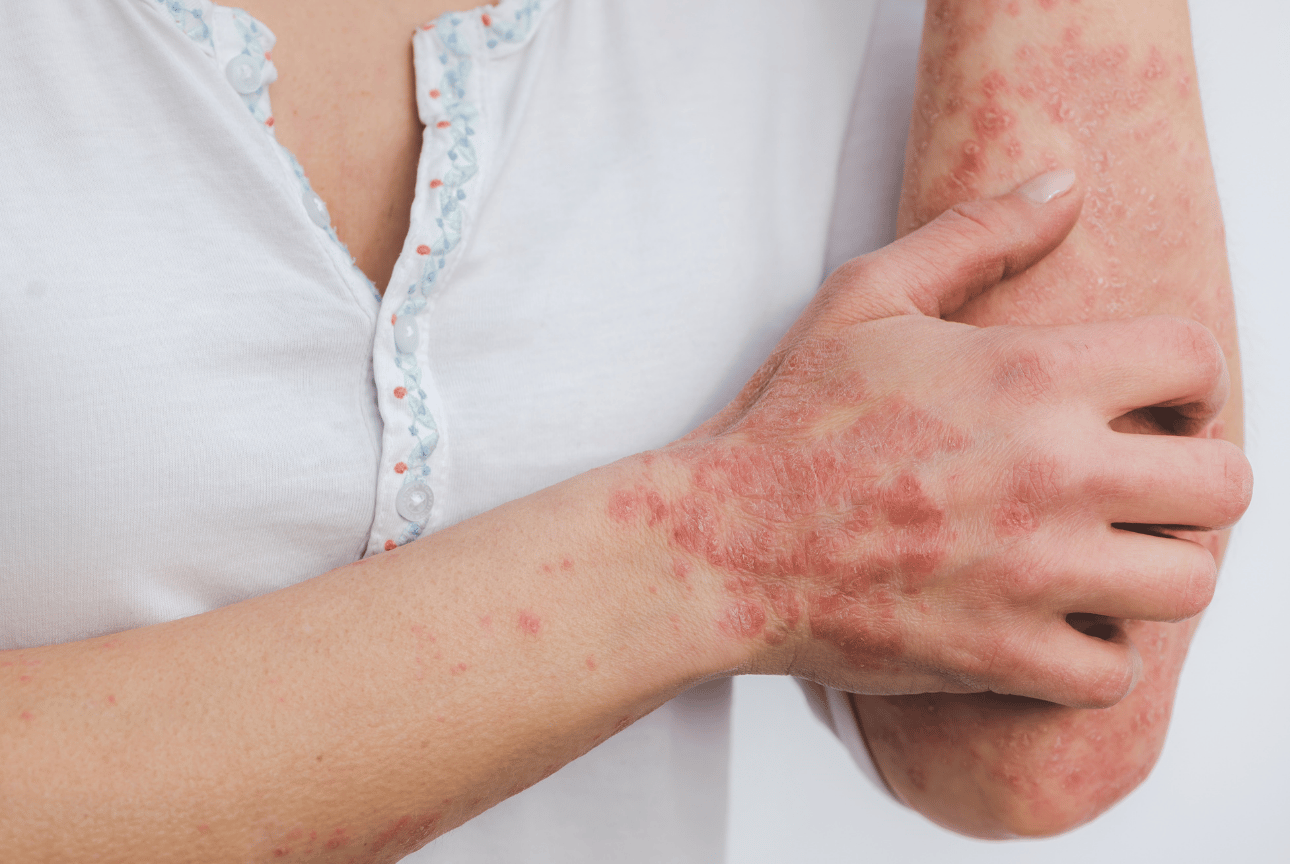
Psoriasis and eczema are chronic inflammatory skin conditions that often follow a cycle of periods of relative stability interrupted by symptom flare-ups. During a flare, symptoms such as redness, itching, dryness, scaling, or irritation may become more noticeable or severe than usual. While psoriasis and eczema are distinct conditions, both involve complex interactions between the immune system, the skin barrier, and environmental factors.
Researchers continue to study why flares occur and why certain triggers seem to affect some people more than others. Although there is no single explanation for every flare, growing evidence suggests that immune activation, skin barrier dysfunction, and external exposures all play important roles.
What defines a flare?
A flare refers to a temporary worsening of symptoms in a chronic condition. For people with psoriasis or eczema, a flare may involve increased itching, more extensive skin involvement, greater discomfort, or changes in the appearance of affected areas.
The timing and severity of flares can vary considerably. Some people experience occasional flare-ups triggered by specific circumstances, while others may notice a more unpredictable pattern. Researchers believe these fluctuations occur because the underlying inflammatory processes driving these conditions can become more active at certain times.
Immune activation and skin inflammation
Both psoriasis and eczema involve abnormal immune responses that contribute to skin inflammation, though the biological pathways differ between the two conditions. In psoriasis, immune cells trigger rapid skin cell growth and inflammation, leading to the development of thick, scaly plaques. Researchers have identified several inflammatory signaling pathways that contribute to disease activity and flare development.
Eczema, also known as atopic dermatitis, is associated with immune system dysregulation that contributes to chronic inflammation, itching, and skin irritation. Inflammatory signals can become amplified during a flare, resulting in worsening symptoms and increased skin sensitivity. Since immune activity plays such a central role in both conditions, researchers continue to investigate how internal and external factors may influence inflammatory responses and contribute to flare-ups.
Environmental and psychological associations
A variety of environmental and physiological factors have been associated with psoriasis and eczema flares. While triggers differ from person to person, several patterns have emerged in research. For eczema, common triggers may include dry air, irritants such as soaps or fragrances, allergens, infections, and emotional stress. Changes in temperature or humidity can also affect symptom severity.
Psoriasis flares have been associated with factors such as skin injuries, infections, psychological stress, certain medications, and lifestyle-related factors. Researchers have also explored how broader health conditions and systemic inflammation may influence disease activity.
Importantly, the presence of a trigger does not guarantee a flare. Instead, many experts believe flare-ups occur when multiple biological and environmental factors interact at the same time.
The role of the skin barrier
The skin barrier serves as the body's first line of defense against environmental exposures, irritants, allergens, and moisture loss. Growing research suggests that skin barrier function plays an important role in both eczema and psoriasis.
In eczema, defects in the skin barrier can allow moisture to escape while making the skin more vulnerable to irritants and allergens. This can contribute to inflammation and increase the likelihood of flare-ups. Although psoriasis is primarily driven by immune dysfunction, researchers have also identified abnormalities in the skin barrier function that may contribute to disease activity. When the skin barrier becomes compromised, inflammation can worsen and symptoms may become more difficult to control.
As researchers continue to learn more about autoimmune and inflammatory conditions, it has become increasingly clear that psoriasis and eczema flares are influenced by a combination of immune activity, skin barrier health, and environmental exposures. Understanding these factors may help provide a broader picture of why symptoms sometimes worsen and how researchers are working to better understand these chronic conditions.
How Evidation can provide insight and support your health
If you're living with psoriasis, eczema, or other chronic conditions, it can be tough to pinpoint your triggers and manage your health. Evidation can help. When you download the Evidation app, you'll be prompted to share the health information you're already tracking. With your permission, we'll use the information you share with us to find patterns, helping you learn more about how you can support your health while managing chronic conditions. Click here to learn more about how Evidation works and get started today.

Men’s Health Matters — During International Men’s Health Week and Beyond
International Men’s Health Week is celebrated every year the week before Father’s Day. The focus of the event is on men’s health, wellness, and prevention — which is critical to lowering risk factors for disease.
Men’s Health Matters — During International Men’s Health Week and Beyond
International Men’s Health Week is celebrated every year the week before Father’s Day. The focus of the event is on men’s health, wellness, and prevention — which is critical to lowering risk factors for disease.
Statistically, men tend to avoid routine medical care and avoid seeking medical care until much later than other genders.
A 2019 survey from the Cleveland Clinic’s MENtion it campaign highlights some of these statistics.
Why?
According to the Cleveland Clinic Survey, stereotypes and social conditioning surrounding gender play a large part.
“Why do men avoid the doctor? Stereotypes taught at a young age may be to blame. Two-fifths (41%) of men were told as children that men don’t complain about health issues.”
International Men’s Health week is an opportunity to focus on the specific health concerns men face, and a way to say, “Hey, guys, your health is important!”
It’s a great time to schedule events, have informed conversations, and raise awareness around men’s health and wellness.
But, the importance of men’s health doesn’t stop at the end of the week. It’s critical that we continue to focus on men’s health throughout the year and remind the men in our lives that they matter and that their health matters!
Regardless of gender, we can all play a part in helping men to feel confident seeking health care!
Luckily, today more than ever, there are many resources focused on the issue of men’s health! We’ve included a short list of resources below. And we encourage all men, everywhere, to remember that their health matters!
Resources
- MENtion it
- Men’s Health Month
- Talking About Men’s Health
- Men’sHealth
- The Good Men Project
- Men’s Health Resource Center

Honoring Juneteenth
We celebrate the connection between identity and whole person health. In this spirit, we honor Juneteenth (short for “June 19th”) which marks the end of slavery in the United States.
Honoring Juneteenth
At Evidation, we celebrate the connection between identity and whole person health. In this spirit, we honor Juneteenth (short for “June 19th”) which marks the end of slavery in the United States.
What is Juneteenth
While Abraham Lincoln issued the Emancipation Proclamation on January 1st, 1863, only a tiny number of people were actually freed at that point.
In Texas, the last enslaved African Americans were declared free two and a half years after the Emancipation Proclamation and two long months after the fall of the city of Richmond.
Juneteenth, which commemorates the anniversary of that historical event, June 19th, 1865, has been observed and celebrated ever since.
Juneteenth is not just a pivotal landmark in American history for many Black Americans, but a representation of independence, freedom, and hope. A moment in time where the road to equality seemed more visible than it had ever been. Some of the most impactful pioneers in the history of civil rights were born from the breath of life that June 19th generated.
History of Juneteenth Celebrations
Juneteenth festivals could be observed extending from one state to another as formerly enslaved individuals relocated throughout the country.
Juneteenth celebrations commonly included singing, dancing, and coming together over food and fellowship.
Some of the first sightings of Black fashion have been connected to Juneteenth celebrations as clothing was a vital part of these festivities.
One way for formerly enslaved people to celebrate their emancipation was by wearing bright and vivid attire that they were unable to wear while enslaved. There are significant connections between those early festivities and modern-day Juneteenth gatherings that exist today.
Juneteenth Inspires
While we celebrate Juneteenth this weekend, let’s use this as an opportunity to remember that the fight for equality and liberty for Black Americans is not yet finished. Many injustices persist, and we must reflect on their impact on health and identity.
Today we fight to bridge the gap to access essential resources, education, healthcare, and equal opportunities, and representation that one day will be celebrated in ways that Juneteenth has paved the way for.
.avif)
Are you a Morning Lark or a Night Owl?
Discover your sleep type plus 5 tips for better sleep.
Some of us naturally go to bed early and wake up early feeling refreshed and ready for the day. Others feel best when they are up late and wake later in the day.
And while much of the way our work life and society is structured seems to favor the early risers, the tendency toward one pattern or the other is entirely normal, natural, and individual.
Whether we are more inclined to be morning larks or night owls is based on our biology!
Our circadian rhythms to be exact.
According to the National Institutes of Health,
“Circadian rhythms direct a wide variety of functions from daily fluctuations in wakefulness to body temperature, metabolism, and the release of hormones. They control your timing of sleep and cause you to be sleepy at night and your tendency to wake in the morning without an alarm. Your body’s biological clock, which is based on a roughly 24-hour day, controls most circadian rhythms. Circadian rhythms synchronize with environmental cues (light, temperature) about the actual time of day, but they continue even in the absence of cues.”
Scientists call this tendency toward thriving in the morning or at night our chronotype.
Your chronotype score is determined by looking at your mid-sleep time (the exact midway point between when you fall asleep and when you wake up) and adjusting based on differences in your sleep habits between your free days and non-free days.
You can learn more about chronotypes and how our genes affect this aspect of our lives with this master class preview from Professor of Neuroscience, Matthew Walker.
Where do Evidation Members Fall?
Thanks to wearable health devices and sleep tracking apps, we’re now able to really see what our sleep patterns and chronotypes are.
Turns out many of our current members are morning larks!
How did we determine this?
We compared sleep data on non-free (work/school) days to sleep data on free days.
Why?
Because social obligations like work and school can interfere with our natural preference for morning or night.
So, in order to know where we truly fall, we need to look at how we behave when we have the freedom to follow our natural habits.
Specifically, we looked at when individuals fell asleep, when they woke up, and their mid-sleep times.
On average, the members whose sleep data we looked at, had mid-sleep times of around 2:50 am.
But to determine chronotype score, we need to look at the difference in total hours slept between free days and non-free days because people often sleep more on free days.
On non-free days, the average mid-sleep time was 2:35am. And on free days, it was 3:21am.
This tells us that while people did tend to go to bed later (and sleep in a little later) on their free days, it wasn’t much later.
So, how do we determine whether someone is a morning lark or a night owl?
We compare their chronotype score to the average (median) chronotype score of other Achievers.
What we found is that many of the members we looked at tended to be early risers.
This graph represents the distribution of recorded mid-sleep times (chronotypes).
.jpeg)
If you’re interested in learning more about sleep chronotypes, this paper from Current Biology is an excellent resource.
Tips for Better Sleep
Whatever your chronotype, there are things you can do to help improve the quality of your sleep — and good sleep is important for so many reasons!
According to the Division of Sleep Medicine at Harvard Medical School,
“sleep plays a critical role in immune function, metabolism, memory, learning, and other vital functions.”
That means that how you sleep directly affects your health, your mood, your weight, your ability to function and work or school, even the success of your interpersonal relationships.
And it’s one of those areas where quality is even more important than quantity.
Here’s our top 5 tips for getting better sleep!
- Unplug. Step away from your electronics for a good hour or more before going to bed. We know it’s hard to resist the pre-bedtime scroll — so much of our lives are connected to our devices! But it will help you sleep better.
- Maintain a regular sleep schedule! This one is critical. While our circadian rhythms are largely determined by biology, environment plays a HUGE role as well. Irregular sleep schedules interfere with our natural rhythms and can make it difficult for us to sleep.
- Get regular exercise. Even a small amount of exercise helps our bodies maintain balance, and that’s great for healthy sleep. Just be sure to exercise at least several hours before you plan to go to bed. Exercise gets our endorphins going and can keep you awake if too close to bedtime.
- Manage any anxieties or tasks before bed. This is especially important if you’re one of those individuals who lies in bed thinking about all the things you need to do. Make a list before bed and then set it aside until the next day.
- Create a restful space for yourself. Usually that means a space that is organized or free of clutter, dark, cool, and quiet. White noise like a fan can help for some.
.avif)
Why is Mental Health Self Care So Important?
Studies show that mental health is just as important as physical health. And little things like taking time for self care can make a huge impact. check out these tips for working mental health into your daily routine.
Why is Mental Health Self Care So Important?
The importance of mental health self care
We all know the importance of taking care of our bodies. When we neglect them, we become ill. Eating right, getting adequate rest and exercise, managing any chronic conditions — these are critical to maintaining good physical health.
But what about mental health?
Studies show that mental health is just as important as physical health. And little things like taking time for self care can make a huge impact.
So why do so many of us neglect this aspect of our wellbeing?
We asked Achievement users how often they made time for mental health self care, what types of activities they typically did, and what keeps them from practicing self care as often as they’d like.
What did we learn? That while many of our users do practice regular self care, the majority of them don’t do it as often as they’d like.
Why?
The most common responses (in order) were:
- Not enough time
- Pressures of daily life
- Financial burdens
We also discovered that while many of those who responded said that self care was very important to them (almost 75%), and almost 70% said they would like to practice self care daily, only 27% do.
So, in honor of Mental Health Awareness Month, we’d like to share some quick, easy, free ways to practice regular mental health self care!
10 tips for working mental health self care into your daily routine
- Take a quick (5–10 minute) walk or bike ride
- Download a free meditation app — most have practices as quick as 1–2 minutes!
- Look in the mirror and tell yourself one thing you like about yourself
- Reach out to someone who helps you feel good about yourself
- Sing your favorite song
- Draw or color something
- Go to bed 10 minutes earlier than usual
- Close your eyes and focus on your breath for 1 minute
- Hug someone
- Write down 5 things you are grateful for
These are just examples of some of the ways you can practice mental health self care daily. We encourage you to find ways that work for YOU!
Mental Health Resources
While taking the time for mental health self care can improve overall wellbeing and keep us feeling good, sometimes we need more.
The following resources are available to you or anyone you know who may be struggling.
Crisis Resources
National Suicide Prevention Lifeline
Substance Abuse & Mental Health Services Administration (SAMHSA) National Helpline
OK2Talk Helpline Teen Helpline
Help Finding Treatment
American Psychological Association
SAMSHA’s Behavioral Health Treatment Services Locator
American Academy of Child and Adolescent Psychiatry
American Psychiatric Association Foundation
Additional Resources

Honoring ALL Who’ve Fallen this Memorial Day
For many of us, memorial day is the unofficial start of summer. It’s the day the neighborhood pool opens. The day the parks, beaches, and amusement areas start filling up. The day the BBQs, picnics, and beach parties begin. But while we enjoy these freedoms, we should also take the time to remember why we honor memorial day in the first place.
The True Meaning of Memorial Day
For many of us, memorial day is the unofficial start of summer. It’s the day the neighborhood pool opens. The day the parks, beaches, and amusement areas start filling up. The day the BBQs, picnics, and beach parties begin.
And it’s good that we enjoy these things. After all, it’s for these things that our service members fight.
But while we enjoy these freedoms, we should also take the time to remember why we honor memorial day in the first place.
History.com defines Memorial Day as,
“an American holiday, observed on the last Monday of May, honoring the men and women who died while serving in the U.S. military.”
Unlike Veteran’s Day, which honors all of our service members, Memorial Day is special in that it is a day of remembrance.
And for our veterans and for the families and loved-ones of fallen service members, Memorial Day is often a day of honor and pain. A day of remembering. A day of visiting graves and paying tribute to fallen friends and loved-ones.
History of Memorial Day
Memorial Day (formally Decoration Day) was declared a national holiday in 1971 but has been observed since the end of the American Civil War.
And while the tradition of visiting the graves of fallen soldiers began sometime during the civil war, the first recognized formal observance was held in May 1868 and annually after that.
The first recorded observance, however, actually occurred three years earlier, just after the end of the war. It was held by freed slaves in Charleston, South Carolina in honor of fallen union soldiers.
If you’re interested in learning more, this post from History.com is an excellent resource.
Memorial Day, Mental Health, and Veteran Suicide
While memorial day traditionally focuses on those who’ve given their lives while in active duty, it’s important that we not lose sight of those who’ve given all in service, whether their sacrifice occurred during active duty or after their service has ended.
Rates of mental health problems and suicide among vets and active duty service members are staggering and and have increased in recent years. Many sources indicate a rate of around 20 suicides per day.
According to an article by Militarytimes on the latest report on veteran suicide rates,
“The rate of suicide among veterans ticked upwards in recent years despite increased public attention and funding on the problem.”
It’s important to note that while this report was released in November 2020, the numbers reflect rates from 2015–2018. Data suggests that these rates have continued to increase and have escalated even more during the Covid-19 pandemic.
So, since May is also Mental Health Awareness Month, we’d like to take this opportunity to pay tribute to those who’ve lost their lives in service to this country — both on the battlefield and at home — and we’d like to remember those who are still with us but struggling.
Thank you. And thank you to the families of those we’ve lost. Your sacrifice is not forgotten.
Resources
Honoring The Fallen On Memorial Day
Nonprofits Supporting Veteran & Military Families
- America’s Gold Star Families
- Highly-Rated Nonprofits Dedicated to Veterans and Military Service Members
Veteran Mental Health & Suicide Prevention

Creamy Asparagus Soup
This rich, creamy asparagus soup is one of those go-to comfort meals. It will easily satisfy your want for flavor, and the best part…it’s super healthy. So you get all of the glut with none of the guilt!
This rich, creamy asparagus soup is one of those go-to comfort meals. It will easily satisfy your want for flavor, and the best part…it’s super healthy. So you get all of the glut with none of the guilt!
It’s naturally gluten free, vegetarian, and keto — and with one simple swap it can be vegan and paleo too!
Food is such an integral part of our daily lives, and while we know that eating healthy is important to our overall well being, it can sometimes seem difficult to find delicious meals that are good for you.
So we’ve decided to create a place to share these gems.
This is just the first of many healthy, tasty recipes we’ll be sharing with our Achievement community. Each of these recipes will come from Achievement team members or Achievement users like you!
We’ll also tell you a little about the recipe author and the dish. Because sharing a meal is about so much more than the food. It’s about coming together.
The Story
I love asparagus! And it just so happens, that May is National Asparagus Month! And since it’s also Celiac Awareness Month, I knew I had to share this recipe.
I’m a sucker for cream soups, but I have celiac disease which can make it almost impossible for me to find safe soup in a restaurant or out of a package. Most cream soups start with a roux to ensure that rich, creamy texture.
Now, I could get that with a gluten-free flour, but I try to keep things as simple and healthy as possible.
So creating a thick creamy soup without the need for thickeners was top priority for me!
Luckily, I love to cook.
This soup gets it’s texture by using the parts of the asparagus stalk that you would normally toss out. Which also means it helps reduce food waste — which is a big win!
And the best part…it’s full of good-for-you nutrients and easily aligns with many dietary needs and preferences.
Ingredients:
2 pounds fresh asparagus
1 small onion
2 cloves garlic
4 cups vegetable broth (or chicken broth)
1 cup heavy cream
Pinch of fresh ground nutmeg (pre ground will work too!)
Salt and pepper to taste
Directions:
- Trim woody ends of asparagus and place in a large pot — reserve the rest for later! ***If there are very thick, hard parts at the bottom, remove and discard.
- Cover with broth and heat to boiling.
- When the broth reaches a full boil, reduce to simmer, cover, and cook until stalks are tender. 20–40 minutes, depending on the toughness of the asparagus stalks.
- Remove any stalks that have remained too hard or woody (that won’t puree nicely).
- Chop onion and garlic and remaining asparagus. Add to the pot. These can be rough chopped as it will all be pureed later.
- Return to a boil. Add a pinch of salt and a pinch of freshly ground nutmeg. ***You can leave the nutmeg out if you don’t like it or are unsure. The idea is not to taste it, just to add a depth of flavor to the soup.
- Cook until veggies are tender.
- Remove from heat and puree using an immersion blender, or allow to cool and transfer to a standing blender in batches and then return to the pan.
- Reheat until warmed through and add in cream. Allow to heat through, but do not boil.
- Salt and pepper to taste.
Modifications:
This dish is already gluten free, vegetarian, and keto-friendly (trust me, you won’t know it — it’s so rich and delicious!). But you can easily make it Vegan and Paleo as well by substituting the heavy cream with full-fat coconut cream.
If you’re not familiar with coconut cream, it’s the solid part of a can of coconut milk (before you mix it up). So, if you can’t find canned coconut cream, you can use the solid cream part of a can of coconut milk.
It does change the flavor a bit, but I’ve done it plenty of times and it is still very tasty!
Tips:
- I save the woody ends of asparagus throughout the year and freeze them. Then, when I want to make this soup, I pull them out of the freezer and cook them down with the rest. This gives the soup a much deeper flavor. And it means less food waste!
- Use chicken bone broth instead of vegetable broth for added nutrition and a dose of gut-healing collagen!

The Women who Inspire our Evidation Members
Meet the women who inspire us to be our best selves! In honor on National Women's month, take some time to honor the inspiring women in your life.
Last month was Women’s History Month and later this month we celebrate one special group of women in our lives — the group of women we call mothers.
We know that Mother’s Day can be difficult for many, and we recognize that the word “mother” means many things.
With that in mind, we want to share the love and inspiration that comes from the women in our lives, whoever they are.
Some of these women have given birth, some have raised us, taught us, picked us up when we’ve been knocked down. Others have been friends, sisters, aunts, lovers. Some, we have lost.
But each of them have inspired us in one way or another.
And inspiration is something we appreciate here at Evidation.
So, we’d like to highlight the women who’ve inspired our community of members!
We recently asked Evidation Members about the women who inspire them, and the response was amazing!
Over 19,000 members sent us inspiring stories of the women in their lives.
It took us a while to get through the many heartfelt submissions, and while we’d love to share them all, we’ve chosen to highlight a few here in honor of women everywhere.
Meet our members and the women who inspire them
.jpeg)
“Ms. Thomas was my first African American female teacher in the third grade; also my only till I reached college. We instantly bonded and have a relationship to this day. She was such a smart and powerful woman and I think she is one of the many people that have encouraged and supported me to become the woman I am today. I could not imagine what my school experience would have been without her. She was always there to offer me extra support outside of class time and continued to help when I was no longer in her class. I can say that I love this woman and am so glad that she is a part of my life.” — Brieanna, Lexington
.jpeg)
“My friend Michelle inspires me in many ways. She is a retired firefighter/paramedic. She has been a competitive bodybuilder. Is a yoga instructor, painter, quilter and end of life doula. When she turned 50 she walked the Camino de Santiago and hiked the Kalalau in Kauai, both in a skirt. (Because, you know, year of the skirt). She is a wife, mother, and grandmother. She loves life and encourages others to love themselves and their life too.” — Karen, Las Vegas
.png)
“My Lola (grandmother in Tagalog) is a truly inspiring woman. She originally graduated at the top of her class in accounting, then when she was in her 40s, she fought ageism and attended medical school to become an ophthalmologist. Not only is she brilliant, she is also a wonderful mother to 7 children, and Lola to her 13 grandchildren and 2 great grandchildren. She was also one of the first female drivers in the Philippines. While my mom’s classmates were being picked up by their drivers, my Lola decided to learn how to drive a car so she could pick up her children herself. At 94 years old today, she is still brilliant, witty and going strong.” — Mariella, Toledo

“Nhu is a very dear friend of mine and she came to USA around 1980. She became USA citizens and is very much a good person. She has had her struggles along the way as she lives here in the USA and had always been a positive person no matter what happened to her as far as people treat her, she has always look to a more positive attitude towards them as she goes on with her life, she appreciate being here from where she came from she is a refugee from Vietnam and I can only imagine what her life was before her life here! To be so patient and positive about things takes a lot of patience and I love and dearly respect her for that. She has inspired me to look at things in a more patient and kind away in my life. She is a very dear and precious friend to have.” — Sher, Tacoma

“She has been my head principal for 10 years, and she continually inspires teachers, students, staff, parents, and the community to do and be their best. She never accepts excuses, and is continually looking for solutions to problems that make our high school awesome. She also treats everyone equally, which I never experienced until she came. She even helped our band to get funding for new marching band uniforms which we haven’t had in a few decades. I’m just sad to see her retire at the end of this school year, but wish her the best in her next chapter. I’m very grateful for knowing because she has made me a better teacher. I’ll never forget her.” — Charles, West Jordan
Give back by supporting woman-friendly charities
Evidation Members can donate the money they earn in app to a variety of charities. Some of the charities that are supportive of women and woman-related issues are:
- Black Girls Code
- Black Women’s Health Alliance
- Girls who Code
- Susan G. Komen Breast Cancer Foundation
- Tides Foundation
- Loveland Foundation
Want to learn more about Evidation? Click here!

Preliminary Results from our Second COVID-19 Vaccination Perceptions and Behaviors Survey
COVID-19 vaccines have been a source of hope and trepidation for many. We wanted to know how individuals felt about the vaccines
The release of COVID-19 vaccinations has been a symbol of hope to many people — -and a source of hesitancy to some. For our second survey on COVID-19 vaccination perceptions and behaviors (which we will refer to as “survey 2” throughout this blog post), we wanted to understand how people were feeling about the vaccines as people first started getting access to them. We launched the survey in January 2021, and are excited to share some preliminary results with you!
Participants
100,080 people (“participants”) completed survey 2. 54,701 have completed all surveys in the study so far. The mean age of survey 2 participants was 37.4 (standard deviation: 12.2 years). The majority of survey 2 participants identified as female (80.8%) and identified as white (78.0%).
.jpeg)
Vaccination Likelihood and Hesitancy
One of our main focuses for this survey was to examine how COVID-19 vaccination likelihood and hesitancy has evolved over time.
11.4% of participants had already gotten a COVID-19 vaccine when they took the survey, with an additional 0.6% reporting participating in COVID-19 vaccination trials:
.jpeg)
Overall, survey 2 participants reported being more positive about COVID-19 vaccination than they had been previously. 30% of participants reported feeling more likely to get a COVID-19 vaccine than they had been a month ago:
.jpeg)
People reported a range of reasons for their likelihood of vaccination increasing, with some common responses including:
- Feeling more informed about COVID vaccination overall (for example, “learned more information about it”, “just thinking and researching”)
- Feeling more confident about COVID vaccination safety as more data and research were released (for example, “more data on potential side effects”, “studies are getting better and more people are receiving it.”)
- Feeling more confident about COVID vaccination safety as they saw their friends, family, and community starting to get vaccinated (for example, “seeing those I respect get it”, “watching people I know get it with little adverse side effects”)
We saw a similar trend looking at the differences between reported vaccination likelihood in the first and second surveys; mean reported likelihood was 4.93 in survey 1 (median=5), and 6.53 in survey 2 (median=8.0):
.jpeg)
Although the majority of participants (51.5%) still report being more hesitant about COVID-19 vaccines than other vaccines, a higher percentage of survey 2 participants reported being equally or less hesitant than survey 1 participants:
.jpeg)
Vaccination Informedness
As mentioned above, one common reason people gave for their increase in vaccination likelihood was feeling more informed about the vaccines. Our data reflect this increase in self-reported informedness; in survey 1, only 27.1% of participants reported feeling “informed” or “very informed”, but 53.3% did so in survey 2:
.jpeg)
The most common pieces of information unvaccinated participants reported needing to know before deciding to get the COVID-19 vaccine were all potential side effects (62.7%) and possible long-term impacts of vaccination (58.9%).
We look forward to further investigating these current perceptions and behaviors and see how they change as more people become eligible for vaccination!
Next Steps
To understand how people’s perceptions and behaviors related to COVID-19 vaccination continue to evolve as vaccines become available more broadly, we will send additional surveys over the following months asking for Evidation Members’ perceptions and behaviors. The exact dates of these future surveys will depend on developments in the pandemic and COVID-19 vaccination, so stay tuned for more!
If you’d like to get vaccinated, see this CDC page with resources to find appointments near you.

How Election Night 2020 Impacted Our Bedtimes
Do people stay up later on election night? Find out what we discovered.
Our Research, Analytics, and Learning team is exploring and analyzing data from our Evidation platform, where members contribute to research and help us uncover insights that could improve their health and the health of others.
During this year’s presidential election there was high voter turnout which included record-breaking numbers of mail-in ballots due to COVID-19. As we now know, this high volume of ballots required multiple days to count, so no final winner could be projected on Election Day. We decided to look at Evidation Members activity data to see what changes the election may have caused for our members.
We used Fitbit data contributed by Evidation Members, to explore sleep characteristics and schedules for the month leading up to Election Day in 2020. We looked specifically at the time that each member went to bed in their local timezone. Equivalent time periods in 2017–2019 were used for comparison. These periods were aligned across years based on week rather than calendar date, so that differences in weekend and weekday sleep cycles would line up. This also syncs the end of daylight saving time, which happened on November 1, 2020, the Sunday two days before Election Day, and temporarily shifts our sleep cycles earlier. Positioning the data in this way allows for appropriate comparisons of data across years.
So, did anything about our sleep change? This plot shows the average time Evidation Members started sleeping on the weeks leading up to and immediately after daylight saving time from 2017–2020:
.png)
There is a clear weekly pattern: we go to bed later on Friday and Saturday nights, when we have a weekend day ahead of us. On daylight savings weekend we started sleeping slightly earlier as we adjusted to the end of daylight saving time, a trend which continues through the following week as we slowly adjust to going to bed later again. However, on Election Day 2020 this pattern was disrupted; bedtimes spiked up over 20 minutes from Sunday and Monday night.
You may also notice the interesting pattern of later bedtimes in 2017, leading up to daylight saving time. This lines up with Halloween night and games 6 and 7 of the 2017 World Series. We’ve examined the impact of the 2017 World Series on sleep in the past.
As we looked closer at our sleep data, we were curious to see if members on the East Coast stayed up later in their time zone than those on the West Coast while they waited for results, so we examined average bedtimes in each time zone. On election night, members on the East Coast stayed up the latest (11:51 PM), compared to members in the Central (11:39 PM), Mountain (11:39 PM), and Pacific (11:43 PM) time zones. Compared to the previous night, members in Eastern Standard Time stayed up 22 minutes later, Central Standard Time 20 minutes later, and Mountain Standard Time 23 minutes later, while members in Pacific Standard Time stayed up only 14 minutes later.
.png)
Regardless of where we live, sleep is an important part of our health. Fortunately, later bedtimes due to the election were confined to Tuesday night. Bedtimes returned to normal after Election Day, as it became clear that election results would take at least several more days to be projected.
Did you stay up late on Election Day? If you have tips to reduce stress or improve sleep, we’d love to hear them.