
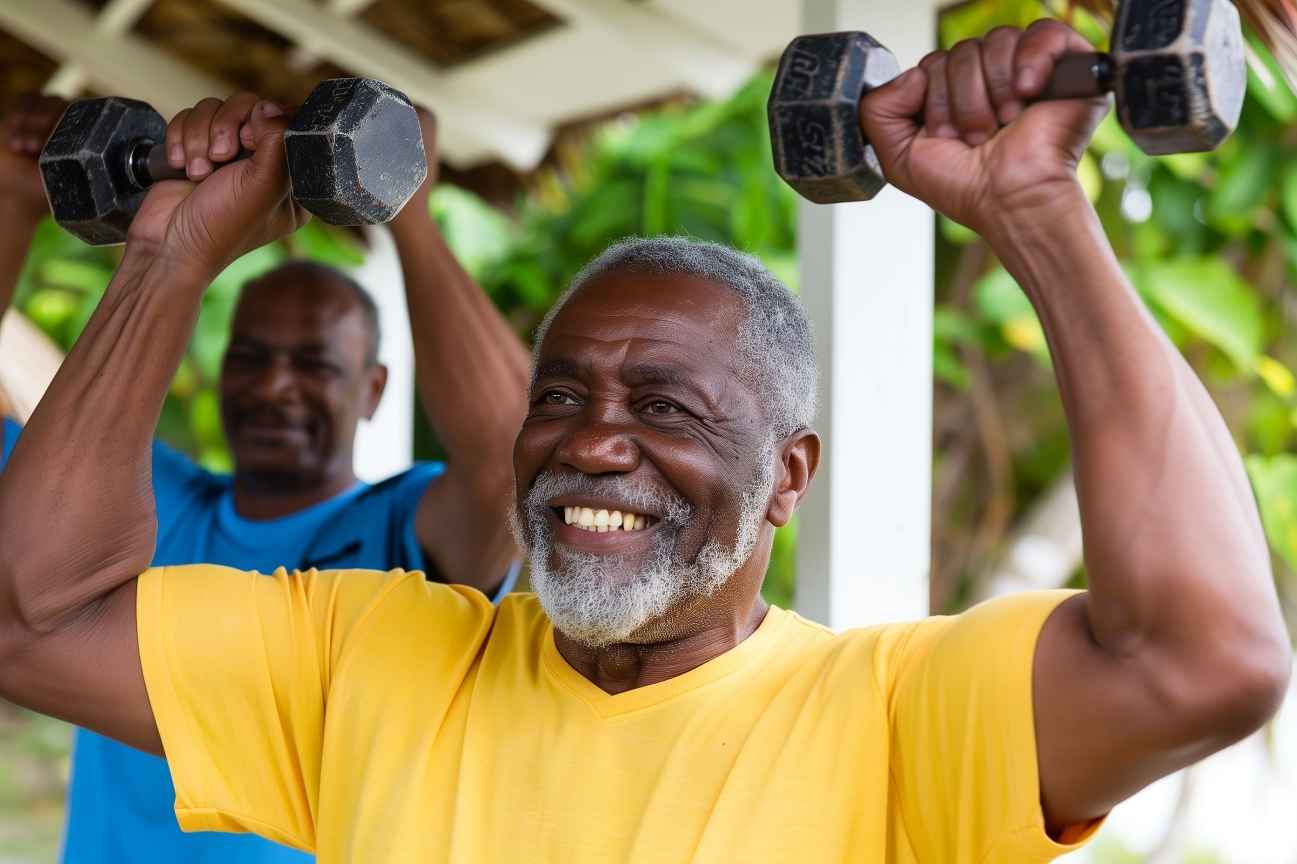
Body recomposition diet & workout planning tips
Learn how a body recomposition diet can help you lose fat and build muscle.
If you're interested in becoming leaner, stronger, and having more energy, it's important to set goals that go beyond the number on the scale. Body recomposition — the process of losing fat and building muscle — can go a long way in helping you look and feel your best. It involves balancing macronutrients, managing calorie intake strategically, prioritizing strength training and recovery, and tracking progress beyond the scale. While the process can feel slower than traditional weight loss, the results are more sustainable and rewarding. Here, we'll explore the difference between body recomposition and weight loss,
Understanding body recomposition vs. weight loss
When most people set fitness goals, they focus on losing weight. That being said, weight alone is not the best indicator of health or fitness. Body recomposition is a more nuanced approach that emphasizes lowering body fat while simultaneously building lean muscle. The goal isn’t just to shrink the number on the scale — it’s to create a leaner, stronger, and healthier body composition.
Weight loss usually refers to reducing total body mass, which can include fat, water, and even muscle. For example, someone who loses weight quickly through severe calorie restriction might shed muscle and water weight along with fat. The result may be a smaller body but not necessarily a stronger or healthier one.
By contrast, body recomposition focuses on quality over quantity. Two people can weigh the same on the scale but look very different depending on their muscle-to-fat ratio. Muscle is denser than fat, so even if your weight doesn’t change drastically, you may notice that your clothes fit differently, your strength improves, and your overall health markers (like blood sugar or cholesterol) benefit.
This shift in perspective is crucial because body recomposition prioritizes long-term metabolic health, strength, and sustainability over quick weight loss.
Macronutrient breakdown for fat loss and muscle gain
Diet plays a central role in body recomposition. The key is not only the number of calories consumed but also the balance of macronutrients—protein, carbohydrates, and fats.
Protein is the building block of muscle tissue. When trying to gain muscle and lose fat, prioritizing protein intake is essential. Aiming for about 1.6–2.2 grams of protein per kilogram of body weight per day is a widely recommended range. High-protein foods such as lean meats, poultry, fish, Greek yogurt, eggs, beans, and protein powders can help you hit your targets. Protein also has a high thermic effect, meaning your body burns more energy digesting it compared to carbs or fats.
Carbs are your body’s main source of fuel, especially for high-intensity training. Far from being the enemy, carbohydrates provide glycogen for your muscles to perform at their best. The key is choosing quality carbs like whole grains, fruits, vegetables, and legumes. These foods provide fiber and micronutrients that support recovery and satiety.
Healthy fats are vital for hormone regulation, brain function, and overall health. Around 20–30% of your total daily calories should come from fats, focusing on sources like olive oil, nuts, seeds, avocados, and fatty fish. Cutting fat too low can disrupt hormone balance and hinder progress.
An effective recomposition diet balances these macronutrients with an emphasis on higher protein intake. For example, you may find success with a macronutrient ratio that includes 30–35% of calories from protein, 40–50% of calories from carbohydrates, and 20–30% of calories from fat. The exact ratio that will work best for you depends on your activity level, metabolism, and personal goals.
Do you need a calorie surplus or deficit to reach these goals?
One of the most common questions about body recomposition is whether you should eat in a calorie surplus (to gain muscle) or a calorie deficit (to lose fat). The answer is nuanced—it depends on your current body composition, training experience, and lifestyle.
Different situations may require different training routines and nutrition habits in order to achieve body recomposition goals:
- Beginners or those returning after a break: New lifters often experience “newbie gains,” where they can simultaneously build muscle and lose fat while eating at maintenance calories or a slight deficit. Their bodies respond quickly to the new training stimuli.
- Individuals with higher body fat: Those with excess body fat often have enough stored energy to fuel muscle growth even in a moderate calorie deficit. In this case, focusing on fat loss while strength training can still yield increases in muscle mass.
- Intermediate or advanced lifters: As training experience increases, it becomes harder to gain muscle and lose fat at the same time. For these individuals, a more structured approach of cycling between slight surpluses (muscle gain phases) and slight deficits (fat loss phases) is often more effective.
The bottom line: If you’re new or carrying extra body fat, you may be able to achieve body recomposition in a calorie deficit. If you’re advanced, carefully managed maintenance or slight surpluses combined with progressive strength training may be needed to see muscle growth while minimizing fat gain.
Strength training and recovery routines
Exercise is the engine that powers body recomposition. While cardio has benefits for cardiovascular health and calorie burning, strength training is the primary driver of muscle gain and fat loss.
Keep these principles in mind when you're working toward body recomposition:
- Compound movements first: Focus on big lifts like squats, deadlifts, bench presses, rows, and pull-ups. These recruit multiple muscle groups and maximize strength and hypertrophy.
- Progressive overload: To build muscle, gradually increase the weight, reps, or sets over time. Small but consistent progress is the key.
- Frequency: Training each muscle group at least twice per week is more effective for growth than once-a-week “bro splits.” Full-body or upper/lower split routines work well.
- Volume and intensity: Aim for 8–15 reps per set for hypertrophy, with 3–5 sets per exercise. For strength goals, work in the 4–6 rep range with heavier loads.
Recovery is just as important as training. Muscles grow and repair during rest, not while lifting.
Prioritize the following to maximize your recovery:
- Sleep: 7–9 hours per night to optimize recovery, hormone function, and energy.
- Rest days: Schedule at least 1–2 rest or active recovery days weekly.
- Mobility and stretching: Keep joints healthy and prevent injuries with mobility drills, yoga, or foam rolling.
- Stress management: Chronic stress can raise cortisol levels, which may hinder fat loss and muscle gain.
Cardio can play a role in your journey — particularly low-intensity steady-state (LISS) or high-intensity interval training (HIIT) — but it should complement strength training, not replace it.
How to track progress without a scale
Since recomposition isn’t always reflected in body weight, relying on the scale alone can be misleading. Instead, use multiple tools to track progress:
- Progress photos: Take pictures every 2–4 weeks in consistent lighting and clothing. Visual changes often reveal results the scale misses.
- Body measurements: Track waist, hips, chest, arms, and thighs with a tape measure. Muscle gain and fat loss can offset each other on the scale but show up in inches lost or gained.
- Strength benchmarks: Improved performance in the gym—lifting heavier weights or doing more reps—indicates progress, even if weight hasn’t changed.
- Clothing fit: How your clothes fit can be one of the most practical indicators of recomposition.
- Body fat percentage: If accessible, tools like DEXA scans, calipers, or bioelectrical impedance can help gauge changes in body composition.
Using a combination of these methods provides a clearer, more encouraging picture of your journey than the scale alone.
How Evidation can support your body recomposition journey
Body recomposition is a long-term process that requires consistency, patience, and smart adjustments. Using apps like Evidation can help you stay motivated and track your progress. When you download Evidation, you'll be prompted to share the health data that you're already tracking, like the data collected by your wearable fitness tracker and the information you input into nutrition apps. Evidation uses this information to find insights and provides you with personalized, content-based suggestions to support your journey. Click here to learn more about how Evidation works and get started today.

How to use gym equipment: A beginner's guide
Get ready to hit the gym by learning how to use weight machines, cardio machines, and more.
We get it: no matter how committed you are to reaching your fitness goals, it can be intimidating to walk into a gym for the first time. Venturing into the weight machine area can feel even more like venturing into a country where you don't speak the language. Here, we'll dig into everything you need to know about using machines in the gym.
How a trainer can help you use gym equipment
Working with a personal trainer can help you learn the basics of how to use gym equipment. Personal trainers understand how to work with people at every fitness level, and can help you make the most of your time in the gym, whether it's your first time working out or you've been pumping iron for years.
Working with a personal trainer long-term can be a valuable investment. If working with a personal trainer regularly doesn't make sense for your budget, you may want to consider one or two sessions to get the hang of using new-to-you machines in the gym.
Strength training machines and how to use them
Weight stacks and cable machines
Weight stack machines—including chest press machines, chest fly machines, arm extension machines, triceps press machines, rotary torso machines, and leg curl machines—use a combination of stacks of rectangular, weighted plates and cable systems to create resistance against the desired muscle group.
To select the weight you're going to use for a weight stack/cable machine, you'll place the pin—a metal cylinder—into the hole of the desired weight you'd like to use for the machine. Be sure you push the pin all the way into the weight stack to ensure that the plates are stable and don't slip. As you move through your reps, be sure to use controlled movements so that the weight plates don't slam.
Plate-loaded machines
With some weight training machines, the weights aren't connected to the machine with a cable—you'll have to place the weights on the machine yourself. Bench press machines, leg press machines, and Smith machines all require you to load your own weights before you get started.
When you're stacking weights onto a machine, be sure to start with the largest weight first. Push it back as far as it will go onto the bar, then repeat the sequence on the other side. Be sure to switch back and forth between sides as you're loading to keep the machine balanced. After you finish fully loading the weights, you'll need to secure the weights with a pin—a small piece of metal used to hold the weights in place while you're lifting.
After you're finished lifting, be sure to remove the weights from the machine and return them to where you found them.
Hydraulic resistance machines
Hydraulic machines function similarly to weight stack and cable machines. Instead of a stack of weights, however, these machines are fitted with hydraulic pistons that work to create resistance as oil flows through the cylinders of the machine.
To change the resistance on a hydraulic machine, you'll usually need to change the settings on a dial or on a similar mechanism. These machines aren’t as common as plate-loaded machines, cable machines, and weight stack machines in most gyms. If you're unsure of how to use a hydraulic machine, be sure to ask gym staff for help so you're able to safely get a great workout.
Cardio machines and how to use them
Ready to ramp up your heart rate by hopping on a cardio machine? Pop your earbuds in, get your favorite playlist going, and enjoy some time on one of these tried-and-true cardio favorites.
Treadmills
Most treadmills are super-simple to use. When you first get on the treadmill, stand with one foot on either side of the belt (the part that you'll walk or run on once you turn the treadmill on) while you get the machine started. You'll likely see a few different options, including quick start, intervals, and hills. It's a good idea to start with the quick start option while you learn how the treadmill works. After you press the quick start button, the belt will likely start to move slowly. Step onto the belt and begin walking, adjusting your speed and/or the incline of the treadmill to meet your needs.
Elliptical machines
Elliptical machines—named for the oblong shape that your foot follows on the pedals— are a joint-friendly way to boost your heart rate. It can take a few minutes to get the hang of an elliptical machine, so don't worry if it feels awkward when you first place your feet on the pedals. On most elliptical machines, simply stepping onto the pedals and moving your feet will turn the machine on. From there, you can choose to adjust resistance levels, choose specific programs, or set a countdown timer for how long you'd like to work out.
Stair climbers
The never-ending stacks of stairs can look intimidating, but once you climb up and check out the control panel, you'll see that it's fairly easy to operate. Like elliptical machines, most stair climbers will turn on as soon as you step onto the machine. You'll be able to choose from quick start or programmed options. When you're ready to get off, turn the machine off and wait for the stairs to stop moving, then use the handrails to guide yourself back to the floor (the stairs may shift slightly as you lower back to the ground, so be sure to move slowly).
Stationary bikes
Whether you want to sit back and read, watch TV, or get some sweaty intervals in, stationary bikes can be a great way to get a cardio workout that's just as easy on the joints as the elliptical. To get started, sit down on the seat, and use the handle to adjust the seat to your preferred position. Place your feet on the pedals, begin pedaling, and use the control panel to adjust the resistance as necessary.
Other equipment
Medicine balls
Medicine balls can offer a full-body workout when used correctly. If you're in the gym with a friend, consider standing back-to-back and passing the medicine ball to one another to work your cores (be sure to switch direction after a set number of passes). If you're in the gym on your own, medicine ball slams can also provide a great cardio and strength session (click here to check out a quick how-to).
Ropes
Battle ropes are heavy, braided ropes that are typically wrapped in tape or other smooth material at the end. The ends of the rope are anchored in the ground. To use battle ropes, make waves (either with both arms at the same time or with alternating arms). Ropes workouts can be seriously challenging. It's a good idea to use these for high intensity interval (HIIT) training. Try making waves for 20 seconds followed by a 40-second break, and repeat 10–15 times.
Stability balls
Stability balls can be a great way to work your abs. Try doing a plank with your feet on the stability ball for a balance challenge. Ready to take it to the next level? Try a jackknife. Start by holding the plank position with your hands, then pulling your knees into your chest while your feet remain on the stability ball.
Basic gym etiquette
First time at the gym? While it's normal to feel a little nervous, remember, every single person in the gym had to, at some point, walk through the doors for the first time. You're doing something positive for your health, and no one is there to judge you. Understanding gym etiquette tips can help your workout flow smoothly, and can help you feel more comfortable as you move from one machine to the next.
Keep these gym etiquette tips in mind:
- Wipe down cardio machines after you're done using them. Usually, there are spray bottles and paper towels for this purpose.
- Ask for help when you need it. Gym staff members are there for a reason, and they'll be happy to show you how to safely use equipment.
- Share equipment with others. If you're doing several sets on a machine and others are waiting, ask them if they'd like to "work in," i.e., get their reps in while you're resting between sets.
Ready to get fit? We've got your back
At Evidation, we're here to support you as you work to become your healthiest self. If that means hitting the gym, we're here to provide you with the encouragement you need (we've also got you covered if you prefer to work out at home).
Here's how the Evidation app works: after you download the app and create an account, you'll be prompted to share health data that you're already tracking, such as information from fitness tracking apps (like Apple Health, Fitbit, Garmin, etc.), nutrition apps, etc. We'll use this information to find patterns and connections, then provide you with actionable, personalized, content-based insights that will help you drive your health journey forward. No matter where you're at in your health journey, our team is here to support you. Click here to download Evidation today and get started.

Cycle synced workouts and why they can help you
Understanding your menstrual cycle—and using it to determine your workout calendar—can help you feel your best. Here's how to do it.
Understanding the changes your body experiences throughout each stage of the menstrual cycle can help you understand your energy levels, moods, and can help you make the most of each workout you complete during the month. Cycle-synced workouts consider your body's unique needs at each phase of your cycle, helping you optimize performance, reduce fatigue, and boost your overall sense of well-being. Taking some time to learn about your body's natural rhythm can help you use the week-to-week changes of your cycle to your advantage.
Here, we'll explore more about what it means to cycle sync your workouts, the research on how cycle-synced workouts can benefit your health, as well as examples of cycle-synced workout plans.
What is cycle syncing?
Cycle-syncing your workouts involves adjusting your routine to support your body's needs in each of the four phases of the menstrual cycle: menstruation, the follicular phase, ovulation, and the luteal phase. Your hormone levels fluctuate throughout your menstrual cycle, and these fluctuations can impact your energy levels, strength, endurance, and mood. Modifying the intensity and type of exercise you do in each phase to meet your needs can help both to enhance your results and prevent burnout.
An important note: No two women are exactly the same, and cycles can vary from one month to the next. While cycle-syncing your workouts may help improve your performance, it's important to listen to your body to better understand your unique needs throughout your menstrual cycle.
Phases of the menstrual cycle—and what they mean for your workouts
Each phase of the menstrual cycle brings different advantages and challenges. Understanding what's happening in your body during each phase of your cycle can help you better understand how you can modify or ramp up your workouts to support your needs. Here, we'll move through how your body changes (and what workouts might be best for your needs) through each phase of the menstrual cycle based on a 28-day calendar. Your cycle may be longer or shorter, so adjust the timing of each of the following phases accordingly.
Menstrual phase
During the menstrual phase—the time of the month when you have your period—estrogen and progesterone levels drop. The start of your period is considered day 1 of your cycle. For many women, this leads to low energy levels and fatigue. You may also experience menstrual symptoms like cramping, headaches, and gastrointestinal issues. Rest is key during this phase. Exercise can help with symptoms, if you're feeling up to it. Light walking, stretching, and gentle yoga can all be solid workout choices during the menstrual phase.
Follicular phase
Occurring from days 6-14, the follicular phase brings a slow rise in estrogen levels, which can also lead to an increase in energy. As your body prepares for ovulation, your hormones increase your body's strength and endurance. During the follicular phase, try workouts like moderate strength training, moderate intensity steady-state cardio, or circuit training. Feel free to ramp up your efforts as your body continues to gain strength and energy as you prepare for ovulation.
Ovulation phase
This phase occurs from day 15 to day 17. During ovulation, your estrogen levels are at their peak, which can boost your motivation, stamina, and power. These days are the best for intense, peak-performance workouts. During the ovulation phase, you may want to incorporate workouts like strenuous strength training, high-intensity interval training (HIIT), and intense cardio sessions (if you're a runner, for example, this is a great time for speed work).
Luteal phase
Occurring from days 18-28, the luteal phase is marked by a rise in progesterone levels and a decrease in estrogen levels, which usually leads to a slow decrease in energy. Many women experience fatigue, bloating, and mood changes during this phase of their cycle. Research shows body temperature tends to be elevated during the luteal phase, which can cause your cardiovascular system to work harder than at other times of the month. The best workouts to schedule during the luteal phase include low-impact cardio (think swimming, low-impact aerobics, and walking), Pilates or yoga, and low-to-moderate intensity strength training.
How cycle-synced workouts can help you maximize your sweat sessions
Cycle-synced workouts can help you make the most of exercise throughout the month. When you understand how your body is changing through each phase of the menstrual cycle, you're better able to know what to expect, allowing you to set yourself up for success.
Some of the benefits of cycle-synced workouts include:
- Increased energy: When you understand the ups and downs of your cycle, you're better able to choose workouts that make sense for your energy levels. This means you know when to push yourself and when to take it easy so you can lessen post-workout fatigue.
- Reduced injury risk: Hormonal fluctuations can affect your joint stability and muscle strength, and adapting your workouts (especially during the luteal and menstrual phases) can help reduce your injury risk.
- Improved well-being: When you honor your body's needs throughout your cycle, you're setting yourself up to keep a positive mindset.
- Balanced hormones: When you choose exercise that aligns with your menstrual cycle, you're better able to regulate your body's hormone levels. This can help you achieve a number of health goals, including improved endurance, weight loss, increased strength, and more.
Cycle syncing workout plan examples
Try following these workout plans to support your well-being through each phase of your cycle.
Walking/Jogging/Running
During the menstrual phase, take it easy. An easy, slow nature walk or jog on a flat path can help ease cramps, anxiety, and other menstrual symptoms. During the follicular phase, ramp it up by adding hills or hiking to the mix. As you enter the ovulation stage, push yourself. You may want to increase the pace of some of your workouts, or tackle some serious hills. When you transition to the luteal phase, listen to your body, and decrease the length and intensity of your walks and/or runs if necessary.
Strength Training
During the menstrual phase, it’s time to listen to your body and work out according to your comfort level. If you’re not feeling up to your normal strength training routine, this is a good time to enjoy yoga, light cardio, or shorter workouts to help you conserve your energy. During the follicular phase, you’ll begin to feel your energy return, making it an ideal time to return to your normal workouts. You should feel strength increase as you move toward ovulation, and you can dial up the intensity of your workouts accordingly (you might even want to add cardio finishers at this point). After the ovulation phase passes and you move into the luteal phase, keep pressing forward and don’t get down on yourself if you see some losses in strength and stamina—you’ll be back to your follicular phase and making gains in no time.
We're here to help you through every phase of your health journey.
At Evidation, we believe knowledge is power, and we're here to provide you with the insights you need to keep moving forward on your health journey. When you download our free app, you'll have the chance to share the health data you're already tracking from MyFitnessPal, your wearable fitness tracker, etc., with our team. Your privacy is our top priority, and you can choose to stop sharing your data with us at any time. As you share your data with us, we'll use the information you're tracking to spot connections and trends. From there, we'll offer you personalized, content-based insights that help you choose the next steps to take you closer to feeling your best.
Ready to get started? We can't wait to support you. Click here to learn more about how Evidation works and download today.

Safe workouts for higher weight beginners: Where to start on your journey
Explore workouts for overweight beginners, how to stay on track when motivation wanes, and the benefits of working out that go beyond the scale.
If you have a higher body weight or live with obesity and are interested in getting started with exercise, we're glad you're here. At Evidation, we're here to help you live your happiest, healthiest life, and we're excited to help you discover great workouts for beginners carrying extra weight. Here, we'll explore what you should keep in mind when you're beginning an exercise routine, including how to talk with your doctor about your weight, different workouts you can do as you begin to work on your fitness, how you can bolster your mindset to keep you on track long-term, and how Evidation can help you work toward your goals.
Talking about your weight with your doctor
If you're concerned about your weight, it's a good idea to talk to your doctor. Together, you can discuss whether losing weight would be a good idea for your health, as well as go over any physical limitations you may need to consider as you begin exercising. If your doctor has told you that you are overweight (your body mass index, or BMI, is between 25 and 25.9) or that you have obesity (your BMI is 30 or greater), they may provide you with additional information that can help you lower your weight, such as a referral to a registered dietitian, an order for thyroid testing, and more. BMI is by no means the only measure of health, but certain BMIs are strongly correlated with certain health issues, allowing your care provider to use your BMI as a tool to understand whether you may be at risk for body mass-related health conditions.
While it can be tempting to put off talking to a doctor about your weight, it's best to approach being overweight or having obesity head-on. People who are overweight or have obesity are more likely to develop high blood pressure, type 2 diabetes, and heart disease than people of a healthy weight. Thankfully, adding exercise to your routine can help you begin your journey to improving your health.
Getting started with exercise
Starting an exercise program can be an exciting time, especially when you're ready to make positive changes to your health. There's no need to get started by joining a gym or signing up for a spinning class—though if that's your thing, more power to you! Taking small steps can go a long way toward meaningful change. Here, we'll take a look at some of the ways you can create sustainable changes with exercise.
Walking
You don't have to hit the ground running when it comes to creating sustainable weight loss habits—walking can be highly effective for weight loss, as well as for increasing lower body strength and mobility. When walking to lose weight, it's important to stay consistent and build up your routine over time, gradually increasing your distance, speed, and incline (if possible) to continually challenge your body.
Strength training
By building muscle and burning fat at the same time, strength training workouts offer a hard-to-beat two-for-one deal. If you're unfamiliar with how to safely strength train, it's a good idea to book sessions with a personal trainer or physical therapist so you can learn the basics. Lifting weights doesn't just help with weight loss—it can also help to improve your posture and range of motion, potentially correcting musculoskeletal issues related to carrying excess weight.
Aerobics
Whether you choose to go to an aerobics class or you prefer to work out in the comfort of your own home, aerobics can be a safe, effective, and fast way to get your endorphins flowing while you rev up your metabolism. If you feel intimidated by the idea of trying an aerobics class, it can help to commit to just the first five minutes of an online aerobics video. If you get to the five-minute point and you aren't feeling it, no worries—go for a walk instead. If you're loving it, keep moving for five more minutes. Building up your fitness over time can help to reduce the chance of burnout as your endurance grows.
If you're looking for a low-impact option, you may want to consider water aerobics. The natural resistance of the water on your body serves to create a challenge, and the support created by your body's natural buoyancy can help you get the intensity that you're looking for without taking a major toll on your joints. Water aerobics classes are offered at many YMCAs and community centers, and can be a great way to make new friends who are on a similar journey.
Considerations for weight loss
If you're getting started with an exercise program, it's important to create a new habit that you're able to stick with over time. This can be easier said than done—especially if you're excited to get moving and want to dive in head first.
Keep the following in mind when you're starting a new exercise program:
- Start slow. As we mentioned, it can be tempting to go all-out when you're excited about improving your fitness. Going overboard when you're getting started, however, can lead to injuries and burnout. Starting with exercise that feels challenging yet doable can provide a good baseline. Each week, you can increase the duration or the intensity of your exercise so it feels challenging, allowing you to build strength and endurance in a healthy way while lessening the likelihood of injury.
- Focus on creating new habits. Motivation and willpower won't be there every day, but habits tend to stand the test of time. When you're working to develop a new habit, choose something you can stick with. For example, you may not be able to make it to the gym every day after work, but you can commit to completing a 10-minute yoga video before bed each evening. You might not be able to commit to 5 am training sessions, but you can commit to going for a 15-minute walk on your lunch break every day after you're finished eating. Setting these small habits doesn't just support your fitness—it also creates momentum that pushes you to keep going when things get tough.
Remember, exercise is about more than weight loss. While it can be tempting to solely focus on the number on the scale as an indicator of progress, it's important to remember how much good you're doing for your overall health when you establish and stick to a workout routine. In addition to supporting healthy weight loss, exercise can also lower your likelihood of experiencing depression, anxiety, high blood pressure, arthritis, and many types of cancer. You'll also get the benefit of better sleep and improved energy.
Get started with Evidation to begin your health journey today
Whether you're looking for workouts to help you lose weight or simply exploring ways to boost your overall health and wellness, Evidation is here to help. Here's how it works: when you download the Evidation app and sign up for an account, we'll ask you to share your health data with us. You choose what data you share, if any. We use the data you choose to share with us to find patterns in your habits and develop insights that can help you move your health forward. We share the next steps you can take by providing personalized content that can help to inform your health decisions. Click here to download our free app and learn more about how our process works. We can't wait to start supporting you!

Best fitness apps to achieve your weight loss goals
Check out the best fitness apps for weight loss, including MyFitnessPal, Lose It!, Lifesum, and RunKeeper.
Weight loss is hard work, and using technology to your advantage can take some of the stress out of the process of dropping pounds. At Evidation, we're here to help you meet your fitness goals. Whether you're looking to lose weight, run a faster mile, consistently attend yoga, or simply be more active throughout the day, Evidation is here to support you. Here, we'll take a look at the best fitness apps for helping you lose weight.
Best apps for planning and tracking workouts
Whether you're a newbie in the gym or you're a personal trainer, planning your own workouts can be time-consuming. When you use an app to plan your workouts, you'll get the benefit of a plan designed with the equipment you have that fits into the time you have available, all while supporting your weight loss goals.
Let's take a look at a few of our favorite workout planning apps that you can use in the gym or at home.
FitBod
This easy-to-use fitness app uses artificial intelligence to create routines based on your performance, utilizing progressive overload to help you make progress toward strength and weight loss goals. The app's library with hundreds of exercises ensures that you'll never do the same workout twice (unless you want to), and you'll be able to view videos and written instructions from trainers working through each move. FitBod's data-driven approach makes the app a great fit for experienced exercisers and newbies alike. Bonus: FitBod easily integrates with MyFitnessPal and Lose It!
8fit
Heralded for its ability to keep users motivated and engaged, 8fit offers customized exercise routines that include bodyweight exercises, HIIT workouts, yoga, and strength training to help you hit your goals. Workouts are quick, effective, and come with easy-to-follow recipes to help you refuel after you finish your workout. You'll love the progress tracking features of 8fit—you'll get to see yourself losing weight and getting stronger over time.
RunKeeper
Whether you hit the treadmill or prefer to pound the pavement throughout the great outdoors, RunKeeper offers countless tracking and motivational options to keep you pushing through, one mile after the next. Whether you're looking to lose weight, run a faster mile, or train for a race, the app can set you up with a training plan designed for your goals. At the end of each run, you'll get to see immediate stats that show how you're progressing, providing you with a sense of well-earned accomplishment for a job well done. Pro tip: Check out the coach-guided runs when you're in need of some extra motivation.
All the apps listed above—and many others—sync with Apple Health and other services that track your health at the macro level. When you connect your Apple Health, Google Fit, Oura Ring, or other tracking app to Evidation, you'll get the benefit of sharing your workout data (if you choose) to earn rewards and inform content-based insights within our app.
Best apps for tracking nutrition and weight loss progress
After you've dug your heels in and are on the path to weight loss, tracking progress can be exciting. For many of us, seeing a visual representation of how our weight and/or health has changed over time can be motivating, helping us to stay on track as we work toward the next goal.
Nutrition tracking apps typically provide easy-to-follow weight loss progress charts, along with estimations of how long it will take you to hit your weight loss goal. No matter how much hard work you're doing in the gym, it's nearly impossible to work off a sub-par diet, so using nutrition apps to track your efforts in the kitchen can help you stay on track. Thankfully, nutrition tracking apps make it easier than ever to understand how the food you eat affects your workout performance, weight, mood, and more.
Let's take a look at our favorite apps for tracking nutrition and weight loss progress.
MyFitnessPal
MyFitnessPal is a time-trusted app that allows you to track your food intake and exercise, creating an accountability platform that can help you stick to your goals. Basic features of the app are available for free, or you can upgrade to a paid membership to access additional features. Many app users love the community support feature, which allows you to reach out to others with similar health and fitness goals to keep one another accountable.
Lose It!
Similar to MyFitnessPal, Lose It! is an app that offers food and exercise tracking. A few features that differentiate Lose It! from MyFitnessPal: the app offers a barcode scanner, recipe builder, and allows you to set a customized calorie budget based on your needs. You'll be able to choose between a free and paid version of Lose It! when you sign up for an account. Insider tip: Lose It! offers great deals on memberships regularly, so keep an eye out to save money.
Cronometer
Heralded for its nutritional accuracy, Cronometer is a food tracking app that also allows you to input custom foods and track exercise habits. Many people say that the reliable accuracy of the nutritional information in Cronometer's database makes it an ideal choice for people who have diabetes and other health conditions that require specific dietary plans. While Cronometer is a great fit for many, some users don't like that the app has a smaller database than competitors like MyFitnessPal and Lose It!
Lifesum
This food and exercise tracker doesn't just let you know how much you're eating—it gives you a Life Score, providing you with a rating based on your eating patterns and activity. If you're especially motivated by numbers, trying to hit your goal Life Score each day can push you to keep using the app while engaging in healthy habits. If you're interested, you'll also be able to check out the app's recipes and meal plans to help you shake up your nutrition.
At Evidation, we're here to help you move toward your weight loss goals, one pound at a time
No matter where you are on your weight loss journey, we'll be here to help you make the most of your hard work. With your permission, we use the health data you choose to share with us to offer personalized, content-based insights that give you the information you need to keep moving toward your goals. Click here to learn more about how Evidation works and download the app today.

Outdoor mindfulness activities to enjoy in the summer
Try these outdoor mindfulness activities to enjoy physical and mental health benefits this summer.
Many of us feel great after spending time outdoors—and it's not all in our heads. Psychological research shows that spending time in nature can both sharpen your mind and improve your mental health. Pair spending time outdoors with mindfulness—practices that help you pay attention to the present rather than dwelling on the past or worrying about the future—and you've got a winning combination.
Here, we'll explore some of the ways you can practice mindfulness outdoors to support positive mental health and, in some cases, get your heart pumping as your lungs fill with fresh air.
Outdoor yoga and meditation
Yoga and meditation both have myriad health benefits, including the ability to lower your blood pressure, brighten your moods, and boost your energy levels.
Taking yoga outdoors can be a fun and relaxing way to center yourself, get a great workout, and enjoy the benefits of nature. In many areas, yoga studios offer outdoor classes when the weather permits. If you live in an area without this option, or you'd rather not pay for a yoga class, simply take your mat (or a towel) and your phone or tablet to a flat area outdoors. Stream one of the many free yoga classes available on YouTube, and don't forget to spend a few minutes in meditation before and after your practice.
Mindful gardening
Getting your hands dirty—literally—can help you connect with nature while you beautify your space.
Follow these simple steps to begin a mindful gardening practice:
- Set your intention: Before you begin, take a moment to set an intention for your gardening session. This could be to relax, to enjoy nature, or simply to care for your plants.
- Engage your senses: Gardening is a sensory-rich activity. Feel the soil between your fingers, smell the flowers, and taste any edible plants or herbs. Engaging your senses can help you stay grounded in the present moment. When your mind wanders (and it will!) simply remind yourself to return to the present.
- Breathe deeply: As you work in the garden, take deep, mindful breaths.
- Move deliberately: Avoid rushing through tasks. Instead, move slowly and mindfully, paying attention to each action you take, whether it’s planting seeds, watering plants, or pulling weeds.
- Practice gratitude: Be grateful for the time you spend in the garden and for the opportunity to connect with nature, and for any fruits or vegetables you're able to enjoy as a result of your hard work.
Beach meditation and mindful listening
If you have access to a beach (the edge of a lake or a river bank works too!), try engaging in meditation and mindful listening. Find a quiet area, sit or lie down, focus on your breath, and listen to the rhythm of the waves and the sounds of the birds. Take time to think about all that you're grateful for.
Journaling in nature
Journaling can help you get in touch with your true self. Whether you're looking to process feelings, get motivated, or ponder your future, journaling can help to provide reflection, clarity, and presence.
When you take journaling outdoors, you're getting even more benefits, including:
- Reduced digital distractions
- Enhanced sensory experience
- Tranquil environment for reflection
- A sense of grounding as you notice the sights and sounds around you
- Enhanced creativity and ability to get into a flow state
Taking your journal to a secluded area off of your favorite trail can be a great way to get away from it all, but you don't have to put in that kind of time to get the benefits of journaling in nature. Simply relaxing in your own backyard, taking your journal to a local park, or sitting on your porch or balcony with your journal in hand can all give you a break from the hustle and bustle of the day to fully focus on your thoughts.
A helpful tip if you're not sure how to get started with journaling: Simply write "I don't know what to write." Often, once you get the first sentence out of the way, it's easier to get moving. There's no need for perfect grammar, great handwriting, or publish-worthy prose. Simply getting your feelings out of your head and onto paper can help to clear the mind.
Mindful walking in nature
The benefits of walking are numerous—from boosting your immune function to counteracting genes that are associated with weight gain, it's tough to find another exercise that melds accessibility and effectiveness so well. When you take your walks out into nature, you'll have the chance to be with your thoughts while also getting the benefit of engaging in physical activity, which can make it easier to work through thoughts that make you feel anxious, sad, or worried.
When you're walking in nature, it's a good idea to pack a snack and a bottle of water—but consider leaving your earbuds at home. Enjoying the sounds of nature without the distraction of a podcast or music can provide the tranquil environment that you need to feel relaxed and centered.
Outdoor mindfulness: making the most of your summer
Combining outdoor activities with mindfulness can be the perfect way to enjoy all that summer has to offer. Whether you choose to relax on the beach or get out for a walk while you're listening to the sounds of the forest, be sure to pencil in a few times each week to connect with nature.
At Evidation, we're here to support you on every step of your wellness journey, and we can't wait for you to start earning rewards by participating in activities that support your well-being. Using Evidation is simple—you share which health tracking app data you'd like to share, and we use that data to provide you with personalized, content-based insights that provide the information you need to take your health to the next level. Click here to learn more about how Evidation works, and how you can get started with earning rewards today!

Outdoor workout in summer: 6 ideas to have fun!
Exercising outdoors can help you make the most of your summer, and these six workout options will help you enjoy the sun.
Summer is in full swing, and there's no better time of year to take your workout outdoors. Working out outdoors isn't just great for getting your heart rate up—it also gives you the chance to enjoy fresh air, soak up the sun, and get the vitamin D you need to feel your best.
The best kind of workout is one that you'll happily do, and finding the type of movement your body craves is key to developing a sustainable summer workout plan. Not sure where to start with sweating in the sun? We've got you! Here, we'll take a look at some ideas for new workouts to try under the summer sun (don't forget to pack your favorite summer fruits to refuel afterward).
1. Swimming: a refreshing way to stay fit
The classic summer workout, swimming lets you stay cool while providing a low-impact workout that keeps you in control of your intensity level.
The benefits of swimming include:
- Builds endurance
- Low-impact
- Reduces stress and anxiety
- Improves lung capacity
- Improves cardiovascular health
Give it a try: If you're not a natural in the pool, no worries. There's nothing wrong with signing up for adult swim lessons, or starting out with a water aerobics class to get a feel for whether you enjoy the pool. If you're already confident in your swimming abilities, start slow by swimming for 15-20 minutes a few times each week, working slowly to build up your endurance and strength.
2. Trail running for an exhilarating challenge
Trail running is a challenge for your mind and your body that will leave you feeling strong, relaxed, and refreshed. Pro tip: leave your headphones at home when you're out trail running. Enjoying the sounds of nature will add to the zen of spending time on the trails.
The benefits of trail running include:
- Natural surroundings can boost mental well-being
- Lower impact than running on asphalt
- Improves proprioception (your brain's awareness of your body's position)
- Natural interval training
- Improved agility
Give it a try: Trail running is a fun and relaxing way to increase your cardio fitness, and you can get started by learning more about trails in your area (check out websites like AllTrails to learn more about nearby hidden gems). Using interval training to play with your speed (for example, running one minute, then walking for one minute) can help you build up to a more constant run. Remember, safety first—go with a friend if you can, make sure your phone is charged, and always let someone know where you're going and when you'll be back.
3. Beach volleyball for a full-body workout
If you're lucky enough to live within driving distance of a beach or sand volleyball court, you'll love the teamwork, excitement, and full-body challenge that you'll get from a game of beach volleyball.
The benefits of beach volleyball include:
- Improved coordination
- Improves reflexes
- Engages legs, core, arms, and shoulders
- Lower impact than hard court surfaces
- Improves endurance
Give it a try: If you have friends who are down to play, organize a weekend game. New to the volleyball world? Check out community centers and local recreational organizations to join a team and get started.
4. Outdoor yoga for flexibility and mindfulness
Taking your yoga practice outdoors can be a fun and challenging way to experience asanas in a new light. Whether you practice with a class or on your own, be sure to enjoy every deep breath of fresh air from your first sun salutation to your final namaste.
The benefits of outdoor yoga include:
- Reduction of stress and anxiety
- Promotes healthy circadian rhythms
- Increased serotonin
- Increased engagement in practice due to enhanced sensory experience
- Improved proprioception
Give it a try: Search for an outdoor yoga class near you (unless otherwise stated, yoga classes are generally welcoming to all levels, and your instructor will help you with any necessary modifications). No outdoor yoga options in your area? Head outside with your mat or a towel, pull up a free yoga video (you'll find tons of options on YouTube), and get started!
5. Stand-up paddleboarding for balance and core strength
Stand-up paddleboarding allows you to glide across the water's surface while you enjoy a full-body workout that improves your balance, calms your mind, and works a wide variety of muscle groups.
The benefits of stand-up paddleboarding include:
- Improved strength and endurance
- Improved cardiovascular health
- Engages a variety of muscle groups, including the arms, shoulders, back, legs, and core
- Improved balance
- Increased mental clarity
Give it a try: Many communities offer stand-up paddleboarding rentals and classes. If you have kayak or rowboat rentals available in your area, ask whether they offer stand-up paddleboard rentals as well. If it's your first time, be sure to schedule a class or lesson with an instructor before hitting the water on your own.
6. Ultimate Frisbee for cardio and teamwork
Fast-paced and fun, Ultimate Frisbee is a cardio-intensive game that requires teamwork, agility, and quick thinking. The game is perfect for those who want to socialize while exercising outdoors.
The benefits of ultimate Frisbee include:
- Improved agility
- Improved cardiovascular health
- Development of teamwork skills
- Improved hand-eye coordination
- May reduce feelings of anxiety and depression
Give it a try: Ultimate Frisbee is popular around the world, and it's likely that you'll be able to find a friendly game wherever you go. Check out Pickup Ultimate to find and join a game near you, and show up ready to sweat and make some new friends.
At Evidation, we're here to support your health, no matter how you choose to enjoy healthy movement. With our app, you'll be able to track a variety of activities, get insights into your performance, and earn rewards for staying active. We're here to help you set and meet fitness goals, monitor your progress, and stay motivated, all summer long.
This is the perfect time of year to enjoy all that the outdoors has to offer, and at Evidation, we're here to help you to make the most of your health data by providing personalized insights and content that helps you live your best life. Learn more about Evidation today and download the app—we can't wait to support you!

Three easy exercises to lower blood pressure
Exercises that engage muscles with minimal movement seem to be more effective for lowering blood pressure than higher-impact exercises like running or pilates.
According to the U.S. Department of Health and Human Services, approximately one out of every two American adults have hypertension, more commonly called high blood pressure. The most troubling thing about this statistic is only about 25% of adults with high blood pressure have their hypertension under control.
Blood pressure has a direct influence on the function of systems and vital organs throughout our bodies. Fortunately, there are some things you can do to help lower blood pressure and keep your blood pressure under control. Let's dive in and go over three easy exercises to lower blood pressure.
Understanding the importance of managing blood pressure
Managing our blood pressure is crucial in the maintenance of overall health and well-being. Blood pressure has a direct influence on the function of our body's systems and vital organs. Moreover, hypertension can lead to complications like heart disease, stroke, kidney damage, and vision loss.
When we maintain blood pressure within a healthy range, we can significantly reduce our risk of developing these life-threatening conditions. If you already live with these conditions, early intervention can help prevent these hypertension-related complications from progressing. When you prioritize the management of blood pressure, you're taking proactive steps toward a healthier future.
Three easy exercises to lower blood pressure
The U.S. Centers for Disease Control and Prevention (CDC) defines blood pressure accordingly:
- Systolic blood pressure: Measures the highest pressure in the arteries when the heart pumps blood and contracts
- Diastolic blood pressure: Occurs in the arteries when the heart rests between beats
A large 2023 study published in the British Journal of Sports Medicine revealed a link between exercise and activities that lower blood pressure. Specifically, exercises that engage muscles with minimal movement seem to be more effective for lowering blood pressure than higher-impact exercises like walking, running, or pilates. Both planks and wall sits have been shown to be effective in lowering blood pressure.
According to the study's news release, isometric exercise is effective in reducing both diastolic blood pressure and systolic blood pressure. Equally important, it's easy to do isometric exercise without lifting weights. Instead, these types of exercise rely on the weight of our own bodies.
Be sure to check with your medical provider before starting a new exercise program of any kind, especially if you have health concerns like high blood pressure.
1. Wall sits
Follow these steps to do a wall sit.
- Stand flush against a wall.
- Place your feet approximately hip-width apart.
- Try not to hold your breath. Rather, breathe in naturally as you do this exercise.
- Sliding your back slowly down the wall, bend your knees until they're at a 90-degree angle. One way to visualize how this works is to imagine you're sitting on an invisible chair.
- Don't extend your knees past your toes. Instead, ensure they stay directly above your ankles. This will prevent you from putting excess stress on your knees.
- Keep your spine in a comfortable, neutral position with your back straight against the wall.
- Hold the wall sit for about 20-30 seconds. Keep your knees steady and aligned without allowing them to collapse inward.
- Repeat the wall sit for a few sets, resting for 20-30 seconds between each one.
2. Planks
Follow these steps to do a plank:
- Get onto the floor in the same position you would use if you were doing push-ups.
- Ease your torso down to place your forearms on the floor. Your elbows should be beneath your shoulders. Your body should be forming a straight line from your heels to your head.
- Fix your eyes on the floor in front of your hands. Keep your neck in a neutral position.
- Keep your buttocks up, and don't let your hips sag.
- Hold the plank position for 10-20 seconds at first, gradually increasing the duration at which you hold the position.
- Breathe in and out naturally as you do your planks.
- Repeat for a few sets. Gradually increase the duration to build up your endurance and strength.
3. Yoga and Meditation
Low-impact yoga is another one of the things that could help lower blood pressure. One of the most effective yoga poses is the forward fold, also called the uttanasana. Here's how to do the forward fold:
- Sit in a comfortable spot on the floor or on a yoga mat.
- Adjust your body to the basic lotus (or a crossed-leg) position.
- Raise your arms at your sides, breathing in and out as you do so. Continue raising your arms until they point straight up.
- Slowly lower your arms to bring them down in front of you, breathing out while lowering your arms.
- Move your legs until they are straight out in front of you.
- Slowly fold your upper body in a way that you might if you were doing a toe-touch. Feel free to bend your knees slightly if you need to.
- Place your hands on the ground, your ankles, or your feet.
Meditation
Meditation is one of the most relaxing activities that lower blood pressure. You can meditate while doing yoga, or you can use meditation alone as a tool for lowering your blood pressure. Here's how to do a basic meditation:
- Sit in a quiet, comfortable spot.
- Make sure you're relaxed, but with your back straight.
- Slowly breathe in and out through your nose. Be mindful of the air as you breathe in and breathe out.
- Try to ignore all of the distractions or sensations. Just focus on your breathing.
Tips for integrating these exercises into daily routines
One way to stay motivated to maintain low blood pressure and exercise is to engage a friend in these low-impact exercises. Consider arriving to work 15 minutes early to do some wall sits, or use your lunch break to do planks or yoga.
When you integrate these exercises into your daily routine, you can lower your blood pressure while also enhancing your overall physical and mental well-being. Start your morning with a few wall sits and planks to engage your core and lower body muscles. You can do these exercises almost anywhere.
You can follow your wall sits and planks with meditation or a few yoga forward folds. You can also use meditation or yoga folds to unwind in the evening.
How Evidation's platform can be used to track blood pressure levels
When you connect the Evidation app to 3rd party apps like Apple Health, you can receive insights about hypertension. Another option is to track your exercise with apps such as MyFitnessPal, which connects with the Evidation app. Qardio is another great app to connect with Evidation because it can be used to track your blood pressure.
Incorporating these easy exercises into your daily routine can make a difference in your long-term health. The best thing about these exercises is that you can do them almost anywhere. Also important, you can do wall sits, planks, and yoga with no equipment.
For content related to hypertension and healthy blood pressure levels, download the Evidation app today. You can also use the app to track healthy activities and earn reward points. When you combine data tracking with personalized insights, you can take control of your blood pressure levels and enjoy improved overall health outcomes. Keep in mind that if high blood pressure is a consistent problem, you should consult your doctor to determine if there are underlying issues.

9 easy exercises to do at home and how to stay motivated with Evidation
A whole body exercise routine at home can be as good for you as a trip to the gym.
One of the keys to maintaining an active lifestyle and healthy living is to move more. Whether we're hitting the gym, enjoying a walk in the park, or going for a brisk morning run, any type of movement can benefit our overall health. But what if you want to get in a quick workout without leaving the house? You might be pressed for time on a day when every minute counts. Or maybe you don't have easy access to a gym facility. Are there some easy exercises to do at home?
Fortunately, you don't have to do an intense home workout to improve your overall fitness and health. And you don't need a dedicated room in your home for gym equipment, either. You can enjoy great workouts without equipment. A whole body exercise routine at home can be as good for you as a trip to the gym. Let's dive in and explore some ideas for moving more from the comfort of home.
Benefits of exercising at home
Why work out at home? The most obvious benefit of an easy or intense home workout is the convenience. How perfect is it to get in an effective workout without having to commute to the nearest gym? Besides convenience, you can also enjoy these benefits that come with a daily workout at home.
Cost-effective
Second to convenience, there's no question that a daily workout at home is easier on your budget than a costly gym membership. Besides the membership cost, working out at the gym might also include expenses for parking, gas if you drive, public transportation costs, or stylish workout clothing.
Flexible
When working out at home, you don't have to commit to a class schedule or the operating hours at the gym. In fact, you can work out in shifts or break up your exercise routine if that's what works for you.
Comfortable
In your own home, you have total control of your atmosphere. You get to select the music you like without having to wear earbuds. Also, you can create an ambiance that enhances your workout. Perhaps best of all, a home workout allows you to adjust the thermostat to whatever temperature you want.
Private
At the gym, you're bound to interact with other people. And sometimes that's not what we want. Working out at home gives you the freedom to get into your own zone without worrying about offending the well-meaning lady on the treadmill next to you who wants to chat. Equally important, there is no judgment when working out at home. You can wear whatever you want, and you don't have to worry about how other people think of you and your workout.
Versatile
We're going to share some ideas below for easy exercises to do at home, but you can also tap into the vast array of online video exercises. With a plethora of internet exercise videos available, you can participate in your own private fitness class whenever you want.
Hygenic
The reality is exercise is messy. If we're exercising effectively, there is going to be some sweat. There's no way around it. At the gym, it's virtually impossible to not be exposed to germs from our fellow fitness enthusiasts. At home, you'll still sweat, but you only have to worry about your own sweat, giving you a more sanitary exercise experience.
Time-saving
One of the biggest benefits of doing easy workouts at home is saving time. You don't have to spend a lot of time preparing a gym bag, driving to the gym, parking, and changing. Also, you can take a quick shower after your workout without having to wait in line.
Importance of staying motivated for consistent workouts
The key to meeting your fitness goal is consistency and staying motivated. Working out at home leaves you with less wriggle room for excuses. For example, if you have to leave your house to exercise, it can be tempting to skip a day if the weather is cold or rainy. Or maybe you've had a difficult day and dread the thought of having to put on a smile and be around other people.
Home workouts give you an excuse-free zone. Best of all, you can fit the workout into your schedule, even opting for a few minutes of exercise here and there. After all, all you have to do is walk to your designated exercise area. And you never have to worry about your favorite exercise class being full.
To make sure you're staying consistent in your exercise routine, follow these tips:
- Choose exercises you enjoy: You're more likely to exercise consistently if you're doing your favorite workouts.
- Minimize distractions: Ideally, you’ll find a time and place to exercise with as few distractions as possible. If watching a TV show while exercising helps you be consistent, that's great. However, if any type of media distracts you, it may be best to turn it off before you start working out.
- Do mini workouts to make it work for your schedule: The flipside of not being distracted by your laundry list is fitting your exercise into the rest of your schedule. Studies show that breaking exercise up into smaller chunks of time is just as effective as a long workout. For instance, instead of doing one 30-minute intense home workout, you can break up your workouts into three 10-minute workouts.
- Block out exercise time: Mini-workouts don’t work in every situation. Some people benefit by blocking out time just for exercise. When possible, schedule your exercise time if your daily routine requires it.
Importance of rest and recovery in the fitness journey
It's important to keep in mind that exercising at home has the same risks as working out at the gym, whether you're doing an intense home workout or following along with a relaxing yoga video. Also, just because you're working out at home doesn't mean you don't need a rest day.
Here are some reasons why it's important to put some emphasis on rest and recovery:
- Rest and recovery days help you avoid injuries and muscle fatigue.
- Rest days help you become stronger.
- A rest day will improve your overall wellness.
- When you take rest days, you enjoy more healthy sleep.
Are you ready to learn more about some of the best easy exercises to do at home? Read on.
1. Planking
Planking is great for doing at home, and offers many benefits, including working core muscles such as the abs, obliques, and transversus abdominis. Also, planking can activate related muscles like your hamstrings, glutes, and lower back.
In addition to working your core muscle groups, planking can also:
- Protect your back
- Prevent exercise-related injuries
- Improve your posture
- Boost your mental health when combined with breathing techniques
To do a plank, go to the floor and get into a pushup position. Then, raise up on your arms and hold your body in an in-line, straight position that resembles a plank of wood.
2. Walking up the stairs
Walking alone is a great whole-body exercise. However, if you have stairs either inside your home or outside, you've got the perfect exercise equipment built into your home. Best of all, when you walk up the stairs, you need no further exercise equipment.
When accumulated over the course of a day, stair climbing can make a significant contribution to your daily whole body exercise routine. Stair climbers have a higher aerobic capacity and are generally more fit. Taking the stairs twice a day can lead to about six pounds of weight loss in a year, according to Duke University researchers. The same study says stair climbing helps to build and maintain healthy muscles, bones, and joints.
3. Yoga
Dedicated yoga practitioners know how rewarding yoga or pilates can be, but the health benefits of this ancient and complex form of exercise are also well-documented by science and research. Most people who enjoy yoga love the vibe of a yoga class, but you can also do yoga at home thanks to the availability of yoga videos online.
If you don't have time to watch a yoga video, you can also practice some basic yoga poses. All you need is a comfortable spot to get down on the floor. A yoga mat makes yoga even more comfortable.
Beyond the yoga mat, yoga may also provide these benefits, according to Harvard Health:
- Mindful eating
- Better body image
- Weight loss and maintenance boost
- Fitness enhancement
- Cardiovascular benefits
- Increased overall quality of life
4. Pushups
In 2019, researchers studied pushups in male firefighters, and the study found these firefighters had a lower risk of stroke and heart attack. Pushups work many of the body's muscles, including the pectoralis minor, triceps, anterior deltoids, and core muscle groups. For this reason, pushups may improve overall body composition, which can lead to fat loss.
To do a standard pushup, assume a high-plank position. Then, raise your body up and down using your arms. Allow your elbows to flare out at 45-degree angles.
Knee pushups can be as effective as traditional pushups. Additionally, knee pushups allow you to build up strength before you attempt a standard pushup practice.
- From your knees, get into the high plank position.
- From your head to your knees, maintain a straight line, bending your elbows as you lower yourself to the floor. Maintain the 45-degree angle with your elbows.
- To start, push back up.
Other types of pushups include wall pushups, incline pushups, decline pushups, weighted pushups, and one-arm pushups.
5. Dance
One of the most fun ways to exercise is dancing. In addition to the positive physical aspects of dance, studies show dancing has psychological benefits. Moreover, a study published in Sports Medicine demonstrated that structured dance of any type is typically as effective as other physical activity types.
When working out at home, you can literally dance like no one is watching because if you're home alone, no one is. Dance along to your favorite playlist, or find some fun dance exercise videos online.
6. HIIT
High-intensity interval training (HIIT) isn't just for the gym. Multiple studies have shown the effectiveness of HIIT exercises for both fitness and cardio benefits. The good news is you can do most HIIT exercises at home without equipment. These include:
- Pushup
- Burpee
- Squat with overhead press
- Russian twist
- Mountain climber
- Jumping jack
- Bent-over row
- Kettlebell swing
- Lunge
- Plank and plank jack
7. Shoulder presses
With shoulder presses, you can strengthen your shoulder muscles while also increasing their size. This includes the triceps. Shoulder presses help when you want to improve your ability to perform everyday tasks, such as placing items on an overhead shelf or putting dishes away in a high cabinet.
If you want to add shoulder presses to an intense home workout, you'll benefit from either a dumbbell shoulder press or a shoulder press machine. However, you can also use small dumbbells to do basic shoulder presses.
Simply put, an overhead press is a movement in which you push resistance over your head. You can achieve this in a few different ways:
- One hand at a time
- Both hands at the same time
- A single barbell you hold by both hands
- A free weight not attached to a piece of equipment in each hand
8. Tae Bo
Tae Bo incorporates taekwondo and boxing, hence the abbreviated name "Tae Bo." This unique exercise routine enjoyed its heyday in the 1990s when exercise guru Billy Blanks reached millions of fitness enthusiasts and beginners with VHS tapes. Tae Bo was specifically designed for a home workout, and it remains one of the easiest ways to get into a solid cardio workout routine in the comfort of your own home.
You don't have to dust off that old VCR in your attic to get back into Tae Bo. Thanks to the internet, you can find countless videos online to follow along with. If you want to enjoy the comfort of home while also engaging with others, some Tae Bo enthusiasts connect via Zoom to enjoy a good workout.
9. Squats and lunges
Squats are a functional exercise that can help prevent injuries, boost your calorie burn, improve your posture and balance, and strengthen your core. Specifically, squats can help power you through essential daily tasks that include stair climbing, walking, carrying heavy loads, and bending. Squats also support back muscles.
A fundamental movement pattern, squats require muscle and joint integration. Primarily, squats target these muscles:
- Quadriceps
- Gluteus minimus, maximus, and medius
- Adductor (groin)
- Hamstrings
- Calves
- Hip flexors
If you have knee injuries or pain, you can still do squats. Consider chair squats.
- Stand with your feet shoulder-width apart in front of a chair.
- Bend your knees and hinge at the hips, lowering down and back until your bottom makes contact with the chair. Keep your arms extended in front of you.
- Use your heels to push up and return to the start position.
Utilizing Evidation to track progress and stay motivated
Building some of the exercises we listed into your daily workout at home can be either your regular workout or an occasional alternative to going to the gym. Using the Evidation app and platform will help you stay motivated as you track your progress.
Evidation can connect to your favorite fitness apps, including apps such as Fitbit, MyFitnessPal, Apple Health, Runkeeper, and more. With these apps, Evidation can help you track many of your health stats, including heart rate, steps taken, and exercise. Download the app today to learn more and start tracking your fitness journey.