

Blog
Understanding the triggers behind psoriasis and eczema flares
Learn what defines a psoriasis or eczema flare and how immune activity, skin barrier function, and environmental factors may influence symptoms.
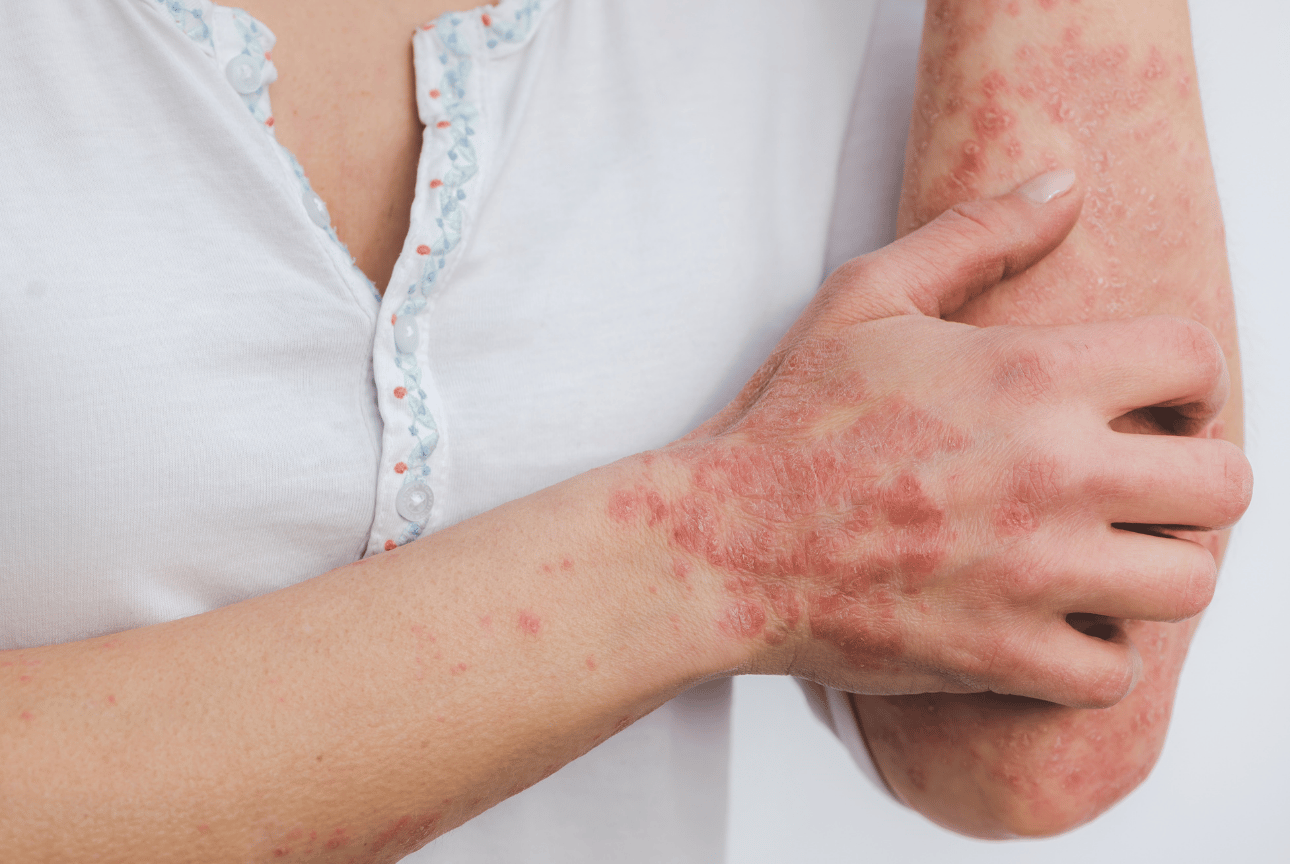
Psoriasis and eczema are chronic inflammatory skin conditions that often follow a cycle of periods of relative stability interrupted by symptom flare-ups. During a flare, symptoms such as redness, itching, dryness, scaling, or irritation may become more noticeable or severe than usual. While psoriasis and eczema are distinct conditions, both involve complex interactions between the immune system, the skin barrier, and environmental factors.
Researchers continue to study why flares occur and why certain triggers seem to affect some people more than others. Although there is no single explanation for every flare, growing evidence suggests that immune activation, skin barrier dysfunction, and external exposures all play important roles.
What defines a flare?
A flare refers to a temporary worsening of symptoms in a chronic condition. For people with psoriasis or eczema, a flare may involve increased itching, more extensive skin involvement, greater discomfort, or changes in the appearance of affected areas.
The timing and severity of flares can vary considerably. Some people experience occasional flare-ups triggered by specific circumstances, while others may notice a more unpredictable pattern. Researchers believe these fluctuations occur because the underlying inflammatory processes driving these conditions can become more active at certain times.
Immune activation and skin inflammation
Both psoriasis and eczema involve abnormal immune responses that contribute to skin inflammation, though the biological pathways differ between the two conditions. In psoriasis, immune cells trigger rapid skin cell growth and inflammation, leading to the development of thick, scaly plaques. Researchers have identified several inflammatory signaling pathways that contribute to disease activity and flare development.
Eczema, also known as atopic dermatitis, is associated with immune system dysregulation that contributes to chronic inflammation, itching, and skin irritation. Inflammatory signals can become amplified during a flare, resulting in worsening symptoms and increased skin sensitivity. Since immune activity plays such a central role in both conditions, researchers continue to investigate how internal and external factors may influence inflammatory responses and contribute to flare-ups.
Environmental and psychological associations
A variety of environmental and physiological factors have been associated with psoriasis and eczema flares. While triggers differ from person to person, several patterns have emerged in research. For eczema, common triggers may include dry air, irritants such as soaps or fragrances, allergens, infections, and emotional stress. Changes in temperature or humidity can also affect symptom severity.
Psoriasis flares have been associated with factors such as skin injuries, infections, psychological stress, certain medications, and lifestyle-related factors. Researchers have also explored how broader health conditions and systemic inflammation may influence disease activity.
Importantly, the presence of a trigger does not guarantee a flare. Instead, many experts believe flare-ups occur when multiple biological and environmental factors interact at the same time.
The role of the skin barrier
The skin barrier serves as the body's first line of defense against environmental exposures, irritants, allergens, and moisture loss. Growing research suggests that skin barrier function plays an important role in both eczema and psoriasis.
In eczema, defects in the skin barrier can allow moisture to escape while making the skin more vulnerable to irritants and allergens. This can contribute to inflammation and increase the likelihood of flare-ups. Although psoriasis is primarily driven by immune dysfunction, researchers have also identified abnormalities in the skin barrier function that may contribute to disease activity. When the skin barrier becomes compromised, inflammation can worsen and symptoms may become more difficult to control.
As researchers continue to learn more about autoimmune and inflammatory conditions, it has become increasingly clear that psoriasis and eczema flares are influenced by a combination of immune activity, skin barrier health, and environmental exposures. Understanding these factors may help provide a broader picture of why symptoms sometimes worsen and how researchers are working to better understand these chronic conditions.
How Evidation can provide insight and support your health
If you're living with psoriasis, eczema, or other chronic conditions, it can be tough to pinpoint your triggers and manage your health. Evidation can help. When you download the Evidation app, you'll be prompted to share the health information you're already tracking. With your permission, we'll use the information you share with us to find patterns, helping you learn more about how you can support your health while managing chronic conditions. Click here to learn more about how Evidation works and get started today.

New week over week changes insights: steps and resting heart rate
We’re introducing a new insights feature: week over week changes. Members will now receive weekly insights when Evidation observes a significant change in your weekly step count or average resting heart rate.
Often it’s interesting to know how your body and behavior change over time. That’s why we’re introducing a new insights feature: week over week changes. Beginning next week, members will receive weekly insights when Evidation observes a significant change in your weekly step count or average resting heart rate.
How it works
If you connect a wearable device to Evidation and give us permission to analyze your data, we’ll analyze your daily steps and resting heart rate data each week to determine if there was a notable change between last week and the week prior. In this case a “notable” change means at least a 20% change in your average daily step count. For resting heart rate, notable means at least a 5 beat per minute change in your average daily resting heart rate.
How do I interpret my week over week changes?
.png)
.png)
How do I get my week over week change alerts
In order to receive week over week change insights you’ll need to do the following:
- Use a wearable device that logs either steps or heart rate (or both!) and connect it to the Evidation app. Make sure you enable sharing of steps and heart rate data when you connect your device.
Learn more about pairing connected devices here.
- Wear your device at least 6 days per week. We need enough data on a weekly basis in order to accurately detect meaningful changes.
How often will I get my week over week change alerts?
You’ll receive weekly alerts if you wore your device enough during the week, have your device connected, and we detect a meaningful change. If you do not receive an insight and have your device connected, it means we didn’t find any significant changes in your steps or resting heart rate.
Health insights on Evidation
We’re constantly adding new insight types to help our members learn more about their health and take control of their health journey. Keep a look out for additional insight types coming soon.
Interested in seeing insights like this, but don’t have a device connected yet, Find out which devices are compatible with Evidation and how you can pair your device here.
Don’t yet have the Evidation app? Download now on iOS or android.

Breathing techniques for sleep: 3 powerful strategies to help you sleep better
Breathing techniques, including belly breathing, 4-7-8 breathing, and alternate nostril breathing can help you get the rest you need.
If you're struggling to fall asleep at night, you're not alone. Studies show that many people around the world struggle to fall and stay asleep at night. Women are more likely to have trouble sleeping than men, younger adults are more likely to have trouble sleeping than older adults.
No matter what your demographic, prioritizing sleep is a key for good health. Here, we'll explore why sleep is so important, breathing techniques you can use to make it easier to get the rest you need, and some habits you can put into place to set yourself up for sleep success.
Why sleep matters
Failure to get enough sleep doesn't just leave you feeling tired the following day—it can also endanger your physical health. Poor sleep can weaken the immune system, increase the risk of developing diabetes, lower the libido, and increase the risk of heart disease.
Mental and emotional health can also be affected by failing to get enough sleep. People who don't get enough sleep may struggle to cope with changes, find that it's difficult to control their emotions and behaviors, and struggle to make decisions. Research has also shown that sleep deficiency is linked to an increase in risk-taking behavior, depression, and suicide.
Effective breathing techniques for sleep
Using simple breathing techniques can make it easier for you to fall and stay asleep by initiating your body's relaxation response. You may also find these techniques helpful for stress management during your waking hours.
Taking just a few moments to practice the following breathing exercises before bed can decrease your heart rate, lower your blood pressure, and help your brain and body understand that it's time to rest.
1. Belly breathing
Also known as diaphragmatic breathing, belly breathing requires the perfect amount of focus—just enough to calm your mind, but not enough to stop you from nodding off.
Give it a try:
- Lie comfortably on your back with your head resting on a pillow.
- Place one hand on your chest and the other on your abdomen.
- Slowly breathe in, working to expand your abdomen as you fill your diaphragm with air. Focus on keeping your chest still as you work to expand your belly.
- Fully exhale, feeling your abdomen lower.
- Continue the practice for two to five minutes, or until you fall asleep.
You may want to pair belly breathing with meditation, positive affirmations, or quiet, calming music.
2. 4-7-8 breathing
4-7-8 breathing takes a bit more focus than belly breathing, but many people find that the additional focus is especially helpful if they're dealing with worries or a stressful situation that's making it difficult to rest.
Give it a try:
- Find a position that feels comfortable.
- Inhale for 4 seconds.
- Hold your breath while you count to 7.
- Exhale slowly for 8 seconds.
- Repeat for up to 5 minutes.
This practice doesn't just help your mind focus—it also works to decrease your heart rate and blood pressure while activating your body's parasympathetic nervous system and supporting your brain's production of the sleep hormone melatonin.
3. Alternate nostril breathing
This yoga technique can help to calm the mind and body when you're winding down at the end of the day.
Give it a try:
- Use your finger to gently close one nostril.
- Inhale through the open nostril.
- Close the opposite nostril and exhale through the nostril that was originally closed.
- Inhale on the now-open side of your nose, and continue alternating nostrils and breaths for up to 5 minutes.
Additional healthy sleep practices
While using breathing exercises can help make it easier to fall asleep, there's more that you can do to get high-quality rest. Try adding these techniques to your nighttime routine.
Relaxation and stress reduction techniques
Using relaxation tools just before bed can help set your mind and body up for sleep success. You can also use these practices throughout the day to manage stress and clear your mind long before it's time for your head to hit the pillow.
Try these practices to calm the nervous system:
- Meditation
- Yoga
- Journaling
- Physical exercise (if exercise tends to energize you, be sure to finish your workout no less than two hours before bed)
- Spending time with family (pets count!)
- Reading a favorite book
Create a comfortable sleep environment
Entering your bedroom should tell your brain that it's time to get some rest. There are a few changes you can make to help make your sleep environment as relaxing as possible, including:
- Temperature: Research shows that the ideal temperature for sleep falls between 60 and 68 degrees for most people.
- Clutter: When your bedroom is used as a catch-all for the clutter of the day, it can be tough for your mind to realize that it's time to rest. Keeping your bedroom clear of work, laundry, and other task-oriented items can help your brain enter the sleep zone.
- Shutting off screens: The blue light that comes from your phone, computer, or TV can keep your brain active after you've turned off the lights for the evening. Stopping the use of screens an hour or two before bed can go a long way toward helping you get the rest necessary to wake up rested.
Keep consistent sleep hygiene habits
Keeping a sleep schedule that works for you is an important part of maintaining great sleep hygiene. Whenever possible, go to bed and wake up at the same time each day. This can help your brain begin to wind down. It's also a good idea to form a bedtime routine, as performing the same actions at the same time each day can also help to signal to your brain that you're preparing to rest.
Evidation: Here to help you feel your best
Evidation provides you with activity tracking, stress monitoring, and other valuable information that can complement your efforts to get the rest you need. Click here to learn more and download the Evidation app today.

National Sleep Awareness Week: 6 evidence-based strategies for better rest with the help of Evidation
Identifying existing sleep issues, managing stress, incorporating exercise, creating a sleep routine, and optimizing your sleep environment can all help you get better sleep.
High-quality sleep and good health go hand-in-hand. March 10th-16th of 2024 is National Sleep Week, which provides the perfect reminder to check in with yourself and think about whether you're getting enough rest.
Prioritizing sleep, making adjustments that make it easier for you to fall and stay asleep, and paying attention to how your body feels when you get enough rest versus when your sleep is lacking can all work to support your well-being. Here, we'll explore why it can be tough to get enough sleep and some simple steps that you can take to make your shut-eye count.
Sleep Awareness Week: goals and challenges
Whether you're having trouble sleeping or just aren't waking up as rested as you'd like, Sleep Awareness Week is a great time to focus on making sure you're getting the best shut-eye possible.
If you struggle to get sleep that helps you feel your best, you're not alone. Common issues that can make it hard to get enough sleep include:
- Anxiety and stress: If you're feeling constantly worried, dealing with a stressful life situation, or are living with an anxiety-related mental health condition, you may find that it's difficult to fall asleep.
- Irregular schedule: Whether you work double shifts or are tending to a brand-new baby, having an irregular sleep schedule can take a toll on your mind and body.
- Electronic device use: Blue light emitted from cell phones and other electronic devices interferes with your body's production of the sleep-regulating hormone melatonin, making it tough for your body to maintain its natural sleep-wake schedule.
- Caffeine: Drinking caffeine can keep your nervous system up and awake long after your body's preferred time to go to sleep.
- Medical issues: Medical conditions like sleep disorders, chronic pain, gastrointestinal problems, and respiratory problems can all make sleep more difficult. Certain medications can also make it difficult to fall and stay asleep.
The importance of quality sleep
There are many factors that can make it difficult to get the sleep you need, and it's important to take steps to remedy and accommodate issues that make it harder to rest.
Risk factors associated with not getting enough sleep include:
- Impaired cognitive function: When your brain doesn't get the rest it needs, a variety of mental processes can be affected, including problem-solving skills, concentration, memory, and attention.
- Mood disorders: People who don't get enough sleep are more likely to develop depression, anxiety, and other mental health issues.
- Obesity: Research shows that there may be a link between getting enough sleep and the regulation of the hormones that control appetite and metabolism. Problems with these hormones can lead to metabolic issues, cravings, increased hunger, and weight gain.
- Cardiovascular issues: When you experience chronic sleep deprivation, you're more likely to develop hypertension, stroke, heart disease, arterial damage, and other cardiovascular problems.
The science is clear: getting enough high-quality, restful sleep is vital to your overall well-being. Let's take a look at some of the tips and tricks you can use to make your time asleep count.
1. Establish a consistent sleep schedule
While it can be tempting to stay up far too late one night and make up for it by sleeping in the next morning, experts agree that routine matters. Creating healthy sleep habits includes sticking to a schedule that makes sense for your sleep needs.
Most adults between 18 and 64 years of age need between 7 and 9 hours of sleep each night, while those aged 65 or older typically need between 7 and 8 hours of sleep each night. Paying attention to the amount of rest that lets you feel your best can help you determine the bedtime and wake-up time that makes the most sense for your needs.
2. Create a relaxing bedtime routine
Nighttime routines aren't just a good idea for little ones—adults can benefit from having a step-by-step before-bed process as well.
Some tips for creating a bedtime routine that can help you optimize your sleep include:
- Ditch the electronics before bed. Taking at least an hour away from screens before you go to bed can help your brain begin the process of winding down. If you can, try to stay away from screens for two hours. If you're stuck working right up until it's time for bed, go into your phone or computer's display settings to reduce the level of blue light emitted.
- Take a warm bath or shower. As your body temperature begins to drop after your bath or shower, your brain begins to prepare for sleep.
- Stretch and/or meditate. Racing thoughts, the tasks of the morning ahead, and physical tension caused by the activities of the day can all make it harder to fall asleep. Taking a few moments to stretch, breathe, and/or meditate can help set you up for a successful night of sleep.
As with most activities that contribute to your health, consistency matters. Understanding what makes a great sleep routine is fantastic, but it's necessary to actually implement the routine consistently to make a difference in your sleep.
3. Optimize your sleep environment
Creating an environment that supports high-quality sleep can both help you feel more comfortable and signal to your brain and your body that it's time to rest.
Creating a relaxing environment can help you relax. Clearing clutter is an important part of creating a bedroom environment that can help you drift off to dreamland. While it can be tempting to make your bedroom a catch-all space for laundry, projects, and other loose ends, doing so can make it difficult for the brain to shift from busy mode to rest mode.
Making your bedroom as dark as possible can also contribute to helping you get great rest. Using blackout curtains or an eye mask can help you block out any light, helping your brain to understand that it's time to sleep.
Sound control is vital for a good night's sleep. If you live in an area where you can't control the noise in or around your bedroom, using a white noise machine (or a white noise app) can help. Playing soothing music can also work to block out noise.
Temperature is also an important consideration for creating an environment that welcomes sleep. Most experts recommend that you keep your bedroom between 60 and 71 degrees, as excessive heat can make it harder for you to drift off.
4. Manage stress and anxiety for better sleep
There's no way around it—stress and anxiety are an unavoidable part of life. When these issues interfere with your sleep, you may begin to feel anxiety about your lack of sleep, creating a cycle that's difficult to break.
Adding some stress relief techniques into your day can make it easier for you to fall asleep at night. As we mentioned, meditation, breathing exercises, and stretching can all help your body wind down from stress.
Progressive muscle relaxation is a tool that many people find helpful to manage stress. Follow these steps to give it a try:
- Sit or lie down comfortably.
- Take a few deep breaths.
- As you breathe, tense a muscle group, hold for a few seconds, then relax. Repeat this in muscle groups progressively, taking a moment to feel the difference between tension and relaxation at each level.
- Repeat for muscle groups where you still feel tension.
If you're dealing with heavy life stressors, you don't have to try to handle it on your own. Talking with a licensed counselor or therapist can help you develop coping strategies unique to your situation that may make it easier for you to fall asleep.
5. Incorporate physical activity for improved sleep
It sounds counterintuitive, but getting exercise can help you fall asleep at night. Much like taking a hot bath or shower, exercise can raise your body temperature, and as your temperature lowers, your brain will have an easier time going into sleep mode.
Not everyone experiences the same effects from exercise, however. While some people find that the change in body temperature and boost in endorphins a good workout creates helps them fall asleep easily, others find that they feel energized after exercise. If you need time to wind down after you exercise, it's smart to leave at least two hours between the end of your workout and the start of your nighttime routine.
You don't have to go crazy to reap the benefits of exercise when it comes to getting better sleep. Adding just half an hour of aerobic activity to your day can help you sleep better that evening. The type of physical activity that you do doesn't matter—just find something you love and will be able to stick with over time.
6. Evaluate dietary habits impacting sleep quality
What you eat before bed matters, and carefully considering your choices at (and after) dinner can make a difference in how well you sleep. Taking stock of your current dietary habits and finding sleep-healthy adjustments can go a long way to support your overall sleep health.
You might want to forgo the glass of wine with dinner. While many people feel like alcohol helps them drift off to sleep, this positive effect is short-lived. Alcohol can disrupt the restorative stages of sleep, and can increase sleep apnea symptoms.
Eating high-fat and high-protein foods slows your body's digestion, and this can result in a lower quality of sleep. Fat and protein molecules take longer to break down than carbohydrates. Leaning heavier on the carbs in the evening—especially complex carbohydrates, like whole-wheat bread—can help you rest more easily.
Research suggests magnesium can help people who struggle to fall asleep. While more research is needed to determine the role that magnesium plays in supporting healthy sleep, adding magnesium to your diet may help you get the rest you need. In addition to taking a magnesium supplement, it can also be helpful to add foods high in magnesium to your diet, including greens, nuts, seeds, beans, and grains.
Getting high-quality sleep can help you feel energized, support a healthy immune system, and provide your body and mind with the time needed to rest and recharge. It can take some trial and error to discover which of the sleep tips discussed above are the best fit for you. It's a good idea to implement one tip at a time, allowing you to discover what works well for you. Small lifestyle changes can go a long way to set the scene for great sleep.
If, despite your best efforts, you're still struggling to get restful sleep, it's important to reach out to your doctor to discuss other issues that may be making it difficult for you to rest.
Some other resources to explore as you embark on your sweet-dreams journey include:
Evidation: Here to support your sleep-well journey
At Evidation, we're here to help you get the most out of your health data by providing personalized, helpful insights that can support you as you work to take your health to the next level. We're passionate about supporting your health! Learn more about how Evidation works and download the app today.

Introducing My Health: your personalized health Hub on Evidation
We're thrilled to unveil a new addition to the Evidation app: My Health. This new feature is designed to provide you with valuable insights into your well-being.
We're thrilled to unveil a new addition to the Evidation app: My Health. This new feature is designed to provide you with valuable insights into your well-being.
At Evidation, we understand that your health journey is unique, which is why My Health is tailored to provide personalized guidance and correlations between essential aspects of your lifestyle.
What Can You Expect from My Health on Evidation?
- Daily Surveys for Comprehensive Insights: By answering the daily questions you see on the home screen, you'll gain deep insights into your health trends over time. You can now find these in the My Health tab.
Currently, you’ll see quick surveys each day asking about your sleep and mood, allowing you to track your progress and make informed decisions about your well-being.
In the future, we’ll add other topics such as healthy eating, prevention, exercise, and so on.
The screenshot below illustrates how these surveys offer valuable insights into your daily habits and behaviors.
%2520(1).png)
- Seamless Device Integration for Real-Time Data: Take your health monitoring to the next level by connecting your health-tracking devices to Evidation. By syncing your wearables and other health-tracking apps, you'll unlock real-time data insights and gain a deeper understanding of your health trends.
Additionally, we’ll provide you with valuable information about conditions you may be at risk for, empowering you to take proactive steps towards better health. Expect to start receiving these insights within 1 day after connecting your device.
The screenshot below demonstrates how connecting your devices offers a comprehensive overview of your health metrics.
%2520(1).png)
How to Maximize Your My Health Experience
- Stay Consistent: Make a habit of answering daily surveys to ensure accurate and meaningful insights into your health trends.
- Dig into My Health: Check out your My Health tab often to get meaningful insights into your activities and patterns.
- Utilize Device Integration: Connect your devices promptly to start receiving real-time data insights and personalized recommendations.
- Act on Insights: My Health isn't just about tracking; it's about taking actionable steps towards a healthier lifestyle. Use the insights you get to make informed decisions and prioritize your well-being.
At Evidation, we believe that proactive health management is the key to living your best life. With My Health, we're putting the power of personalized health insights directly into your hands.
Whether you're striving to improve your fitness, manage stress, enhance sleep quality, prevent illness, or adopt healthier eating habits, Evidation is your trusted companion on your journey to optimal well-being.
Get Started with My Health Today
Ready to take control of your health? Update your Evidation app now to access the My Health feature and start your journey towards a healthier, happier you. Don't have the app yet? Download it today and unlock a wealth of personalized health insights at your fingertips.
Here's to a healthier tomorrow with My Health on Evidation!

Sleep debt insights on Evidation
Introducing sleep debt insights. Track your sleep debt and improve your sleep patterns with Evidation. Learn more.
Evidation Members tell us they love seeing insights in the app such as how their sleep and mood are connected or how their mood or sleep impacts their activity levels. So we’re always working to provide new and valuable health insights for our members.
To that end, we’re kicking off an exciting new project… 8 new insight types in 8 weeks!
Here, we’ll dive into the first of these new insights — sleep debt! Keep an eye out for more insight types coming soon.
What is sleep debt?
At a high level, sleep debt is just a measure of how much you sleep compared to how much you ideally should sleep.
There are two kinds of sleep debt:
- long term sleep debt that you accumulate over months and years, and
- short term sleep debt that you accrue over days and weeks.
Both are important, but the measurement we provide members focuses on short term sleep debt — specifically sleep debt calculated over the last 14 days.
Learn more about sleep debt and the associated risks here.
How Evidation tracks your sleep debt
Here’s the overview of how Evidation calculates sleep debt:
- First we estimate your “ideal” nightly sleep duration based on sleep data logged on your sleep tracker. This number is personalized to you, but for almost everyone this number will be between 7 and 9 hours of sleep per night.
- We then look at your actual sleep duration over the past 14 days. For each day, we take the difference between your ideal sleep and your actual sleep to calculate a daily sleep debt score.
- The daily sleep debt scores are then adjusted to account for the fact that recent sleep debt is more impactful than sleep debt you accrued far in the past. For example, sleeping only 2 hours last night will make you feel terrible today if you’re used to consistently sleeping 8 hours each night, but if you had a night where you slept 2 hours a week ago, it would impact you far less today, assuming the other nights you slept your usual 8 hours.
- Finally, we take the adjusted daily sleep debt values and sum them up over the last two weeks. This is your total short term sleep debt.
How do I interpret my sleep debt score?

The graph you’ll see in the evidation app shows four different pieces of information:
- Your daily sleep duration over the past week
- Your ideal sleep duration (the dotted horizontal line)
- Your daily sleep debt (the red bars that are stacked on top of your daily sleep duration on days you slept less than your ideal sleep duration)
- Your total sleep debt calculated as discussed above (the final red bar)
How do I get my sleep debt score?
In order to receive a sleep debt score you must do the following:
- Use a wearable device that logs sleep and connect it to the Evidation platform. Make sure you enable sharing of sleep data when you connect your device.
- Wear your device while you sleep as often as possible. In order to receive your sleep debt score, we need at least 10 days of sleep data every two weeks. Too few data points will make our calculations inaccurate.
How often will I get my sleep debt score?
For now, you’ll see your sleep debt score weekly. In the future, we’ll begin updating your sleep score daily so you can better track your score over time. Knowing your sleep debt score makes it possible to take steps to improve your sleep and get the rest you need to feel your best.
Get sleep debt insights with Evidation
Want to receive sleep debt insights and other valuable health metrics? Be sure to download Evidation and connect a health-tracking app today!

Unraveling the mystery of sleep debt: understanding the risks and taking action for better health
Discover the hidden costs of sleep debt on your health and well-being. Learn how understanding and addressing sleep debt can transform your life. Read more on the Evidation blog.
In our fast-paced world, sleep often takes a backseat to the demands of work, family, and social life. Many of us may find ourselves sacrificing sleep to fit more into our day, but what we don't realize is that this can lead to a phenomenon known as sleep debt. Understanding what sleep debt is, its risks, what your sleep debt is can empower you to take action for better health.
What is sleep debt?
Sleep debt, or sleep deficit, is the difference between the amount of sleep someone needs and the amount they actually get.
It occurs when you regularly get less sleep than your body needs to function optimally. For most adults, the recommended amount of sleep is between 7 to 9 hours per night, although individual needs may vary. When you consistently get less sleep than your body requires, the hours of missed sleep add up, resulting in a sleep debt.
Risks of sleep debt
The risks associated with sleep debt are numerous and can impact both your physical and mental health. Here are some of the key risks:
- Impaired Cognitive Function: Lack of sleep can impair cognitive function, including concentration, memory, and decision-making abilities. This can lead to decreased productivity at work or school and increase the likelihood of accidents or errors.
- Mood Disturbances: Sleep debt is closely linked to mood disturbances such as irritability, mood swings, and feelings of stress or anxiety. Chronic sleep deprivation can also contribute to the development of mood disorders like depression.
- Weakened Immune System: Adequate sleep is essential for a healthy immune system. Sleep debt can weaken the immune response, making you more susceptible to infections such as colds and flu.
- Increased Risk of Chronic Diseases: Chronic sleep deprivation has been linked to an increased risk of various chronic diseases, including obesity, diabetes, heart disease, and hypertension. Lack of sleep can disrupt hormonal balance and metabolism, contributing to these health conditions over time.
- Impaired Physical Performance: Sleep debt can impair physical performance and recovery, affecting athletic performance and increasing the risk of injuries during physical activities.
Taking action to improve sleep debt
Understanding your sleep debt can empower you to take action to improve your sleep quality and overall health. Here are some strategies to help you reduce sleep debt and prioritize sleep:
- Establish a Consistent Sleep Schedule: Go to bed and wake up at the same time every day, even on weekends. Consistency helps regulate your body's internal clock and promotes better sleep quality.
- Create a Relaxing Bedtime Routine: Develop a calming bedtime routine to signal to your body that it's time to wind down. This may include activities such as reading, taking a warm bath, or practicing relaxation techniques like deep breathing or meditation.
- Create a Sleep-Friendly Environment: Make your bedroom conducive to sleep by keeping it cool, dark, and quiet. Invest in a comfortable mattress and pillows, and limit exposure to electronic devices before bedtime.
- Prioritize Sleep Hygiene: Practice good sleep hygiene habits, such as avoiding caffeine and heavy meals close to bedtime, limiting alcohol consumption, and exercising regularly (but not too close to bedtime).
- Seek Professional Help if Needed: If you're struggling with chronic sleep issues or suspect you have a sleep disorder, consult a healthcare professional for evaluation and treatment options.
Monitoring sleep debt with Evidation:
Sleep debt is a serious concern that can have significant implications for your health and well-being. By understanding what sleep debt is, recognizing its risks, and taking proactive steps to improve your sleep habits, you can reclaim restful nights and enjoy the numerous benefits of adequate sleep.
But for many, keeping track of sleep debt can be challenging. That’s why we provide valuable sleep debt insights designed to help you track and improve your sleep debt over time. To learn more about Evidation’s sleep debt insights and how you can use them to improve your sleep schedule, check out our post highlighting this new feature.
Prioritize sleep as an essential component of your overall health and make a commitment to repay your sleep debt starting today. Want to get this valuable insight, but don’t have the Evidation app? Download today!

7 ways to identify restless sleep and improve sleep quality with Evidation
Restless sleep is loosely defined as a pattern of sleep consisting of constant movement, frequent waking up, and difficulty staying asleep all night.
If falling asleep has ever been difficult for you, or you find yourself tossing and turning a lot when you're sleeping, you're no stranger to restless sleep. And you're not alone. In fact, a study conducted by the American Sleep Apnea Association revealed that 11% of American adults report having poor sleep every night. Also, a whopping 70% of people report having restless sleep at least one night every month.
Unfortunately, it's not just a matter of not feeling rested the next day. Prolonged restless sleep has an effect on nearly every area of a person's life. For example, if you're waking up several times every night, it can make driving dangerous or affect your mood.
The key to getting more restful sleep is to first identify the underlying cause of your sleeplessness. It could be a sleep disorder such as insomnia or sleep apnea, but lifestyle changes and careful monitoring of your sleep health can also help you get better sleep. The good news is there are solutions out there for you if you're living with restless sleep.
What is restless sleep?
While waking up a couple of times during the night is normal for many people, tossing and turning all night long isn't something people with good sleep health normally do. There isn't a specific clinical definition for restless sleep because it's subjective. Generally, restless sleep is loosely defined as a pattern of sleep consisting of constant movement, frequent waking up, and difficulty staying asleep all night.
It's important to note that the American Academy of Sleep Medicine (AASM) reports restless sleep isn't a medically recognized sleep disorder at this time. However, some sleep experts are in the early stages of recognizing "restless sleep disorder (RSD)" as a possible new sleep diagnosis for teens and children.
How restless sleep can affect your routine
Regardless of an official definition, restless sleep can have a significant impact on a person's life. A person who experiences restless sleep may find their energy ebbing and flowing during the day. A lack of restful sleep will make most people feel lethargic during the day, especially if it becomes a regular problem.
If you're tired during the day, it's usually challenging to complete your to-do list or all you want to accomplish. Equally important, many people who experience restless sleep the night before find their moods affected during the day. This has the ability to impact relationships, whether at work or with your family. You may also experience:
- Falling asleep when driving
- Difficulty concentrating or focusing
- Experiencing response time issues
- Memory problems
- Unexplained mood changes
Restless sleep also significantly impacts our cognitive functions. When we don't have good sleep health, our memory can feel impaired, we may make poor decisions, and our creativity can suffer.
Long-term restless sleep can also cause or aggravate any of these conditions:
- Chronic pain
- Weakened immune system
- Nocturia (waking up more than one time a night to go to the bathroom)
- Chronic illnesses
- Sleep apnea
- Cognitive decline
- Health issues such as heart disease, diabetes, and obesity
Understanding the causes and symptoms of restless sleep
We now have a good understanding of what restless sleep is and how it can impact our lives negatively. So how do you know if your sleeplessness is restless sleep? Restless sleep can be identified by any or all of these five symptoms:
- Frequent tossing and turning throughout the night
- Waking up often and finding it difficult to quickly go back to sleep
- Awakening in the morning without feeling rested
- Stirring frequently during sleep because of racing thoughts
- Difficulty going to sleep
- Difficulty staying asleep all night
- Frequently needing a daytime nap
Causes of restless sleep
While there may not be an official medical definition for restless sleep, it's usually possible to pinpoint causes.
Recreational drugs or medications
Any of these medications, substances, or recreational drugs can impact our ability to achieve restless sleep:
- Stimulant drugs such as amphetamines or psychostimulants
- Some SSRI antidepressants, including Zoloft and Prozac
- Water pills (diuretics)
- Anticonvulsants
- Anti-inflammatory corticosteroids
- Beta-agonists and beta-blockers
- Appetite suppressants
- Nicotine replacement treatments
- Decongestants and cold medications
- Steroids
- Niacin
- Medications for Parkinson's disease
Common sleep disorders and their effects
Four of the most common sleep disorders can contribute to or cause restless sleep.
Sleep apnea
Sleep apnea is a disorder characterized by nighttime breathing challenges. When a person has sleep apnea, they stop breathing while they're sleeping, which can cause snoring or gasping for air.
Insomnia
Perhaps the most commonly known sleep disorder is insomnia, which is the inability to sleep or difficulty sleeping. When a person lives with insomnia, they may experience restless sleep as one of the symptoms.
Restless leg syndrome
Also known as Willis-Ekbom disease, restless leg syndrome isn't precisely a sleep disorder. Rather, this condition causes restlessness in the leg, which can contribute to restless sleep. Because restless leg syndrome symptoms worsen at night, it can add to the restlessness people experience.
Narcolepsy
Narcolepsy is a neurological disorder that affects the chemical signaling of the brain. Individuals who live with narcolepsy experience several different symptoms, which can include restless sleep.
Evaluating lifestyle factors impacting sleep quality
If you've eliminated a medical cause for your restless sleep, taking a look at your daily routines and lifestyle may help you identify steps you can take to find better quality sleep.
- Sleep hygiene: Good sleep hygiene consists of going to bed and waking up at the same time each day, sleeping in a room that's dark and relaxing, and avoiding large meals before bedtime.
- Anxiety and stress: If you're feeling stress or anxiety, you may have restless sleep.
- Caffeine and alcoholic beverages: Caffeine consumption late in the day or having too much alcohol at happy hour can affect the quality of your sleep.
- Irregular sleep schedules: People who follow regular sleep schedules are often less likely to have restless sleep.
- Late-night screen time: Spending time on a computer or other device late at night can make it harder to drift into a restful sleep.
Utilizing Evidation to analyze and improve sleep patterns
Many things can cause restless sleep, from medications to sleep disorders and lifestyle. Understanding what causes your restless sleep is the first step to getting the quality sleep you deserve.
The next step is monitoring your sleep with analytics and tracking, and Evidation can help. Find out more on the Evidation blog and download the app for personalized insights and help tracking your sleep patterns.

Discover what members say about health research at Evidation!
Did you know that Evidation connects members with exciting clinical trial opportunities? Join our community to contribute and shape the future of medicine.
Did you know that Evidation connects members with exciting clinical trial opportunities? Join our community to contribute your everyday health data and shape the future of medicine.
At Evidation, we believe in the power of real-life experiences to improve healthcare. That's why we partner with various organizations to offer clinical trials in areas like diabetes, migraine, and more, allowing our members to share their insights on new treatments and health challenges.
However, in a recent survey on our app, only 44% of Evidation Members were aware of these opportunities.

Unlocking health insights: our clinical trial series
To bridge this gap, we launched a comprehensive 3-part clinical trial series in June 2023:
- Assessing Knowledge: We gauged our members' understanding of clinical trials through a survey.
- Educational Journey: Engaging videos, images, and blog posts were shared to enlighten members about clinical trials.
- Knowledge Boost: A follow-up quiz measured the impact of our educational content on members' understanding.
Insights from our community
Here are some key findings from the survey:
- Only 28% of members felt "very familiar" or "extremely familiar" with clinical trials.
- Surprisingly, 61% expressed willingness to participate in future clinical trials.
- Educational content significantly improved members' understanding of clinical trial processes and eligibility criteria.
Want to see the data for yourself? Check out this community results post for a more in-depth look at what our members had to say.
Tailoring trials to your lifestyle
We understand the importance of convenience in participation. That's why we offer virtual trials, allowing you to contribute from the comfort of your home. In fact, over two-thirds of our members prefer virtual trials over in-person ones.
Join the Evidation community
Ready to embark on your health journey with Evidation?
- Download our app now to earn points for your daily health activities.
- Gain insights into your health trends and receive personalized content.
- Participate in virtual trials and contribute to groundbreaking research from anywhere.
Our commitment to you
Rest assured, your privacy and data security are our top priorities. We never share your personal information without your consent and ensure transparency in all our practices. Learn more about our privacy practices here.
Join almost five million members today!
Become a part of our growing community and make a difference in healthcare!

Community results - how Evidation Members feel about participating in health research
Discover how Evidation Members are learning about and contributing to health research.
Did you know that Evidation helps match members with relevant clinical trial opportunities?
At Evidation, we believe that contributing everyday health data to clinical trials is important to determine how well new medicines and other treatments work in real life. When solely developed and assessed in highly controlled research settings, treatments might not fit well within our often chaotic lives, especially when we’re not feeling well.
That’s why we’ve partnered with multiple organizations to provide clinical trial opportunities in areas such as diabetes, migraine, and influenza-like illnesses, so our members can provide information about their real-life experiences with their health or a new treatment.
Yet, only 44% of Evidation Members reported being aware of these opportunities in a recent survey on our app.
Clinical trials on the Evidation app
To better understand this gap in awareness, we wanted to explore how much our members know about clinical trials in general. We thought that sharing educational information about clinical trials with our members could increase knowledge and the likelihood that someone might participate in a trial with Evidation and beyond.
Therefore, in June 2023, we launched a 3-part clinical trial series in our app:
- We shared a survey to measure our members’ knowledge about clinical trials.
- Educational content was provided using videos, images and graphics, and blog posts.
- We asked members to complete a quiz to see if the educational content in Part 2 increased their knowledge about clinical trials.
Almost 7,000 of our members responded to the initial survey. Some of the results are described below.
Part 1: Knowledge about clinical trials
Only 28% of Evidation Members reported being “very familiar” or “extremely familiar” with clinical trials. So, if you feel like you know very little about clinical trials, you’re not alone!
Quick fact: What is a clinical trial?
Clinical trials look at new and different ways to prevent, detect, or treat disease. Scientists, doctors, and other specialists work with members of the public to determine if a new or improved medicine, vaccine, or other treatment works and is safe for people to use. To do this, they carefully plan the clinical trial, which is reviewed by an independent group of experts, and follow strict rules to make sure everything is done safely, ethically, and fairly. Specialized agencies, such as the Food & Drug Administration (FDA), review the final results to make sure that the new treatment is, in fact, safe and works well before the public can use it.
In addition:
61% of members reported being “likely” or “very likely” to participate in a clinical trial in the future if given the opportunity.
48% of members reported being “likely” or “very likely” to refer a friend or family member for a clinical trial
We found it interesting that, although not many of our members know much about clinical trials, they still view trials in a positive light.
We performed additional analysis to see if there are differences in the willingness to participate in a clinical trial by age and type of neighborhood. It’s often thought that older adults and people living in rural areas might find it more difficult to participate in clinical trials, and this analysis allowed us to explore the attitudes toward clinical trials for these groups.
Age
In all age groups, most people reported not being “very familiar” or “extremely familiar” with clinical trials.

Despite low levels of familiarity, most people in all age groups also believed that participation in clinical trials is important, especially Baby Boomers.

More than one-half of each age group also reported they would join a clinical trial in the future, led again by Baby Boomers, who reported the greatest likelihood.

Quick fact: Where are clinical trials run?
Evaluations and activities for clinical trials can be performed in different locations. For example, they could be completed:
- In person at a clinic.
- By a nurse in your house.
- Online or in an app on your phone or computer.
When all evaluations have to be completed in person, we call that an “in-person” trial. “Virtual” trials allow you to complete all evaluations at home, and “hybrid” trials use a combination of “in-person” and “virtual” assessments. Virtual or hybrid trials are typically considered to be more convenient because they require less travel and time away from work, family, and other responsibilities.
To determine which type of clinical trial (in-person or virtual) our members prefer, we asked:
“Imagine that Evidation notified you that you may be eligible for a clinical trial. Please rate how likely you would be to complete the eligibility screener in each of the following scenarios.”
An “eligibility screener” is a questionnaire used to determine if you meet the requirements to take part in a trial. For example:
- The trial might be only for a specific health condition or disease, like diabetes or heart disease.
- You might have to currently be non-medicated for that condition.
- You might also have to be experiencing symptoms at a certain frequency or severity.
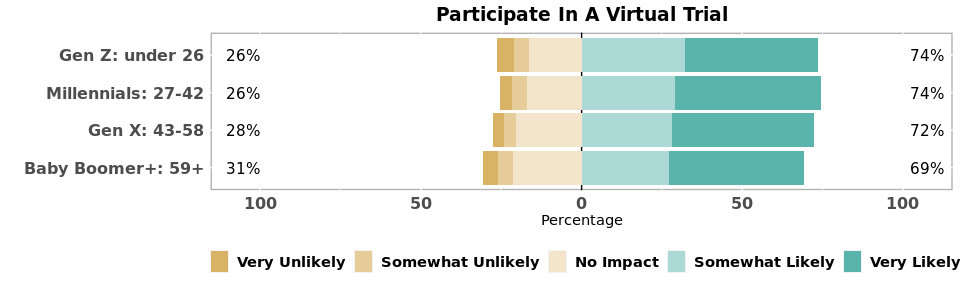
Over two-thirds of all age groups said they were “likely” or “very likely” to participate in a virtual trial, compared with only one-quarter to one-third of members for in-person trials.

Neighborhood
Our members living in small towns or micropolitan areas were less familiar with clinical trials than those living in metropolitan areas.

Members in all neighborhood types were more likely to participate in a virtual trial than an in-person trial. Specifically, there were about 8 times more people who would “very likely” participate in a virtual trial than an in-person trial. This was true even among rural and small town members who can find it challenging to participate in clinical trials because of their distance from a research center.

Part 2: Educational content about clinical trials
Shortly after completing the initial survey, we delivered educational content about clinical trials to members. The educational content and more were presented in cards like these on our app during Part 2:

Part 3: The effect of education on knowledge about clinical trials
After reviewing the educational material in Part 2, our members’ knowledge about clinical trials improved, including:
.png)
.png)
Quick fact: Who can participate in clinical trials?
Some clinical trials focus on a specific disease or condition, while others are interested in testing the safety and effectiveness of, for example, a vaccine for everyone (healthy volunteers).
What does this information tell us?
This type of information from our members helps us understand how we can continuously improve the materials we share in our app. For example, we saw that clinical trials are generally viewed favorably by members, but a lack of knowledge about clinical trials and what’s expected might contribute to limited involvement. In addition, although the education in the app slightly improved knowledge, there is more we can do to help our members understand this topic better.
One additional learning for us was that most of our members would be more likely to participate in a virtual trial, where all study activities can be done at home. Did you know that Evidation offers many opportunities to participate in virtual trials? Look out for new recruitment offers from Evidation to see if you qualify for our upcoming studies!
Interested in joining our community to learn more about how you can participate in health research? Download the Evidation app today!