

Blog
Understanding the triggers behind psoriasis and eczema flares
Learn what defines a psoriasis or eczema flare and how immune activity, skin barrier function, and environmental factors may influence symptoms.
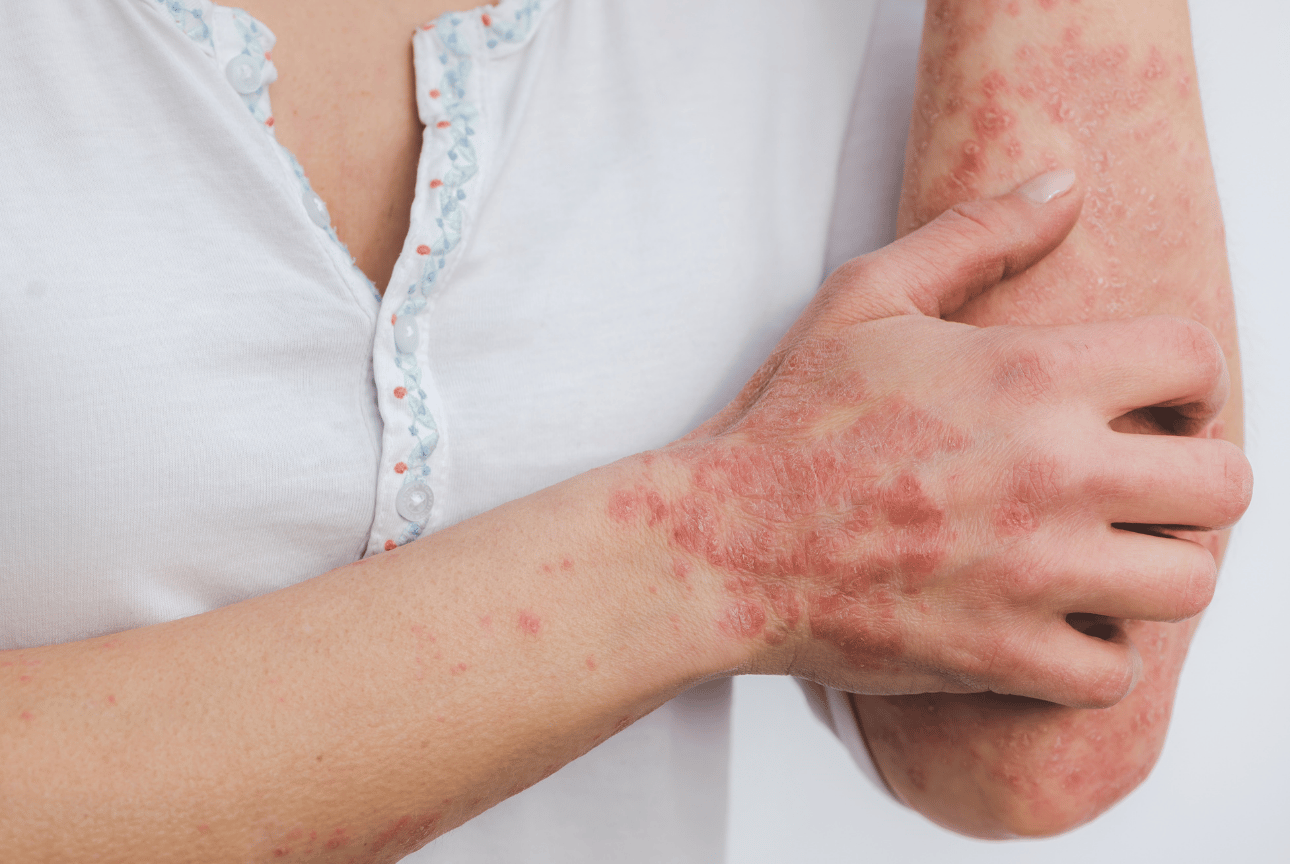
Psoriasis and eczema are chronic inflammatory skin conditions that often follow a cycle of periods of relative stability interrupted by symptom flare-ups. During a flare, symptoms such as redness, itching, dryness, scaling, or irritation may become more noticeable or severe than usual. While psoriasis and eczema are distinct conditions, both involve complex interactions between the immune system, the skin barrier, and environmental factors.
Researchers continue to study why flares occur and why certain triggers seem to affect some people more than others. Although there is no single explanation for every flare, growing evidence suggests that immune activation, skin barrier dysfunction, and external exposures all play important roles.
What defines a flare?
A flare refers to a temporary worsening of symptoms in a chronic condition. For people with psoriasis or eczema, a flare may involve increased itching, more extensive skin involvement, greater discomfort, or changes in the appearance of affected areas.
The timing and severity of flares can vary considerably. Some people experience occasional flare-ups triggered by specific circumstances, while others may notice a more unpredictable pattern. Researchers believe these fluctuations occur because the underlying inflammatory processes driving these conditions can become more active at certain times.
Immune activation and skin inflammation
Both psoriasis and eczema involve abnormal immune responses that contribute to skin inflammation, though the biological pathways differ between the two conditions. In psoriasis, immune cells trigger rapid skin cell growth and inflammation, leading to the development of thick, scaly plaques. Researchers have identified several inflammatory signaling pathways that contribute to disease activity and flare development.
Eczema, also known as atopic dermatitis, is associated with immune system dysregulation that contributes to chronic inflammation, itching, and skin irritation. Inflammatory signals can become amplified during a flare, resulting in worsening symptoms and increased skin sensitivity. Since immune activity plays such a central role in both conditions, researchers continue to investigate how internal and external factors may influence inflammatory responses and contribute to flare-ups.
Environmental and psychological associations
A variety of environmental and physiological factors have been associated with psoriasis and eczema flares. While triggers differ from person to person, several patterns have emerged in research. For eczema, common triggers may include dry air, irritants such as soaps or fragrances, allergens, infections, and emotional stress. Changes in temperature or humidity can also affect symptom severity.
Psoriasis flares have been associated with factors such as skin injuries, infections, psychological stress, certain medications, and lifestyle-related factors. Researchers have also explored how broader health conditions and systemic inflammation may influence disease activity.
Importantly, the presence of a trigger does not guarantee a flare. Instead, many experts believe flare-ups occur when multiple biological and environmental factors interact at the same time.
The role of the skin barrier
The skin barrier serves as the body's first line of defense against environmental exposures, irritants, allergens, and moisture loss. Growing research suggests that skin barrier function plays an important role in both eczema and psoriasis.
In eczema, defects in the skin barrier can allow moisture to escape while making the skin more vulnerable to irritants and allergens. This can contribute to inflammation and increase the likelihood of flare-ups. Although psoriasis is primarily driven by immune dysfunction, researchers have also identified abnormalities in the skin barrier function that may contribute to disease activity. When the skin barrier becomes compromised, inflammation can worsen and symptoms may become more difficult to control.
As researchers continue to learn more about autoimmune and inflammatory conditions, it has become increasingly clear that psoriasis and eczema flares are influenced by a combination of immune activity, skin barrier health, and environmental exposures. Understanding these factors may help provide a broader picture of why symptoms sometimes worsen and how researchers are working to better understand these chronic conditions.
How Evidation can provide insight and support your health
If you're living with psoriasis, eczema, or other chronic conditions, it can be tough to pinpoint your triggers and manage your health. Evidation can help. When you download the Evidation app, you'll be prompted to share the health information you're already tracking. With your permission, we'll use the information you share with us to find patterns, helping you learn more about how you can support your health while managing chronic conditions. Click here to learn more about how Evidation works and get started today.

Summer health tips: stay cool, safe, and healthy with these essential tips
The lazy days of summer are all about finding time for fun. These tips will help you stay safe and healthy.
The long, sunlit days of summer give you a chance to kick back, soak up the sunshine, and enjoy activities you may not have time for during the rest of the year. Summertime is the season when we find it irresistible to set aside busy schedules and indulge in some much-needed laid-back fun and relaxation, whether we do this at home or set out for a memorable adventure.
With all of the opportunities for enjoyment, summer also comes with its own share of hazards. Let's dive into these tips for staying healthy and refreshed so you can make the most of your summer.
What to eat in summer
Summertime brings an abundance of fresh fruits and antioxidant-rich vegetables to farmer's markets. Try all of these when they're in season:
- Corn on the cob
- Watermelon
- Vine-ripened tomatoes
- Bell peppers
- Leafy greens
- Cucumbers
- Peaches
- Berries
- Plums
- Figs
- Nectarines
There's nothing quite like a nice, cool ice pop or ice cream treat to cool you down on scorching hot days. If you want to avoid eating excess sugar, try smoothie pops. To make these healthy popsicles, buy some ice pop molds and fill them with your favorite smoothie. You can also layer your homemade popsicles with fruit and yogurt to make them more filling.
Whenever possible, stay on your regular eating schedule, including breakfast.
Food safety when outdoor cooking and picnicking
More people take advantage of outdoor cooking in the summer, and it's important to keep food safety in mind. Follow these tips to keep your delicious outdoor foods safe:
- Don't leave perishable food in the heat or sun for more than two hours.
- Keep your food packed with ice packs in an insulated cooker.
- Use separate cutting boards for vegetables, raw meats, and cooked meats.
- Use clean knives between uses.
- Use a meat thermometer to ensure you're cooking meat to the correct temperature.
Sun safety
One of the most important summer wellness tips is to stay safe in the sun. One of the most common forms of cancer is skin cancer. Wearing protective clothing helps, but we all need sunscreen, too. Don't forget your ears, lips, scalp, hands, and eyelids.
The American Academy of Dermatology (AAD) recommends daily, year-round use of a water-resistant SPF 30 sunscreen providing broad-spectrum coverage. Apply sunscreen 15 minutes before you go out into the sun, and reapply it every two hours. One ounce of sunscreen will adequately cover most bodies. Helpful tip: one ounce of sunscreen is about the amount that fills a shot glass.
.jpeg)
Insect repellent
It's not just people who thrive in the summer. Ticks, fleas, and mosquitos are also prolific, and these insects can pass on illnesses that can cause temporary or long-term health issues.
To keep these bugs at bay, experts recommend using products that contain DEET for your skin and permethrin for your clothing. Both of these chemicals will keep bugs away from you and your family members.
If you don't want to use DEET, the Centers for Disease Control (CDC) suggests looking for a product that contains lemon eucalyptus oil. Note that the CDC doesn't recommend using pure lemon eucalyptus oil. Rather, find an insect repellent that has the oil mixed in. Also, don't use these products on children under the age of 3.
Stay hydrated
The first step to keeping cool in the summer is to stay hydrated. If you don't love drinking plain water or just want a little variety, you can add flavor to your H20. Try adding watermelon or berries to your drinking water for a delightful flavor boost.
Mint and cucumber are also flavorful options. A splash of lemon or lime juice is another healthy add-in (you get the added benefit of some extra vitamin C!). Food like tomatoes, cantaloupe, watermelon, and cucumbers also provide excellent hydration.
Get moving
Summer is full of lazy days but staying active is important. To keep moving when the afternoons are hot, take advantage of cooler daytime hours, such as mornings and evenings.
Whether you run, bike, walk, play soccer, or swim, the American Medical Association (AMA) recommends 75 minutes of vigorous exercise and 150 minutes of moderate exercise every week for healthy individuals. Fun summer exercises include outdoor yoga classes in the morning and water aerobics.
.jpeg)
How to stay cool in the heat
Staying hydrated is the key to keeping cool in the summer. Here are some more tips for making sure you don't get overheated:
- Spa towels: Use chilled towels to cool off quickly. Soak clean washcloths in cold water, adding a few drops of essential oil if you like. Wring the washcloths and roll them up. Keep them in a plastic bag or container in your refrigerator.
- Mornings and evenings: Try to do outdoor activities such as exercising, shopping, and gardening in the morning or evening.
- Lightweight clothing: Wear loose-fitting, lightweight clothing so that when you sweat, it evaporates and keeps you cooler.
- Hats: When possible, don a wide-brimmed hat to keep your head cool and give you some shade.
- Seek shade: Between 10:00 a.m. and 4:00 p.m., limit your direct sun exposure.
Summer wellness tips
In addition to all of the important tips we shared above, keep these in mind to stay healthy in the summer.
Get plenty of rest
Insufficient sleep is associated with higher blood sugar levels, increased hunger, impaired problem-solving, and poor concentration. Be sure to stop having fun for long enough to get plenty of high-quality sleep.
Travel healthy
It's easy to let our healthy habits slide when traveling. Finding nutritious food options is more challenging on the road and long stretches of time on a plane or in a vehicle sap our energy.
If traveling by train or bus, make time for a brisk walk before you hop aboard. Also, if time allows, skip moving sidewalks and walk instead so you can still get your steps in. Take advantage of exercise equipment at your hotel's gym or take a walk around the neighborhood when visiting relatives.
Wear shoes that support your feet
Sandals and flip-flops are the go-to footwear for many people in the summer. However, some of these styles are flimsy and may not provide enough support for long periods of time. Try to find styles that support your feet, or opt for sneakers when you're not at the beach or pool.
Enjoy alcohol in moderation
Who doesn't love a tasty frozen drink or cool cocktail in the summertime? Make it a goal to enjoy alcoholic beverages in moderation, both for your health and safety and for the safety of others.
Stay healthy in summer
Summer is a time of fun, joy, and making memories. Staying healthy is the key to ensuring that your summer memories are good ones.
Evidation Members can track points for activities that include getting plenty of sleep, staying hydrated, food intake, exercise, and more. Download our app to get started today.

How to relieve a migraine
Learn about the causes of migraines, what a migraine feels like, and current treatment options
As every migraine sufferer knows, migraines aren't just headaches. Migraines cause debilitating pain that can make it impossible to get through the day--much less be productive.
June is National Migraine and Headache Awareness Month. At Evidation, we know many people in our community deal with migraines and headaches, and we're working to provide you with the information you need to come out on the other side following a migraine.
What causes migraines?
Many migraine sufferers work to pinpoint their triggers to avoid a future migraine. Unfortunately, researchers still aren't completely sure what causes migraines to occur. There’s likely a combination of factors at work, including changes in blood vessels, nerves, and chemicals.
While the exact cause of migraines has yet to be determined, many people find that certain health and life circumstances make migraines more likely to occur.
Common migraine triggers include:
- Hormonal changes throughout the menstrual cycle (people who menstruate are three times more likely to experience migraines)
- Stress (both chronic and acute)
- Fatigue
- Certain foods and drinks, including caffeine, alcohol, and chocolate
Knowing your triggers can help you and your doctor develop a plan to stop migraines in the future. Many people who live with migraines find it helpful to keep a journal regarding their symptoms. This can help you and your healthcare professional to work together to find patterns, allowing you to develop a plan that makes it less likely that you'll experience migraines in the future.
What does a migraine feel like?
.jpeg)
For many people, a migraine involves severe headache pain. It's often only felt on one side of the head. When people are experiencing a migraine, they might be extremely sensitive to light and sound and may experience gastrointestinal symptoms (such as vomiting) due to headache pain. Some people experiencing a migraine find it difficult to fully open their eyes due to light changes (similar to the feeling many experiences following eye dilation at an eye appointment).
There are three types of migraines, and the type of migraine you experience can determine your symptoms. Some people only ever experience one type of migraine, while other people find that their migraines change over time.
The three most common types of migraines include:
- Migraine with aura: In this type of migraine, warning signs are experienced before the pain sets in. Many people experience an aura, which can include the appearance of flashing lights, blind spots in the vision, patterns in the vision (such as dots or repeating black marks, and tunnel vision).
- Migraine without aura: This type of migraine only involves severe pain without the warning signs associated with aura.
- Silent migraine: Only the aura portion is experienced in a silent migraine, and head pain does not occur.
Migraines are different from person to person. Suppose your symptoms are more severe than normal, or you're experiencing new and concerning symptoms (such as paralysis, weakness, slurred speech, a level of pain you haven't experienced before, fever, double vision, confusion, seizures, or a rash). In that case, it's important to go to the emergency room for help, as these symptoms can be signs of a more serious condition.
How long can a migraine last?
The exact length of a migraine can depend on several factors. Some people find that their migraines always fade within a certain time, while others experience more variability. Typically, a migraine lasts between four hours and three days.
The frequency of your migraines is important to mention to your healthcare provider. If you experience more than a few days of migraines per month, you may be a candidate for medicine that can stop migraines from occurring in the first place.
Migraine treatments
Are you searching for information on how to relieve a migraine? Unfortunately, there's no cure for migraines--yet. Researchers are working to determine the exact cause of migraines, so they can develop treatments to help people suffering.
Thankfully, some medicines can treat the symptoms of migraines, allowing you to get back on your feet faster following an attack.
Many people find that painkillers are helpful when experiencing a migraine. Taking medicine like Tylenol or Advil as soon as you notice the first symptoms of a migraine (such as an aura before the pain sets in) can help minimize symptoms, even if you can't eliminate them. If you find that you're experiencing regular migraine attacks that leave you reaching for the medicine cabinet, be sure to talk with your doctor, as they may be able to provide you with different, more effective pain management options.
Triptans (such as Imitrex, Zomig, Amerge, and Maxalt) are prescription medicines that can help with brain changes thought to occur before a migraine. You may find that these medicines help to stop your migraine faster than painkillers alone.
If you deal with nausea when you have a migraine, your doctor may prescribe you anti-nausea medications to help you get the rest you need to get through a migraine attack.
In addition to pharmaceutical treatments, there are some at-home remedies that many people find helpful for alleviating migraine symptoms. Lying down in a quiet, dark room with a cool cloth on your head may help with symptoms. Some people also find that stress reduction techniques (like deep breathing) can help to alleviate migraine symptoms.
Make a difference: Participate in migraine research with Evidation
At Evidation, we're proud to be the link between our community and the betterment of healthcare. When you agree to participate in research, you're making a difference in medical care and treatment development. Join our community today to play a part in advancing the future of healthcare.

Neuroticism and Your Health
We each have a unique personality. Research suggests our personality traits may impact our health. Learn more about tendencies toward anxiety and depression can impact overall health and wellbeing.
Many researchers generally agree that personality is made up of 5 unique traits:
- Conscientiousness (organization, productiveness, responsibility)
- Extraversion (sociability, assertiveness; its opposite is Introversion)
- Agreeableness (compassion, respectfulness, trust in others)
- Openness (intellectual curiosity and creative imagination)
- Neuroticism (tendencies toward anxiety and depression)
Some people may have very high or low levels of any single trait, but most of us fall somewhere in-between.
What is neuroticism?
Neuroticism is a broad personality trait that describes how much a person may experience difficult emotions, such as guilt, sadness, or anxiety.
- Those with high levels of neuroticism may be more likely to experience emotions such as moodiness and worry. They may also be more likely to experience self-consciousness or shyness, or to think of certain situations as threatening.
- Those with low levels of neuroticism may be less likely to experience negative emotions, and might tend to experience more balanced feelings and reactions during stressful situations. Low scorers may also experience a lot of optimism and resilience.
Why does neuroticism matter for health?
The relationship between neuroticism and physical health is complicated. In general, high neuroticism may be related to more disease and worse self-reported health.
However, people who are high in neuroticism may also be more likely to notice and report symptoms than people who are low in neuroticism. Basically, it’s unclear whether people with high neuroticism might actually have worse health or are more likely to report their symptoms.
When looking at more concrete measures of health such as how long a person lives, the research is mixed. Just like with some of the other personality traits, it’s likely that any level of neuroticism is health-protective in some situations, and risky in others.
Although research has found that neuroticism relates to mental and physical health, having a low or high score doesn’t necessarily mean someone will have poor health. No matter what level of neuroticism a person has, they can use what research has uncovered about personality and health to improve their well-being.
We recently offered our members the opportunity to take a survey to see where they fall on the spectrum for neuroticism. If you’re an Evidation Member who took the survey and received your neuroticism results, read on to understand what a high or low score may mean for your health. If you’re not a member and want to see results like these, download the Evidation app.
I scored high on neuroticism. What could this mean for my health?
If you tend to experience high levels of stress and worry, take a moment to think about how you deal with those emotions. If your ways of dealing with stress could harm your health, consider replacing those behaviors with new methods of stress relief, such as:
- Going for walks
- Relaxation techniques
- Calling a trusted friend
However, if you cope with stress with healthy amounts of exercise and leaning on social support, you may be less likely to experience some of the negative health effects of high neuroticism.
And remember–being high in neuroticism is different from being diagnosed with an affective disorder such as major depressive disorder. Though you may be more likely to experience unsettling emotions, it is not a diagnosis.
If you feel as though your emotions are preventing you from enjoying your life, talk to your healthcare provider.
I scored low on neuroticism. What could this mean for my health?
Interestingly, being worry-free doesn’t mean you’re in the clear. Some research suggests that individuals who are low in neuroticism may be less likely to seek medical attention when experiencing symptoms.
Make sure you keep up with your doctors’ appointments and have a healthcare provider investigate any new symptoms you may be experiencing.
Want to receive more personalized health insights? Complete cards daily in the Evidation app and, if you haven’t already, connect a compatible health app.
Don’t yet have an Evidation account? Download the app today!

How does Evidation work: Collecting points
How Evidation's point-based rewards promote healthy lifestyle changes that are attainable, sustainable, and long-lasting.
Creating a healthier lifestyle begins with an individual feeling empowered and informed to do so. Using the Evidation app, members can track their health information, connect to other fitness and health apps, and make engaging, smart decisions about their lifestyles.
The main difference between Evidation and other health apps lies in the points-based reward system we’ve created for our members.
Let’s explore the Evidation point system and discover the healthy actions members can take to earn daily points through exercise, data, and education.
Evidation 101: The point system
Using points as rewards for daily activity, education, and health monitoring is precisely how Evidation works. Along the way, members can track their physical and mental progress and create sustainable, long-term healthy habits that will stick.
This section will answer all your questions about collecting and redeeming points.
How do points work?
Points are based on your daily activity within the Evidation app and the physical exercise you perform that’s tracked through compatible wearable devices and fitness apps like MyFitnessPal, Apple Health, Strava, and many more.
Points can be earned from the data collected through your existing health and fitness apps and the information you input there. For example, logging your sleep, tracking your weight, and using a food diary are ways to collect points within Evidation.
Other data points you may track include the following:
- Blood pressure
- Glucose
- Heart rate
- Water consumption
Numerous forms of exercise will earn you points within the Evidation app, and these points are calculated and measured using different units, including:
- Calories burned
- Kcals
- Kilometers
- Laps
- Meters
- Miles
- Minutes
- Seconds
- Steps
Depending on the form of exercise you’re performing, you could receive up to 100 points for tracked health activities each day.
Aside from physical exercise and health monitoring, research is integral to what Evidation contributes to the health industry and science.
Evidation Members may be able to participate in health-related studies that are specific or relevant to their conditions. For example, some Evidation Members have chronic pain and could potentially contribute their experiences to pain studies, gain insight into what may be going on, and share their learnings with their medical team to improve their lives.
Health research is essential to improving healthcare and individual treatments for various health conditions and ailments. Evidation Members can contribute to a better understanding of their conditions and earn points for participating along the way.
Ways to earn points
Within the Evidation app, members can earn points throughout the day in many ways.
If you’re already using a fitness tracker app or have a wearable device that tracks your activity, you can quickly sync your profile with Evidation, so the two can share data, earning you points along the way.
Evidation is compatible with the following fitness and health apps:
- Apple Health
- Dexcom
- Fitbit
- Garmin
- Google Fit
- MapMyFitness
- MapMyHike
- MapMyRide
- MapMyRun
- MapMyWalk
- MyFitnessPal
- Oura
- Qardio
- RunDouble
- RunKeeper
- Samsung Health
- Strava
If you’re already using a wearable device to track your activity, Evidation is compatible with the following:
- Fitbit
- Garmin
- Apple Watch
- Oura Ring
This post shares even more fitness apps and wearable devices that are compatible with Evidation.
Once your Evidation account is confirmed and your apps are synced, it’s time to start earning points! Members can earn points in the Evidation app in several ways, including tracking your health activities and completing cards in the Evidation app.
These types of activities are equally important because they impact physical and mental health uniquely. Empowering our members with data points about their physical activity, tracking their sleep patterns, and what they eat each day can provide an unbiased look at what they’re doing well, what needs to be modified, and how they can improve through small, actionable changes.
Many people struggle with knowing where to start when it comes to improving their lifestyles, and we believe that a point-based system can help individuals understand how to make small changes over time. In doing so, health habits are formed without anyone feeling overwhelmed or disheartened by a lack of instant progress.
Members can also rack up points by participating in unique activities within the app, like answering survey questions, participating in health programs and research studies, and reading articles.
We introduced Cards to the Evidation app as a way for members to earn more points and to educate people through relevant articles, tips, and educational resources.
.png)
Members can answer daily questions about their mood, mental health, physical activity, and much more within the cards prompted to them each day.
Access points information in the Evidation app
When you open the Evidation app, you’ll see how many points you’ve accrued thus far during the week. The Points History section provides a detailed look at your weekly activity within the app that tells you from which categories you’ve earned points and any surveys, polls, or information you’ve completed.
%2520(1)%2520(1).png)
Evidation strives to challenge its members to participate daily in numerous healthy actions. Doing so creates long-lasting, sustainable habits that become part of your daily routine instead of a task you must think about or remember to do daily.
That’s why we offer points for different healthy actions that may seem small but can add up to significant healthy changes in a person’s lifestyle.
The benefit of connecting Evidation to your current fitness and health apps is that this data is already being tracked through apps like Apple Health or MyFitnessPal; by syncing these apps with Evidation, you’ll gain more insight into your health and wellness and earn free money along the way. What’s not to love?
For years, Evidation Members have been using the app to track their daily food intake, participate in relevant research studies, and increase their activity levels through accountability within the Evidation community.
Redeeming your points
Once you’ve earned 10,000 points, you can redeem them for $10 via PayPal, a prepaid VISA card, a gift card, or a bank deposit. You can also choose from various charities to donate the money you’ve earned.
Redeeming points is straightforward; once you’ve earned 10,000 points, you’ll see a prompt to redeem your points at the top of the home page, just follow the instructions to claim your reward. You’ll receive an email within five business days, in which you’ll select how you’d like to receive your reward (gift card, Paypal transfer, direct deposit, or a charitable donation).
At this time, Evidation is available for people over 18 who live in the United States.
Do Evidation points expire?
As long as your Evidation account is active (meaning you’ve completed at least one card in the last 12 months), the points you’ve earned will not expire. We do encourage members to log in as frequently as possible so they don’t lose access to their hard-earned points. Plus completing cards daily is one of the easiest and fastest ways to earn points.
Benefits of using a points-based health app
Regardless of your physical health and daily habits, utilizing a points-based health and wellness application could significantly improve your lifestyle in multiple ways.
For one, it can help raiss awareness about your level of physical activity on a daily basis. Simple, easy-to-understand data can help members make informed decisions about their fitness goals or change their daily routines.
By participating in daily food tracking, exercising, logging sleep, weigh-ins, and monitoring health metrics like heart rate and blood pressure, members can begin making healthier, research-supported changes at their own pace to ensure they’re sustainable and manageable.
Reach your health goals with Evidation
Using Evidation, tracking your health and wellness has never been easier or more efficient. By sharing your data, we’ll reciprocate with relevant health information, trends, and insights that you can leverage to make healthy changes in your everyday life.
Evidation values and respects our members’ privacy, so we use technical and administrative safeguards to protect the confidentiality, integrity, and availability of your information. We do not sell any personal information and will only share your health data information outside of Evidation with your consent.
You can find our full Privacy Notice here.
If earning cash for getting and staying fit sounds like something you’d love to be a part of, Evidation may be an excellent fit for your lifestyle. Learn more about Evidation and here.
Or download the app below.

Burnout 101: Know the signs of burnout and how to prevent it
Preventing or recovering from burnout relies heavily on self-care, luckily there are tools available to help.
Modern life is stressful. The COVID-19 pandemic and its aftermath have added to that stress, leaving society at the highest risk of burnout than we’ve had in decades. Financial stress is also at all-time highs, adding to the problem.
According to the American Psychological Association, 79% of employees are experiencing high levels of work-related stress. Nearly 3 out of 5 report negative impacts from this. A surprising 44% of adult workers report physical fatigue and 36% report mental fatigue due to stress.
What do these numbers mean? They mean that burnout is a serious concern for the modern adult, and it isn’t just a risk for people in the workforce. People from all walks of life can face stress that can lead to burnout. The statistics also show that most of us don’t know how to manage the stress that causes it.
What is burnout? How does it affect you? Keep reading to learn about this common issue and what you can do to spot it, prevent it, and heal from it.
What is burnout?
The term “burnout” was coined by Herbert Freudenberger, a psychologist who practiced in the 1970s. It refers to severe stress that leads to complete physical, emotional, and mental exhaustion.
Burnout goes beyond just feeling tired or fatigued. When someone’s in burnout, they might struggle to handle their daily responsibilities. They often feel as though they can’t give anymore, and they can feel hopeless about life.
Unfortunately, burnout is not a temporary problem. It doesn't go away on its own and can severely impact a person’s physical and emotional health. Thankfully, there are steps you can take to prevent burnout and overcome it if you do experience it. That’s why understanding burnout, its causes, and good prevention steps is so important.
Common causes of burnout
Stress is the underlying cause of burnout, but stress can come from many areas of life. Here are some examples:
- A nurse faces high stress on the job as they deal with increased demands and nursing shortages.
- A CEO of a large corporation must manage the demands of growing a business and increasing the bottom line while keeping employees and shareholders happy.
- A stay-at-home parent faces stress from the daily tasks of parenting combined with the lack of social interaction.
- A newlywed couple finds it difficult to afford their household needs while starting out in their careers, leading to high emotional and financial stress.
- An adult child who works a hard job comes home each night to care for their elderly parent, meaning they never have time to relax.
- A recent high school graduate finds it necessary to work multiple jobs to pay their bills, and this creates a stressful schedule on top of financial strain.
The stress in each of these people’s lives is different, but the end result’s the same: exhaustion and apathy. This is burnout.
What are common signs of burnout?
Burnout looks different from person to person, but some common signs of this problem include:
- Exhaustion – This common symptom of burnout makes working productively challenging. It derails concentration and enjoyment in life.
- Cynicism – When someone is experiencing burnout, they become increasingly cynical about life and its challenges. While most people will be cynical occasionally, if it’s becoming a habit, you might be experiencing burnout.
- Inefficacy – This term refers to a general feeling of incompetence or the lack of achievement in life or work.
- Changes in eating or sleep habits – According to Eastern Washington University, many people find their eating or sleep habits changing when they experience burnout. They either eat and sleep too much or too little.
- Physical symptoms – Headaches, immune system concerns, and muscle pain can all occur due to burnout.
How to prevent burnout
Modern life has many stressors. When possible, we should try to take measures to manage that stress in a healthy way to prevent the negative effects of burnout.
If you’re wanting to prevent burnout, there are some proactive steps you could take.
1. Try adding some self-care to your routine
One way to reduce stress and prevent burnout is to make taking care of yourself a priority. You could use tools like Evidation to track sleep, eating, and exercise, and make sure you’re caring for your body.
Make time in your week for activities you enjoy that feel relaxing. When possible. When you start feeling stressed and worn down, find ways to engage in activities that help you reset.
If you’re pressed for time or resources, self-care can be simple. Instead of a shower one night, consider a warm bath to relax your muscles. This doesn’t take much additional time or cost anything, but it could end up being a great self-care addition to your life.
2. Look for ways to reduce exposure to stressors
While you can’t eliminate all stress from your life, see if you can reduce some exposure. For example, if work is stressful, you could limit your exposure by having set times when you do work activities and set times when you focus on your non-work life. Even if you’re working multiple jobs, you can learn to walk away from work responsibilities when you clock out from each one for the day.
It’s not always work that makes people feel stressed. If you have people or activities in your personal life that are stressful, limit your exposure to them or plan to do something less stressful after you spend time with those people to combat the effect of the stress.
3. Find meaningful ways to connect with others
Healthy interpersonal relationships can help you overcome the symptoms of burnout. Your friends and family can encourage you to slow down when you’re taking on too much.
Once you have those people in your life, you could grow those relationships by dedicating time to them. You’ll need that support system when life gets stressful.
%2520(1)%2520(1)%2520(1).png)
How to recover from burnout
Most people will experience burnout from time to time, even with the best possible plan. When you find yourself in that position, try to take steps to recover. Here are some tips that can help:
- Rest – When you find yourself in full-blown burnout, see if you can take some time off. Your body and mind need time to rest and recuperate. If you can’t take time off work, find other places to carve out time for rest. Going to bed earlier some nights or making time to sit and watch a movie with a friend are examples of restful activities you can do when you have some extra time.
- Improve your personal care – Eating well, sleeping, and exercising are often the first things that stop happening when we’re stressed. Find ways to add these back in. If you can’t make big changes due to your schedule or budget, start small. Swap out a bag of chips for an apple for your snack, and start going to bed just 30 minutes earlier. You can add exercise by taking the stairs instead of the elevator, even if you can’t carve out time or money to go to the gym. Use tools like Evidation to track your new habits.
- Ask for help – If your workload’s overwhelming and you have a support system around you, ask for help managing it. If you can’t get help, consider reassessing your goals and determining if you can cut back somewhere while still meeting your needs and achieving your goals. Asking for help could also look like reaching out to your doctor or a mental health professional for guidance.
- Reduce your stress – The human body wasn’t designed to handle extreme stress for endless weeks and months. Learning to either reduce stress or manage stress more effectively may help avoid burnout. If you’re able to lessen your responsibilities, that may help, but if not, activities like meditation, yoga, and walking can release the hormones that counter the stress hormones.
- Learn a new perspective – There will be situations where you can’t reduce your stress. In these, learn a new perspective. Decide what you can and can’t fix, and stop taking responsibility for the things you can’t change. This mental shift in perspective may help you recover.
Reward yourself for less stress with Evidation
Preventing burnout relies heavily on self-care, and there are many tools available to help. Evidation is one of them.
With Evidation, you can reward yourself for making better health choices. Simply pair your favorite health-tracking app with Evidation, and earn rewards for every healthy choice you make.
Keep track of your health as you strive to manage stress more effectively – download the app today!

Openness to Experience and Your Health
How is your health impacted by your openness to experience? Learn more about how personality impacts health.
Many researchers generally agree that personality is made up of 5 unique traits:
- Conscientiousness (organization, productiveness, responsibility)
- Extraversion (sociability, assertiveness; its opposite is Introversion)
- Agreeableness (compassion, respectfulness, trust in others)
- Openness (intellectual curiosity and creative imagination)
- Neuroticism (tendencies toward anxiety and depression)
Some people may have very high or low levels of a trait, but most of us fall somewhere in-between.
What is openness?
Openness describes how intellectually curious, imaginative, and appreciative of art and beauty someone is.
- Those with high levels of openness are generally open to new activities and ideas. They tend to be creative, curious, and sensitive to art and beauty.
- Those with low levels of openness tend to be traditional, practical, and like to stick with conventional ways of doing things. They prefer the familiar over the new, and the concrete over the abstract.
Why does openness matter for health and health decision-making?
Although openness doesn’t strongly or consistently relate to health, people can still use their understanding of their level of openness to change their health behaviors and make them more likely to stick.
We recently offered our members the opportunity to take a survey to see where they fall on the spectrum for openness. If you’re an Evidation Member who took the survey and received your openness results, read on to understand what a high or low score may mean for your health. If you’re not a member and want to see results like these, download the Evidation app.
I scored high on openness. What could this mean for my health?
If you’re high in openness, and thus enjoy exploring new activities and ideas, you may be more motivated to stick with a varied physical activity schedule than a familiar routine.
If you have a hard time turning healthy behaviors, like exercise, into habits, try adding variety. For example you may try…
- Going for a walk at a new spot
- Creating a new music playlist to run to
- Signing up for an exciting race you need to train for
Finding new ways to fulfill your intellectual interests–like music, art, or something else–may also help boost your well-being. You may find these hobbies to be especially helpful when you’re feeling stressed.
I scored low on openness. What could this mean for my health?
If you scored low in openness, you may find it easier to stick with familiar exercise routines or healthy recipes than it is to try new ones.
If you haven’t found healthy behaviors that work for you, try a few out until you find one you like, and make it a habit, such as…
- Making a healthy taco dinner every Tuesday
- Aiming to walk with a friend every day at the same time
- Going to the same evening yoga class each week
Though personality traits are only one small part of your health and well-being, learning more about yourself may help you to find healthy routines and behaviors that stick.
Want to receive more personalized health insights? Complete cards daily in the Evidation app and, if you haven’t already, connect a compatible health app.
Don’t yet have an Evidation account? Download the app today!

Hypothyroidism Vs Hyperthyroidism: What's the Difference
From hyperthyroidism to hypothyroidism to Hashimoto's disease, it can be tough to understand all of the different conditions that can affect your thyroid gland.
From hyperthyroidism to hypothyroidism to Hashimoto's disease, it can be tough to understand all of the different conditions that can affect your thyroid gland. Here, we'll take a look at the differences between hypothyroidism and hyperthyroidism, including symptoms and treatments.
The thyroid gland: supporting your body, one system at a time
Hormones produced by the thyroid include thyroxine, triiodothyronine, prohormone, and calcitonin. These hormones work to regulate your body's growth, development, and metabolic rate.
If you're generally healthy, you probably don't spend much time thinking about your thyroid. But if the gland begins producing too much or too little thyroid hormones, many health symptoms can appear. Changes in energy levels, weight, heart rate, reproductive health, and skin health can all occur when thyroid hormone levels fall out of balance.
Cancer can also develop in the thyroid, interrupting a variety of bodily processes. Signs of thyroid cancer can include a lump or nodule in the front of the neck (where the thyroid is located), voice changes, neck and throat pain, trouble swallowing, and hormonal changes (such as acne and unusual growth of body hair).
If you’re experiencing any of these symptoms, be sure to talk to your healthcare provider.

What are the symptoms of thyroid disorder?
As mentioned, the thyroid is a key player in producing and regulating your body's hormones. If you're experiencing a thyroid disorder, such as hypothyroidism or hyperthyroidism, it's likely that you'll notice some changes related to your energy and hormones.
Symptoms of thyroid disorder are often attributed to aging and other factors. If you're noticing symptoms that could be indicative of a thyroid problem, it's important to talk to your doctor about the changes you've noticed.
Symptoms that may indicate a thyroid disorder include:
- Changes in mood, including anxiety or depression
- Sleep changes, such as excessive sleepiness
- Weight loss or weight gain that cannot be explained by lifestyle factors
- Changes in energy levels, especially feeling tired even after getting a normal amount of sleep
- Body changes typically related with teenage hormones, such as an increase in body hair and acne
If you're experiencing symptoms that could indicate a thyroid condition, your doctor will be able to prescribe tests to find the root cause of the issue. Thankfully, medication and lifestyle changes can be hugely helpful in alleviating many of the symptoms associated with a thyroid disorder.
What's the difference between hypothyroidism and hyperthyroidism?
Both hypothyroidism and hyperthyroidism mean that something isn't quite right with the thyroid.
The prefix "hyper" means "more"--when a person is experiencing hyperthyroidism, their thyroid is producing a surplus of hormones.
The prefix "hypo" means "less"--when a person is experiencing hypothyroidism, their thyroid isn't producing enough hormones.
Hypothyroidism symptoms
Hypothyroidism is a condition in which the thyroid does not make enough hormones. This can cause the body processes to slow down. People with certain conditions, including diabetes, lupus, and Celiac disease, are more likely to develop hypothyroidism than people who do not have these conditions.
Symptoms of hypothyroidism can include:
- Chronic fatigue
- Fertility problems
- Struggles to tolerate cold temperatures
- Slow heart rate
- Depression
- Muscle and joint pain
- Weight gain that can't be explained by changes in diet or lifestyle
Like the symptoms of hyperthyroidism, many of the symptoms of hypothyroidism are often thought to be associated with aging, mental health issues, and other non-hormonal conditions. Hypothyroidism tends to develop slowly. If you notice that you're developing symptoms of hypothyroidism, it's important that you ask your doctor to check your thyroid hormone levels.
Hyperthyroidism symptoms
If your body has an excess of thyroid hormones, it can speed up your metabolism to the point where you experience negative health effects.
Symptoms of hyperthyroidism can include:
- Losing weight despite efforts to maintain or gain weight
- Never feeling satiated despite eating more food
- Rapid heartbeat or heart palpitations
- Anxiety
- Hand tremors
- Eyes appear to bulge forward out of sockets
Simply put, hyperthyroidism speeds up your body to a point where it can be tough to function effectively. Many people who have hyperthyroidism believe that their symptoms--especially anxiety--are within their control. With hyperthyroidism, medication is often needed to regulate hormone levels.
It’s important to note, that while most people with hyperthyroidism lose weight, about 10% actually gain weight, which can lead to difficulty getting diagnosed. So, if you’re experiencing other symptoms of hyperthyroidism but are gaining weight, be sure to talk to your doctor.
Hypothyroidism treatment
There are several approaches to treating hypothyroidism. Your endocrinologist (a doctor who specializes in hormonal issues) will work with you to determine the right treatment approach for you. Your doctor may recommend diet and lifestyle changes along with synthetic thyroid medicine known as levothyroxine. After about a month and a half of taking medication for hypothyroidism, your doctor will run tests to ensure that the medication is working as expected and make changes if necessary.
Hyperthyroidism treatment
If you're diagnosed with hyperthyroidism, your endocrinologist will likely prescribe a combination of medicine, radioactive iodine treatment, and/or surgery. Medications, including carbimazole and propylthiouracil can work to stop your thyroid from over-producing hormones. Some patients diagnosed with the condition also find that taking beta blockers can help to control their symptoms.
Radioactive iodine treatment uses radiotherapy to kill some of your thyroid cells. This can minimize the hormones produced by your thyroid, allowing your hormones to return to a healthy level. Some people also need surgery to remove some or all of the thyroid gland.
Evidation: moving treatment forward
At Evidation, we're proud to partner with medical research industries to make a difference in tomorrow's healthcare. When you use the Evidation app, you may have the option of participating in research with our trusted partners. If you choose to participate in research, we're excited to tell you more about how your choice can make a difference in the world of healthcare.

Health Mythbusting: How Much Sleep Do We Really Need?
Getting 8 hours of sleep each night is just one of the top ten health myths and practices our members said they believed in. Were they right?
The energy we feel when we're awake is often related to how much sleep we get at night.
We can all relate to the dreaded feeling of taking on the day after a night of poor sleep. Your body feels worn out, and your brain is full of fog.
During sleep, our body works to support and maintain our physical health and healthy brain function.
In a sense - your body recharges and repairs itself during this time.
Whether you’re striving to perform and feel your best with sports, work, or family life - sleep plays a critical role.
But, how much sleep do we really need?
When we asked our members the common health myths and practices they believed in - getting 8 hours of sleep every night was amongst the top ten.
But, is this true?
Does it really matter how many hours of sleep we get?
Is quality or duration of sleep more important?
And, can age affect how much sleep is optimal for our health?
We’ll be discussing all these questions and getting to the bottom of the idea that we need 8 hours of sleep every night to be at our best!
How much sleep do I need?
According to the National Sleep Foundation, the average adult needs about 7-9 hours of sleep every night. However, many factors can affect how much sleep you need, including age, pregnancy, your level of physical activity, and prior sleep deprivation (sleep deficit). We'll go into that later in this article.
If you get between 7 and 9 hours of sleep most nights, you'll spend about one-third of your life sleeping. However, keep in mind that the time you spend sleeping isn't wasted time. Your body is getting a lot of work done while you're sleeping. If you get high-quality sleep—and enough of it—you'll be healthier, more energetic, and more productive when you're awake.
But sleep duration is only part of the equation. Sleep quality matters just as much when it comes to whether or not your sleeping hours are actually restorative. The key is to progress through the four stages of the sleep cycle multiple times every night.
Genetics also plays a role in how much sleep you need. A 2009 study found that some people have a mutation in the DEC2 gene. These people can function efficiently on very little sleep. In fact, people with this mutation are well-rested after just 6.25 hours of sleep per night.
In 2019, a second short sleep gene was discovered when researchers at the University of California, San Francisco identified 50 families whose members require less than 6.5 hours of sleep per night. The research team used whole exome genome sequencing to study three generations of naturally short sleepers in one of these families and found a rare mutation of a gene that was being passed down in the family's DNA.
People who have these specific gene mutations are called "efficient sleepers." Magaret Thatcher, the former British prime minister, famously needed only four hours of sleep to feel well-rested and energetic. Researchers suggest that Thatcher probably had one of the gene mutations. However, most of us aren't this lucky. Less than 1% of humans have one of these mutations, so most of us need 7-9 hours of sleep to function at our best.
Quality or duration?
First, we should understand the difference between sleep quality and duration.
Whether you’ve had nights of tossing and turning or nights where you’re waking up often. Not all of our time spent trying to sleep is of good quality.
According to the nationwide research team - assessing sleep is better done using quality of sleep as a measurement rather than using the duration.
But, what does quality sleep even mean?
How can we measure the quality of our sleep?
The National Sleep Foundation states that there are generally 4 aspects used to measure the quality of sleep:
- Wakefulness: which is the amount of time you spend awake after first falling asleep
- Sleep latency: this refers to the amount of time it takes you to fall asleep
- Sleep efficiency: the time you spend sleeping while lying in bed
- Sleep waking: how many times you wake up during your sleep
Becoming aware of all four parts of your sleep quality will allow you to better measure if you’re having a good sleep.
Do you wake up in the middle of the night?
Do you have trouble falling asleep?
These are all questions we should be asking ourselves when trying to figure out how much sleep we really need.
But, how come?
Why does it matter?
8 hours of quality sleep is much different from 8 hours of poor quality of sleep.
In fact, you feel the difference the day after.
Those days when we wake up feeling energized and satisfied with our sleep are generally days we can say we had a good quality sleep.
Right?
This brings up the point that when we refer to the hours of sleep we get a night, we’re referencing good quality sleep, not poor quality sleep.
But, the question still remains - how much sleep do we really need?
How many hours of sleep by age?
I’m sure we can all agree that age plays a role in the amount of sleep that’s necessary for optimal health.
When we were infants if we weren't crying or eating we were sleeping, and during our teenage years sleeping in felt like the greatest thing ever!
During infancy, the recommended number of sleep is as much as 16 hours a day! But, as we grow up the recommended time spent sleeping begins to lessen and lessen.
- From the ages of 3-5, it’s recommended we sleep 10-13 hours a day
- From the ages of 6-12, it’s recommended we sleep 9-12 hours a day
- From the ages of 13-18, it’s recommended we sleep 8-10 hours a day
- Then, from adulthood onward, it’s recommended we sleep 7 or more hours a day
Other than age, there are other factors that can affect our sleep patterns.
How much sleep we need can also be affected by things like:
- Pregnancy
- Sleep quality
- Physical activity
- Reaching older age
- Previous sleep deprivation
Some of these factors may cause us to have a poor night's rest, making us fall behind in our sleep. Think of it like sleep debt. Sleep debt accumulates when we sleep fewer hours than our body needs.
For example, your body may need 7 hours of sleep, but when you only sleep for 5 you create 2 hours of sleep debt.
This is why some people decide to nap, go to bed earlier some nights, or even sleep in on the weekends!
These approaches may provide temporary recovery and energy. But, research suggests that 1 hour of sleep debt takes a total of 4 days to recover to your optimal level.
This means it’s better in the long term for you to do your best to maintain a sleep schedule that fits your lifestyle.
The general guidelines provided by the NIH say from 18 years old and onward we should be getting 7-8 hours of sleep per night.
What is the sleep cycle?
The sleep cycle—sometimes referred to as the sleep-dream cycle, ultradian sleep cycle, or REM-NREM cycle—is the period of time it takes to transition through the four stages of sleep, which we'll define below.
A sleep cycle takes between 90 and 110 minutes, but can extend to up to 120 minutes. However, like all aspects of sleep, the sleep cycle duration varies depending on various factors. For example, the sleep cycle for infants lasts about 50-60 minutes.
If you sleep 7-9 hours at night, you'll go through between four to six sleep cycles.
Sleep cycles can be affected by a number of different things, including some medications. To encourage a healthy sleep cycle, try some of these things:
- Turning off all artificial lighting sources
- Practicing good sleep hygiene
- Relaxation techniques or meditation
- Avoiding caffeine in the afternoon and evening
Let's learn more about the four stages of sleep that make up the sleep cycle.
What are the four different types of sleep?
Sleep is divided into four stages. The first three stages are NREM sleep, and the fourth stage is REM (rapid eye movement) sleep.
The acronym NREM stands for "non-rapid eye movement," and the acronym REM means "rapid eye movement." NREM sleep is abbreviated by the letter N, with numbers representing the stages.
- Stage 1: N1 (NREM - drowsiness and light sleep)
- Stage 2: N2 (NREM - light to moderate sleep)
- Stage 3: N3 (NREM - deep sleep, delta sleep, or slow-wave sleep)
- Stage 4: REM (rapid eye movement or REM sleep)
Note that many experts cite five sleep stages, with two stages of deep sleep. However, the majority of sleep scientists focus on the four stages, so we're using the sleep stage guidelines established by the Sleep Foundation for this article.
Let's do a deep dive into what these four sleep stages mean.
Stage 1: N1 (drowsiness and light sleep)
Duration: 1-7 minutes
When you're in sleep stage 1, you drift from wakefulness to sleep. This light NREM sleep doesn't last for long. During stage 1, you begin to relax and dream, but you may twitch occasionally as you transition to stage 2.
During this stage, your body isn't fully relaxed, but brain and body activities start slowing down. If you're not disturbed, you will move quickly into state 2 of the sleep cycle.
Stage 2: N2 (light to moderate sleep)
Duration: 10-25 minutes
While still light sleep, stage 2 of the sleep cycle has you drifting into steadier sleep. As your heartbeat and breathing slow down, your muscles begin to relax. During this time, your body temperature decreases, and your brain waves become less active.
In this stage, brain activity begins to slow, but you will still have short bursts of activity that help your body resist being awakened by external stimuli. Throughout the night, stage 2 can become longer during sleep cycles. You spend about half your sleep time in N2 sleep.
Stage 3: N3 (deep sleep, delta sleep, or slow-wave sleep)
Duration: 20-40 minutes
The deep sleep stage of the sleep cycle lasts for up to 40 minutes, and it's more difficult for someone to wake you up when you're in this stage. Your breathing rate, muscle tone, and pulse rate decrease during N3 sleep, and your body begins to further relax.
Stage 3 is also known as delta sleep because of the identifiable patterns of brain activity. Another name for this stage is slow-wave sleep (SWS).
Deep sleep is critical to getting restorative sleep. This stage allows your body to recover and grow. Stage 3 also boosts your immune system and impacts some of your other bodily processes.
While brain activity is reduced in Stage 3, evidence suggests that deep sleep contributes to creativity, insightful thinking, and memory.
During the first half of the night, you spend more of your sleep time in deep sleep. Throughout the night and subsequent sleep cycles, deep sleep stages get shorter.
Stage 4: REM (rapid eye movement, REM sleep)
Duration: 10-60 minutes
Brain activity picks up during REM sleep, coming close to the same as waking hours. However, your body also experiences a temporary muscle paralysis called atonia. There are two exceptions to atonia: the muscles that control breathing and the eyes. Although your eyes are closed, they can also be seen moving quickly, and that's where the name "rapid eye movement" comes from.
The REM stage is believed to be highly associated with cognitive functions such as learning, memory, and creativity. During REM sleep, most people have vivid dreams because of increased brain activity, but they’re more common in NREM stages.
In most circumstances, you don't enter REM sleep until you've been asleep for approximately 90 minutes.
REM stages get longer throughout the night, particularly during the second half of the night. The first REM stage might last for just a few minutes, and later stages can last for about an hour. REM stages make up about 25% of sleep in the average adult.
Why is deep sleep so important?
The effects of sleep deprivation are well-known, and as we explained earlier, the quality of your sleep is as important as the quantity. All sleep stages are necessary, but deep sleep specifically offers numerous mental and physical benefits.
Deep sleep starts between 20 and 30 minutes after you first doze off, and it's this restorative sleep that dominates the first half of your sleep. Deep sleep lasts for up to an hour at a time, then you drift into deep sleep again approximately every 90 minutes.
Deep sleep is the most restorative sleep, and it's when we produce most of our growth hormones. For children, this is what helps them grow and develop. However, for adults, growth hormones are involved in youthfulness.
Also known as slow-wave sleep (SWS), deep sleep strengthens our bones and muscles, keeps our immune systems optimizing and functioning, helps us prevent injury, and contributes to many other important bodily functions. Equally important, if we're injured, deep sleep helps with recovery.
This sleep stage has been shown to have potential importance in regulating glucose metabolism, and elite athletes value deep sleep because it helps them replenish their energy stores. Researchers believe that deep sleep is important for memory and cognitive function and that it plays a significant role in motor skills, language learning, and brain development.
Signs you might not be getting sufficient deep sleep
If you are experiencing any of these issues, you may not be getting enough deep sleep.
- Reduced attention and alertness
- Hitting the snooze button repeatedly
- Cognitive fogginess
- Feeling drowsy
- Lowered libido
- Cravings for food high in calories
- Irritability
- Dozing off when it's not convenient, such as at your desk
- Slow reaction time (increased risk of having accidents)
- Increased anxiety
- Trouble forming new memories and learning
When you wake up, you should feel refreshed and alert. If you don't, you may not be getting enough sleep or your sleep may be lower in quality than it should be. Conditions such as general sleep disorder and obstructive sleep apnea also affect our sleep quality. In total, about 13-23% of your sleep should be deep sleep. For most people, this equals to between 1 and 2 hours every night for deep sleep.
What are the long-term effects of not getting enough deep sleep?
In addition to the issues listed above, chronic sleep deprivation has been linked to other serious health conditions. For example, if you don't get sufficient deep sleep, your immune response to vaccines may be weakened.
One of the roles deep sleep plays is eliminating waste products that are potentially harmful from the brain. For this reason, long-term deep sleep disruptions may drive the advancement of such neurological conditions as Parkinson's and Alzheimer's disease.
Because sleep deprivation increases our appetites for high-calorie foods, a shortage of slow-wave sleep may contribute to insulin resistance, which often manifests as heart disease and the development of type 2 diabetes.
How can I get more deep sleep?
If you're concerned that you're not getting enough deep sleep, there are some strategies you can employ to try to increase the quality of your sleep.
- Reducing the stress in your life
- Establishing sleep routines and rituals
- Eliminating caffeine in the afternoon and evening
- Using an eye mask for blocking light
- Using earplugs to block external noise
- Exercising regularly
- Creating a relaxing ritual or routine to wind down near bedtime
- Listening to pink or white noise
- Eliminating screen time for an hour before bed
- Using brainwave entertainment such as binaural beats
- Sleeping in a cool room
- Practicing sleep meditation
The bottom line - How much sleep do we really need?
We know that not all hours of sleep are created equal. There’s a difference between poor quality and high-quality sleep.
And, we know we can create a certain sleep debt in our lives causing us to fall behind.
This makes us more tired throughout the day, and we often try to catch up on sleep through different methods.
The general consensus for adults 18 years and older is that we should be trying to get 7-8 hours of sleep a night. Which is about 49-64 hours of sleep a week!
But, we know this isn’t always possible. Life can sometimes cause interruptions in getting that amount of sleep.
You should be doing your best to sleep 7-8 hours, but don’t beat yourself up if you can’t always do that. If you can’t sleep 7-8 hours a night, do your best to catch up on it, and try to start maintaining a consistent sleep schedule so you can prevent sleep debt!
Getting 8 hours of sleep each night is just one of the top ten health myths and practices our members said they believed in.
We’re just getting started with our health myth debunking series.
Stay tuned for upcoming blog posts where we're going to talk about more common health myths and if they’re even true!
Sleep your way to optimal health
All of the sleep stages are important to our health and well-being, with deep sleep being the most essential for staying healthy and feeling well-rested. If you're concerned you're not getting enough deep sleep, consider speaking with a healthcare provider or participating in a sleep study.
Evidation Members can earn points for tracking self-care activities such as walking, sleeping, food intake, and more. Download our app today to get started.

Is Type 1 diabetes genetic? Learn more about the condition
Is Type 1 diabetes a lifestyle issue or a genetic condition? Take a closer look at this less common form of diabetes and its causes.
According to the CDC, over 37 million people in the United States have diabetes. As many as one-fifth of these individuals don’t know that they have it. These facts make it a serious health concern.
While the tools available to people with diabetes have improved significantly in recent years, a diabetes diagnosis still impacts most aspects of life. If you're someone who’s affected, you’re probably wondering whether or not you’re going to pass the condition on to your kids. In other words, you want to know, “Is Type 1 diabetes genetic?”
To answer this question, you’ll want to take a closer look at diabetes, the different types and how they develop.
How many types of diabetes are there?
Doctors diagnose three types of diabetes: Type 1, Type 2, and gestational diabetes. Gestational diabetes only affects pregnant people and typically clears up after the baby’s birth. It happens when the body doesn’t make enough insulin to meet the mother’s needs during pregnancy. This occurs in 2 to 10 percent of pregnancies each year.
Type 2 diabetes is the most common type, making up 90 to 95 percent of all cases, per the CDC. In this type of diabetes, the body’s cells don’t respond to insulin properly, so the body makes more of it to compensate. This condition is known as insulin resistance. Over time, the body can’t keep this up, and blood sugar levels increase.
While Type 1 diabetes is sometimes called juvenile diabetes, it appears in people of all ages. This form of diabetes occurs when the body doesn’t make enough insulin, if it makes any at all. Blood sugar builds up in the bloodstream since insulin isn’t present to help the cells absorb and use it.
What is the difference between Type 1 and Type 2 diabetes?
%2520(1).png)
While both Type 1 and Type 2 diabetes affect a person’s blood sugar, they’re quite different in how they do this.
In someone with Type 1 diabetes:
- The body can’t create insulin properly.
- The condition is an autoimmune problem.
- Symptoms develop quickly.
- The only treatment is to take insulin.
- There is no cure.
In someone with Type 2 diabetes:
- The body can’t use insulin properly.
- Weight and diet are contributors.
- Symptoms develop slowly.
- Treatment involves lifestyle changes and medications or insulin.
- There's no cure, but it can go into remission.
What causes Type 1 diabetes?
Type 1 diabetes is an autoimmune condition that causes the immune system to destroy cells in the pancreas that make insulin. However, doctors have not identified all of the elements that cause this illness.
Several factors determine if someone is at a higher risk for Type 1 diabetes. They include:
- Having another autoimmune condition
- A family history of Type 1 diabetes
- Genetic components, including variants of specific HLA genes
In addition, people usually have a trigger that causes them to develop Type 1 diabetes. Triggers include certain problems during pregnancy, exposure to viruses, and specific climate factors, such as living near the ocean or at a higher altitude. However, no one knows why only some people develop Type 1 diabetes when these triggers are present.
What percentage of Type 1 diabetes is genetic?
Because doctors can’t pinpoint the exact cause of diabetes, it's impossible to say that a specific percentage of cases result from genetics. Doctors know that predisposition to Type 1 diabetes is passed down through families, but they can’t use this information to predict which children will develop it.
Instead, consider the risk of passing diabetes on to your child if you are an adult who has it. Here are some facts about the odds of passing Type 1 diabetes on to your child:
- Fathers have a 1 in 17 chance of passing the condition on to their children.
- Mothers who have children before age 25 have a 1 in 25 chance of passing it on to their children.
- Mothers who have children after age 25 have a 1 in 100 chance of passing it on, and the general population faces the same level of risk.
- Parents who are diagnosed with diabetes before age 11 have twice the risk of passing it on to their children as parents of the same age who were diagnosed later.
- Children who have two Type 1 parents have 1 in 4 odds of developing Type 1 diabetes.
While it’s clear that someone with Type 1 diabetes can pass it on to their child, many people develop the condition without any known relatives who have diabetes. Because of these variances, tracing the Type 1 diabetes inheritance pattern isn’t easy.
Can you prevent Type 1 diabetes?
.png)
There’s nothing you can do to prevent Type 1 diabetes. Living a healthy lifestyle, having more activity in your life, and eating nutritious foods are all good choices to make, but they can’t stop you from developing an autoimmune disease.
However, these steps can reduce your likelihood of developing Type 2 diabetes, so they are worth considering.
If you want to gain better control over your health, Evidation can help. Track your steps and sleep or log your meals with your favorite app. Next, connect it to Evidation and get rewarded for healthier choices. You can also participate in health surveys and research, including research into Type 1 diabetes.
Download the app today.