

Blog
Understanding the triggers behind psoriasis and eczema flares
Learn what defines a psoriasis or eczema flare and how immune activity, skin barrier function, and environmental factors may influence symptoms.
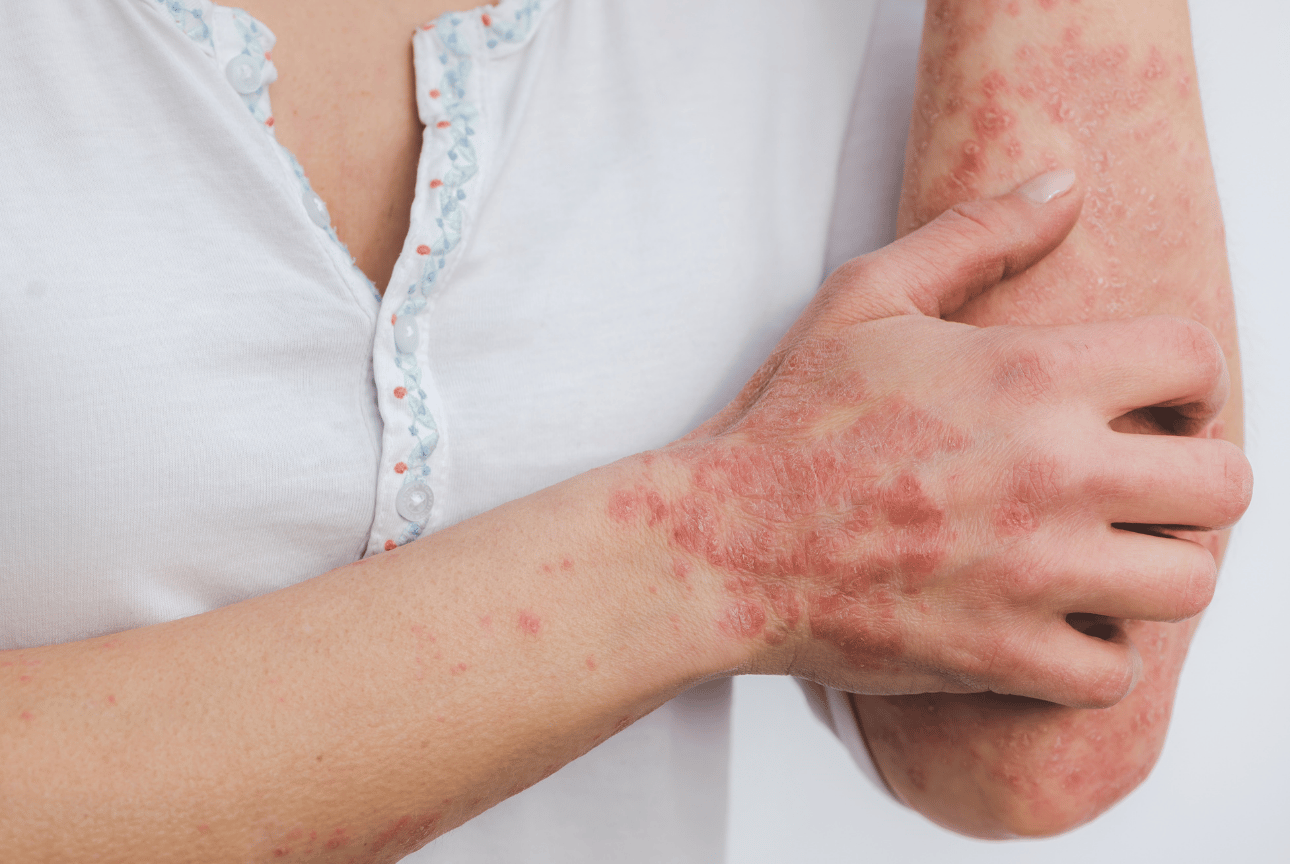
Psoriasis and eczema are chronic inflammatory skin conditions that often follow a cycle of periods of relative stability interrupted by symptom flare-ups. During a flare, symptoms such as redness, itching, dryness, scaling, or irritation may become more noticeable or severe than usual. While psoriasis and eczema are distinct conditions, both involve complex interactions between the immune system, the skin barrier, and environmental factors.
Researchers continue to study why flares occur and why certain triggers seem to affect some people more than others. Although there is no single explanation for every flare, growing evidence suggests that immune activation, skin barrier dysfunction, and external exposures all play important roles.
What defines a flare?
A flare refers to a temporary worsening of symptoms in a chronic condition. For people with psoriasis or eczema, a flare may involve increased itching, more extensive skin involvement, greater discomfort, or changes in the appearance of affected areas.
The timing and severity of flares can vary considerably. Some people experience occasional flare-ups triggered by specific circumstances, while others may notice a more unpredictable pattern. Researchers believe these fluctuations occur because the underlying inflammatory processes driving these conditions can become more active at certain times.
Immune activation and skin inflammation
Both psoriasis and eczema involve abnormal immune responses that contribute to skin inflammation, though the biological pathways differ between the two conditions. In psoriasis, immune cells trigger rapid skin cell growth and inflammation, leading to the development of thick, scaly plaques. Researchers have identified several inflammatory signaling pathways that contribute to disease activity and flare development.
Eczema, also known as atopic dermatitis, is associated with immune system dysregulation that contributes to chronic inflammation, itching, and skin irritation. Inflammatory signals can become amplified during a flare, resulting in worsening symptoms and increased skin sensitivity. Since immune activity plays such a central role in both conditions, researchers continue to investigate how internal and external factors may influence inflammatory responses and contribute to flare-ups.
Environmental and psychological associations
A variety of environmental and physiological factors have been associated with psoriasis and eczema flares. While triggers differ from person to person, several patterns have emerged in research. For eczema, common triggers may include dry air, irritants such as soaps or fragrances, allergens, infections, and emotional stress. Changes in temperature or humidity can also affect symptom severity.
Psoriasis flares have been associated with factors such as skin injuries, infections, psychological stress, certain medications, and lifestyle-related factors. Researchers have also explored how broader health conditions and systemic inflammation may influence disease activity.
Importantly, the presence of a trigger does not guarantee a flare. Instead, many experts believe flare-ups occur when multiple biological and environmental factors interact at the same time.
The role of the skin barrier
The skin barrier serves as the body's first line of defense against environmental exposures, irritants, allergens, and moisture loss. Growing research suggests that skin barrier function plays an important role in both eczema and psoriasis.
In eczema, defects in the skin barrier can allow moisture to escape while making the skin more vulnerable to irritants and allergens. This can contribute to inflammation and increase the likelihood of flare-ups. Although psoriasis is primarily driven by immune dysfunction, researchers have also identified abnormalities in the skin barrier function that may contribute to disease activity. When the skin barrier becomes compromised, inflammation can worsen and symptoms may become more difficult to control.
As researchers continue to learn more about autoimmune and inflammatory conditions, it has become increasingly clear that psoriasis and eczema flares are influenced by a combination of immune activity, skin barrier health, and environmental exposures. Understanding these factors may help provide a broader picture of why symptoms sometimes worsen and how researchers are working to better understand these chronic conditions.
How Evidation can provide insight and support your health
If you're living with psoriasis, eczema, or other chronic conditions, it can be tough to pinpoint your triggers and manage your health. Evidation can help. When you download the Evidation app, you'll be prompted to share the health information you're already tracking. With your permission, we'll use the information you share with us to find patterns, helping you learn more about how you can support your health while managing chronic conditions. Click here to learn more about how Evidation works and get started today.

Grilled Peaches and Pork Chops
This light summer meal is perfect for an easy weekday meal or serving to company,
It’s National Peach Month!
That means there are tons of recipes out there using peaches, so why one more?
Easy.
This one is different. Why? Because as you may have noticed from the title, it’s a savory dish. And it’s super easy to make, doesn’t heat up the house, and it’s healthy!
Perfect for an easy weekday meal or serving to company, it’s one of my favorite summer dishes!
The peaches give it a slight sweetness, but balanced with the pork chops and onions, it’s a truly satisfying meal.
It’s also naturally gluten-free and paleo. And if you watch how many of the peaches you eat, fits well into a keto meal plan as well.
I like to make this when I have friends over for a quick, easy BBQ because total prep and cooking time is about half an hour. I usually serve it with a light salad.
Ingredients
- Bone-in thin-cut pork chops (you really want the thin, fattier cuts for this so they’ll cook quickly and avoid drying out!) I use rib chops.
- Peaches (They should still be firm, not quite ripe is best!)
- Red onion
- Other vegetables as desired for grilling (I like summer squash with this recipe)
- Olive Oil
- Salt
- Pepper
- Garlic powder
- Onion powder
Directions
- Season the pork chops with salt, pepper, garlic powder, and onion powder to taste then drizzle with olive oil and let sit to marinade.
- Slice peaches and onions (and other vegetables) in ¼ inch thick slices (same way you would cut onion or tomato for a hamburger!)
- Spread peaches and veggies out in a single layer on a tray or sheet pan, then season with salt and pepper and drizzle with olive oil.
- Make sure your grill is nice and hot (I prefer a hot grill 450–500 degrees)
- Grill pork chops until desired temp (I prefer medium for pork)
- Grill peaches and onions (and any other veggies) until tender and caramelized
- Serve immediately!
Modifications
You can always substitute nectarines if you don’t have peaches. White onions or green onions work just as well as the red! You can also leave out the garlic and/or onion powder if you don’t eat those foods, really the pork is tasty enough without it!
Tips
Don’t overcook the pork! These cuts can dry out quickly, so be sure to keep a close eye on them.
.png)

Can Pain Really Affect Your Mood?
Over 20% of adults in the US are living with chronic pain. Chronic pain is linked to high medical costs, opioid use, missed work, and decreased quality of life.
Pain is something we all experience from time to time, but for some people it’s a daily occurrence.
And the toll is not just physical, individuals with chronic pain suffer a variety of mental health effects as well.
According to the CDC, chronic pain is one of the most common reasons adults seek medical care.
In 2016, they estimated that over 20% of adults in the US were living with chronic pain. And, since chronic pain is linked to high medical costs, opioid use, missed work, and decreased quality of life — it can take a huge toll on mental health.
Pain and Mental Health
Long-term or chronic pain can be physically debilitating and significantly alter quality of life. But the mental health effects are just as serious, and often overlooked.
To find out how much impact pain has on mood, we launched a study in 2018 to look at real-life effects in people with chronic pain. In this year-long study, we sent out surveys every 3-months asking about pain, mental health, and how much each person’s pain interfered with activities of daily life.
For the study to be valid, we had to ask individuals with chronic pain and those without the same questions.
As expected, those who identified as having chronic pain had higher pain levels over time than the group of participants without chronic pain.
%2520(2).png)
Individuals with chronic pain also reported higher levels of anxiety and depression.
%2520(1).jpeg)
%2520(2).jpeg)
And, the people who said that their pain interfered with their quality of life, activities, and relationships, also had more depression and anxiety symptoms.
What does that mean?
Well, it tells us that physical pain and the effects of this pain on our lives may have real impact on our mental health as well.
.jpeg)
What can we take away from this? Chronic pain is a major challenge for many. And the challenges that people with chronic pain face may have a big impact on their physical and mental health.
By understanding how chronic pain interferes with daily living, we can work to help those living with it improve their mental health and live happier lives.

Are you on Track to Meet your 2021 Goals?
Tips for reaching your 2021 goals
Can you believe we’re halfway through 2021?
That means it’s time to check in with ourselves and think about how close we are to reaching our goals.
Every year, millions of Americans celebrate the new year by making a resolution. Some focus on health, others relationships, finances, or personal growth.
Whatever resolution you make, the idea is to work on some aspect in your life you want to improve!
Setting and reaching goals in empowering.
But often we struggle to meet these types of goals. This can lead to disappointment and feelings of failure. But, the progress is what’s important — not just the result!
No matter how behind you may feel on reaching your goals, it’s not too late to start now! And if you’ve already made progress, staying motivated is a sure way to finish strong.
So, we’d like to share a few ideas to help you on your journey!
5 Tips for Reaching your 2021 Goals
- Focus on what you have accomplished this year! One of the best ways to stay motivated is to focus on what we have accomplished instead of what we have left to do.
- Change up your routine! Routines are how a lot of us get through the day, but this can lead to repeating the same bad habits over and over. Switching things up can be a great way to find new opportunities to meet your goals.
- Take time to recharge! Stress and daily life can sometimes leave us drained. Taking time to recharge — whether that means taking time off work, spending more time with family, or getting outside for some fresh air — is like hitting the reset button. Rather than being time wasted, this is time well spent!
- Create a plan! Having a plan for how to achieve your goals makes it a lot easier to start taking steps in the right direction.
- Be understanding! Setting goals is important to our growth. And being able to reach them is great. But sometimes, we just don’t get there. That’s okay! The best way to move forward is to be understanding of your own struggles and forgive yourself for not reaching your goals. That way instead of seeing these instances as a failure, they become an opportunity for learning more about ourselves. And that always leads to growth!
After all, as the author Stephen McCranie says,
“The master has failed more times than the beginner has even tried!”

How Important are Eye Exams Really?
More and more people are skipping their annual eye exams despite knowing the importance of them. Learn how to keep your eyes healthy.
They say the eyes are the windows to the soul.
They’re also how many of us observe the world around us.
So keeping them healthy is super important!
4 Tips for Keeping your Eyes Healthy
- Protect your eyes from sun damage! UV light can damage your eyes. Be sure to wear sunglasses with UV protection and wear a hat if you’re going to be out in the sun for a while.
- Step away from the screen! Too much screen time can have lasting effects on your eyes. Take breaks and use blue light filters if you can.
- Eat healthy! Proper nutrients and healthy fats like Omega-3 are great for your eye health. Eating a balanced diet rich in these foods is an easy way to help maintain eye health.
- Stay up-to-date on regular eye exams! Eye exams are just as important as other health screening routines, so be sure to get your eyes checked by an optometrist or ophthalmologist every year.
Want to learn more about what you can do to keep your eyes healthy? Click here for tips for the National Eye Institute.
.jpeg)
3 Reasons Regular Eye Exams are Important
- Early diagnosis! Eye Exams can detect some major eye health issues like glaucoma or cataracts before you have symptoms. And early diagnosis can make a huge difference in treatment options.
- Better performance at work or school! Even minor vision issues can significantly impact how well you do at work or school. And for children, the effects are drastic. Vision problems can have long-term effects on education if not caught early.
- Detect other health issues! Eye exams can help detect and monitor other health issues like diabetes and thyroid disease — just another reason eye exams are crucial to maintaining good health.
Eye Exam Statistics
According to a 2018 study conducted by VSP Vision Care and YouGov, more and more people are skipping their annual eye exams despite knowing the importance of them!
By the numbers: The importance of eye exams
8 in 10 people (84 percent) rate vision as the most important sense, and nearly everyone (97 percent) agrees that having healthy eyes is important, but only half of people get annual eye exams.
Virtually no one (1 percent) knows that signs of serious diseases and conditions like high blood pressure, autoimmune disorders, thyroid diseases, and certain types of cancers can be detected through an eye exam.
6 in 10 (61 percent) people worry about diabetes impacting their family’s health, but only 4 percent know that eye doctors can detect signs of diabetes through an eye exam.
More than two-thirds of parents worry about their children’s eye health more than their own, but only 12 percent of parents know children should receive their first eye exam at six months old.
After learning about the importance of annual eye exams, 9 in 10 (90 percent) survey respondents agree on the importance of annual eye exams.
How do Evidation Members Compare?
We asked our Evidation Members if they’d had an eye exam this year. What did they say?
Well, out of the 17,496 people who responded, Over 10,000 said yes — that’s over 57%!
So, while the majority of respondents have, it’s a small majority. Which means it’s important for us to share posts like this to help remind everyone — if you haven’t had your exam this year, schedule one now.
.jpeg)

Texas Caviar
Texas Caviar. This light, tasty recipe comes from one of our team members and is a southern summer fave!
Texas Caviar
Summer is here, and it’s a HOT one!
Record temperatures across many parts of the country have made cooking difficult. And eating out regularly can make it hard to maintain healthy habits.
So we decided this month’s recipe should be a cold one!
This “caviar” is naturally vegan, gluten-free, and packed with protein. So it fits well into many diet plans, and it can be easily modified.
And the best part, no cooking!
This is a quick, easy, healthy dish. Great as a salad or side dish. Paired with some grilled meat or fish (or more veggies if you’re vegan or vegetarian!), you can have a complete meal and avoid heating up the house.
The Story:
This recipe (and story!) comes from another Evidation team member!
“This is a recipe passed to me from my mom and is very common in the Southeastern United States. We often tailgate for football games and this is always a dish that’s on the table and a crowd favorite. It’s fresh and healthy, but also filling because of all of the protein in the beans. Served best cold and with tortilla chips and shared with friends (it makes a lot!).” — Jen L., Evidation
Ingredients:
SALAD:
1 15 ounce can black-eyed peas rinsed and drained
1 15 ounce can black beans, rinsed and drained
1 15 ounce can sweet corn rinsed and drained
1/2 red bell pepper, finely diced
1/2 green bell pepper, finely diced
1/2 a red onion, diced
2 cups grape tomatoes, halved (or cherry tomatoes or 2 Roma tomatoes)
2 ripe avocados, diced
⅓ cup Cilantro (or parsley), finely chopped
DRESSING:
1/4 cup olive oil
1/4 cup fresh-squeezed lime juice
2 tablespoons chopped cilantro
2 cloves garlic, crushed
1 teaspoon brown sugar
3/4 teaspoon red chili flakes, adjust to your preference of spice
1/2 teaspoon ground cumin
1 teaspoon salt
TO SERVE:
Veggie sticks, Tortilla chips, etc.
Directions:
- Combine salad ingredients in a large bowl. Mix together to combine. Set aside.
- Whisk dressing ingredients together in a smaller bowl, until well combined.
- Pour dressing over salad, stir through, and serve with chips or veggie sticks.
Modifications/Tips:
“I add red wine vinegar to this as well for a bit more acid. You can also substitute pre-made Italian dressing in a pinch (recommend a zesty Italian). Letting it soak overnight (without avocado and tomatoes) and adding the avocado and tomatoes right before you’re ready to serve it helps the beans really soak up the flavors. If you don’t like or have one of the ingredients (for example, I often skip the bell peppers), it’s a very forgiving recipe! The black-eyed peas, black beans, corn, tomatoes (can also use canned!), and acidic dressing are the core ingredients. All others are to taste!”

Sarcoma — The Forgotten Cancer
Sarcoma is considered a "rare" cancer, making up only 1% of all cancers. Survival rates for those with the disease are low. Diagnosis and treatment are difficult, so we need to raise awareness.
Yellow Ribbons conjure many feelings.
They’re used to promote awareness of suicide prevention, missing children, numerous medical conditions (including several types of cancer). They remind us to support our troops and remember those missing or killed in action.
They’re also used to represent sarcoma awareness.
And, in honor of Sarcoma Awareness Month, we share this yellow ribbon today.
What is Sarcoma?
According to The National Foundation for Cancer Research,
“Sarcoma is a rare but deadly form of cancer affecting connective tissues such as fat, muscle, blood vessels, nerve, bone, deep skin and cartilage.”
There are two main types of sarcomas — soft tissue sarcomas and bone sarcomas, but there are many subgroups. In fact, The Mayo Clinic lists over 70.
%2520(1)%2520(1)%2520(1).jpeg)
Often called, “the forgotten cancer,” sarcoma is most commonly diagnosed in children.
But while considered a “rare” cancer, making up only 1% of all cancers, survival rates for those with sarcoma are low. And diagnosis and treatment are difficult.
That makes awareness critical!
Around 12,000–15,000 people are diagnosed with sarcoma each year in the US. For those battling sarcoma and their loved-ones, the “rarity” of this disease is no comfort.
To help do our part in raising awareness, we’ve compiled a list of resources and sources of additional information for those who’d like to learn more.
Resources
American Childhood Cancer Organization
Cancer Financial Assistance Coalition (CFAC)
National Cancer Institute (NCI)

The Most Dangerous Day of the Year
For many living in the US, Independence Day is a day of celebration - a day to spend with family and friends. A day of BBQs, fireworks, and expressions of freedom. But it’s also the most dangerous day of the year.
The Deadliest Day of the Year
For many living in the US, Independence Day is a day of celebration - a day to spend with family and friends. A day of BBQs, fireworks, and expressions of freedom.
But it’s also the most dangerous day of the year.
According to the Pew Research Center,
“45,000 people visit U.S. hospital emergency rooms for treatment of injuries on July 4 and 5 – nearly 91,000 in total, by far the highest daily numbers in the entire year.”
What accounts for this surge in injuries?
The top two causes are fireworks and alcohol.
Accidents involving alcohol and/or fireworks account for the majority of deaths and injuries that occur over the 4th of July holiday but other injuries are also more common.
Fireworks-Related Accidents
The most common injuries (not surprisingly) are caused by fireworks. In fact, fireworks-related accidents surge for several weeks surrounding the holiday.
.jpeg)
According to the Consumer Product Safety Commission’s (CPSC) 2019 fireworks annual report,
“An estimated 7,300 fireworks-related injuries (or 73 percent of the total estimated fireworks-related injuries in 2019) were treated in U.S. hospital emergency departments during the 1-month special study period between June 21, 2019 and July 21, 2019 (95 percent confidence interval 4,700-9,900).”
While it may not surprise you to learn that fireworks cause so many injuries (and deaths), what may surprise you is that many of these accidents are caused by what has been labeled “safe and sane” fireworks.
In fact, hand-held child-friendly fireworks, like the much-beloved sparklers, account for a huge number of serious burn injuries each year.
And while accidents involving fireworks do account for the largest number of injuries, they aren’t the only type of injuries that occur in higher numbers on the 4th.
Driving-Related Accidents
There are more car accidents, primarily alcohol-related accidents, on the 4th of July than any other holiday - including New year’s Eve!
According to a 2017 report by the NHTSA (National Highway Traffic Safety Administration), July has higher rates of alcohol-related accidents than any other month.
And while this graph from the National Safety Commission shows that there are fewer fatalities caused by drunk driving in recent years than in the past, 4th of July still trends much higher than average.

Other Common Injuries
Fireworks and traffic accidents aren’t the only causes of the increase in injuries on this holiday.
Other common causes include:
Grilling Accidents
Grilling safety is such a big concern, the CDC has an entire page dedicated to it. Burns, cuts, and improperly cooked food account for the majority of these types of injuries.
Food Poisoning
Food-borne illnesses are common around the holidays. And with BBQs and potlucks taking center stage on Independence Day, food from multiple households is often left out all day. Combined with the July heat, this contributes to high numbers of food-borne illnesses on this particular day.
Drownings/Water & Boating Accidents
Pools, lakes, beaches, water parks - water and the 4th tend to go hand-in-hand, especially in the warmer areas of the US. Combined with increased alcohol consumption, drownings and near-drownings occur far more frequently on this day than others.
According to the CPSC,
“The July 4th holiday has traditionally seen an increase in the number of pool and spa drownings, compared to an average week during the rest of the summer.”
Heat Stroke/Dehydration/Sunburn
Heat & sun injuries are also common on the 4th of July as Americans gather outdoors to celebrate. Hot July temperatures and all the fun-in-the-sun activities lead to the increased rates of these injuries.
Lasting Impact of 4th of July Injuries
We wanted to learn more about the impact of these holiday-related injuries on individuals and families. So, we reached out to our Evidation Members.
We asked a series of questions to find out how many of them had been injured (or had a family member injured) on 4th of July as well as to determine the level of impact the injury had and any lasting effects.
Here’s what we learned.
Only 5% of respondents said that they (or someone in their immediate family) had been injured on the 4th of July.
Of those over 6% required hospitalization, 35% were treated in the ER, and over 25% were treated in an urgent care.
.jpeg)
52% of those injured changed their habits as a result of the injury and over 25% said that the injury significantly impacted family members or loved ones.
What does this tell us?
That the majority of those who were injured were hurt badly enough to require emergency medical attention AND badly enough to inspire lasting changes to their holiday traditions.
Independence Day Safety Tips
Injuries may be more common on the 4th of July, but you can reduce the risk by celebrating safely!
Nothing is less fun than spending a holiday in the ER. A few simple precautions can help ensure a safe, fun day for you and your family.
Here are some tips to help keep you and your loved ones safe while celebrating!
- Watch a public fireworks show! Many cities, and even small towns, offer fireworks displays. This is a great way to enjoy the show without personal risk.
- If you do use personal fireworks, do so before consuming alcoholic beverages, keep a water supply within reach, avoid lighting fireworks while in hand, and supervise children and animals closely.
- Stay hydrated! Make sure to drink plenty of water. And remember, if you celebrate with alcohol as well, double your water intake!
- Use a designated driver! Don’t get behind the wheel after drinking. There’s nothing wrong with enjoying a cocktail or a beer while celebrating, but be responsible!
- Use sun protection. Dress appropriately for the weather and use sunscreen if you will be outdoors.
- If you’ll be near water, drink responsibly and supervise children carefully!
- Keep an eye on food left out and make sure anything you eat (or give children to eat) is fully cooked and kept at safe temperatures.

Adopting a Cat is Good for You, Your Community, and the Cat!
Adopting a cat (or two!) doesn’t just help the animal, it helps our communities and ecosystem too. And studies show that we are healthier, happier, and live better when we share our homes with pets.
June is National Adopt a Cat Month!
Thousands of kittens are born each year, and many of them end up in shelters. In fact, an article on humanpro.org reports that over 3.2 million cats end up in shelters each year. And 27% end up euthanized. Many others end up living out their lives in shelters, never adopted.
And while cat adoption rates in the US are going up in recent years, there are still so many left without homes.
Even more never find their way to shelters, and instead roam communities as feral strays. The impact of this is severe, and not just for the cats.
A 2018 article addressing the disastrous impact feral cats have on communities and the environment reported that,
“Feral, free-roaming cats have been documented by dozens of studies to be indiscriminate killers of wildlife and the cause of at least 63 species extinctions, according to a 2016 analysis of invasive species impacts.”
Adopting a cat (or two!) doesn’t just help the animal, it helps our communities and ecosystem too. And studies show that we are healthier, happier, and live better when we share our homes with pets.
Health Benefits of Having a Cat
According to a study by the University of Indiana, just watching videos of cats,
“does more than simply entertain; it boosts viewers’ energy and positive emotions and decreases negative feelings.”
If seeing a cat video online can do so much for our mental health, just imagine the benefits of snuggling up with a cat or two of your own!
And cats aren’t the only pets to provide health benefits. Studies show that there are numerous physical and mental health benefits to sharing our homes with pets.
According to a CDC article on pets and people,
“Studies have shown that the bond between people and their pets can increase fitness, lower stress, and bring happiness to their owners. Some of the health benefits of having a pet include:
Decreased blood pressure
Decreased cholesterol levels
Decreased triglyceride levels
Decreased feelings of loneliness
Increased opportunities for exercise and outdoor activities
Increased opportunities for socialization”
And a study from the National Institute of Allergy and Infectious Diseases found that children that grow up in homes with pets are less likely to develop allergic diseases.
In the news release summarizing the study, the chief of the allergic mechanisms section at NIAID states,
“This new finding changes the way scientists think about pet exposure; scientists must now figure out how pet exposure causes a general shift of the immune system away from an allergic response.”
With increased rates of allergies and autoimmune disorders in recent years, early exposure to animals could potentially mean a HUGE health benefit!
Where to Adopt
The best way to adopt a cat (or any pet) is by visiting your local animal shelter. The following resources are great search tools to help you find one near you!
And, if you need some guidance or more information before bringing home your new addition to the family, this checklist from American Humane is an excellent resource.
Member Insights
We’re excited about Adopt a Cat Month and about the many health benefits of having a pet.
And we wanted to know how many of our Evidation Members currently have pets. So, we asked.
.jpeg)
Out of the 19,118 individuals who answered the question, 13,451 currently share their home with a pet.
That’s over 70% percent!
Next time, we’ll have to find out what types of pets Evidation Members prefer!
.png)
Oxtails with Gravy — Soul Food and A Story
In honor of National Soul Food Month, this recipe and its story come from Solomon, one of our team members.
Did you know that June is National Soul Food Month?
You’re probably familiar with the term “Soul Food,” after all it has become a common culinary term in recent decades. But it’s important we take the time to recognize what, exactly, soul food is and acknowledge why it holds a special place in the lives of so many people.
What is “Soul Food”?
The cuisine recognized today as soul food originated in the southern United States.
Infused with the flavors of numerous African cultures and made with the few, “unwanted” ingredients available to enslaved peoples, soul food became a part of the traditions and culture of generations of Americans.
The term “soul food” was first seen in print during the Black Pride movement of the 1960s. Some of the earliest references are in Malcolm X’s 1965 autobiography and the essay, “Soul Food” by author and activist Amiri Baraka.
It’s critical that we recognize the distinction between soul food and other southern cuisine.
Soul food specifically refers to the distinct culinary traditions of African Americans in the southern United States.
The cuisine is unique because of its complicated origins and its significance to the cultural traditions of Black and African Americans.
In an article on the history of soul food on Blackfoodie.co Vanessa Hayford says,
“Soul food has a rich and important history that ties Black culture to its African roots, and that history is deeply reflected in the staple recipes and techniques.”
Recipe
In honor of National Soul Food Month, this recipe and its story come from Solomon, one of our Evidation team members.
Solomon, thank you for sharing your story and your recipe!
Solomon’s Oxtails with Gravy!
“My family Oxtails with gravy recipe was handed down to me for 3 generations starting with my great great grandmother. This oxtail recipe is a hybrid of Caribbean oxtails made with southern comfort spin. Growing up, oxtails were the ultimate comfort food that my grandmother would make whenever we had a hard day and could use a feel-good boost. It was a tradition that one Sunday out of every month, my younger brothers and I would help my grandmother make oxtails, and it became a family bonding meal. Even today, when my daughters and I could use a little boost of feel-good energy and comfort, we head to the kitchen and make oxtails as it is my goal to keep the family recipe and intention strong for many generations to come!” — Solomon Howard, Evidation
Ingredients:
For the Oxtails:
2 lbs of Oxtails
1 clove of garlic
1 chopped onion
1 ½ teaspoon salt
1 teaspoon ground pepper
1 tablespoon greek seasoning
1 teaspoon season salt
1 can of Campbell’s mushroom gravy
1 teaspoon Garlic Powder to taste
For the Gravy:
3 tablespoons flour (more as needed)
Salt and pepper to taste
Directions:
- Plug in a slow cooker (any slow cooker will do)
- Place the temperature to “low”
- Mix all of the ingredients into a bowl ensuring that all ingredients are mixed thoroughly and the oxtails are evenly covered
- Pour the thoroughly mixed oxtails and ingredients into the slow cooker
- Cover the slow cooker with its lid
- Set a timer or the cooking time to 12 hours
- And let the goodness begin to cook :)
Gravy Recipe:
After the oxtails have cooked for 12 hours:
- Grab a large frying pan and place it on medium heat
- Transfer 2 smaller pieces of oxtails into the pan with a half cup of the juices from the slow cooker
- Add 3 tablespoons of all-purpose flour into the pan and stir until flour mixes and turns into a gravy
- Add more flour to thicken the gravy to the desired thickness.
- Add salt and pepper to taste
- Once the gravy is at the desired thickness, transfer the remaining oxtails from the slow cooker to the gravy (be sure to strain to not add too much of the broth from the slow cooker)
Modifications:
Any gravy recipe or premade gravy can work in place of the gravy recipe listed above.
