

Blog
How to control your spring allergies
Allergies are a frustrating problem, and spring seems to bring them out for many people. But there are things you can do to take control of your spring allergies.

A guide to stopping the sniffles and sneezes that come with spring
Spring has come. With it comes thoughts of flowers and gentle rain, but for many people, those spring signs bring on sniffles, sneezes, and respiratory concerns. These spring symptoms have many potential causes, from actual viruses spreading through the community to spring allergies.
When you’re suffering, you may feel desperate for relief.
Fixing your spring maladies starts with finding the underlying cause. Once you know what’s causing you to feel bad, you can take measures to improve it.
This guide takes a deep dive into common spring health concerns, including allergies, and gives you tools you can use to help yourself feel better. When you feel well, you can get out there and enjoy the warmth of spring.
5 common spring allergies symptoms
.jpeg)
If you’re sick in the spring, always consult with a doctor first to rule out any underlying infections. For many, spring discomfort is due to allergies. Allergies affect people in many different ways, but these are five common symptoms.
1. Runny or congested nose
One of the most common signs of spring allergies is a runny nose. If you find yourself reaching for the tissues more frequently when spring rolls around, you can probably chalk it up to allergies. Many people have a condition called rhinitis, which means “inflammation of the nose,” according to the Asthma and Allergy Foundation of America (AAFA). Rhinitis can cause a runny or congested (stuffy) nose.
2. Itching
Itching in the eyes, nose, and throat are usually signs that you’re having an allergic reaction to the seasonal change. These are often some of the signs that help you distinguish between a cold and allergy symptoms.
3. Watery eyes
Your eyes are quite susceptible to allergens. The delicate tissue that lines the eyes can get irritated when exposed to spring allergens, like pollen or mold. If you’re tearing up frequently, but aren’t really sad, then it may be due to your allergies flaring. Mayo Clinic indicates that eyes may also become red and swollen because of exposure to allergens.
4. Sneezing
When you start sneezing excessively, it’s often because of irritation from allergens in the air. The extra pollen that accosts you in the spring can cause this symptom to flare up.
5. Skin itching or hives
While hives are usually connected to topical allergens, some people will develop hives or itching skin due to seasonal allergies, the AAFA warns. Sometimes you can have an allergic reaction to plants growing more abundantly in the spring as well. Though these aren’t seasonal allergies, they’re more likely to occur in the spring.
When do spring allergies start?
Spring allergies usually flare up at the start of spring. The actual month varies depending on the local climate. For most parts of the United States, the symptoms show up as early as February.
What causes spring allergies?
You can have allergy symptoms any time of year, but they’re worse for many people in the spring. This is due to a number of allergens that present themselves when the world comes out of winter and heads into the growing season again.
Pollen
One well-known allergen that’s present in the spring is pollen. While you might think of flowers as a source of pollen, the AAFA explains that trees are a more common problem. Specifically, you may notice allergy symptoms if you have these trees in your area:
- Alder
- Ash
- Aspen
- Beech
- Birch
- Box elder
- Cedar
- Cottonwood
- Elm
- Juniper
- Maple
- Mulberry
- Oak
- Olive
- Pecan
- Poplar
- Willow
Pollen can also come from grasses in the spring. These grasses are common culprits:
- Rye
- Timothy
- Kentucky
- Bermuda
- Orchard
- Johnson
- Sweet vernal
Pollen counts tend to be higher on warm and dry days. Wind can also cause pollen to spread more easily, so weather directly impacts how much pollen you’ll be exposed to.
Mold
In the spring, people start going outside. The leaves and dead foliage that fell in the winter have been harboring a lot of mold, and it gets moved around by foot traffic and even the wind.
Mold spores get carried on the wind. They can travel on both wet and dry days, triggering your allergy symptoms. The more time you spend outdoors in areas where there are good conditions for mold growth, the worse your allergies may be.
Animal dander
In the spring, your pets may start shedding to prepare for their summer coat. This releases more dander, the shed skin flakes that come with pet hair, into the air.
For many people, dander is an allergen. It has proteins in it that people are allergic to. If you have pets, and you notice increased allergy symptoms in the spring, it may be because of the increased dander in the air.
Insects
Insects become more active as the weather starts to warm. Many insects leave behind droppings that people have allergic reactions to. Cockroaches, which tend to invade homes, are a common trigger for spring allergy symptoms due to their droppings, according to Health Partners.
Treating allergies starts with a proper diagnosis
The symptoms of allergies can be similar to the symptoms of colds and other conditions. In order to get the right treatment, you need a proper diagnosis.
Visit your doctor for a full checkup if you’re noticing spring allergy symptoms. Your doctor will be able to tell if you have allergies or a different type of problem. If you do have allergies, your doctor can help you choose a treatment that will work for the type of allergy and reaction you have.
Is it a cold or allergies?
Like many with allergies, you may find yourself asking, “Is it a cold, or allergies?” Knowing how to tell the difference is important because the way you take care of yourself will be different. If you’re sick, you’ll benefit from extra rest. If you have allergies, the treatment is less restrictive.
Some ways you can distinguish between colds or allergies, according to Mayo Clinic, are:
- Duration: Allergies last for weeks or months, while a cold typically resolves within five to seven days.
- Aches and pains: This symptom doesn't come with allergies.
- Itchy eyes: This is typically an allergy symptom.
- Sore throat: This usually means you have a cold. But post-nasal drip caused by allergies can sometimes cause you to wake up with a sore throat. If you’re not sure, talk to a healthcare provider.
- Fever: Allergies never cause a fever.
Some symptoms overlap. Both allergies and colds can make you feel tired and weak or cause sneezing and a runny nose. That’s why it’s important to talk to your doctor if you’re not sure.
Other common spring health concerns
At Evidation, our goal is to help you live the healthiest life you can. That’s why we want you to know about other potential health risks associated with spring. In addition to seasonal allergies, you may also struggle with:
Asthma
Asthma has the same springtime triggers as allergies do. Mold and pollen, specifically, can make your lungs struggle if you have asthma because your body views them as a threat.
If you’re experiencing tightness in the chest or shortness of breath, even if you have allergy symptoms as well, it may be due to asthma. This health condition can become serious quickly, so talk to your doctor about the right medicines to control it.
Once you have medication, take it as prescribed. Keep your inhaler or other rescue medication handy to ensure you can get treatment when needed.
Insect bites
As insects become more active, the risk of getting bit increases as well. Some insect bites or stings cause little more than an itchy reaction on the skin, but others can lead to full allergic reactions and sometimes anaphylaxis — a life-threatening allergic reaction.
One of the most dangerous insects to watch for in the spring is the tick. Ticks carry a number of viruses, parasites, and bacteria, including Lyme disease. Lyme disease rates are growing by about 476,000 new cases a year, according to the Global Lyme Alliance, and it can be difficult to treat once you catch it. To protect yourself, wear insect repellent when you go outdoors, and if you live in an area with ticks, check yourself for them when you come home.
Cold and flu
Spring means people are getting out into the community more frequently, rather than staying at home like they do in the colder months of winter. With more time around other people comes a higher risk of catching a cold, flu, or coronavirus.
If you’re feeling unwell in the spring, but don’t have typical allergy symptoms, consider that you might actually be sick. Give yourself some time to rest, and if you’re worried about flu or COVID, be sure to get tested.
How to prevent spring allergies
If you're living with allergies in the spring, you're in good company. The AAFA says over 100 million people in the US alone have spring allergies. Thankfully, there are things you can do to protect yourself from these symptoms. Consider these strategies:
Reduce allergy trigger exposure
If you know what your allergy triggers are, reduce your exposure to them. For instance, if you’re sensitive to pollen, avoid chores like mowing the lawn or working in the garden, and don’t bring your outdoor shoes into the home to track in pollen. If you’re allergic to dogs, avoid going to homes that have dogs.
Watch pollen counts
Your local news station will monitor pollen counts. If you have a high pollen day, try to stay home. If you must venture out, do your outdoor activities earlier in the day before the pollen counts rise. Keep your doors and windows closed to prevent pollen from entering your home.
Improve your indoor air
Have your indoor air quality tested, and if the test discovers pollutants, install air cleaning systems. Use your air conditioner to circulate air through the filters, so you don’t add more pollen and other allergens into your home. Use a HEPA filter and HEPA-filtered vacuum in your home.
Clean up your space
Cleaning your space not only helps prevent colds and the flu, but it can also reduce allergen exposure. Keeping dust mites, pet dander, and even pollen off of the surfaces of your home will reduce your exposure to allergens.
Practice better healthcare
Overall, if you take better care of your body, your body may be able to handle allergen exposure better. Learn how to de-stress and relax, so you aren't adding stress hormones to the mix. Use Evidation to track exercise, so you have accountability to make better choices.
How to treat allergies
Prevention is helpful, but sometimes it’s just not enough to stop your allergy symptoms. You can’t avoid pollen altogether, no matter how hard you try, especially in the spring. If you’re living with allergy symptoms, talk to your doctor about treatments. Your primary care doctor can help, but if you have serious allergies, consider getting an appointment with an allergist for specialty care. Some additional options to help include these:
Use medication
There are many over-the-counter medications that treat seasonal allergies effectively. These include:
- Oral antihistamines
- Corticosteroid nasal sprays
- Cromolyn nasal spray
- Oral decongestants
Some people find that one medication works well for a while, then stops working. Talk to your doctor about changing your medicine if you experience this.
Talk to your doctor or pharmacist before trying anything new, especially if you have health conditions or take other medications that could interact with these.
Consider allergy shots
If your allergies are making you miserable, and you aren’t getting relief through the above options, talk to your doctor about allergy shots. Allergy shots reduce your body’s allergic response by gradually increasing exposure to the allergen in a safe, controlled way.
Protect your health with Evidation
Allergies are a frustrating problem, and spring seems to bring them out. As you move through spring and into summer, make sure you’re taking care of your body well. Evidation can help by adding the accountability component and making it fun to take care of yourself.
Keep taking care of your health with Evidation - download the app today.

7 ways to identify restless sleep and improve sleep quality with Evidation
Restless sleep is loosely defined as a pattern of sleep consisting of constant movement, frequent waking up, and difficulty staying asleep all night.
If falling asleep has ever been difficult for you, or you find yourself tossing and turning a lot when you're sleeping, you're no stranger to restless sleep. And you're not alone. In fact, a study conducted by the American Sleep Apnea Association revealed that 11% of American adults report having poor sleep every night. Also, a whopping 70% of people report having restless sleep at least one night every month.
Unfortunately, it's not just a matter of not feeling rested the next day. Prolonged restless sleep has an effect on nearly every area of a person's life. For example, if you're waking up several times every night, it can make driving dangerous or affect your mood.
The key to getting more restful sleep is to first identify the underlying cause of your sleeplessness. It could be a sleep disorder such as insomnia or sleep apnea, but lifestyle changes and careful monitoring of your sleep health can also help you get better sleep. The good news is there are solutions out there for you if you're living with restless sleep.
What is restless sleep?
While waking up a couple of times during the night is normal for many people, tossing and turning all night long isn't something people with good sleep health normally do. There isn't a specific clinical definition for restless sleep because it's subjective. Generally, restless sleep is loosely defined as a pattern of sleep consisting of constant movement, frequent waking up, and difficulty staying asleep all night.
It's important to note that the American Academy of Sleep Medicine (AASM) reports restless sleep isn't a medically recognized sleep disorder at this time. However, some sleep experts are in the early stages of recognizing "restless sleep disorder (RSD)" as a possible new sleep diagnosis for teens and children.
How restless sleep can affect your routine
Regardless of an official definition, restless sleep can have a significant impact on a person's life. A person who experiences restless sleep may find their energy ebbing and flowing during the day. A lack of restful sleep will make most people feel lethargic during the day, especially if it becomes a regular problem.
If you're tired during the day, it's usually challenging to complete your to-do list or all you want to accomplish. Equally important, many people who experience restless sleep the night before find their moods affected during the day. This has the ability to impact relationships, whether at work or with your family. You may also experience:
- Falling asleep when driving
- Difficulty concentrating or focusing
- Experiencing response time issues
- Memory problems
- Unexplained mood changes
Restless sleep also significantly impacts our cognitive functions. When we don't have good sleep health, our memory can feel impaired, we may make poor decisions, and our creativity can suffer.
Long-term restless sleep can also cause or aggravate any of these conditions:
- Chronic pain
- Weakened immune system
- Nocturia (waking up more than one time a night to go to the bathroom)
- Chronic illnesses
- Sleep apnea
- Cognitive decline
- Health issues such as heart disease, diabetes, and obesity
Understanding the causes and symptoms of restless sleep
We now have a good understanding of what restless sleep is and how it can impact our lives negatively. So how do you know if your sleeplessness is restless sleep? Restless sleep can be identified by any or all of these five symptoms:
- Frequent tossing and turning throughout the night
- Waking up often and finding it difficult to quickly go back to sleep
- Awakening in the morning without feeling rested
- Stirring frequently during sleep because of racing thoughts
- Difficulty going to sleep
- Difficulty staying asleep all night
- Frequently needing a daytime nap
Causes of restless sleep
While there may not be an official medical definition for restless sleep, it's usually possible to pinpoint causes.
Recreational drugs or medications
Any of these medications, substances, or recreational drugs can impact our ability to achieve restless sleep:
- Stimulant drugs such as amphetamines or psychostimulants
- Some SSRI antidepressants, including Zoloft and Prozac
- Water pills (diuretics)
- Anticonvulsants
- Anti-inflammatory corticosteroids
- Beta-agonists and beta-blockers
- Appetite suppressants
- Nicotine replacement treatments
- Decongestants and cold medications
- Steroids
- Niacin
- Medications for Parkinson's disease
Common sleep disorders and their effects
Four of the most common sleep disorders can contribute to or cause restless sleep.
Sleep apnea
Sleep apnea is a disorder characterized by nighttime breathing challenges. When a person has sleep apnea, they stop breathing while they're sleeping, which can cause snoring or gasping for air.
Insomnia
Perhaps the most commonly known sleep disorder is insomnia, which is the inability to sleep or difficulty sleeping. When a person lives with insomnia, they may experience restless sleep as one of the symptoms.
Restless leg syndrome
Also known as Willis-Ekbom disease, restless leg syndrome isn't precisely a sleep disorder. Rather, this condition causes restlessness in the leg, which can contribute to restless sleep. Because restless leg syndrome symptoms worsen at night, it can add to the restlessness people experience.
Narcolepsy
Narcolepsy is a neurological disorder that affects the chemical signaling of the brain. Individuals who live with narcolepsy experience several different symptoms, which can include restless sleep.
Evaluating lifestyle factors impacting sleep quality
If you've eliminated a medical cause for your restless sleep, taking a look at your daily routines and lifestyle may help you identify steps you can take to find better quality sleep.
- Sleep hygiene: Good sleep hygiene consists of going to bed and waking up at the same time each day, sleeping in a room that's dark and relaxing, and avoiding large meals before bedtime.
- Anxiety and stress: If you're feeling stress or anxiety, you may have restless sleep.
- Caffeine and alcoholic beverages: Caffeine consumption late in the day or having too much alcohol at happy hour can affect the quality of your sleep.
- Irregular sleep schedules: People who follow regular sleep schedules are often less likely to have restless sleep.
- Late-night screen time: Spending time on a computer or other device late at night can make it harder to drift into a restful sleep.
Utilizing Evidation to analyze and improve sleep patterns
Many things can cause restless sleep, from medications to sleep disorders and lifestyle. Understanding what causes your restless sleep is the first step to getting the quality sleep you deserve.
The next step is monitoring your sleep with analytics and tracking, and Evidation can help. Find out more on the Evidation blog and download the app for personalized insights and help tracking your sleep patterns.

Discover what members say about health research at Evidation!
Did you know that Evidation connects members with exciting clinical trial opportunities? Join our community to contribute and shape the future of medicine.
Did you know that Evidation connects members with exciting clinical trial opportunities? Join our community to contribute your everyday health data and shape the future of medicine.
At Evidation, we believe in the power of real-life experiences to improve healthcare. That's why we partner with various organizations to offer clinical trials in areas like diabetes, migraine, and more, allowing our members to share their insights on new treatments and health challenges.
However, in a recent survey on our app, only 44% of Evidation Members were aware of these opportunities.

Unlocking health insights: our clinical trial series
To bridge this gap, we launched a comprehensive 3-part clinical trial series in June 2023:
- Assessing Knowledge: We gauged our members' understanding of clinical trials through a survey.
- Educational Journey: Engaging videos, images, and blog posts were shared to enlighten members about clinical trials.
- Knowledge Boost: A follow-up quiz measured the impact of our educational content on members' understanding.
Insights from our community
Here are some key findings from the survey:
- Only 28% of members felt "very familiar" or "extremely familiar" with clinical trials.
- Surprisingly, 61% expressed willingness to participate in future clinical trials.
- Educational content significantly improved members' understanding of clinical trial processes and eligibility criteria.
Want to see the data for yourself? Check out this community results post for a more in-depth look at what our members had to say.
Tailoring trials to your lifestyle
We understand the importance of convenience in participation. That's why we offer virtual trials, allowing you to contribute from the comfort of your home. In fact, over two-thirds of our members prefer virtual trials over in-person ones.
Join the Evidation community
Ready to embark on your health journey with Evidation?
- Download our app now to earn points for your daily health activities.
- Gain insights into your health trends and receive personalized content.
- Participate in virtual trials and contribute to groundbreaking research from anywhere.
Our commitment to you
Rest assured, your privacy and data security are our top priorities. We never share your personal information without your consent and ensure transparency in all our practices. Learn more about our privacy practices here.
Join almost five million members today!
Become a part of our growing community and make a difference in healthcare!

Community results - how Evidation Members feel about participating in health research
Discover how Evidation Members are learning about and contributing to health research.
Did you know that Evidation helps match members with relevant clinical trial opportunities?
At Evidation, we believe that contributing everyday health data to clinical trials is important to determine how well new medicines and other treatments work in real life. When solely developed and assessed in highly controlled research settings, treatments might not fit well within our often chaotic lives, especially when we’re not feeling well.
That’s why we’ve partnered with multiple organizations to provide clinical trial opportunities in areas such as diabetes, migraine, and influenza-like illnesses, so our members can provide information about their real-life experiences with their health or a new treatment.
Yet, only 44% of Evidation Members reported being aware of these opportunities in a recent survey on our app.
Clinical trials on the Evidation app
To better understand this gap in awareness, we wanted to explore how much our members know about clinical trials in general. We thought that sharing educational information about clinical trials with our members could increase knowledge and the likelihood that someone might participate in a trial with Evidation and beyond.
Therefore, in June 2023, we launched a 3-part clinical trial series in our app:
- We shared a survey to measure our members’ knowledge about clinical trials.
- Educational content was provided using videos, images and graphics, and blog posts.
- We asked members to complete a quiz to see if the educational content in Part 2 increased their knowledge about clinical trials.
Almost 7,000 of our members responded to the initial survey. Some of the results are described below.
Part 1: Knowledge about clinical trials
Only 28% of Evidation Members reported being “very familiar” or “extremely familiar” with clinical trials. So, if you feel like you know very little about clinical trials, you’re not alone!
Quick fact: What is a clinical trial?
Clinical trials look at new and different ways to prevent, detect, or treat disease. Scientists, doctors, and other specialists work with members of the public to determine if a new or improved medicine, vaccine, or other treatment works and is safe for people to use. To do this, they carefully plan the clinical trial, which is reviewed by an independent group of experts, and follow strict rules to make sure everything is done safely, ethically, and fairly. Specialized agencies, such as the Food & Drug Administration (FDA), review the final results to make sure that the new treatment is, in fact, safe and works well before the public can use it.
In addition:
61% of members reported being “likely” or “very likely” to participate in a clinical trial in the future if given the opportunity.
48% of members reported being “likely” or “very likely” to refer a friend or family member for a clinical trial
We found it interesting that, although not many of our members know much about clinical trials, they still view trials in a positive light.
We performed additional analysis to see if there are differences in the willingness to participate in a clinical trial by age and type of neighborhood. It’s often thought that older adults and people living in rural areas might find it more difficult to participate in clinical trials, and this analysis allowed us to explore the attitudes toward clinical trials for these groups.
Age
In all age groups, most people reported not being “very familiar” or “extremely familiar” with clinical trials.

Despite low levels of familiarity, most people in all age groups also believed that participation in clinical trials is important, especially Baby Boomers.

More than one-half of each age group also reported they would join a clinical trial in the future, led again by Baby Boomers, who reported the greatest likelihood.

Quick fact: Where are clinical trials run?
Evaluations and activities for clinical trials can be performed in different locations. For example, they could be completed:
- In person at a clinic.
- By a nurse in your house.
- Online or in an app on your phone or computer.
When all evaluations have to be completed in person, we call that an “in-person” trial. “Virtual” trials allow you to complete all evaluations at home, and “hybrid” trials use a combination of “in-person” and “virtual” assessments. Virtual or hybrid trials are typically considered to be more convenient because they require less travel and time away from work, family, and other responsibilities.
To determine which type of clinical trial (in-person or virtual) our members prefer, we asked:
“Imagine that Evidation notified you that you may be eligible for a clinical trial. Please rate how likely you would be to complete the eligibility screener in each of the following scenarios.”
An “eligibility screener” is a questionnaire used to determine if you meet the requirements to take part in a trial. For example:
- The trial might be only for a specific health condition or disease, like diabetes or heart disease.
- You might have to currently be non-medicated for that condition.
- You might also have to be experiencing symptoms at a certain frequency or severity.
Over two-thirds of all age groups said they were “likely” or “very likely” to participate in a virtual trial, compared with only one-quarter to one-third of members for in-person trials.
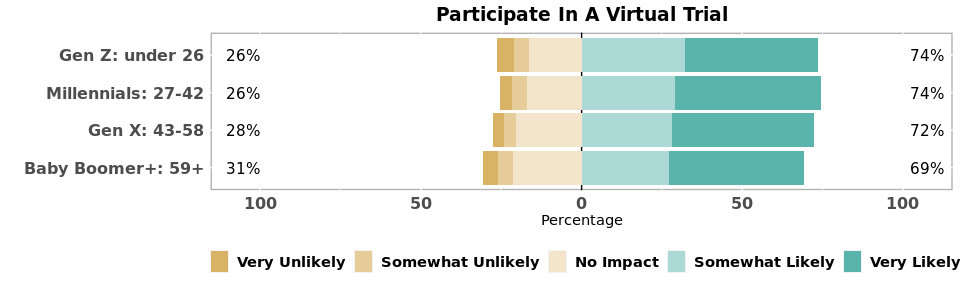

Neighborhood
Our members living in small towns or micropolitan areas were less familiar with clinical trials than those living in metropolitan areas.

Members in all neighborhood types were more likely to participate in a virtual trial than an in-person trial. Specifically, there were about 8 times more people who would “very likely” participate in a virtual trial than an in-person trial. This was true even among rural and small town members who can find it challenging to participate in clinical trials because of their distance from a research center.

Part 2: Educational content about clinical trials
Shortly after completing the initial survey, we delivered educational content about clinical trials to members. The educational content and more were presented in cards like these on our app during Part 2:

Part 3: The effect of education on knowledge about clinical trials
After reviewing the educational material in Part 2, our members’ knowledge about clinical trials improved, including:
.png)
.png)
Quick fact: Who can participate in clinical trials?
Some clinical trials focus on a specific disease or condition, while others are interested in testing the safety and effectiveness of, for example, a vaccine for everyone (healthy volunteers).
What does this information tell us?
This type of information from our members helps us understand how we can continuously improve the materials we share in our app. For example, we saw that clinical trials are generally viewed favorably by members, but a lack of knowledge about clinical trials and what’s expected might contribute to limited involvement. In addition, although the education in the app slightly improved knowledge, there is more we can do to help our members understand this topic better.
One additional learning for us was that most of our members would be more likely to participate in a virtual trial, where all study activities can be done at home. Did you know that Evidation offers many opportunities to participate in virtual trials? Look out for new recruitment offers from Evidation to see if you qualify for our upcoming studies!
Interested in joining our community to learn more about how you can participate in health research? Download the Evidation app today!
.avif)
Can high blood pressure cause headaches?
Mild to moderate hypertension isn't correlated with headaches, however, a hypertension headache can be a sign of a medical emergency.
If your healthcare provider has notified you that you have high blood pressure, or you've taken several self-readings with a blood pressure above the ideal pressure of 120/80 mm Hg, you may begin to realize that some health issues--such as headaches--may be influenced by your blood pressure.
Here, we'll demystify high blood pressure, explore the connection between high blood pressure and headaches, and discuss what you can do to relieve blood pressure related headaches.
Understanding high blood pressure
Also known as hypertension, high blood pressure means that the force of the blood being pushed against the walls of your arteries is too high. High blood pressure means that your heart is working unusually hard to pump blood throughout your body.
The American College of Cardiology offers four distinct categories for blood pressure readings:
- Normal: Normal blood pressure is 120/80 mm HG (or lower).
- Elevated: In this category, the top number can reach up to 129 mm Hg while the bottom number is 80 mm Hg or less.
- Stage 1 hypertension: The first stage of high blood pressure is classified as a top number between 130 and 139 mm Hg and a bottom number between 80 and 89 mm Hg.
- Stage 2 hypertension: The second stage of hypertension is classified as a top number of 140 mm Hg or above, and a bottom number of 80 mm Hg or above.
There are many risk factors that can contribute to a person's development of high blood pressure, including:
- Age (men develop high blood pressure earlier in life, while women typically develop the condition after age 65)
- Race/ethnicity (Black people are more susceptible to high blood pressure than people of other races)
- Family history
- Sedentary lifestyle
- Smoking
- Eating too much salt
- Being obese or overweight
- A high-stress lifestyle
- Pregnancy
- Drinking too much alcohol
Hypertension and headaches: What's the connection?
Research shows that people who have mild to moderate hypertension are not more likely to experience headaches than people who have healthy blood pressure. People who have high blood pressure, however, may experience headaches related to hypertension. Headaches that are related directly to high blood pressure are known as primary headaches. Secondary headaches, however, are related to other conditions that also cause blood pressure to spike. Conditions that can cause high blood pressure and headaches include pre-eclampsia, eclampsia, hypertensive encephalopathy, and pheochromocytoma.
If you're aware that you have high blood pressure, and you experience a severe headache, unlike any headache or migraine pain you've ever had before, it's important that you go straight to the emergency room. You may be experiencing a hypertensive emergency. In addition to an extremely severe headache, you may experience dizziness, an altered mental status, shortness of breath, vomiting, chest pain, and/or changes in your vision.
Managing high blood pressure
If you have high blood pressure and are experiencing headaches, it's important that you work closely with your healthcare provider to ensure that you're not suffering from a secondary condition. Here, we'll take a look at the steps that you can take to alleviate high blood pressure that is not caused by another health issue.
Quit smoking
There are many reasons to quit smoking, and lowering your blood pressure is one of them. Smoking makes your heart work harder, and quitting can help improve your overall health, including lowering your blood pressure.
Lifestyle changes
There are many lifestyle changes that you can make to lower your blood pressure. For many people, blood pressure is positively correlated with weight gain. Typically, blood pressure can be expected to go down about 1 mm Hg for every 2.2 pounds of body weight lost.
Talking with your doctor, a registered dietitian, or a licensed personal trainer can help you learn what weight goal is healthiest for your body. Eating a balanced diet, exercising regularly (more on that in a moment!), and maintaining a waist measurement of less than 35 inches for women or 40 inches for men can all help to keep your blood pressure down.
Stress management
Stress is an unavoidable part of life, but chronic stress can take a serious toll on your health. While more research is needed to understand exactly how stress levels affect blood pressure, taking steps to lower stress can benefit your health in many ways.
Some tips to lower your daily stress levels include:
- Take control of your to-do list. Learning how to say no to others and being realistic about the number of tasks you can handle can help you prioritize your health.
- Chat with a licensed therapist. There's nothing wrong with asking for help, and talking with a licensed professional about mental health can help you develop personalized coping strategies that can help you feel your best.
- Prioritize self-care. Taking time for yourself to exercise, meditate, and spend time with loved ones can all help you lower your stress levels.
Prioritize rest
Getting high quality sleep can contribute to lower blood pressure. If you have trouble falling or staying asleep, it's important to talk with your doctor to rule out underlying conditions. Generally, going to bed and waking up at the same time each night can help you get the most out of sleep. Avoiding caffeine in the afternoon and evening can help you improve your sleep quality as well.
Dietary changes
Making small changes to your diet can go a long way when it comes to achieving healthy blood pressure. Steps that you can take to lower your blood pressure include:
- Limit salt in your diet. Cook at home more often, and don't add salt to your food when you cook.
- Enjoy foods lower in saturated fat and cholesterol.
- Increase the amount of whole grains, vegetables, and fruit in your diet.
- Drink plenty of water throughout the day.
Talk with your doctor
In some cases, medications are necessary to keep you safe while you implement lifestyle changes that can help you lower your blood pressure. Talk with your doctor about the best path forward after you've been diagnosed with high blood pressure.
Start tracking your health with Evidation today.
If you're ready to take control of your health, our team is here to support you! With Evidation, you'll be able to get insights and support that you need to achieve your health goals. Download the app today to start getting rewarded for treating your body right.

How much collagen should you take per day?
Can you take too much collagen? Is there a best time to take it? Find out the answers to common questions about collagen.
A healthy lifestyle starts with understanding what your body needs to achieve wellness. This goes beyond simply eating the right number of calories or restricting food groups. It also involves looking at what’s in your food and how it impacts your body.
Collagen is one of the things your body needs to feel healthy and well, and it’s something you can easily get from your food or through supplements. Here’s a closer look at how collagen impacts your wellness and what you can do to increase your intake of it while focusing on building healthy lifestyle patterns.
Understanding collagen basics
Collagen is a primary protein in the human body. It’s the primary building block for skin, ligaments, muscles, tendons, and blood vessels. It’s also part of the eyes and teeth. In addition, it plays a role in helping wounds heal, supporting your nervous system, and triggering the blood clotting response.
Different types of collagen
As of today, scientists have identified 28 different types of collagen, but the first five are the most common in humans. These are:
- Type I: Found in skin, bones, ligaments, and tendons.
- Type II: Makes flexible cartilage that supports joints and movement.
- Type III: Located in the internal organs, blood vessels, and muscles.
- Type IV: Found in the skin.
- Type V: Found in the skin and hair as well as the corneas
The collagen found in supplements is typically one of the following types:
- Hydrolyzed collagen: This collagen comes from meat and poultry sources and is easy for the body to absorb. It’s the most common supplemental form of collagen.
- Undenatured collagen: Pulled from chicken cartilage, this form of collagen may support joint health.
- Gelatin: Also from animal sources, this form of collagen is used for cooking more so than in supplements, for the most part.
Collagen and aging: why it matters for women over 40
The human body is capable of creating the collagen it needs if a person eats a balanced diet. However, natural collagen production decreases as a person ages. For women and those who were female at birth, the slowing production of collagen can lead to elasticity loss in the skin, which can also contribute to wrinkling. Lowering collagen levels can also cause changes in the hair, such as hair loss. Stiffening of the joints also occurs when collagen production decreases.
Another concern for women, specifically after age 40, is bone density loss. In a 2018 study from the National Institutes of Health, researchers found that taking a collagen supplement for one year greatly increased the bone density in female patients in both the neck and spine, which reduces the risk of bone loss and fractures. Age-related bone loss in women can start in the mid-30s, but it increases rapidly as estrogen decreases during menopause. While men can also have bone loss, it happens at a much lower rate for males. Thus, using collagen to support healthy bones after the age of 40 is quite beneficial for many females.
Collagen for men: supporting vitality and well-being
Like women, men produce less collagen as they age, but the impact of the collagen drops may not be as strong. Still, collagen can support overall health and well-being for males as well as females.
Men and those who were born male also experience improvements in skin, joints, and hair with collagen supplementation, but men are less likely to suffer from extreme bone loss. However, men who take collagen may notice faster recovery after workouts. They may also build muscle more quickly.
In other words, collagen supports vitality and well-being for men. Whether through supplementation or through diet, increasing collagen intake has few risks and many potential benefits for men.
How much collagen per day? Determining your collagen needs
The benefits of collagen supplementation are still being researched. As such, no official health authorities have stated recommended guidelines for dosage. Instead of looking for an official recommended dosage, you’ll want to check with the manufacturer of the collagen you’re taking, as well as your doctor, to determine a good dosage option.
Can you take too much collagen? The good news is that it’s hard to take too much collagen, and it doesn’t have any toxic side effects. However, some people report stomach discomfort if they take more than the manufacturer’s recommended amount.
Hydrolyzed collagen doses
As you analyze how much collagen per day, you’ll need to factor in the type of collagen you’re taking. For hydrolyzed collagen supplements, which are easier to absorb than other forms, most people take between 2.5 and 15 grams without noticing any side effects. A smaller dose focuses on skin and joint health, while a dose of around 5 grams can impact bone density. The larger dose works best for those looking to improve muscle mass and overall body composition.
Undenatured collagen
A dose of 10 to 40 mg of undenatured collagen appears to be safe for humans. This supplement could support improved joint health.
Gelatin
For gelatin, which is a food and not a supplement, add the recommended serving size to the food you’re preparing. You can use it in smoothies, sauces, and soups for added collagen in your everyday diet, but there’s no specific recommended amount.
Collagen-rich foods and supplements
It’s possible to get all the collagen you need from your diet if you’re careful about the foods you choose. Thankfully, foods rich in collagen are also great options for a balanced diet. Some foods that are rich in collagen include:
- Bone broths
- Chicken with its skin
- Sardines
- Organ meats
In addition, eating foods rich in vitamin C may help your body make more of its own collagen, which could boost your collagen levels, according to WebMD. These foods include:
- Berries
- Broccoli
- Legumes
- Peppers
- Leafy greens
- Citrus fruits
Try adding more of these to your diet to improve your collagen levels.
If you feel you could benefit from additional collagen, a supplement may be a good choice. These come in powders that you mix into coffee or other beverages, or they’re available as capsules. You may also find pre-made collagen drinks and liquid supplements to try. To choose the best supplement, consider the source and the type of collagen. If you prefer a plant-based diet, you can find vegan options.
Are you interested in tracking your food so you can make informed, healthy choices about your diet? Evidation can help! Start tracking your health and earning rewards with Evidation today.
.jpg)
Are protein bars healthy?
You should consider sugar content, total calories, and protein source when deciding whether a protein bar is a good fit for your health.
Getting enough protein in your diet is key for optimal health--but it can be tricky to figure out if protein bars are the right option for you. Some people use protein bars as a convenient snack or meal replacement. While this can be a great option when you're on the go, it's important to understand the nutritional content of your protein bar to ensure that it meets your unique nutritional needs.
Here, we'll take a look at how to read the nutrition label of your protein bar, how to gauge the quality of the ingredients in your bar, and some special considerations to think about if you're trying to lose weight.
Let's dig in.
Decoding nutritional labels
Reading nutrition labels can help you understand whether a particular protein bar is a good choice for your body. You'll want to consider several factors as you read over the nutrition label of protein bars.
A few things to keep in mind:
- Take a look at the total sugar content in your protein bar. Sugar is sugar--and whether it's coming from a healthy-sounding source like brown rice syrup or a more nefarious-sounding option, your body sees it the same. Many protein bars have a high sugar content--equal or more than that of candy bars. While a high-sugar bar can be a treat that also provides nutritional benefits, it's usually not the best choice to fuel a workout. You'll also want to keep an eye out for artificial sweeteners. While they can keep sugar grams low, many have adverse effects on the body and can cause headaches, bloating, and gastrointestinal distress.
- You'll also want to take a look at the total calories in your protein bar. There's no upper limit for how many calories you should have in a bar, but you'll want to make sure that your bar fits into your total caloric needs for the day. If you're considering using a high-calorie bar to replace a meal, pay attention to whether you feel satisfied afterward to guide your choices in the future. If you feel full and satisfied with what you ate, fantastic! If you're left feeling like you didn't have a meal, it might be a better idea to choose a bar that more easily fits into your nutrition plan next time.
- Finally, be sure to take a look at the protein content of your bar. If you're trying to hit a certain number of protein grams per day, be sure that your bar is keeping you moving in the right direction--not just adding to your sugar total for the day.
When convenience meets nutrition
Protein bars are a great standby to have in a pinch, like if you're caught working late and need something to keep you from hitting the break room vending machine. While it's a good idea to get the majority of your protein from natural food sources, the occasional protein bar isn't going to throw you off track.
Quality of ingredients
When you look at the ingredients of your protein bar, it can seem like you're trying to read a foreign language. Here, we'll take a look at a few factors to consider when determining whether the ingredients in your protein bar are giving your overall health a boost.
You'll want to see high-quality protein as the first ingredient in your protein bar. It can take some time to learn what type of protein feels best for your body. Some people, for example, find that whey (dairy) protein causes digestive issues, and fare better with a plant-based option, like pea protein or brown rice protein.
No matter what type of protein your bar contains, you'll want to shoot for the least processed version possible. That means you'll want to look for ingredients like whey protein instead of whey protein isolate, which is a more processed version of the protein.
Considerations for weight management
If you're working to get to a healthy weight, it makes sense that you're looking to increase your protein intake. Protein is essential for helping your body feel satisfied, and can support a healthy exercise plan. Getting enough protein can also help to ensure that your body's hunger hormones are functioning properly.
While a plate of grilled chicken or an egg white omelet can be delicious, sometimes, it's more convenient to grab a protein bar when you need to get out the door--fast. Protein bars can be a part of your weight loss plan, but it's important that you consider a few factors when you're choosing the right bar for you.
Protein bars can also be used to gain weight, if that's a goal you're working toward to optimize your health. Many protein bars pack 400 calories, making them a fast and convenient way to get the protein you need to gain weight in a healthy way.
Potential pitfalls
Like any processed food, there are some pitfalls when it comes to adding protein bars to your diet. You may find that getting such a high amount of protein from a processed source makes you feel sluggish or nauseous. You may also find that the artificial sweeteners and/or sugar alcohols found in many protein bars cause unpleasant side effects, like headaches.
Conclusion
Protein bars can be a part of a healthy nutrition plan, but it's important to read labels carefully to ensure that you know what's going into your body. If you're trying a new protein bar, pay attention to how you feel over the next few hours, keeping an eye out for any adverse effects (like digestive issues).
If you're struggling to find a great protein bar that makes sense for your needs, making your own can be a great option that allows you to customize your bars to your goals and caloric needs.
Evidation: Helping you take steps toward your goals, one day at a time.
If you're ready to learn more about how to fuel your body and get personalized tips and information that will help you meet your goals, we're glad you're here. At Evidation, we're working to make your health data work for you. Download the app today and get started with moving toward a healthier you.

Your essential weight loss grocery list
A healthy grocery list consists of lean protein, vegetables, fruits, and minimal processed foods.
When you're working to help your body achieve healthy weight loss, nutrition is key. While exercise is vital for physical health, it's tough and unhealthy--if not impossible--to try to out-exercise a diet that isn't giving your body what it needs. While it's important to eat fewer calories than you burn in order to lose weight, it's also important to provide your body with the macro- and micro-nutrients it needs in order to thrive--and make your weight-loss stick over time.
When you develop a healthy grocery list, you'll find that you have plenty of options to keep your nutrition exciting, try new foods, and provide your body with the fuel it needs to achieve your goals.
Building a foundation -- essential nutrients for weight loss
When you're working toward weight loss, the goal isn't to eat as little as possible--the goal is to enjoy healthy foods that support your body, keep you energized, and meet your caloric needs.
Understanding the nutrients that support healthy weight loss can help you find the foods that will help you on your weight-loss journey.
Let's take a look at some of the essential nutrients you'll need to include in your nutrition plan to help you lose fat and stay energized.
Protein
Protein is a macronutrient, meaning it makes up a part of your total caloric intake each day. Getting plenty of protein in your diet can help regulate your body's hunger hormones, boost your metabolism, and reduce your appetite.
Iron
Iron is a vital nutrient that helps your blood carry oxygen to your hard-working muscles, which can help your body burn fat. Some signs of low iron include low energy levels, weakness, and fatigue. If you think you may have low iron, talk with your doctor about getting tested.
B Vitamins
There are a number of B vitamins, including folate (B-9), riboflavin (B-2), thiamine (B-1), and niacin (B-3). B vitamins support a healthy metabolism and can help your body convert food to energy.
Magnesium
Magnesium is necessary for many vital processes in the body, including regulating blood pressure, controlling blood sugar, strengthening bones, and helping the nervous system function properly.
Vitamin D
Vitamin D is important for a healthy immune system, and a 2011 study showed that people who were overweight and took vitamin D supplements lost a greater amount of abdominal fat than people who did not take the supplements. The jury is still out on exactly why vitamin D may help with weight loss.
Smart shopping strategies
Don't go to the grocery store hungry. When we're ravenous, it's easy to load up the cart with snacks that are designed to be hyper-palatable. Hitting the grocery store after you've had a healthy, satisfying meal can make it easier to stay on track when it comes to making choices that support your goals.
- Shop the perimeter first. When you do a lap of the perimeter of the grocery store, you'll get to choose your produce, protein, and dairy products before you venture into the aisles for pantry staples. Loading up on the good stuff can help you stick to more non-processed items.
- Make a list. Planning out your menu for the week can work wonders when it comes to boosting the nutrition levels of your grocery cart--and the balance of your bank account. Make a plan, make a list, and stick to it.
- Read labels. If you're working to lower your intake of added sugars, be sure to keep an eye out for sneaky sugar code names that may sound healthy, like agave nectar, barley malt, cane juice, fruit juice, and fruit juice concentrate.
Proteins -- fueling your weight loss journey
Research shows that a daily protein intake equal to about 1 gram of protein per pound of body weight can support healthy weight loss.
Healthy protein options to keep on hand to support your weight-loss journey include:
- Beans
- Chicken
- Eggs
- Lean beef
- Low-fat dairy, especially cottage and ricotta cheese, as well as low-fat, unsweetened yogurt
- Seafood (canned options like tuna can be especially convenient when you're on the go)
- Turkey
Veggies and fruits -- nature's weight loss allies
Veggies and fruits give your body the fiber, sugars, and micronutrients that you need to feel your best. You may find that loading up on fruits and veggies helps you feel more satisfied throughout the day.
Some of the best produce items to include in your meals for weight loss include:
- Apples
- Asparagus
- Avocados
- Broccoli
- Brussels sprouts
- Cucumbers
- Green beans
- Kale
- Kiwis
- Leafy greens
- Pomegranates
- Sweet potatoes
- Tomatoes
If you're venturing into the world of produce for the first time in a while, it's OK to take it slow. Start with a few tried-and-true favorites and work to incorporate something new into your meal plan each week.
Planning your meals
Keeping variety in your nutrition plan can help you stay on track over time. Two days enjoying foods from your weight-loss grocery list may look like:
Day One
- Breakfast: Yogurt with berries and peanut butter
- Lunch: Broiled fish with roasted sweet potatoes and broccoli
- Dinner: Ground chicken tacos topped with homemade pico de gallo
Day Two
- Breakfast: Omelette with lean turkey and a sprinkle of cheese
- Lunch: Grilled chicken salad topped with olive oil and lemon juice
- Dinner: Sliced turkey breast with roasted vegetables and a side salad topped with cucumbers and tomatoes
Processed foods & frozen foods
Many people are surprised to learn that frozen fruits and veggies can be just as nutritious as fresh! Be sure to read labels, however, as some frozen options are loaded with preservatives, sugar, and sodium. Stick with options like mixed berries, mixed veggies (without butter), broccoli, peas, and cauliflower.
Let's be clear: losing weight does not mean that you have to cut out foods that you love. Enjoying processed foods sometimes is not going to derail you from your goal, especially if you make a point to give these foods a supporting role in your meals, rather than making them the star of the show.
Evidation: supporting your weight loss journey
Understanding your health-related behaviors is key when it comes to making strides toward your goals. At Evidation, our team is here to provide you with the personalized articles and insights you need to keep moving forward. Download the app today and start making your health data work for you.

How to get diagnosed with ADHD as a woman
Understanding your ADHD symptoms and finding the right mental health care professional are key to getting an ADHD diagnosis as a woman.
Even as children, boys who have ADHD are more likely to get a diagnosis than girls who have ADHD. 13% of boys with ADHD receive a childhood diagnosis, compared to just 6% of girls. This problem persists into adulthood. Many of the commonly known signs of ADHD--such as hyperactive behavior--tend to be more prevalent in boys.
Here, we'll take a look at how to get diagnosed with ADHD as a woman, with tips including how to choose the right professional and how to recognize whether you're showing signs of ADHD.
Barriers to diagnosis
As we mentioned, many women with ADHD struggle to get diagnosed with the condition. Boys are three times as likely to be diagnosed with ADHD than girls. Even in childhood, it takes longer for the girls who do get diagnosed to get the help they need, as the average age of ADHD diagnosis for girls is around 12 (most boys are diagnosed around the age of 7).
Often, professionals and patients alike think of a person with ADHD as a young boy who struggles to sit still. While this is one way the condition can be expressed, girls and women often show different symptoms. People with ADHD may show symptoms of inattention, hyperactivity, or both. Girls are most likely to have inattentive-type ADHD, which is often dismissed as a tendency to daydream. Since the girls who have this type of behavior are often thought of as underachievers, their condition often goes unnoticed until they reach adulthood and begin to seek out help for their ADHD symptoms.
Recognizing ADHD symptoms in women
Many adult women who have ADHD do not get an accurate diagnosis until their 30s or 40s. Typically, these women have been experiencing the symptoms of ADHD throughout their entire lives. In childhood, many of these symptoms are missed by teachers and other care professionals, as they aren't typically as obvious as ADHD symptoms in boys.
ADHD can be experienced differently, and your symptoms may ebb and flow depending on your stress levels, medication, life circumstances, and more.
Common signs of ADHD in adult women include:
- Money management problems
- Time management problems
- A constant struggle to stay organized
- Feeling overwhelmed often
- Chronic overeating
- Chronic lack of sleep
- Problems with alcohol consumption
Many women who are diagnosed with ADHD as adults have a history of anxiety and depression, and studies indicate that these conditions tend to occur together with ADHD. If you have a family member who has been diagnosed with ADHD, it's more likely that you'll develop the condition.
Many women who have ADHD find that they notice their symptoms more easily when a friend or family member is diagnosed with the condition and their symptoms begin to dissipate with therapy and medication.
Choosing the right professional
If you're showing symptoms of ADHD, it's important to choose a mental health professional who is well-versed in the condition and how it affects adult women. Your regular doctor may be able to diagnose your condition, or you may need a referral to a mental health provider who specializes in ADHD.
Treatment options after diagnosis
Getting a diagnosis of ADHD can feel like a relief for many adult women, as you have a renewed sense of hope for feeling like your healthiest, happiest self. While there is no cure for ADHD, treatment can help you manage your symptoms. It can take some time to find the right combination of medication, therapy, and lifestyle changes that help you manage your symptoms. It's important that you work closely with your healthcare provider to determine what types of treatment are the best fit for managing your ADHD.
In children, most medical professionals recommend trying therapy to learn ADHD coping skills before moving to medication. This isn't the case for adults. While therapy can be helpful, your care provider will likely prescribe medication along with therapy.
Medications prescribed for ADHD fall into the category of psychostimulants. These medications work to help control your attention, focus, and behavior symptoms associated with ADHD.
The two most common ADHD medications are methylphenidate (brand names include Concerta, Daytrana, Focalin, Focalin XR, and Metadate) and amphetamines (brand names include Adderall and Vyvanse). As mentioned, it may take some time for your doctor to find the right medication and dosage that works to control your symptoms.
It's likely that your doctor will give you a low dose of a new medication. Over the course of about a week, you'll keep track of your symptoms to see whether the medication works well for you. Your doctor will work with you to determine which medication is the best fit. They'll also consider any other health conditions that you have to ensure that the medication prescribed for you is safe and effective.
Lifestyle strategies for managing ADHD
While medication is the first line of defense for adult women who are diagnosed with ADHD, your doctor may also encourage you to try therapy and other lifestyle changes that can help you learn how to manage your symptoms. Many adult women who have ADHD have success with life coaching. Working with a life coach certified to help adult women with ADHD can teach you valuable strategies for boosting your self-esteem, improving your time management, and developing coping skills for dealing with your ADHD symptoms.
In addition to working with a licensed therapist or life coach for adult women with ADHD, you may find success with using other stress management techniques, including yoga, exercise, meditation, and spending time outdoors.
Using other types of coaching and counseling services related to your unique life situations can also be helpful. Women with ADHD who are mothers may benefit from working with a parenting coach who can help you learn how to manage busy schedules, behavioral issues, and other issues that come along with parenting. If you find that you're having trouble reaching your potential in your career, working with a licensed career counselor who is well-versed in the needs of professionals with ADHD can help you develop your strengths and work on opportunities for improvement.
Evidation: Taking your health to the next level
If you're a woman living with ADHD, it can be helpful to have tracking tools in place that help you make the most of your health data. At Evidation, we've got you covered. Download the Evidation app today and get started with making your health data work for you.

National Cancer Prevention Month
There are many ways to lower the risk of cancer, including quitting smoking, eating less red meat and processed meat, and seeing your doctor regularly.
According to the American Cancer Society, there were 1,918,030 new cancer cases and 609,360 cancer-related deaths in 2022. The vast majority of people in the United States have been affected by cancer, whether through their own diagnosis or that of a loved one.
Thankfully, cancer research grows every day, and scientists around the world are working to find a cure. In the meantime, taking preventive measures to lessen the likelihood of developing the disease is a smart place to start.
February is National Cancer Prevention Month, and it's the perfect time to learn about the preventive measures you can take to support your health. Whether you've recently been diagnosed with a medical condition and are interested in taking steps to boost your health, or you're generally healthy and simply want to make sure you're doing all you can to prevent cancer, we've got you covered.
Taking steps to prevent cancer will benefit your overall health and well-being. Let's take a look at some of the steps you can take to lessen the likelihood of developing cancer.
Understanding cancer risk factors
In order to take action against cancer, it's important to evaluate your risk. Some risk factors are genetic and therefore unavoidable, but other risk factors can be avoided with lifestyle changes.
Non-genetic factors that are associated with increased cancer risk include:
- Smoking: Smoking has long been known to cause cancer, as it causes damage to almost every part of the body. Smoking has been proven to cause lung, colon, cervical, rectal, bladder, liver, pancreatic, kidney, throat, oral, larynx, and esophageal cancers. Vaping is not a safe alternative, as e-cigarettes are not regulated and typically contain substances (including nicotine) that are known to cause cancer.
- Exposure to ultraviolet radiation: Most skin cancers are caused by exposure to ultraviolet light, either from the sun or from tanning beds. Getting a sunburn increases the risk of developing skin cancer. It's important to regularly apply SPF when you're outside, and to try to stay out of the sun from 11 am until 3 pm in spring, summer, and early fall.
- Viral, bacterial, and parasitic infections: There are several types of infections that are associated with cancer, including human papilloma virus (HPV), hepatitis B and C, and Helicobacter pylori (H. pylori). Vaccination against HPV and hepatitis are important to lower the risk of these conditions. H. pylori causes stomach ulcers that can increase the risk of stomach cancer. Human immunodeficiency virus, or HIV can also increase the risk of certain infections.
Healthy habits for cancer prevention
Thankfully, there are steps that you can take to help lower your cancer risk, including:
- If you smoke, quit. If you're not sure how to quit or are having a hard time, talk with your doctor for help.
- Cut down on alcohol, or stop drinking it.
- Maintain a healthy weight and try to get at least two and a half hours of physical activity per week.
- Stay out of strong sunlight, and don't use tanning beds.
- Get vaccinated against preventable diseases that are more likely to cause cancer, including HPV and hepatitis.
- See your doctor regularly for check-ups and recommended screenings
We get it--going to the doctor can be nerve-wracking, especially if you're worried about an aspect of your health. Doing so, however, can be life-saving. Getting yearly check-ups from your primary care provider allows your doctor to form a baseline for your health, making it easier to notice when something has gone wrong.
Your care provider will talk with you about when you'll need to be screened for certain types of cancer. If you have a family history of certain types of cancer, your doctor may recommend that you get screened sooner than called for by general guidelines.
In addition to providing physical screenings for health issues, your doctor can also talk with you about preventive measures you can take against cancer and other conditions, hazards in your workplace that could contribute to disease, and more.
If you feel like something is off with your health, or you've noticed changes in your health that you can't explain, you don't need to wait until your next yearly physical to get help. Knowledge is power, and it's only possible to fight a health condition once you know it exists. Reach out to your doctor and schedule an appointment to take control of your health.
Nutritional strategies for cancer prevention
What you choose to eat can make a major difference when it comes to lowering your cancer risk.
According to the Harvard Public School of Health, some simple steps you can take to prevent cancer include:
- Limit red meat, such as beef and lamb.
- Cut down on or eliminate processed meat, like hot dogs. Recent research showed that the risk of colorectal cancer increased by 12% for every 100g/day of red meat intake and increased by 16% for every 50g/day of processed meat intake.
- Eat plenty of whole, unprocessed grains, fruits, vegetables, and legumes. These foods have high amounts of dietary fiber. Research suggests eating foods high in fiber can protect against colorectal cancer.
- Limit fast food--aim to cook at home instead. Research shows that it's likely that people who get a high percentage of their total calories from fast foods may have an increased risk of cancer.
- Follow a nutrition plan that helps you maintain a healthy weight--sustainably. People who are overweight or have obesity are at a higher risk for some types of cancers.
Doing our part: Research at Evidation
At Evidation, we're working to contribute to medical research responsibly using data to move medicine forward. We know that cancer and other diseases are devastating, and we want to contribute to a healthier world. Every time a member of Evidation consents to share their health data with us for research purposes, we're able to use that information to make a difference.
Our recent contributions to research include:
- From in-person trials to DCTs and back again: Why has implementation of remote trials been so challenging?
- Sarcoma -- The Forgotten Cancer
- Psychosocial functioning among caregivers of childhood cancer survivors following treatment completion
Evidation: Using health data for good.
At Evidation, we believe in putting you in the driver's seat of your health. Your health data allows you to earn rewards, get personalized content--including articles and health tips--catered to your needs based on your health patterns, and participate in health research, potentially helping people around the globe. Download the app today so we can begin a partnership that works toward a healthier you--and a healthier world.